
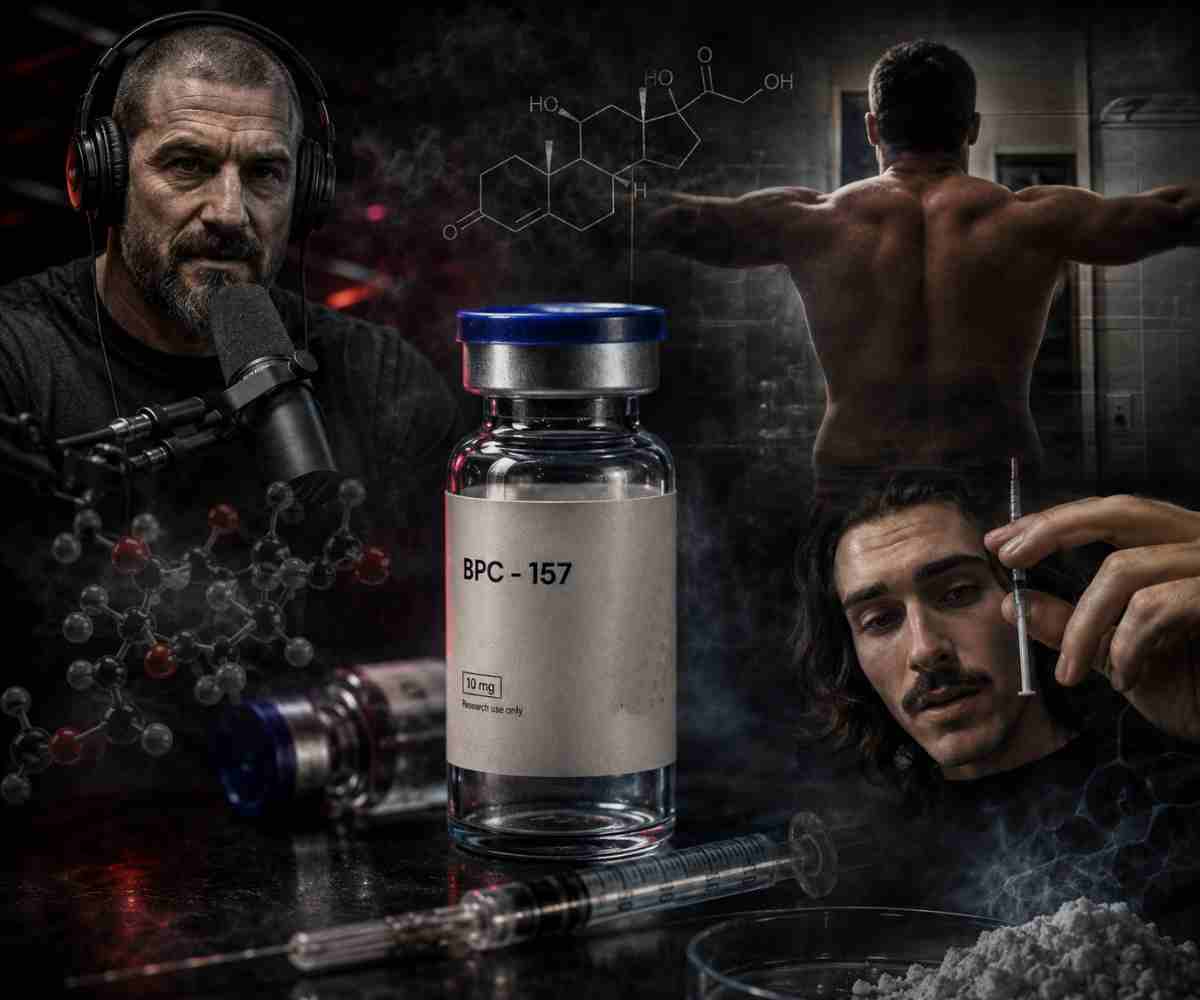

Peptides are everywhere lately. People are quietly injecting themselves with them, lured by the promise that they’re a miraculous new class of treatment, free from the dirty baggage attached to those nasty “steroids”.
And this peptide boom appears to target men’s fitness frustrations and insecurities directly: more muscle, better sleep, better sex, leaner, even a better freakin’ tan. I mean, injection is normal these days, right?
No it should not be. And the first problem is Peptides aren’t a single drug. Ozempic contains a peptide. Insulin is one. The collagen in many protein powders is broken down into peptides. Even aspartame, the sweetener in plenty of kitchen cupboards, is a modified dipeptide. The word describes a chemical structure, not a safety rating or effect, like saying something is liquid so it’s safe to neck from the bottle.
Then there are the products being sold online and through the more, ummm, entrepreneurial end of the wellness industry: BPC-157 for injuries and gut health, TB-500 for recovery, CJC-1295 and ipamorelin for growth hormone, GHK-Cu for skin and hair, melanotan for tanning and retatrutide for weight loss. They may all be called peptides. That does not put them in the same category medically.
What Do Peptides Do?
Some peptides genuinely do something. Semaglutide and tirzepatide can help people lose weight and manage blood glucose. They reduce appetite, slow digestion and affect blood-glucose regulation. They can also cause nausea, vomiting, constipation, diarrhoea, abdominal pain and other complications. They are medicines, not harmless fat burners. Healthdirect
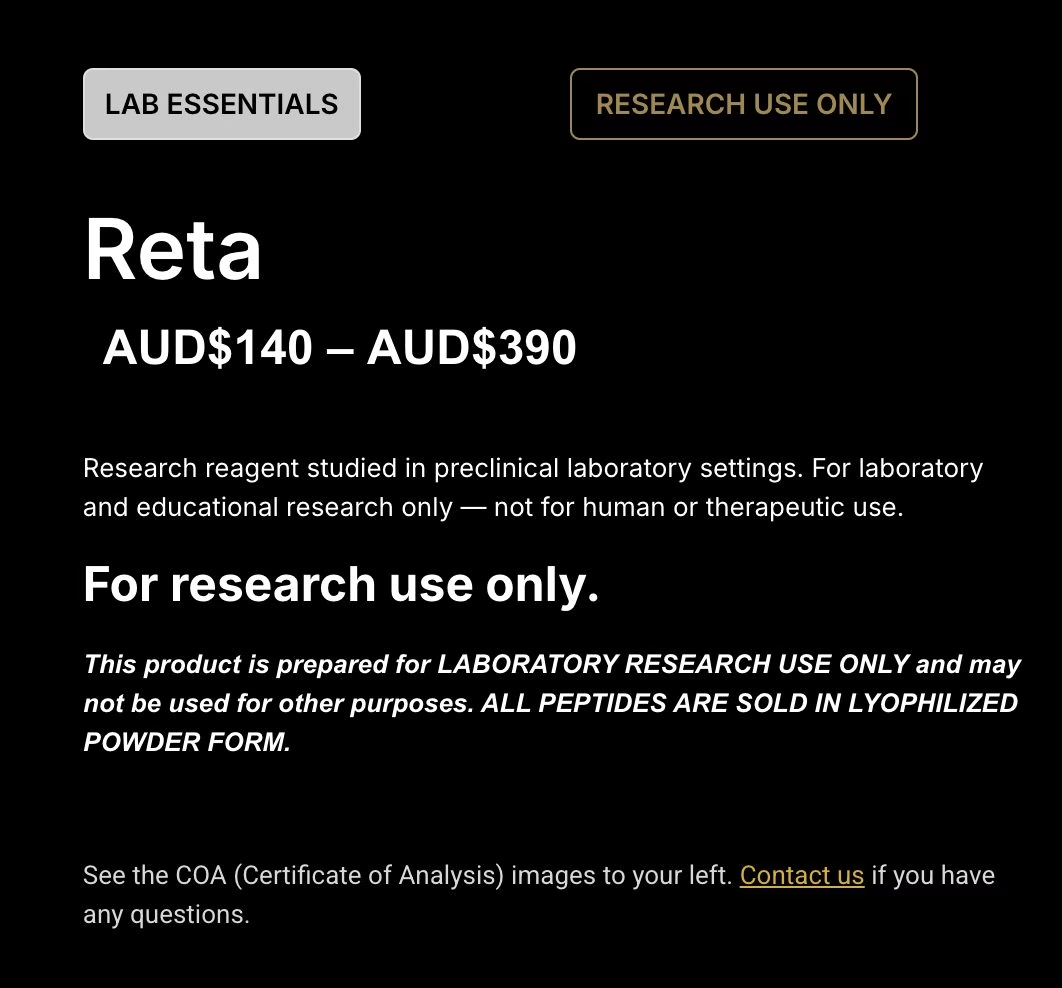
Retatrutide is more complicated. It is an experimental drug that activates three metabolic pathways: GLP-1, GIP and glucagon. Clinical trials have produced impressive weight-loss results, but gastrointestinal side effects and increases in heart rate have also been reported. It is not approved for general use in Australia. Sport Integrity Australia
Update: that risk isn’t hypothetical. Seven Victorians have gone into liver failure using a counterfeit product labelled retatrutide, and the TGA now suspects a contaminated batch.
The Dodgy Peptides
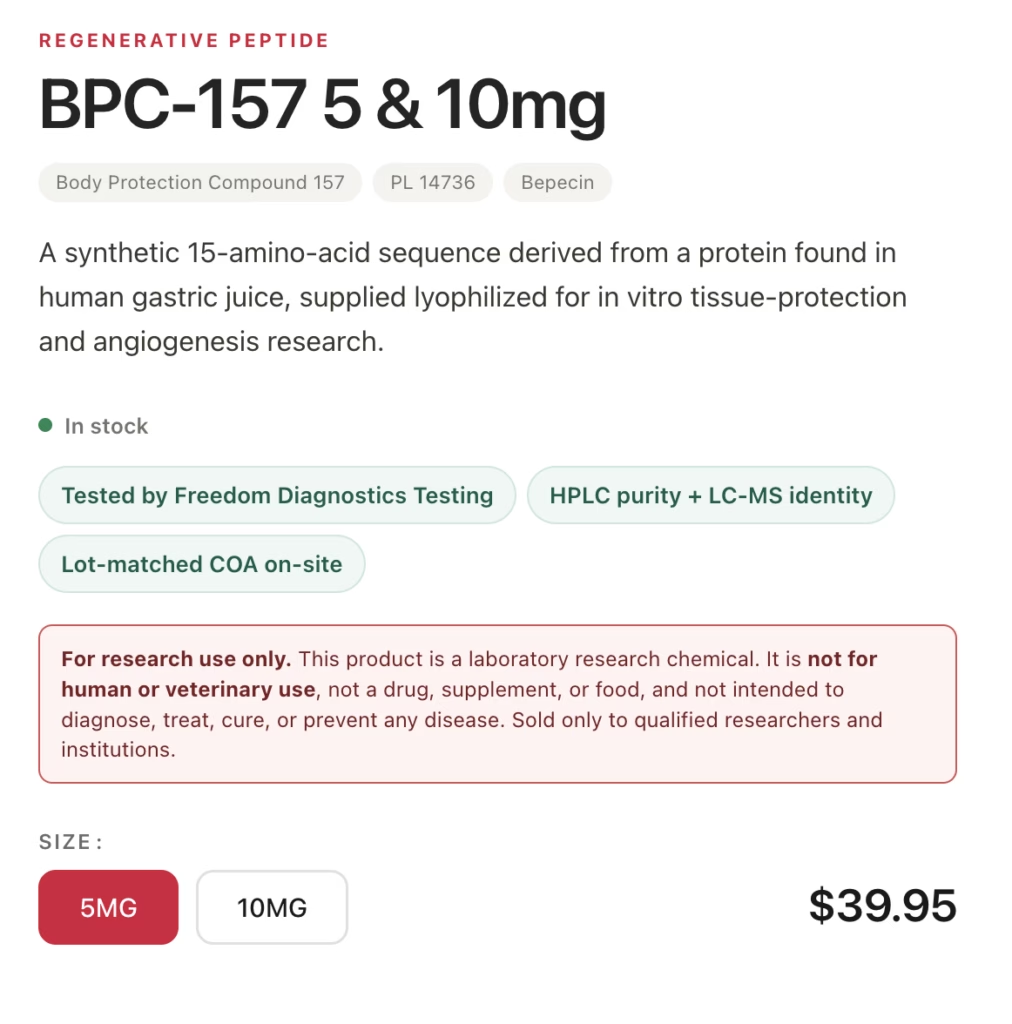
BPC-157 is usually promoted as a kind of injectable repair crew for tendons, ligaments, muscle injuries and the gut. The problem is that most of the enthusiasm comes from laboratory and animal research. There is no established human evidence showing that it safely repairs your shoulder or Achilles tendon.

The FDA’s 2026 review found no useful human pharmacokinetic data and very limited clinical evidence for BPC-157. It also raised concerns about impurities, aggregates and possible immune reactions. FDA briefing document
TB-500 is marketed in a similar way for healing and recovery. It is often discussed as if it were identical to thymosin beta-4, a naturally occurring 43-amino-acid peptide. It is not necessarily the same product. The online fitness market tends to flatten that distinction because “thymosin beta-4” sounds more impressive than “unverified peptide fragment”.
CJC-1295 and ipamorelin can produce real changes in growth-hormone signalling. A small human study found that CJC-1295 raised growth hormone and IGF-1 for days after injection. That proves biological activity. It does not prove that a healthy man will gain useful muscle, lose fat or become Wolverine. PubMed
Melanotan is marketed for tanning and sometimes sexual performance. It is not approved as a tanning agent in Australia. The TGA has warned about unknown ingredients, counterfeit products and serious adverse reports, including neurological reactions and priapism. TGA
Why is Everyone Quietly Taking Peptides?
Because they aren’t simply being discovered. They’re being sold.
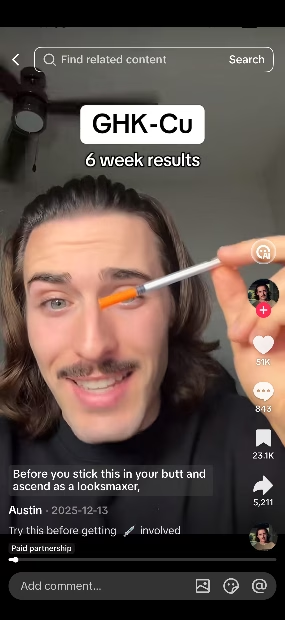
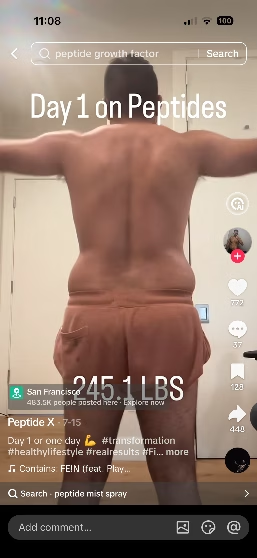
Look at TikTok’s looksmaxxing content and peptides sit in the middle of it all: pimples, hair, skin, tanning, fat loss, muscle, recovery and sex. One word has become a catalogue of male insecurities, with a vial attached to each one. You don’t have to go looking for obscure biochemistry. The algorithm brings you the before-and-after, the influencer’s testimonial and a link to one of a dozen online stores.
The GLP-1 explanation is true, but incomplete. Ozempic and Wegovy made regular injections seem medically normal and gave the word “peptide” a respectable halo. The bigger engine is an online commercial ecosystem: influencers create demand, testimonials remove doubt and stores make the product easy to buy. It looks less like a fringe drug culture and more like a skincare and supplement market with needles.
Then there’s the research-use-only fig leaf. The label says “not for human use”, while the website, reviews and videos explain precisely how humans are using it. That’s the loophole-shaped bit of the business. The TGA says the disclaimer does not remove the legal obligations around importing, supplying or advertising an unapproved therapeutic product. TGA guidance
The appeal is obvious. Peptides promise to fix the things men are told to hate about themselves without the ugly stigma attached to steroids. Less fat. More muscle. Better skin. Better hair. Better sex. A better tan. And because they’re sold as optimisation rather than drug use, a man can inject one in private and still tell himself he’s simply taking his health seriously.
Researchers from the University of Queensland have described this as part of a wider shift towards pharmacological self-optimisation, particularly among young men exposed to relentless body-image pressure online. JAMA
The marketing is public. The use is private. That may be why it feels like everyone is quietly taking them.
For the actual rules rather than the culture around them, here’s what’s legal, what’s changed, and what isn’t in Australia.