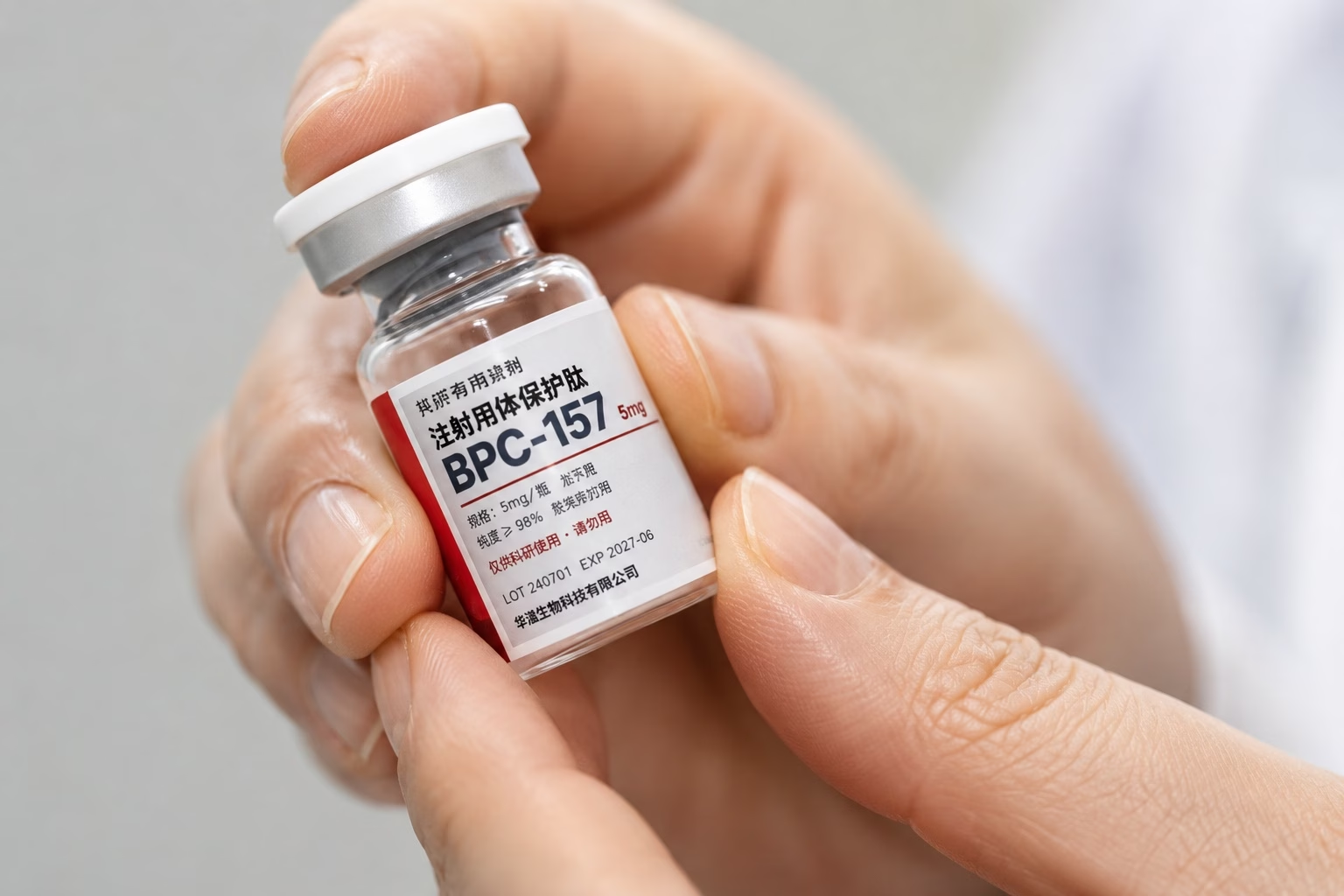
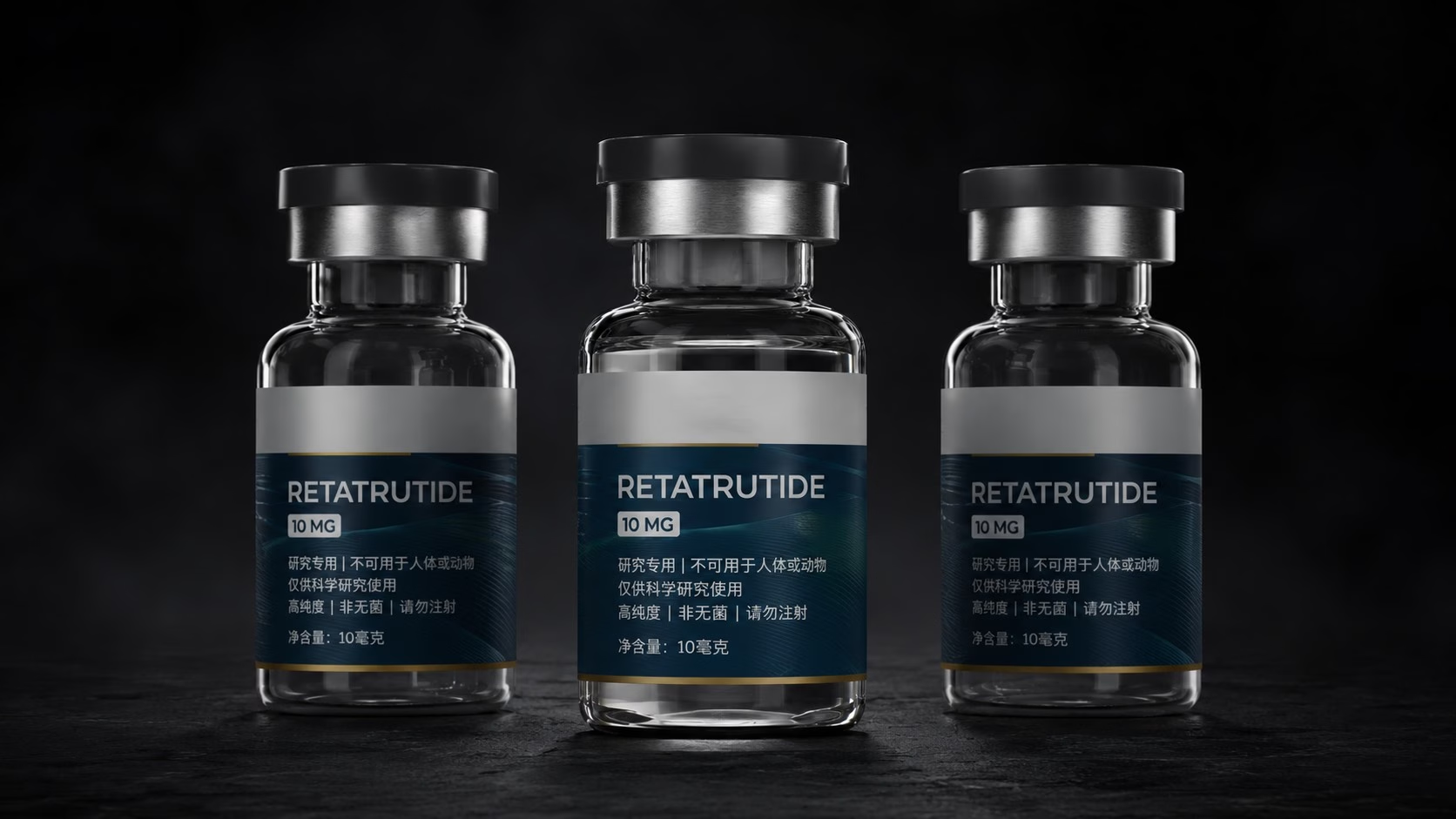
Megan Hancocks bought it from a beautician for cash. A week after her second dose, she was in liver failure. Victoria’s health department has now confirmed seven cases, and the TGA thinks a bad batch, not just the drug, may be to blame.
We wrote last week about the flood of unapproved peptides being sold online as safe self-optimisation, with BPC-157, TB-500, melanotan and retatrutide among them.
Retatrutide got the most measured treatment in that piece. It is an experimental drug, not a proven fraud, with real clinical trial data behind it. The problem is what happens when the product someone receives may not be the real thing.
If you want the full legal picture rather than just this one drug’s story, we’ve mapped what’s actually legal, what’s changed, and what isn’t across the whole peptide market.
Megan Hancocks, 32, bought a product labelled retatrutide from a clinician during a beauty appointment in late 2025. She paid cash and was told the peptide had been sourced from a Chinese manufacturer and was an “off-market” product. She injected it on 24 December and again four days later. Within a week, she was in hospital. ABC News reported her case.
She spent about a month at the Royal Melbourne Hospital. At one point, doctors discussed a possible liver transplant, but she said her liver subsequently recovered enough for her to avoid it. Six months later, she was still taking steroids as part of her treatment, had been back in hospital several times and could not work.
She was not isolated. On 19 June, Victoria’s Chief Health Officer, Dr Caroline McElnay, issued a health alert saying six cases of acute liver injury had been reported in Victoria since January among people who had used an unapproved peptide labelled retatrutide.
A separate woman in her twenties presented to Austin Hospital in acute liver failure after buying vials online. Liver transplant specialist Dr Marie Sinclair said the hospital had submitted the vials for testing.
A seventh case, and a new theory
By late August, the reported Victorian cases had risen to seven. In an ABC report published on 24 August, Professor Robyn Langham, the TGA’s chief medical adviser, said the localised nature of the liver injuries suggested a “batch problem”.
That was a hypothesis, not a confirmed finding. Test results on the suspect vials were not available at the time of reporting.
Canberra Health Services separately confirmed it had detected liver damage associated with products sold as retatrutide, but did not say how many cases were involved because of the low numbers. The problem was no longer confined to Victoria.
In plain terms, officials were investigating whether a contaminated batch of products labelled retatrutide might be responsible. That does not establish that genuine retatrutide causes liver failure, but it does not make the black-market product safe either.
The symptoms health authorities want people to watch for include unusual tiredness, jaundice, abdominal pain, dark urine and easy bruising. They can indicate acute liver injury.
Anyone who has used an unapproved peptide and develops unusual or concerning symptoms should seek medical attention promptly. The Poisons Information Centre can be contacted 24/7 on 13 11 26. In an emergency, call 000.
What retatrutide actually is, and isn’t
Retatrutide, the compound being studied by Eli Lilly, is an investigational drug that activates the body’s receptors for GIP, GLP-1 and glucagon. In a phase 2 trial, it produced substantial weight loss. The most common adverse events were gastrointestinal, and heart rate increased in a dose-dependent manner before peaking at around 24 weeks. NEJM
It is not approved for general use in Australia.
Those trial results describe a controlled, identified investigational compound. They cannot tell us what is in an unapproved vial.
A product bought in cash from a beauty clinician, or from an online store, with no reliable way for the buyer to verify its contents, sterility or dose, is not the same thing as a drug supplied in a regulated clinical trial, whatever the label says. The same discipline applies across the wider peptide market: being available to buy does not mean something is safe to take.
The TGA had already issued a 2 March safety advisory after laboratory testing found that some imported weight-loss products labelled as GLP-1 medicines contained no GLP-1 or GLP-1 analogues. It told consumers to buy prescription medicines only from local registered pharmacies.
The gap the label doesn’t fill
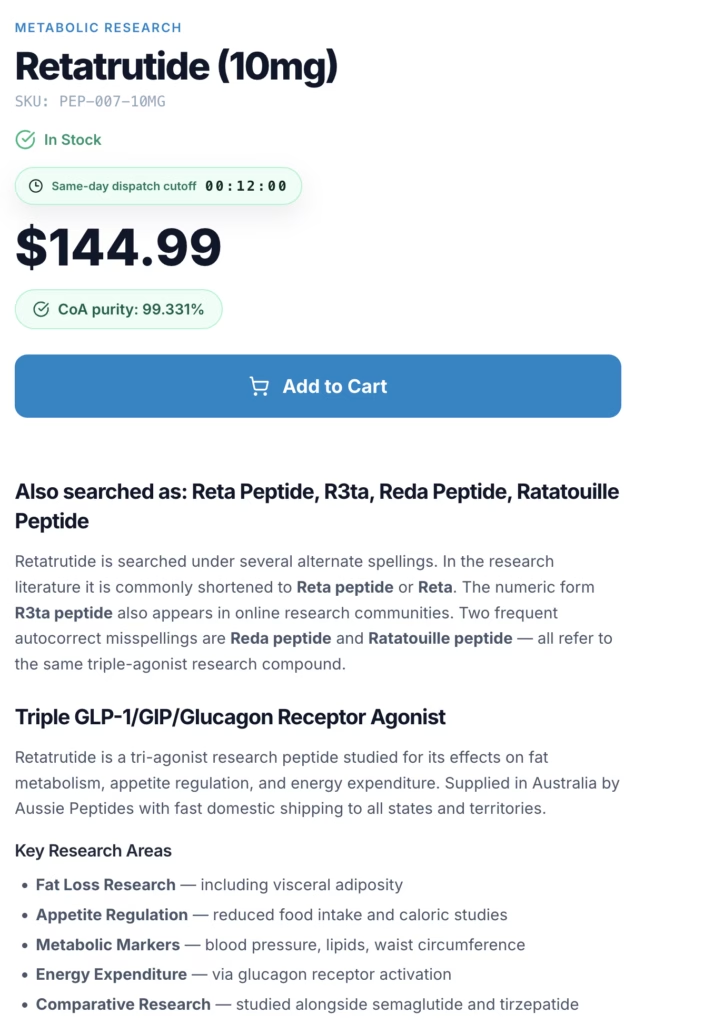
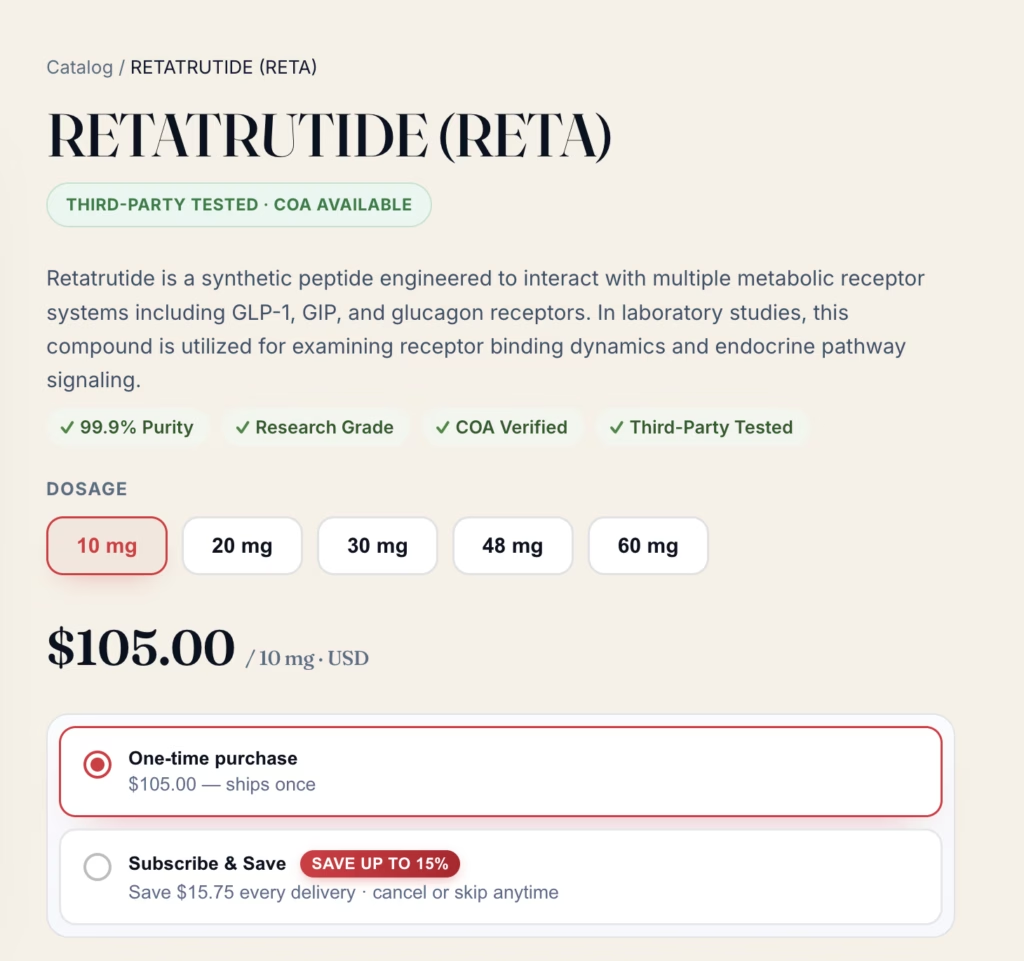
The pattern is familiar across the underground peptide trade. A compound with genuine biological activity or early clinical evidence gets sold outside the regulated supply chain, with none of the assurance attached to an approved medicine. Buyers see “for research use only” and treat it as a loophole rather than a warning.
The TGA says the disclaimer does not change a product’s regulatory status or make its importation, supply or advertising lawful.
The same gap exists in the market for human growth hormone secretagogues: a genuine biological effect can sit on top of a supply chain the buyer cannot independently verify.
Megan Hancocks injected the product in December. Her case became public six months later. The seventh Victorian case emerged in August.
Whether there are more cases is for clinicians and health authorities to establish. The laboratory results may help explain what was in those vials. The label never could.