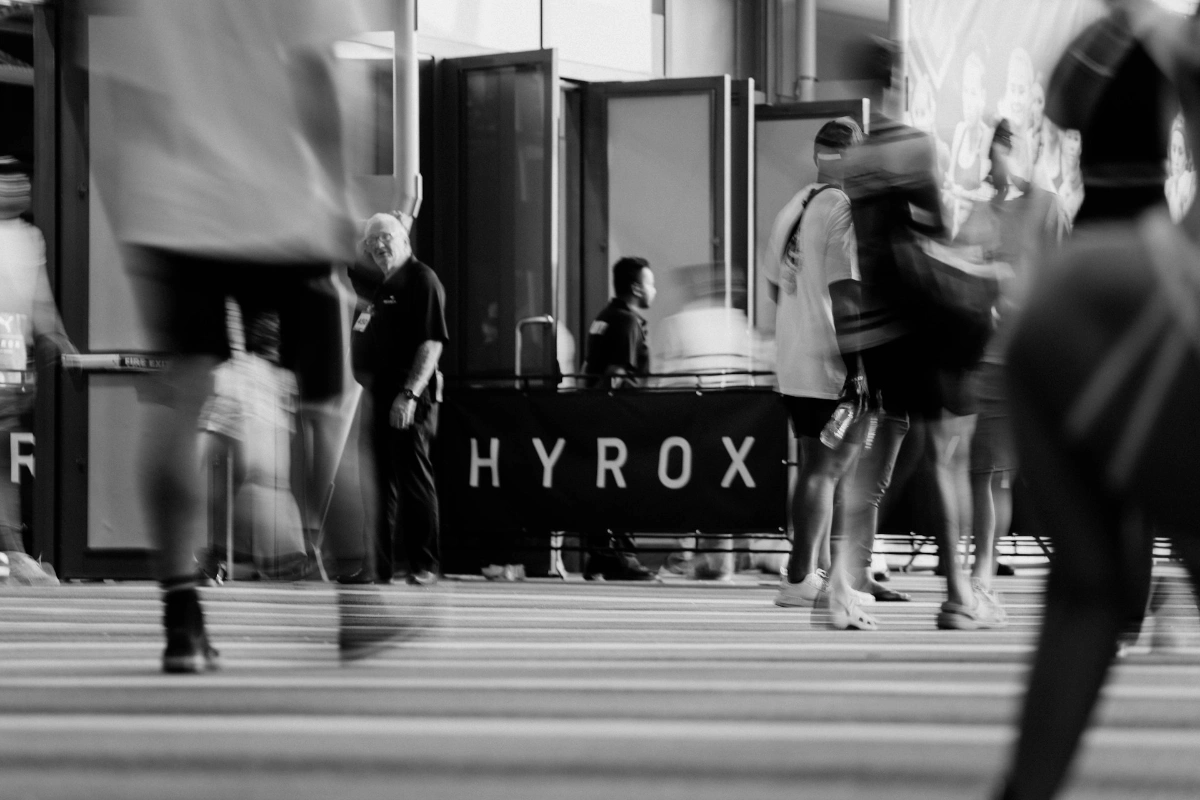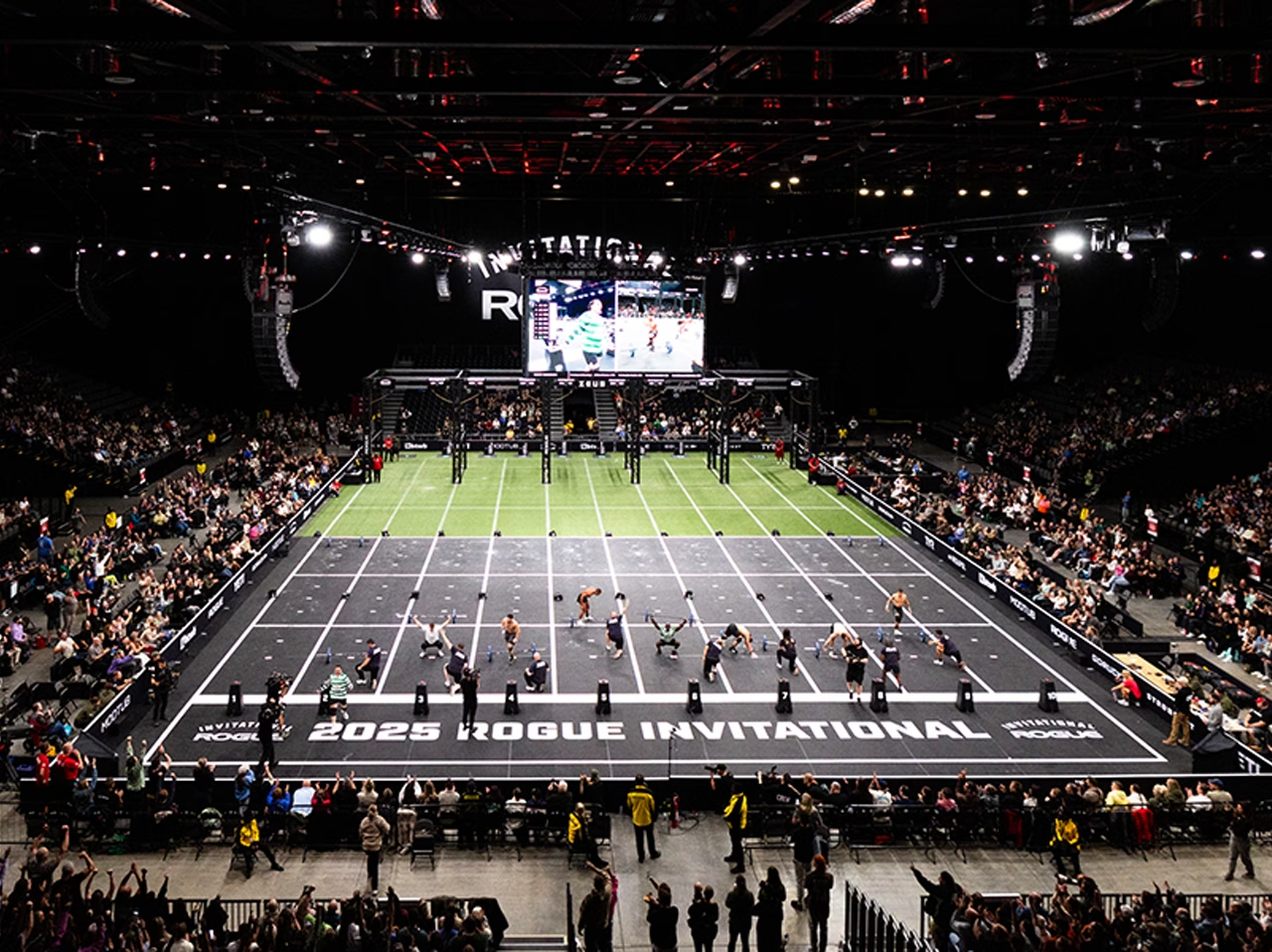


Less than three weeks ago, we wrote that HYROX Perth was exploding. More than 11,000 competitors were expected at the Perth Convention and Exhibition Centre for three days of running, sleds, burpees, rowing, carries, lunges and wall balls.
That was the attractive side of the HYROX boom. Here is the part that deserves just as much attention.
Seven competitors were taken to hospital after collapsing during the event, held from 21 to 23 August. According to reporting by The West Australian, two men and one woman were transported under “time-critical” conditions and later stabilised. Another three men and one woman were taken to emergency departments with less acute conditions.

Australasian Leisure Management reported that the medical problems included hyperthermia, heatstroke, chest pain, nausea and fainting. One competitor was discharged that day, four remained in hospital overnight and two men were still being treated at Royal Perth Hospital when the original report was prepared.
“Seven hospital transfers, including three time-critical patients, should be a wake-up call to organisers and prospective participants,” AMA WA president Dr Kyle Hoath told The West.
Dr Hoath told The West Australian “extreme endurance events are not something people should enter lightly or attempt without appropriate preparation.
It is worth being precise. “Time-critical” is the reported ambulance classification. It does not automatically mean the competitors were “fighting for life”, as one headline claimed. Their identities and subsequent conditions have not been released.

Death Shocks HYROX world
HYROX has become a global phenomenon partly because the movements are familiar and its divisions accommodate individuals, pairs, relay teams and adaptive athletes. Unlike an obstacle race, there are no ropes to climb or walls to scale. It looks achievable.

But the full race still requires eight 1 km runs, each followed by a workout station. The running alone adds up to eight kilometres, with heavy sled work, 80 metres of burpee broad jumps, a kilometre each on the SkiErg and rower, loaded carries and lunges, then 100 wall balls.
HYROX director of sport Mat Lock recently told news.com.au that the race was “built so anybody can finish it, whatever their age or fitness level”. That may be true eventually. It does not mean anybody can safely turn up and race it today.
Seven hospital transfers at an event of this scale do not, on their own, demonstrate that HYROX is more dangerous than a marathon, triathlon or other mass-participation endurance event. HYROX has not published enough medical data for that comparison to be made. It also isn’t the first time HYROX’s handling of competitors in trouble has drawn criticism on this site — a competitor who left an unconscious partner mid-race raised separate questions about the sport’s culture around finishing at all costs.
The Perth incidents nevertheless came shortly after tragedy at another HYROX event. On 13 August, 41-year-old strength and conditioning coach Leroy Saunders lost consciousness while competing in Bangkok. Medical staff administered CPR before he was transported to hospital, where he later died.

Saunders was an experienced coach, CrossFit gym owner and previous HYROX competitor. His family confirmed his death on 18 August but said they were still trying to understand what happened. No medical cause has been disclosed. There is no basis to claim his death was caused by HYROX or connected to the Perth hospitalisations.

What competitors should take from this
Following the Bangkok collapse, sports cardiologist Dr Akanis Srisukwattana said there was not enough evidence to conclude that HYROX carried a greater risk of death than running or other endurance sports. His advice was simpler: race at the level you have actually trained for, rather than chasing a time your body is not prepared to deliver.
He urged competitors to stop for chest pain, unusually severe breathlessness, dizziness, faintness, abnormal palpitations or cold sweats. Men with high blood pressure, high cholesterol, diabetes, a smoking history or known cardiovascular disease warrant particular caution.
Australia already has a free adult pre-exercise screening system designed to identify people who may need medical or professional guidance before increasing exercise intensity. Anyone entering a race as demanding as HYROX, particularly after 50, should use it honestly.
The lesson is not “don’t do HYROX”. The event gives thousands of ordinary people a reason to train, and most cross the finish line safely. If you’re building toward a first race, start with a plan rather than a leap of faith.
The lesson is that accessible movements do not make a gentle race. HYROX may be open to every body. That does not mean every body is ready.