
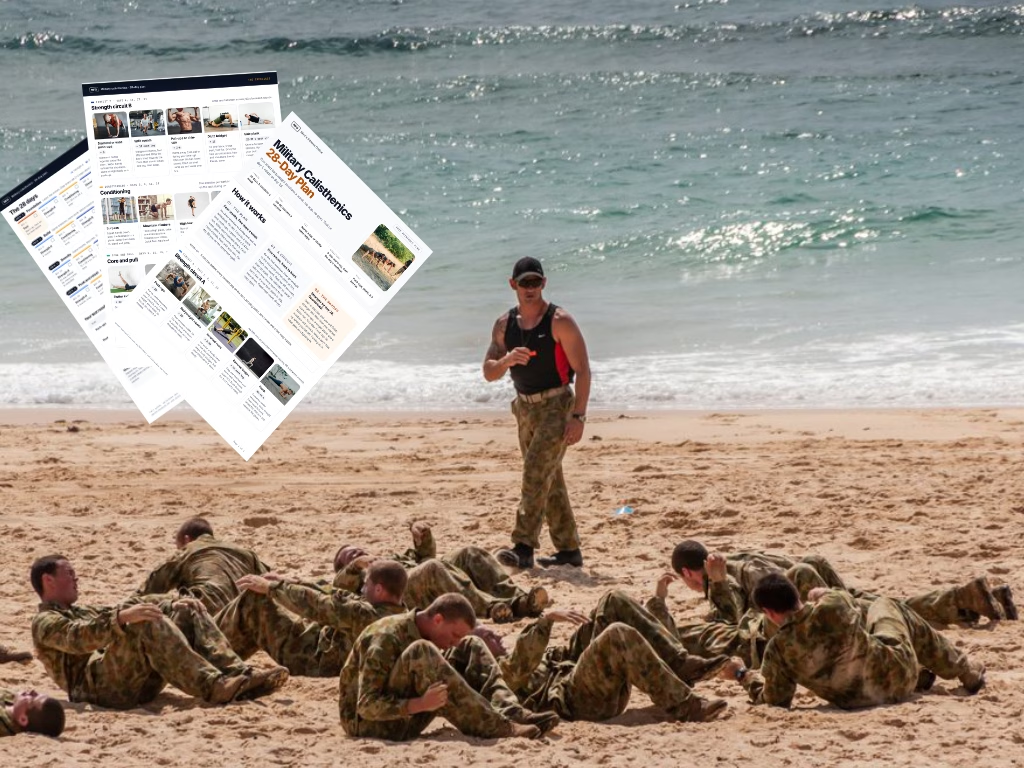

If you’ve scrolled social media lately, you’ve probably been served an ad for a “28-day military calisthenics” challenge: a soldier-themed bodyweight plan, usually behind an app subscription. The idea behind it is sound. Militaries have trained people with push-ups, lunges, sit-ups and running for generations, because it works, needs no equipment and scales to anyone.
You don’t need an app to do it. Below is a free 28-day military calisthenics plan modelled on the way the US Army trains, with a simple test on day 1 and day 28 so you can see your progress. Five short sessions a week, no gym required.
- Length: 28 days, 5 sessions a week, 30–40 minutes each
- Equipment: none required; a pull-up bar or sturdy table, and a chair, help
- Structure: 5-minute warm-up, then strength, conditioning or core work
- Progress: Foundation → Build → Density → Peak and retest
- Test: push-ups, plank and a 2.4 km run on day 1 and day 28
What is military calisthenics, and does it work?
Calisthenics just means bodyweight exercise. Military calisthenics is the style armies use for group physical training: simple, full-body moves done in controlled drills, with the same exercises repeated until they’re sharp. For decades the Army also tested its soldiers on push-ups, sit-ups and a two-mile run (the Army Physical Fitness Test), which is why those three still feel like the core of “military fitness”.
What it builds: muscular endurance (lots of good reps rather than one heavy one), an aerobic engine, and the kind of trunk strength that can carry weight for days and upper body strength where it matters: shoulders and arms. It is a great all-round basis for fitness and is achievable surprisingly quickly. You will see a difference in 28 days. How much of a difference is up to you.
The warm-up
Five minutes before every session: jog on the spot, jumping jacks, arm circles and a few easy squats. That’s enough to raise your heart rate and loosen your joints before the first set.
The Workouts
Strength circuit A
- Push-ups: 10 (knees or hands raised on a bench if needed)
- Bodyweight squats: 20
- Inverted rows under a table or bar: 8–10 (or towel rows on a door)
- Reverse lunges: 10 each leg
- Plank: 30–45 seconds
Move from one exercise to the next with little rest; rest 90 seconds between rounds.
Strength circuit B
- Diamond or wide push-ups: 8
- Split squats: 10 each leg
- Pull-ups or chin-ups: 3–6 (or slow negatives: jump up, lower for 5 seconds)
- Glute bridges: 15
- Side plank: 20–30 seconds each side
Conditioning
Rotate through burpees, mountain climbers, high knees, squat jumps and jumping jacks: one exercise per interval, working hard but controlled. On the easy portions, walk or march on the spot.
Core and pull
- Flutter kicks: 20 each leg
- Hollow hold: 20–30 seconds
- Single-leg toe reach: 10 each side (sit with one hand on the floor, lean back slightly, lift one leg and reach the other hand towards your foot)
- Dead hang or active hang: 20–40 seconds (see our dead hang guide)
- Seated straight-leg hold: 20–30 seconds (sit on a sturdy chair, grip the seat beside your hips and lift both straight legs; bend the knees to make it easier)

The 28-day military calisthenics plan
Week 1: Foundation
Learn the moves. Stop every set 2–3 reps short of failure.
- Day 1 Test day: warm up, then do the tests below
- Day 2 Strength circuit A: 3 rounds
- Day 3 Conditioning: 8 × 30 s on, 60 s easy
- Day 4 Strength circuit B: 3 rounds
- Day 5 Core and pull: 3 rounds + 20 min brisk walk
- Day 6–7 Rest one day, walk the other for 30 min
Week 2: Build
Same sessions, more work: add a round or a few reps.
- Day 8 Strength circuit A: 4 rounds
- Day 9 Conditioning: 10 × 30 s on, 45 s easy
- Day 10 Strength circuit B: 4 rounds
- Day 11 Core and pull: 4 rounds
- Day 12 Run: 20–30 min at a steady pace (3–4 km)
- Day 13–14 Rest one day, walk the other for 45 min
Week 3: Density
Same moves, less rest. This is the hard week.
- Day 15 Strength A as a 20-min AMRAP (as many rounds as possible)
- Day 16 Conditioning: 12 × 30 s on, 30 s easy
- Day 17 Strength B as a 20-min AMRAP
- Day 18 Core and pull: 4 rounds, harder progressions
- Day 19 Run: 25–30 min with 6 × 1-min faster efforts
- Day 20–21 Rest, or an easy walk
Week 4: Peak and retest
Back off early in the week, then test.
- Day 22 Strength circuit A: 3 rounds, crisp
- Day 23 Conditioning: 8 × 30 s on, 60 s easy
- Day 24 Strength circuit B: 3 rounds
- Day 25 Core and pull: 3 rounds
- Day 26–27 Rest
- Day 28 Retest: compare with Day 1
If a session leaves you wrecked for two days, repeat that week instead of moving on. Progress in a plan like this comes from turning up five times a week for four weeks, not from one heroic session.
Test yourself on day 1 and day 28
The old Army test used two-minute push-up and sit-up events and a timed run (APFT). This simplified version keeps the spirit of it with a safer core test:
- Push-ups: as many good reps as you can in 2 minutes. Chest to a fist’s height from the floor, body straight, full lockout. You can rest in the top position.
- Plank: hold a forearm plank as long as you can with a straight body.
- 2.4 km run (1.5 miles): run, or run-walk, as fast as you can. Note your time.
Write the three numbers down. Complete the four weeks and you should see progress on all three, especially push-ups, which respond quickly to frequent practice. For the extreme end of daily bodyweight volume, see Mike Tyson’s prime workout: 2,000 sit-ups a day, split into sets. Applying to the Army? Its entry test includes the beep test, so here are the beep test levels and ADF targets.
Adjusting the plan
If you’re a beginner
Do push-ups with your hands on a bench or kitchen bench, cut every circuit to 2 rounds in week 1, and walk briskly instead of running. Our calisthenics plan for beginners is a gentler starting point if you need one.
If you’re over 50
The plan works at any age, but give yourself longer to warm up, swap jumping moves (jumping jacks, squat jumps, burpees) for step-backs, fast step-ups or marching, and take an extra rest day whenever your joints ask for one. Strength and muscle are worth fighting for as you age; injuries set you back far more than a slower plan does.
For women
The plan is the same. Scale the push-up and pull-up variations to your level, and progress exactly as written. The old Army test used different standards for women; your own day-1 numbers are the only standard that matters here.
Do you need a military calisthenics app?
No. Apps can help with reminders and structure, but the training itself is simple and has been published by militaries for years. If you use one, check the price and cancellation terms before you sign up, and judge it by whether it gives you a clear progression and a way to test yourself, which is what this plan does for free.
Military calisthenics FAQ
What is military calisthenics?
Bodyweight training in the style armies use for physical training: push-ups, squats, lunges, core work and running, done in structured drills. The US Army begins sessions with a 10-exercise preparation drill.
Is there a free military calisthenics workout plan?
Yes. The 28-day plan on this page is free, needs no equipment and includes a day-1 and day-28 test. You can also download it as a printable two-page PDF.
How many days a week should I do military calisthenics?
Five short sessions a week, with two rest or walking days, works well for most people. Beginners can start with three.
Can you build muscle with military calisthenics?
Beginners can, especially in the upper body and core. Over time you’ll need harder progressions or added weight to keep building size and strength.
Is military calisthenics good for men over 40?
Yes, with a longer warm-up and low-impact swaps for the jumping moves. Consistency matters more than intensity.