
Creatine HCl’s big claim to fame is that costs more than plain creatine monohydrate but promises a smaller dose with less bloating. If you’re standing in the supplement aisle wondering whether that’s worth paying for, here’s what the research actually shows, how much of each to take, and which one we’d buy.
- Best researched: monohydrate. Most creatine studies, and the safety record, are built on it
- HCl’s selling point: it dissolves far better in water, but there’s no human evidence it’s absorbed better
- Head-to-head trials: a handful, all small. Most found no edge for HCl; one 2026 trial in soccer players found a small one
- Dose: 3–5 g of monohydrate a day. There’s no good evidence a smaller dose of HCl does the same job
- Cost: HCl costs more per serve in our Australian price check
- Our pick: plain monohydrate. HCl is a fair try if monohydrate upsets your stomach
What is creatine HCl?
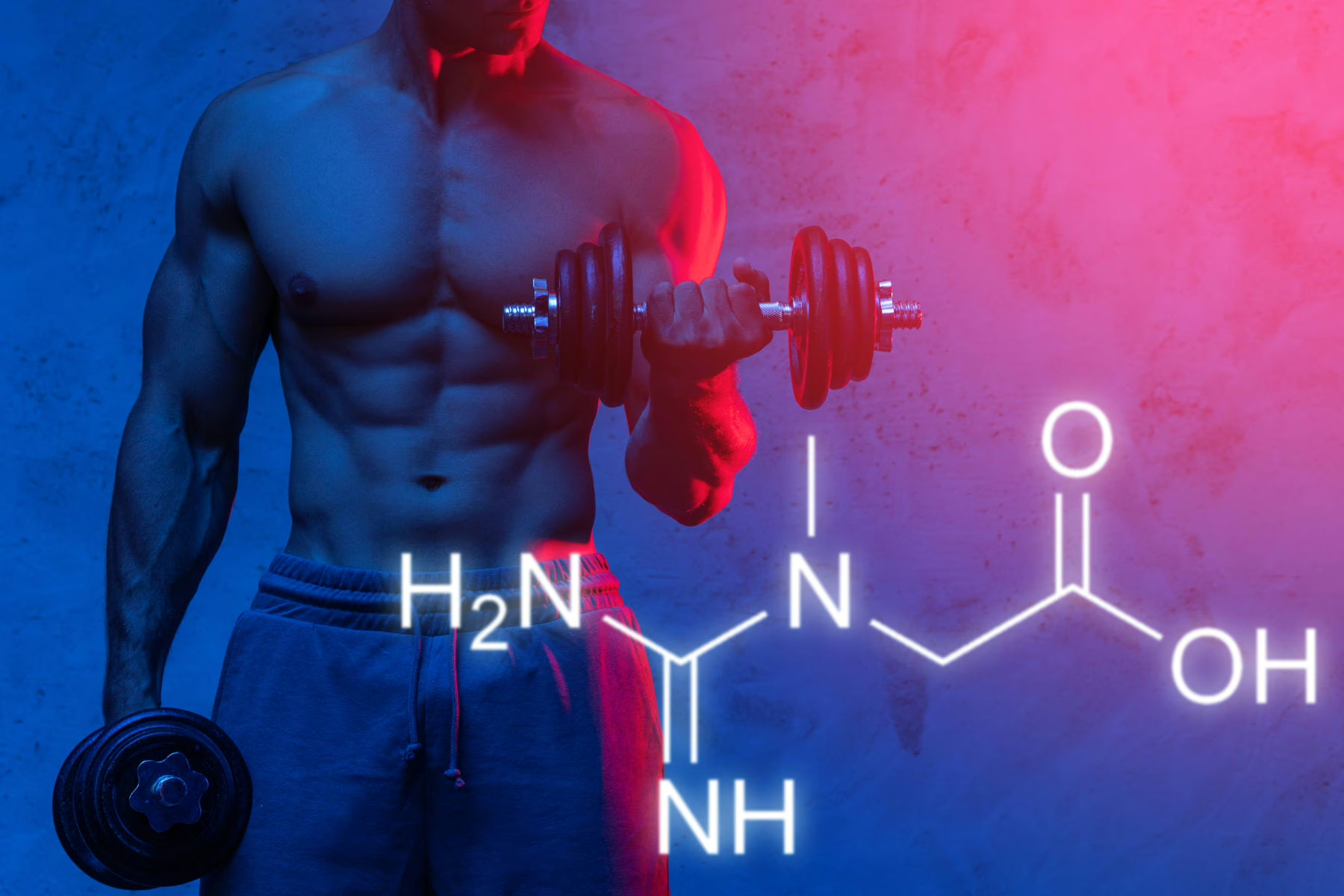
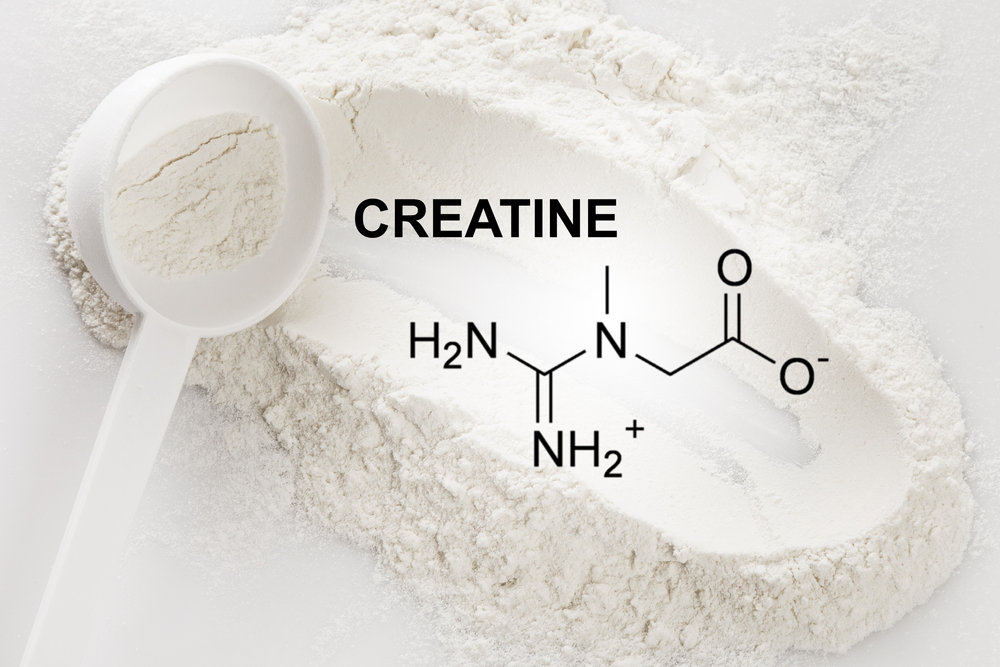
Creatine hydrochloride is creatine bound to hydrochloric acid, which makes it a salt. Monohydrate is creatine bound to one molecule of water. Once either one dissolves, you’re left with the same creatine molecule.
The big claim for HCl comes from a 2010 lab study at the University of Nebraska Medical Center, which found creatine HCl was 38 times more soluble in water than monohydrate (Gufford et al., 2010). The same study tested how well the forms crossed a layer of human gut cells in a dish, and found no significant difference between HCl and monohydrate.
There are two catches, both pointed out in a 2022 review by creatine researcher Richard Kreider and colleagues (Kreider et al., 2022). First, monohydrate’s solubility was measured at a pH of 8.6 and HCl’s at 0.3, so the test wasn’t like for like. Second, HCl is about 78% creatine by weight, against about 88% for monohydrate. Gram for gram, HCl gives you less creatine, not more.
Two of the 2010 study’s authors are also named on the US patent for creatine HCl as a supplement, which the review lists among its references.
What the research says about creatine HCl vs monohydrate
Monohydrate is the form almost all creatine research has used. The International Society of Sports Nutrition calls it “the most extensively studied and clinically effective form of creatine” (ISSN position stand, 2017). It’s also the form behind the original research that put creatine on the map (the secret history of creatine).
Trials that pit HCl directly against monohydrate are few and small. These are the ones we could find:
| Study | What it found |
|---|---|
| de França 2015, Brazil: 40 recreational lifters, 4 weeks | Both forms helped; fat-free mass rose most with 5 g monohydrate (+1.7 kg vs +1.6 kg for 5 g HCl). Skinfold measures only |
| Yoshioka 2019, Brazil: Olympic-level athletes, 30 days | 1.5 g HCl vs 5 g monohydrate: both gained strength. The HCl group got about a quarter of the creatine |
| Tayebi & Arazi, Iran: 36 trained men, 7 days | 3 g HCl did no better than 3 g or 20 g of monohydrate |
| Eghbali 2024, Iran: 40 young lifters, 8 weeks | Same dose per kg: HCl showed “no benefit over” monohydrate |
| Duan 2026, China: 40 soccer players, 4 weeks | 5 g of each: HCl and creatine ethyl ester beat monohydrate on jumps, sprints and peak power |
The 2024 Iranian trial (Eghbali et al., 2024) is the cleanest test so far: both groups got 0.03 g per kg of body weight a day for eight weeks of weight training, and both improved strength and muscle size over placebo. The HCl, supplied by the brand Con-Cret, did no better.
The 2026 soccer trial (Duan et al., 2026) is the one HCl fans will point to. Its gaps were small (the HCl group’s 20 m sprint improved 5.6% against 4.3% for monohydrate), each group had 10 players, and the authors call their findings preliminary. Creatine ethyl ester did just as well, even though earlier research had found it no better than monohydrate, which the authors acknowledge.
Kreider’s 2022 review (Kreider et al., 2022) found no evidence that HCl is absorbed better in humans, kept in muscle better at the same dose, or works at lower doses. It rated HCl as having some evidence of working compared with placebo. In fairness to HCl, the review’s publication fee was paid by Alzchem, a German company that makes creatine monohydrate.
| Monohydrate | HCl | |
|---|---|---|
| Creatine by weight | About 88% | About 78% |
| Dissolves in water | Poorly | Very well |
| Absorption in humans | Near 100% | No evidence it’s better |
| Research behind it | Hundreds of trials | A handful of small trials |
| Evidence-based dose | 3–5 g a day | Not established |
| Cost per serve (AU) | Lower | Higher |
Is creatine HCl better than monohydrate?
Our read: no, not on the evidence so far. HCl works, but almost every head-to-head trial has found it does no better than monohydrate, and the one that did was small and short. Monohydrate has decades of research behind it and costs less. If a bigger, longer trial ever backs up the 2026 soccer result, we’ll update this page.
Creatine HCl dosage vs monohydrate dosage
For monohydrate, the ISSN says 3–5 g a day keeps your muscles topped up once they’re full. Taken that way from day one, it takes three to four weeks to fill them. The fastest route is a loading phase of about 0.3 g per kg of body weight a day for five to seven days, then 3–5 g a day (ISSN, 2017). Bigger athletes may need 5–10 g a day.
HCl products are often sold on the idea that you need less. One Australian retailer’s listing for an HCl capsule says it “may require a smaller dose”. The research doesn’t back that: Kreider’s review found no evidence that lower doses of HCl work as well as the standard monohydrate dose (Kreider et al., 2022).
Our read: if you take HCl, match the creatine, not the label. Because HCl is lighter on creatine, about 3.4–5.6 g of HCl gives you the same creatine as 3–5 g of monohydrate. And if muscle growth is the goal, a 2026 UNSW trial has already asked whether even 5 g a day is enough.
Does creatine HCl cause less bloating?
This is HCl’s biggest marketing claim, and the least tested. The 2010 solubility study opened by saying monohydrate’s poor solubility and high dose lead to water retention and stomach discomfort (Gufford et al., 2010), but it didn’t test that in people. We couldn’t find a trial that measured stomach symptoms in HCl and monohydrate users head to head.
What we do know:
- The dose in one go matters. In 59 top-level soccer players, a single 10 g dose of creatine caused diarrhoea in 55.6% of players, against 28.6% when the same 10 g was split into two 5 g doses (Ostojic and Ahmetovic, 2008)
- At normal doses, creatine isn’t linked to stomach upset. The ISSN says well-controlled studies show creatine doesn’t increase gastrointestinal upset (ISSN, 2017)
- Some water gain is the point. Creatine draws water into muscle cells, which is part of how it works (our complete guide to creatine). In the 2019 Brazilian study, body water rose more on monohydrate than HCl, but the HCl group was getting about a quarter of the creatine (Kreider et al., 2022)
Our read: if creatine bloats you or sends you to the toilet, try a smaller dose split across the day, or skip the loading phase, before you pay more for a different form.
Creatine HCl vs monohydrate: the cost per serve
We checked two Australian retailer pages on 10 November 2026. Bulk Nutrients listed a 1 kg bag of creatine monohydrate at $48, which it says holds 333 serves of 3 g: about 14 cents a serve, or about 24 cents for 5 g. Australian Organic Products listed Switch Nutrition’s Creatine 100% Pure HCL, 90 capsules, at $39.15: about 43 cents a capsule. The page doesn’t say how much HCl is in each capsule, but one capsule already costs more than a full 5 g scoop of monohydrate.
Prices change, and brands and sizes vary, so check the cost per gram of creatine, not the price of the tub.
Who might try creatine HCl?
Our read: HCl is a reasonable option if monohydrate gives you stomach trouble even at 3–5 g split across the day, or if you simply prefer it and don’t mind the price. Just take enough to match a normal monohydrate dose. For most men, plain monohydrate is the one supplement worth buying (what supplements you actually need).
If you’re a tested athlete
The Australian Institute of Sport puts creatine in Group A of its sports supplement framework, its strongest evidence rating, and lists it as creatine monohydrate (AIS). Sport Integrity Australia says no supplement is 100% safe for a tested athlete. If you use one, it recommends batch-tested products, certified by HASTA or Informed Sport, which you can check in its free Sport Integrity App (Sport Integrity Australia). That goes for both forms. We’ve also looked at why creatine quality and purity matter.
Creatine HCl vs monohydrate FAQ
Is creatine HCl better than creatine monohydrate?
Not on current evidence. Most small head-to-head trials found no difference, and a 2022 review found no evidence that HCl is absorbed better, works better or works at a lower dose. Monohydrate has far more research behind it.
How much creatine HCl should I take?
No dose has been established by research. To get the same creatine as the standard 3–5 g of monohydrate, you’d need roughly 3.4–5.6 g of HCl, because HCl contains less creatine by weight.
Does creatine HCl cause bloating?
No trial has compared stomach symptoms between HCl and monohydrate. Big single doses of any creatine are the usual cause of stomach trouble, so splitting the dose is the first thing to try.
Is creatine HCl safe?
The HCl trials summarised in the 2022 review reported no side effects, but they were short. The long-term safety record belongs to monohydrate, which the ISSN says has been studied for years in healthy and clinical groups without serious side effects.
Does creatine cause hair loss?
The worry traces back to a single 2009 study and hasn’t been shown since. We’ve covered the evidence in does creatine cause hair loss? And if you’re using creatine to get through short nights, read what creatine can and can’t do for sleep deprivation first.
Sources: Kreider et al., ISSN position stand, 2017; Kreider et al., Nutrients, 2022; Gufford et al., J Diet Suppl, 2010; Eghbali et al., Physiol Res, 2024; Duan et al., JISSN, 2026; Ostojic and Ahmetovic, Res Sports Med, 2008; AIS Sports Supplement Framework; Sport Integrity Australia; Bulk Nutrients and Australian Organic Products websites (prices). Checked 10 November 2026. This is general information, not medical advice.