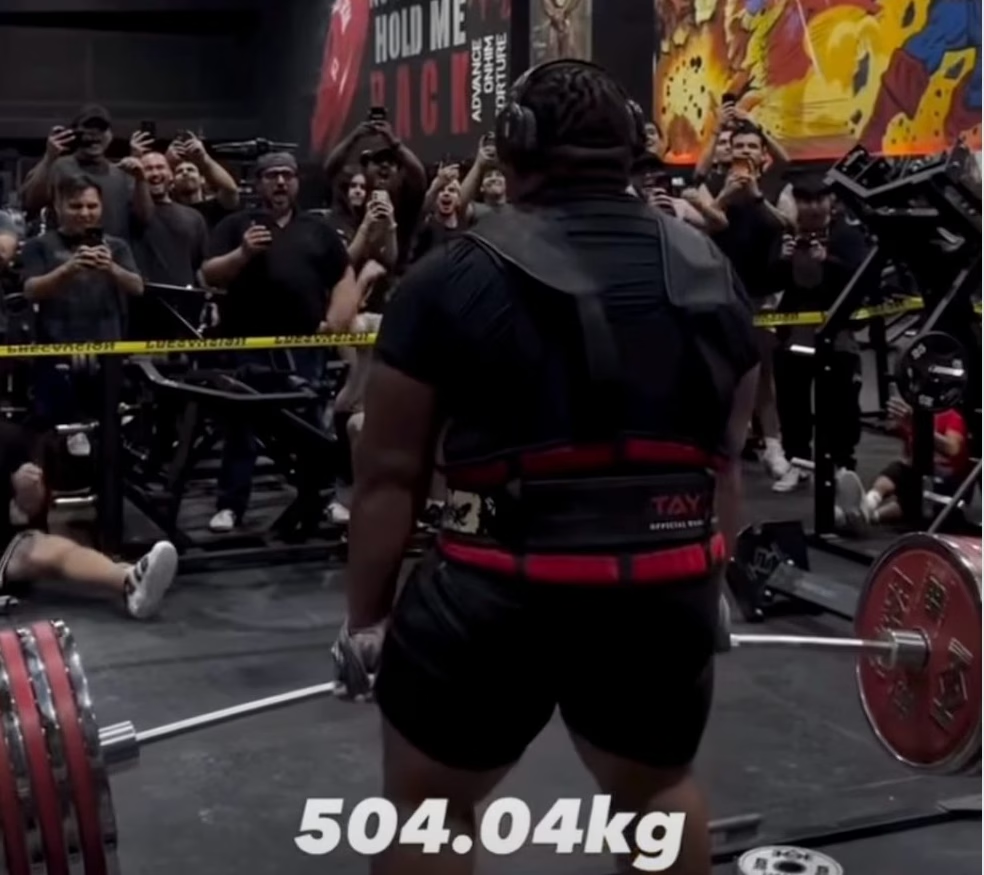
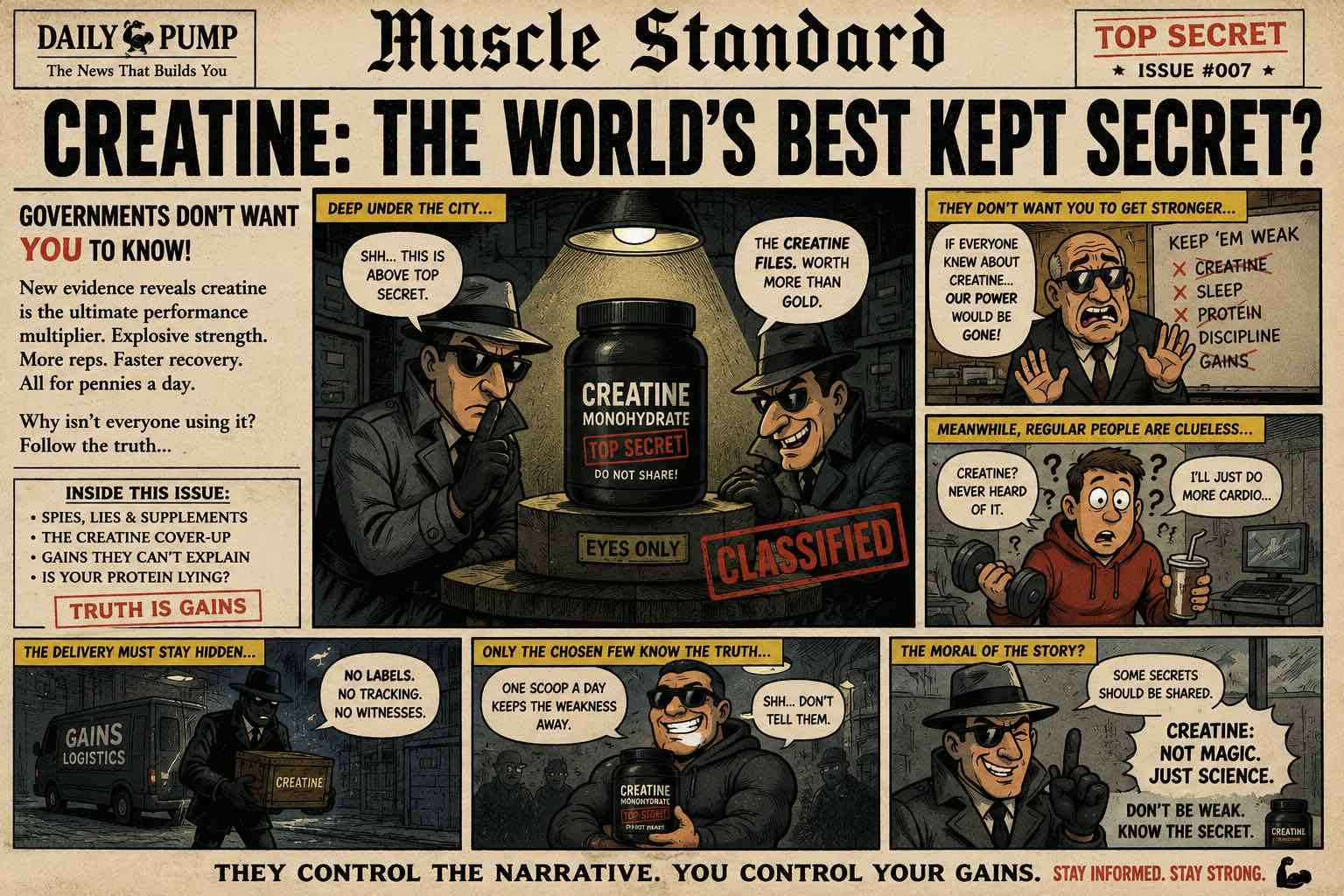
Creatine did not arrive like protein powder. It arrived like a juicy rumour.
Before tubs of white powder dominated suburban supplement stores, creatine existed in whispers. Coaches talked quietly. Athletes denied using it. Journalists chased stories they could not quite prove.
In the months leading into the 1992 Barcelona Olympics, there were rumours floating through British sport about a legal substance helping sprinters and power athletes recover faster, hit harder and hold speed longer.
At the centre of it was a product called Ergomax C150.
Looking back now, it is hard to explain how strange the whole thing felt at the time. Modern sports nutrition did not really exist yet. There was no Instagram fitness economy. No bro-science podcasts. No TikTok teenagers dry-scooping pre-workout in a car park. Creatine landed in elite sport closer to how a Cold War technology leak might spread than a supplement launch.
One of the earliest newspaper reports described it as a potential “wonder pill” capable of keeping British athletes “one step ahead”. Another referred to it as athletes’ latest “elixir”. The tone was half excitement, half suspicion.
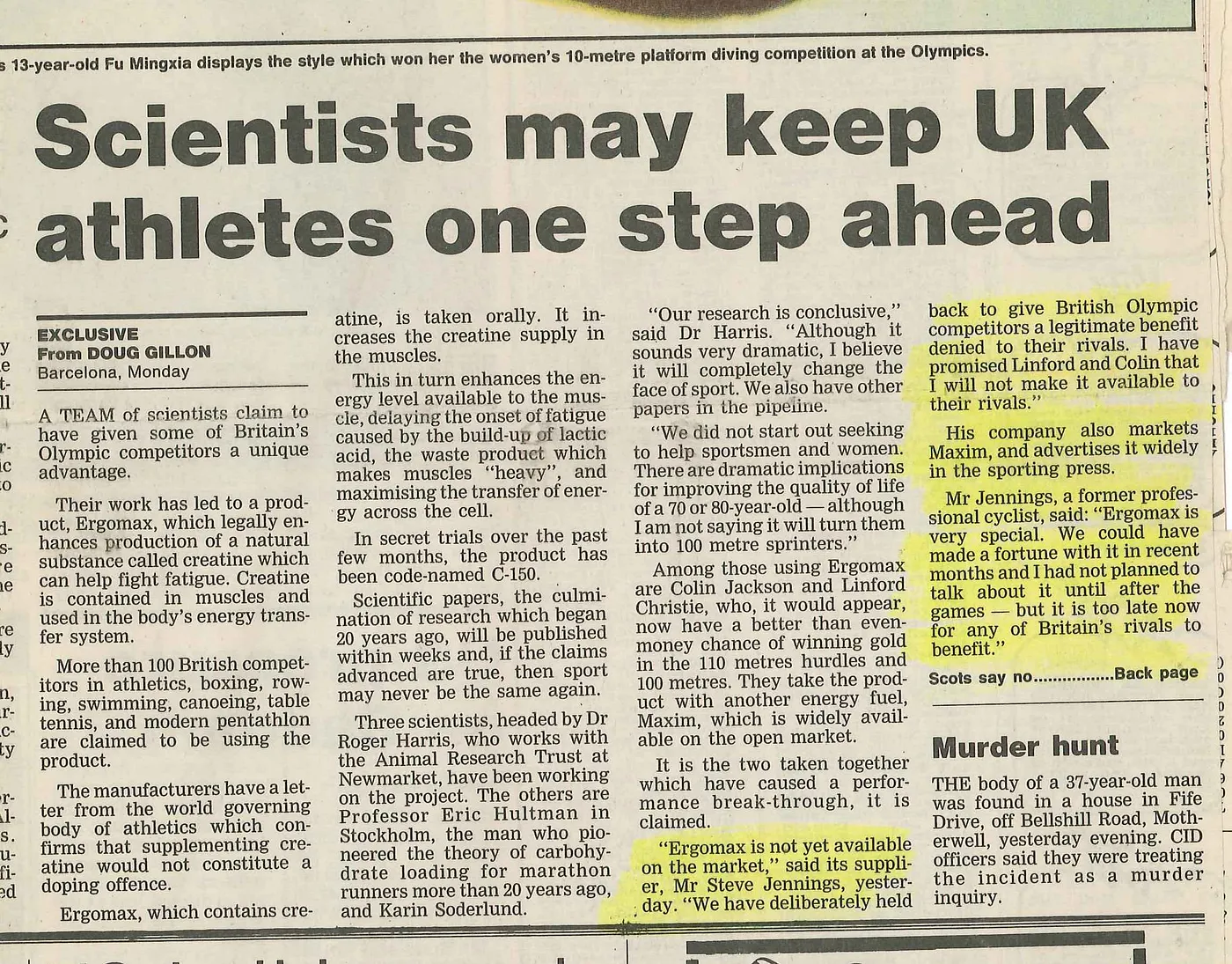
The science itself had come out of Europe. Swedish researcher Professor Eric Hultman and British physiologist Dr Roger Harris had been studying how creatine affected muscular energy production, particularly in explosive sports. Their work showed that supplementing with creatine monohydrate could increase phosphocreatine stores inside muscle tissue. In simple terms, athletes could regenerate energy faster during repeated high-intensity efforts.
That mattered enormously in sprinting, rowing, swimming and power events where fractions of a second separate medals from obscurity.
According to later accounts from Steve Jennings, the British sports nutrition entrepreneur who helped commercialise Ergomax, the early rollout was deliberately quiet. Meetings were held privately. Athletes were reportedly asked not to speak publicly about using it before the Games. Jennings would later describe it as “truth stranger than fiction” territory.
Then Barcelona happened.
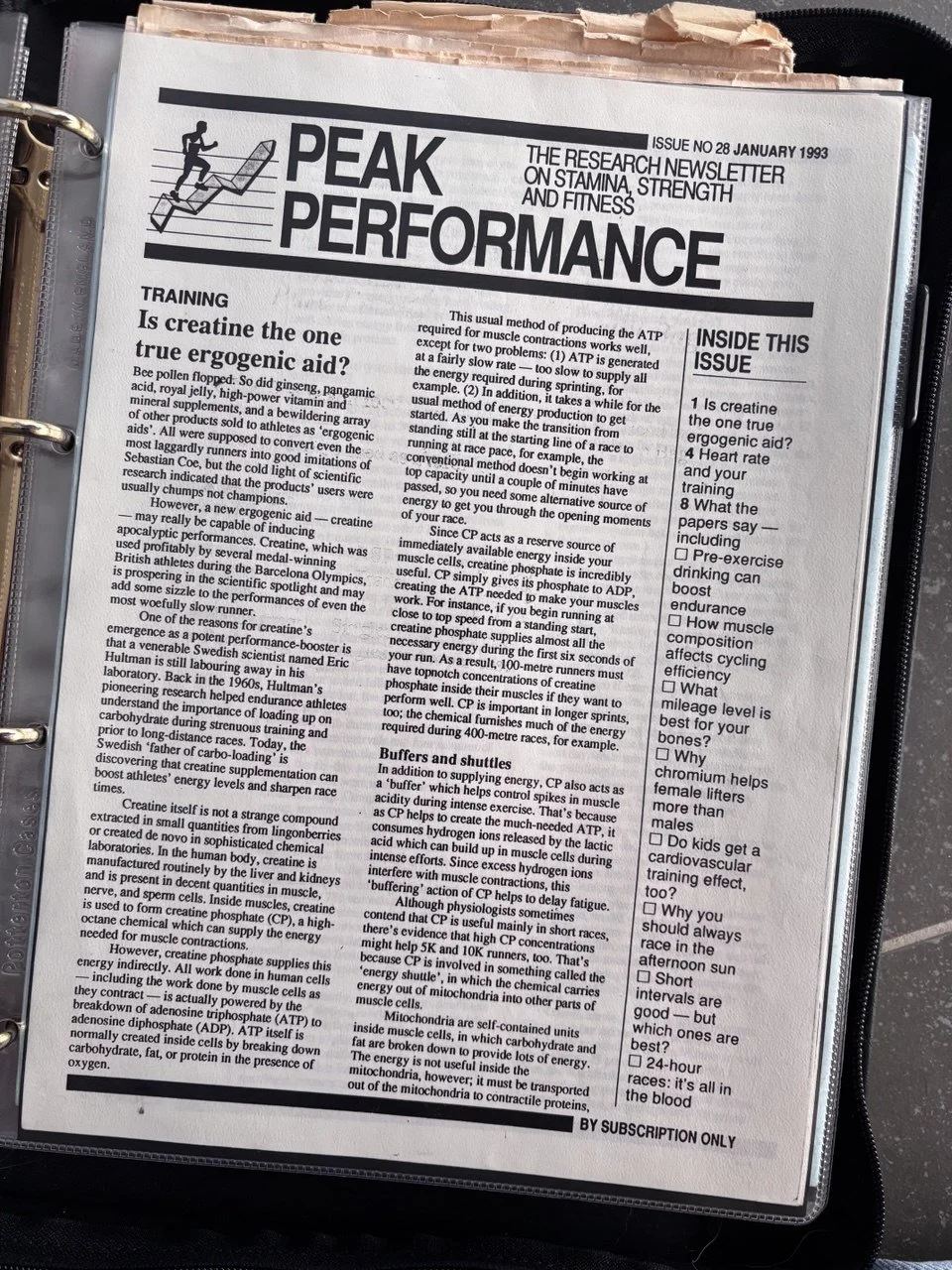
British athletes exploded onto the Olympic stage. Linford Christie won gold in the 100 metres. Sally Gunnell dominated the hurdles. Across sprint and power sports, rumours intensified that something new was happening behind the scenes. The Glasgow Herald ran a front-page exclusive suggesting British athletes had gained a legal edge through creatine supplementation. One line from the coverage captured the mood of the moment perfectly:
“We have deliberately held back to give British Olympic competitors a legitimate benefit denied to their rivals.”
You could never print that line today without triggering a week-long ethics debate and six anti-doping panels.
But creatine occupied an unusual space. It was not anabolic steroids. It was not blood doping. It was not chemically altering hormones. Creatine already existed naturally inside the human body and in foods like red meat and fish. Researchers argued supplementation simply increased the body’s available fuel reserve for explosive muscular work. That distinction became the entire argument.
Critics saw a slippery slope toward pharmacological enhancement. Supporters argued it was no different to carbohydrate loading or electrolyte drinks. One sports scientist quoted at the time called it a “sinister development”. Others insisted there was no evidence of harm and no breach of anti-doping rules.Meanwhile athletes kept winning.
Within a few years creatine moved from secret weapon to standard practice. By the Atlanta Olympics in 1996, estimates suggested the majority of athletes in explosive events were using it in some form. What had once been whispered about inside Olympic villages was now sitting openly in supplement shops.
The irony is that the original claims now look almost conservative.
Three decades later, creatine is one of the most studied sports supplements in existence. Research consistently shows benefits for strength, repeated sprint performance, muscular power and lean mass gains. More recently, scientists have begun examining possible cognitive and neurological benefits too, particularly around ageing, fatigue and brain energy metabolism.
The “wonder pill” never turned out to be magic. But it also never disappeared.
That alone says something. Most supplements arrive with noise and vanish quietly a few years later after the claims collapse under scrutiny. Creatine survived because the science largely held up. Beneath all the hysteria of Barcelona, the tabloid headlines and the secrecy, there was a real physiological effect sitting underneath it all.
Which is probably why every generation rediscovers it. A teenager taking creatine before football training today likely has no idea the supplement once caused Olympic-level panic, newspaper exclusives and accusations of scientific gamesmanship. To them it is just part of the furniture. Another scoop in the shaker bottle.
But for a brief moment in the early 1990s, creatine looked less like a supplement and more like the future arriving early.