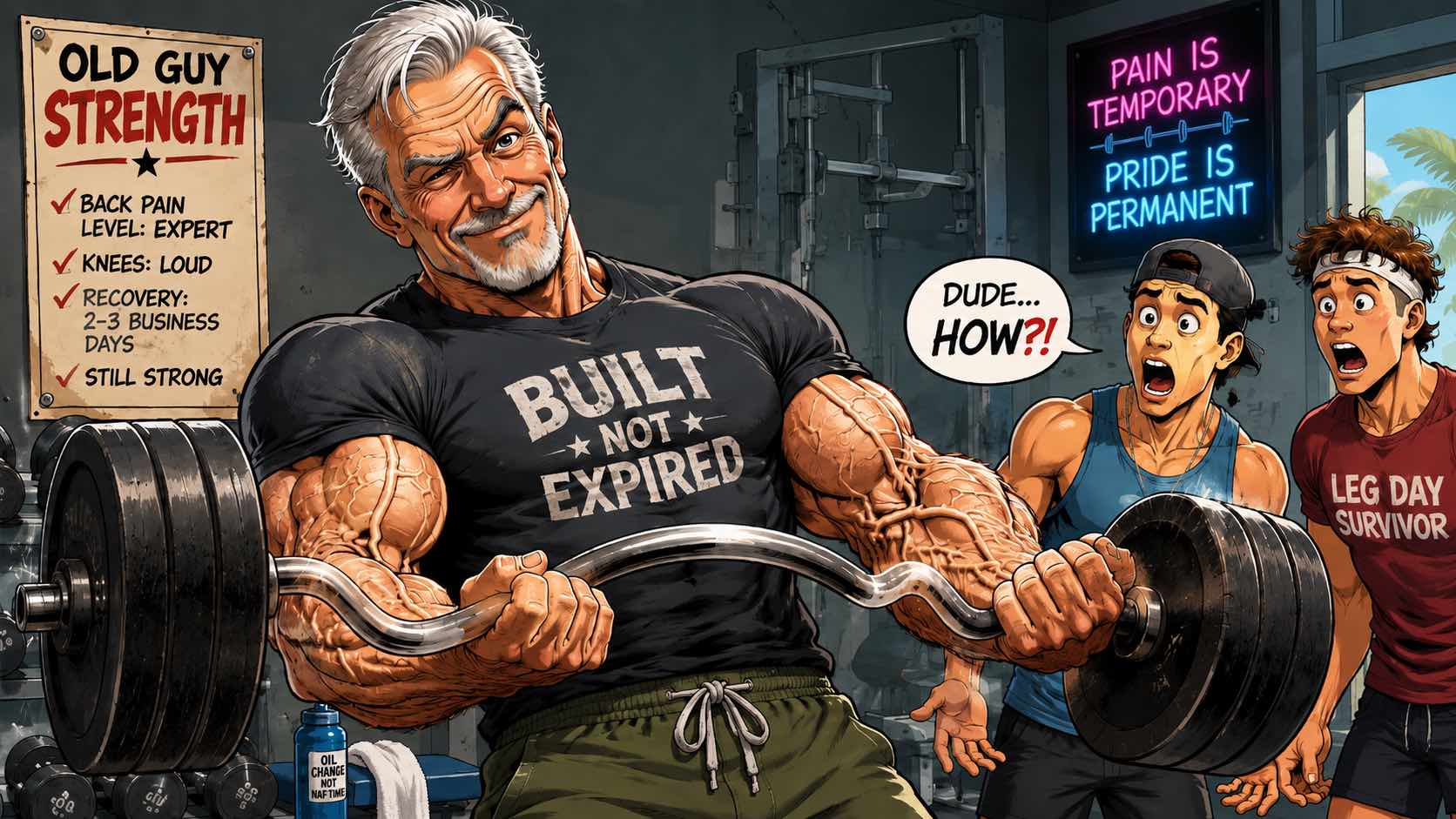

Old-Man Strength: The Key Points
- Old-man strength exists, but it comes from years of experience and physical skill, not age alone.
- Older men often develop practical strength through decades of work, lifting and varied physical tasks.
- This builds efficient movement patterns and strengthens muscles, tendons and grip over time.
- The real secret is consistency. Staying active helps prevent the loss of strength as you age.
- Strength eventually declines, but lifelong training can preserve far more of it than most men realise.
Ever watched your grandad wrench the lid off a jar that has defeated every other male in the house and thought, Jesus, the old fucker’s strong?
Or seen a 60-year-old tradie trudge up a hill carrying two 20 kg bags of concrete while you become mildly breathless looking for your AirPods?
Then there’s former strongman Mark Felix. At 57, Felix became the oldest man ever to compete at the World’s Strongest Man. He was particularly famous for a grip that appeared capable of crushing coal into diamonds. This is old-man strength in action. So, is old-man strength real?
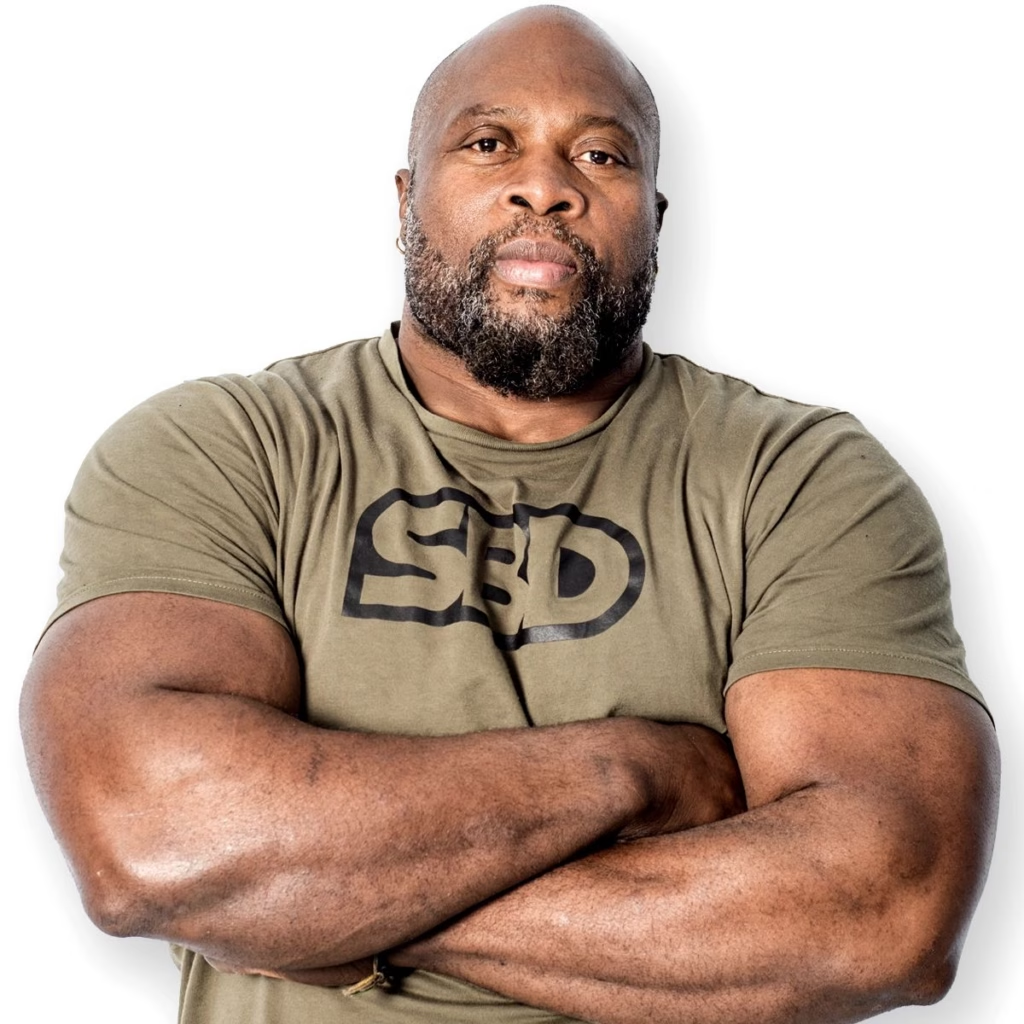
Sort of. Age itself doesn’t make you stronger, any more than grey hair improves your deadlift. In fact, ageing gradually strips away muscle, speed and power. But strength is more than the amount of meat hanging from your skeleton. It is also skill, leverage, connective tissue, nervous-system efficiency and thousands of hours spent picking up heavy, awkward things. Old-man strength isn’t strength created by age. It’s strength that has survived it and he’s how to start building it now.
Strength Is a Skill
When a younger bloke tries to move a refrigerator, he often attacks it like a Labrador encountering a screen door: plenty of enthusiasm, no obvious plan.
The older bloke gets his hips close, braces properly, finds the balance point and uses the edge of the doorway as leverage. He may not possess more raw horsepower, but considerably less of it is being wasted.
Every physical task teaches the nervous system how to recruit and coordinate muscle. After several decades of lifting, carrying, digging, building or training, the body becomes very good at producing force in familiar planes and angles. If you’ve pushed a barrow for 40 years, you’d undoubtedly be good at it.
This is why an experienced lifter can feel far stronger than a muscular beginner. The beginner may own the necessary muscle, but the instructions are still in the box.

Forty Years of Accidental Training
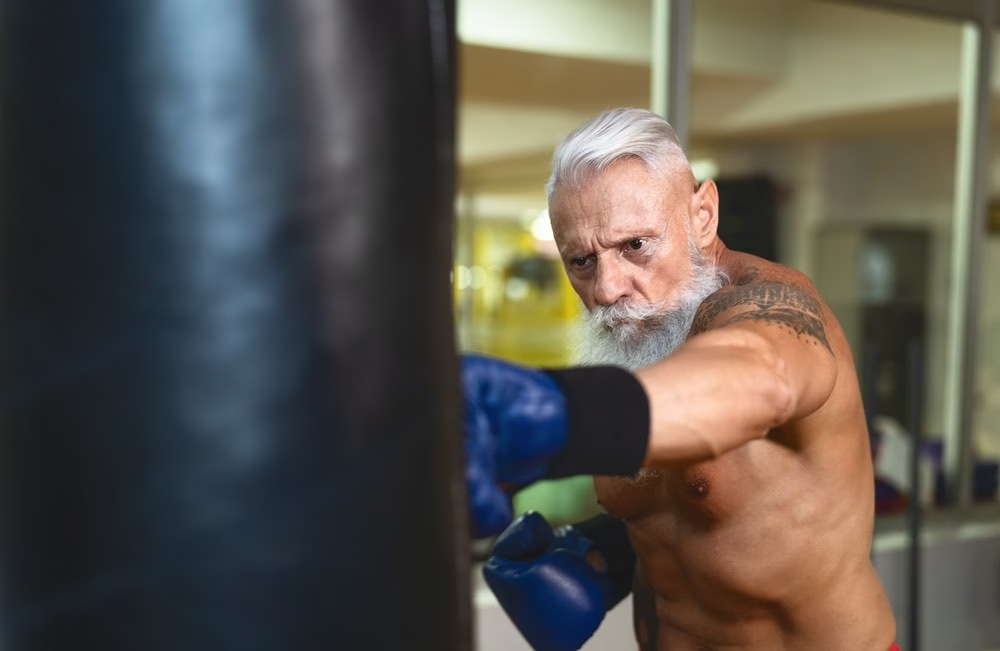
Old-man strength is particularly common among tradies, farmers, mechanics and men who grew up before “functional fitness” required a monthly direct debit.
A bricklayer doesn’t perform three neat sets of ten. He picks things up all day. A farmer carries, pulls, drags and wrestles objects that have never heard of ergonomics. A mechanic develops extraordinary hand and forearm strength because almost everything he touches is either stuck, oily or positioned somewhere no human arm was designed to reach.
Multiply that work by five days a week and several decades and you have an enormous training history, even if the man involved has never owned activewear or been near a gym.
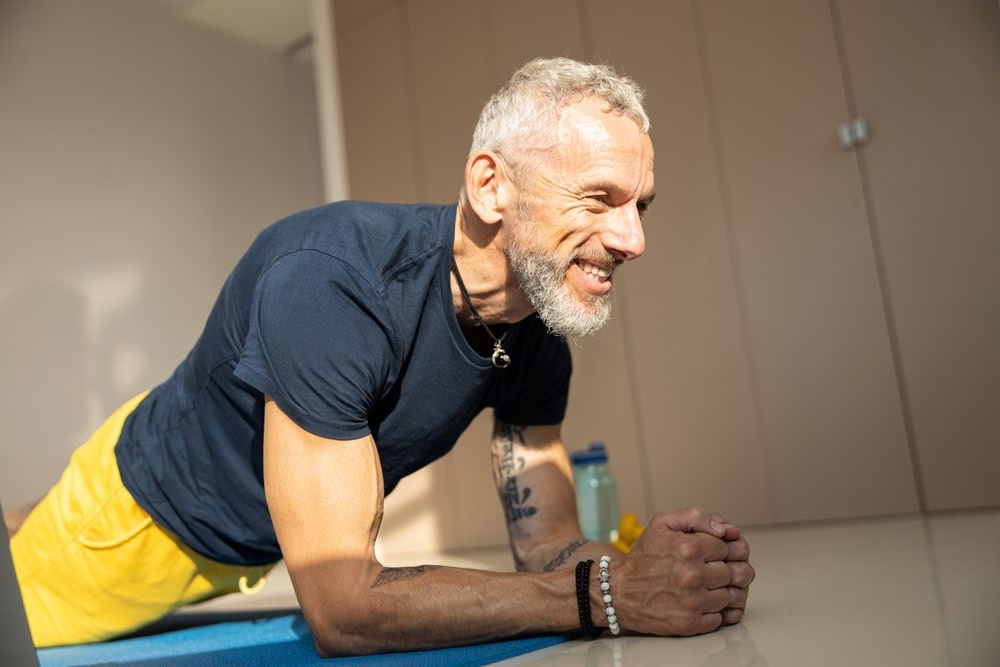
The adaptations are also highly specific. Your uncle may not bench 100 kg, but he can carry an Esky, six folding chairs and half a campsite from the car in one trip because making two trips would violate his core beliefs.
Why Is It Always the Grip?
The handshake is often the first warning. You offer your hand to an older tradie and briefly wonder whether you’ll be getting it back. This isn’t necessarily an attempt to establish dominance. His default grip setting may simply be “rusted bolt”.
Hands and forearms respond to repeated loading just like other muscles. Decades spent gripping tools, carrying materials and holding awkward objects can produce extremely specific strength and endurance.
Mark Felix is the extreme example. Known as “The Miracle Man”, he became a legend in strongman events involving grip and static holds, while continuing to compete at the highest level into his late 50s. He wasn’t strong because he was older. He remained strong because he had spent decades training qualities that ageing had not yet managed to take from him.
Strength Hangs Around Longer Than Speed
Here is where the folklore meets some actual physiology. Both muscular strength and power decline with age, but power generally declines faster. Power is the ability to apply force quickly: sprinting, jumping, changing direction or catching yourself when you stumble. Maximum strength is simply how much force you can produce, regardless of whether it takes a moment to arrive.
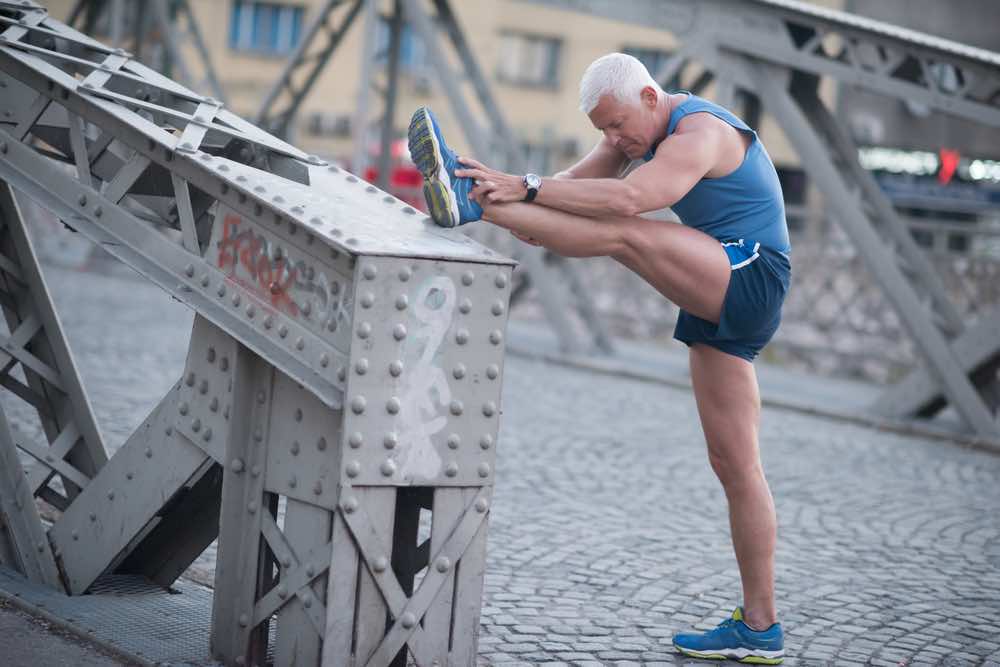
That helps explain why an older man might struggle to beat you over 20 metres but can still pin you during an ill-advised family wrestling match.
Research consistently finds that ageing affects power more severely than basic strength. Muscle loss is part of the reason, along with changes to fast-twitch muscle fibres and the nervous system. Resistance training, however, can preserve and rebuild a meaningful amount of both. In other words, the machinery is older and takes longer to start, but it can still tow the trailer.
None of this means ageing is secretly performance-enhancing. It isn’t. After 60, warming up can take longer than the actual workout, and getting off the sofa may produce noises once heard only in professional tennis. But a lifetime of training gives age something substantial to work with.
Tendons Remember the Work Too
Muscles aren’t acting alone. Tendons transfer muscular force to the skeleton, and years of sensible loading can strengthen the entire muscle-tendon system.
Ageing and inactivity can reduce tendon quality, but resistance training remains effective later in life. Studies have found that strength training can improve tendon properties in older adults, just as it improves muscular strength.
That doesn’t mean your 65-year-old Achilles tendon is indestructible. It means the body remains adaptable. The years matter, but so does what you do during them.
There’s Also Some Selection Bias
Before we declare every grandfather a dormant strongman, we should acknowledge the obvious: plenty of older men are not unusually strong.
We remember the wiry 68-year-old who carries a washing machine by himself. We don’t construct folklore around the bloke who needs help opening a bottle of Gatorade.
The men displaying “old-man strength” are usually the survivors of decades of physical work or consistent training. They’ve retained more strength than their peers, then learned exactly how and where to apply it. Genetics help. Large hands help. Being built like a fire hydrant certainly helps. But the defining ingredient is usually an absurd accumulation of practice.
How to Become That Old Bloke
Old-man strength is built less by what you do this week than by what you keep doing. The strongest older men rarely found the perfect program. They simply kept training. Their history doesn’t contain a 20-year hole.
That doesn’t mean doing the same thing forever or training through every injury. It means never stopping, ever. Life will get in the way: kids, work, travel, but the trick is never stop. One day you’ll be old, and strong, and very thankful to your yonnger self.