
Everyone “knows” a silverback is 10 times stronger than a man. Some say 27. Nobody can show you the test, because there isn’t one.
Here’s what is actually known: how big silverbacks get, how much of that is muscle (from the few gorillas ever weighed piece by piece), what the bite research says, and our best real number for gorilla vs man. If you’ve read our chimp strength breakdown, this is its bigger, heavier cousin.
- “10 times stronger”: unproven. No study has measured gorilla strength against a human’s
- Silverback weight: about 135 to 180 kg in the wild. Zoo males can top 200 kg
- Muscle: dissected zoo males carried about 51 to 80 kg of muscle. The average man carries about 33 kg
- As a share of body weight: roughly 34 to 46% muscle, not far off a man’s 38%
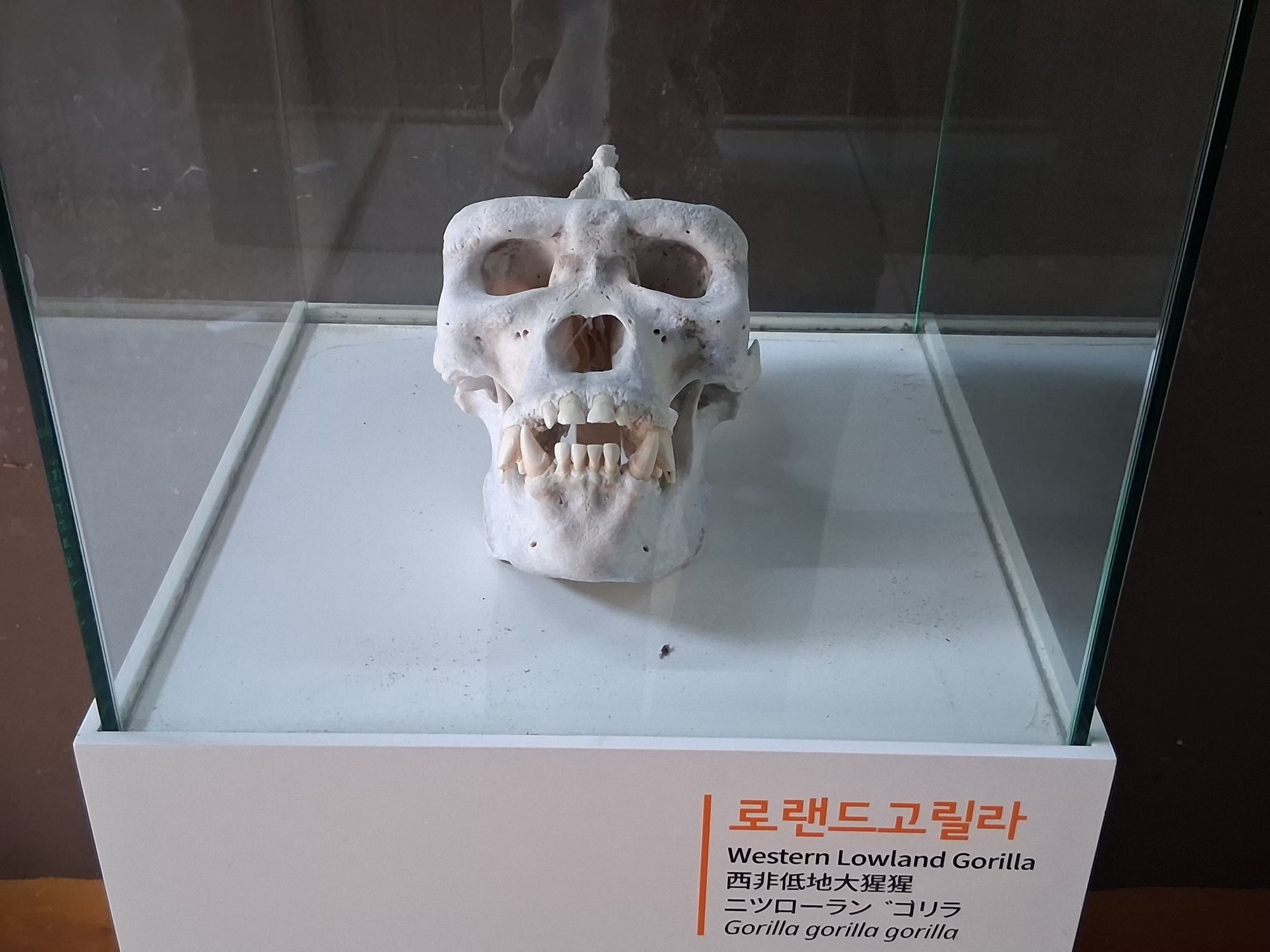
- Bite: skull models say a gorilla out-bites a human at the back teeth
- Our estimate: about two to three times an average man’s raw strength, based on muscle mass. Not 10
Where the “10 times stronger” myth came from
Nobody knows, and that’s the point. Berggorilla & Regenwald Direkthilfe, a German gorilla conservation group, puts it bluntly: “To date, no research has been conducted into how strong gorillas are compared to humans.” It notes that some people say a silverback is 10 times stronger than a man and others say 27 times, and that “neither argument has been proved” (Berggorilla).
The only real ape strength tests were done on chimps and orangutans, never gorillas. In the 1920s a researcher at the Bronx Zoo had chimps pull on a dynamometer and got huge numbers (one chimp, Suzette, pulled 1,260 pounds). According to Slate, that is probably where the “five to eight times stronger” legend started. Later, better-controlled work cut that right down. A 2017 PNAS study, using muscle samples and computer models, estimated chimp muscle produces about 1.35 times the force of human muscle the same size (O’Neill et al., PNAS). That study tested chimps, not gorillas.
Our read: the gorilla numbers you see online, the 10x, the “can lift 2,000 pounds”, look like the old chimp hype scaled up to gorilla size. We couldn’t find a single study behind any of them.
How big is a silverback?
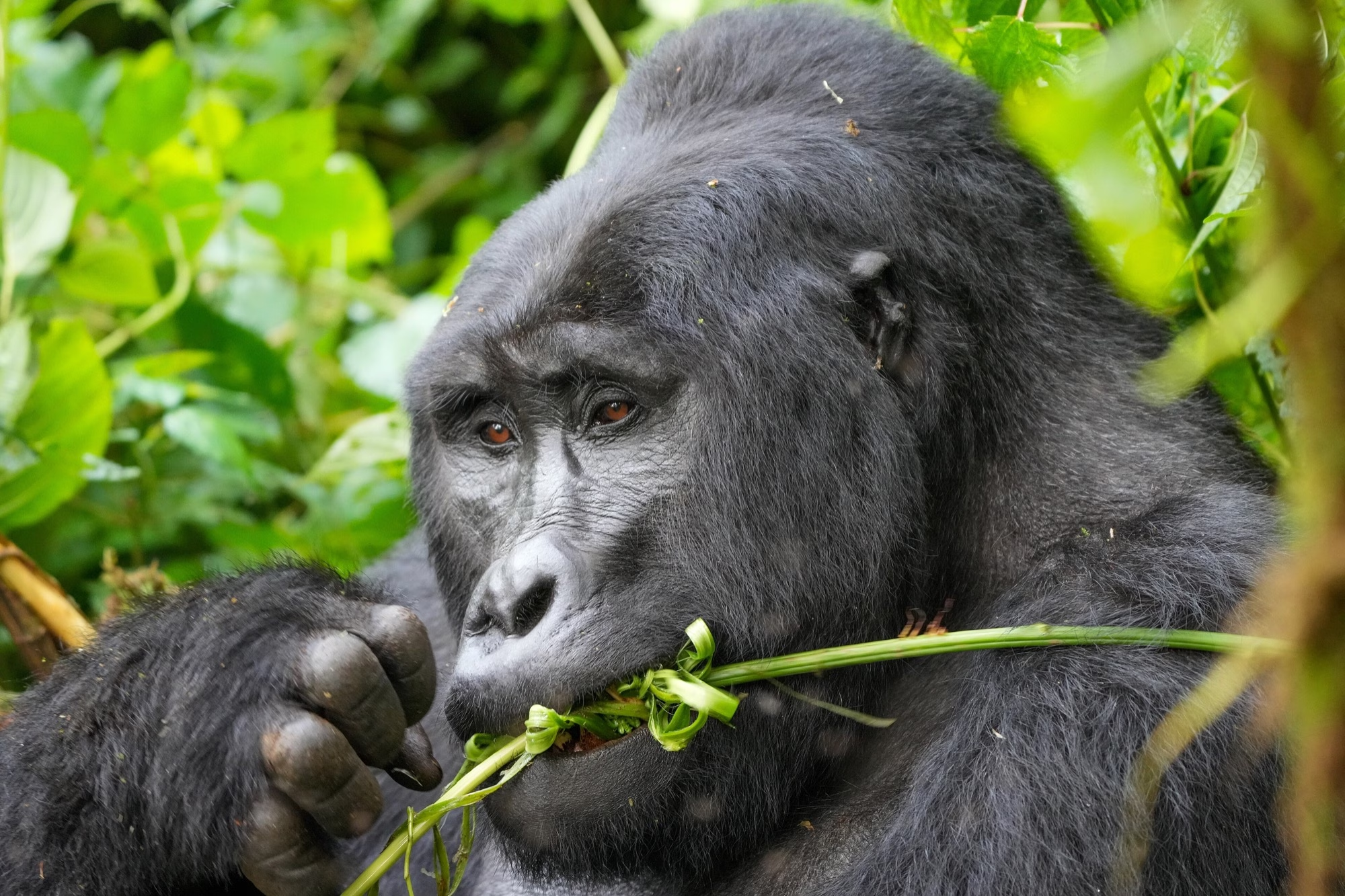
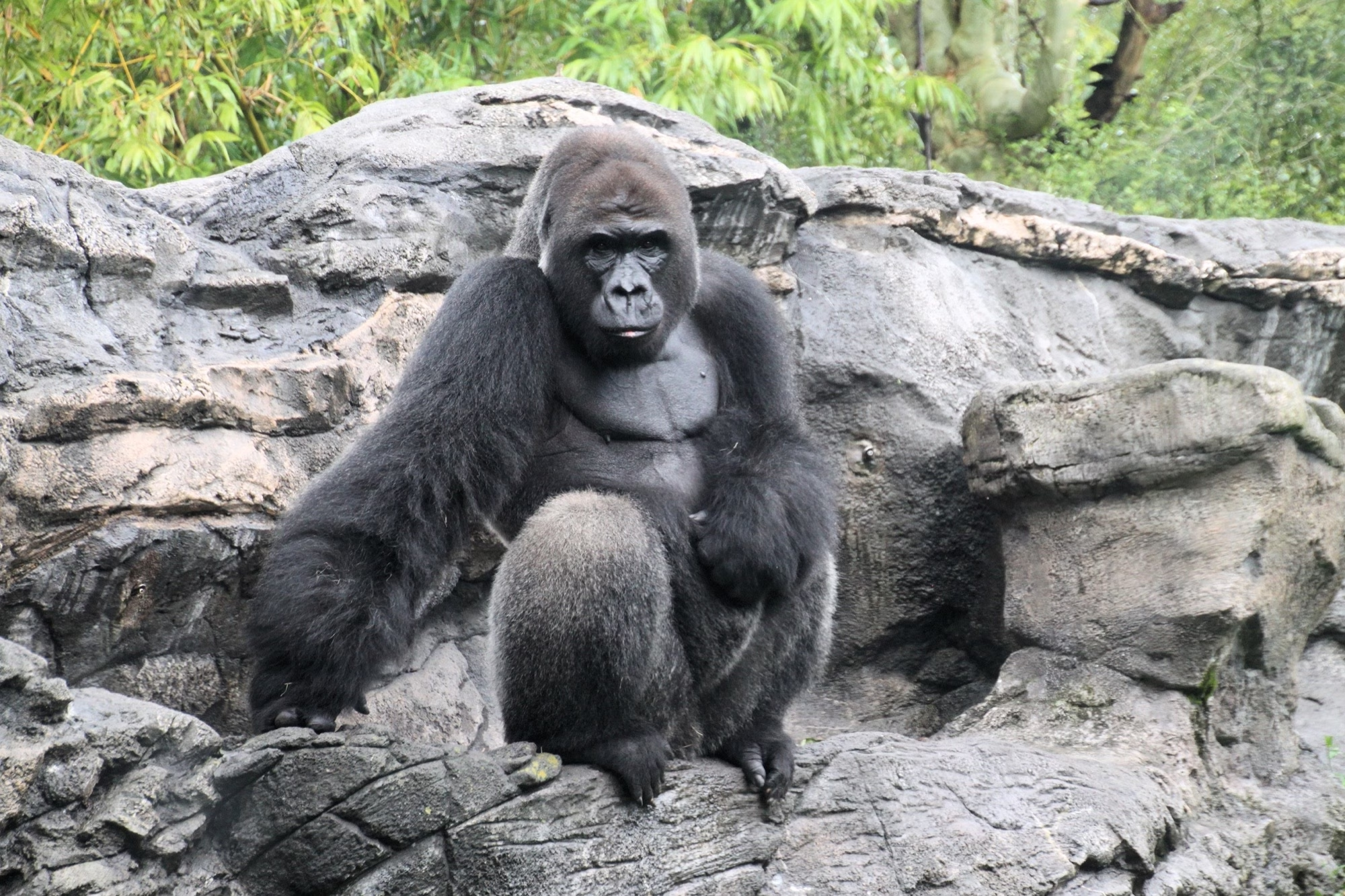
A silverback is a mature adult male, named for the saddle of white hair across his lower back. He leads the group, and in encounters between males, size is thought to play a big part in who wins (Smithsonian’s National Zoo).
- Weight in the wild: about 135 to 180 kg. San Diego Zoo Wildlife Alliance gives 136 to 181 kg for male western lowland gorillas. Berggorilla gives mean weights of 140 to 160 kg for western males, 150 to 160 kg for mountain gorillas and 160 to 180 kg for Grauer’s gorillas, and says wild gorillas over 200 kg are rare.
- At the top end: Toronto Zoo gives western lowland males 135 to 220 kg, and the Smithsonian says up to 227 kg. Of the five zoo males dissected in one study, the heaviest weighed 209 kg.
- Height standing upright: about 1.7 m, up to about 1.8 m.
- Arm span: about 2.25 to 2.4 m. Sources differ: Berggorilla gives 2.25 m for male mountain gorillas, the Smithsonian 2.4 m for western lowland males.
So picture a man of about your height, roughly twice your weight, with arms longer than his legs. That’s before you count any muscle.
How much of a gorilla is muscle?
This is the closest thing to hard data. In 2011, anthropologist Adrienne Zihlman and colleagues at the University of California, Santa Cruz published whole-body dissections of five adult male western lowland gorillas from zoos, weighing every muscle, bone and piece of skin (Zihlman et al., Anatomical Record).
- The males weighed 148 to 209 kg.
- The fittest one, a 27-year-old described as “the youngest, leanest and most muscular” and “in the prime of life”, weighed 172 kg and carried almost 80 kg of muscle: 46.4% of his body weight, with body fat of about 7 to 8%.
- The others came in at roughly 34 to 39% muscle, about 51 to 76 kg of it.
- The surprise: gorillas had less muscle in their forelimbs than their hind limbs. The famous arms aren’t where most of the meat is.
Now compare a man. An MRI study of 468 adults found men average 33 kg of skeletal muscle, or 38.4% of body weight (Janssen et al., Journal of Applied Physiology). So as a share of body weight, a gorilla is built a lot like you. Berggorilla makes the same point: a male gorilla “probably looks much stronger than he actually is, as he doesn’t have that much more muscle tissue than humans”. He just has a lot more body.
Gorilla vs man: the real number
Put the two together. Those zoo silverbacks carried between about 1.5 and 2.4 times the muscle of an average man. Nobody has tested whether gorilla muscle is stronger kilo for kilo. Chimp muscle is about 1.35 times stronger than ours, and chimps are the gorilla’s close relatives, but that’s a borrowed number.
Our read: a prime silverback is probably somewhere around two to three times as strong as an average man in raw terms, maybe a little more in pulling and gripping. Against a trained heavyweight strongman, the gap shrinks a lot. Pound for pound, a fit man may not be far behind. Ten times? Not on any evidence that exists.
| Measure | Silverback vs man |
|---|---|
| Body weight (wild male) | About 135 to 180 kg |
| Muscle mass (zoo males) | About 51 to 80 kg vs 33 kg |
| Muscle as % of body weight | About 34 to 46% vs 38.4% |
| Arm span | About 2.25 to 2.4 m |
| Measured strength test | None exists |
| Our estimate | 2x to 3x an average man |
| The internet claim | 10x to 27x: unproven |
For context on what the strongest humans can do, see who is the strongest man in the world. And if you want to know where you stand, grip is a good start: here’s the 10-second grip test that says a lot about how you’re ageing.
How strong is a gorilla’s bite?
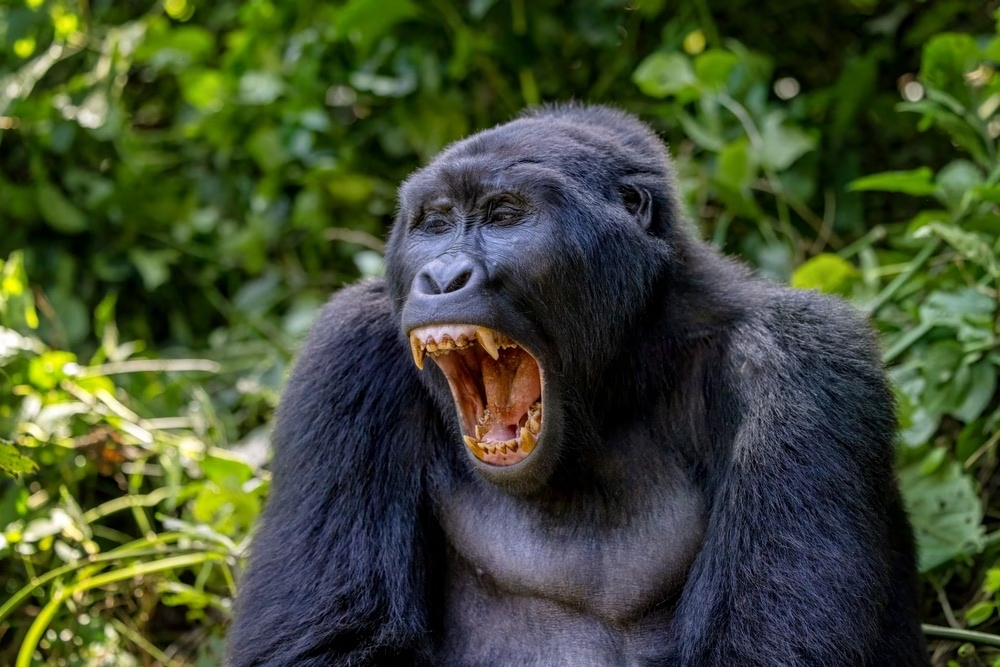
Stronger than yours, but again nobody has put a meter in a live gorilla’s mouth. In 2010 a team led by Stephen Wroe at the University of New South Wales built computer models from CT scans of primate skulls, including a gorilla, and crash-tested them digitally (Wroe et al., Proceedings of the Royal Society B).
The human back molars came out at about 1,100 to 1,300 newtons, “lagging behind the gorilla, chimp and Paranthropus”, as National Geographic reported it. The twist: scaled to the same size, the human jaw was the more efficient design. The gorilla wins on sheer size. All the modern skulls in the study were female, the human one included, so a silverback would likely bite harder still (and so would you).
What about the “1,300 psi” gorilla bite you see everywhere? We couldn’t find a study behind it, and psi measures pressure, not bite force, so treat it as internet folklore.
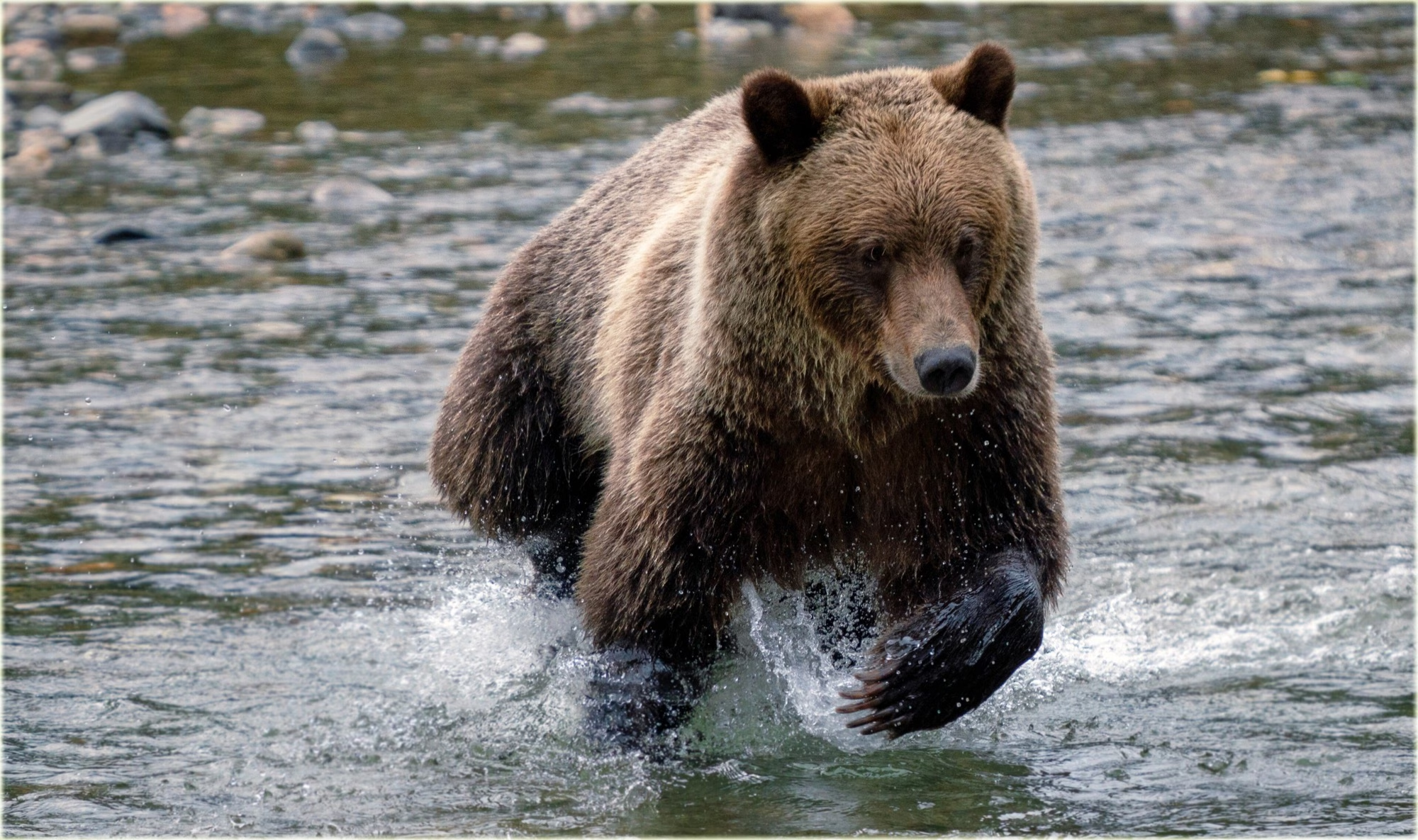
And against a bear? Joe Rogan and friends argued it out, so we checked their claims: grizzly vs gorilla.
Could a man beat a gorilla?
Our read: no, and the strength number barely matters. A silverback is roughly twice your weight, with an arm span of more than two metres and a bite built around big canines. Even a young gorilla is a handful: Berggorilla notes that “even a four-year-old gorilla is difficult for a single person to control”. Two or three times your strength is plenty.
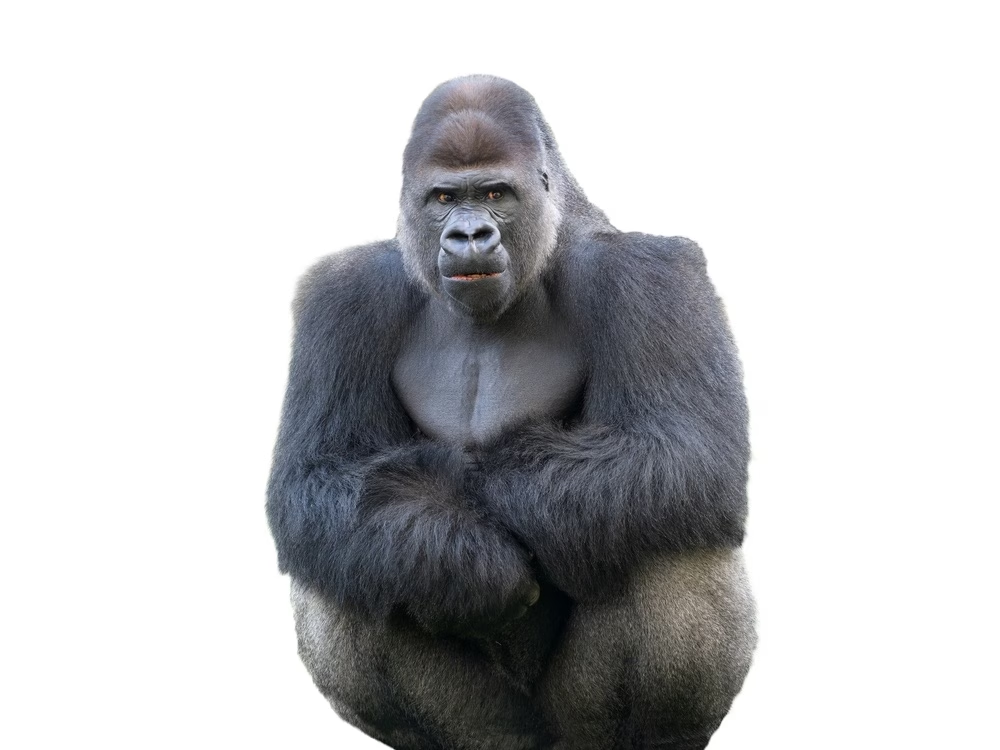
Our take: the myth gets the numbers wrong and the outcome right, exactly like the chimp one. Read how chimps compare, and the story of the MMA fighter who said he’d fight a chimp.
How strong is a gorilla? FAQ
Is a gorilla 10 times stronger than a man?
There’s no evidence for it. No study has measured gorilla strength against human strength. Based on muscle mass from dissections, our estimate is about two to three times an average man.
How much can a gorilla lift?
Nobody knows. Figures like 1,800 or even 4,000 pounds circulate online, but we found no measurement behind any of them.
How much does a silverback gorilla weigh?
About 135 to 180 kg in the wild, where gorillas over 200 kg are rare. The heaviest zoo male in one dissection study weighed 209 kg.
How strong is a gorilla’s bite?
Stronger than a human’s, which skull modelling put at about 1,100 to 1,300 newtons at the back teeth (from a female skull). There’s no live measurement from a gorilla.
Is a gorilla stronger than a chimp?
Our read: in raw strength, almost certainly, because a silverback is several times heavier. Kilo for kilo, nobody has compared them.
Sources: Berggorilla & Regenwald Direkthilfe (strength, size); San Diego Zoo Wildlife Alliance; Smithsonian’s National Zoo; Toronto Zoo; Zihlman, McFarland and Underwood, Anatomical Record 2011; Janssen et al., Journal of Applied Physiology 2000; Wroe et al., Proceedings of the Royal Society B 2010; O’Neill et al., PNAS 2017.