
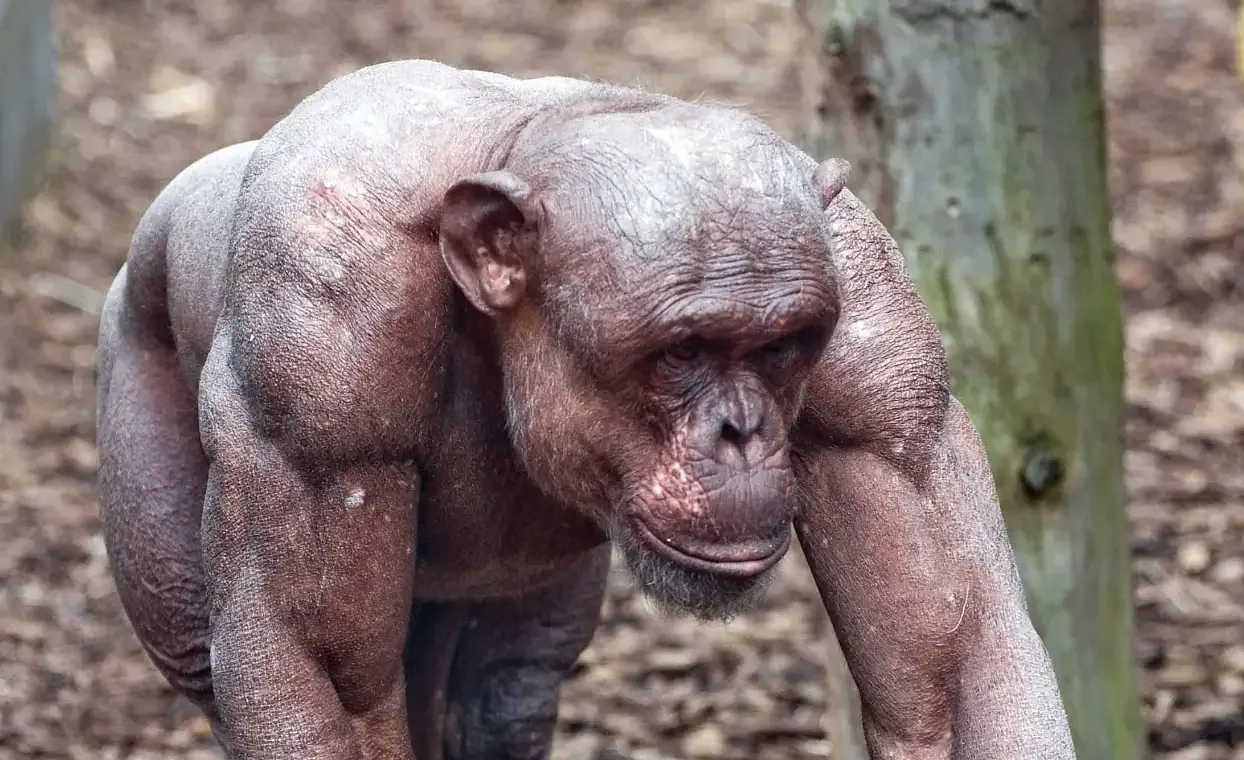

Cole Johnston, an MMA fighter, says he is going to fight a chimpanzee in four days. There is apparently a date, possibly a pay-per-view event and plenty of online excitement. What there does not appear to be is the sort of information normally attached to a real fight: a confirmed venue, a sanctioned promotion, a confirmed opponent, or a credible explanation of how a great ape has somehow been booked to compete in a combat-sports event.
That absence may be the point. The chimp fight is not necessarily a sporting event waiting to happen. It may be an attention event waiting to be monetised.
The Claim
Cole “Wavy” Johnson is a 24-year-old New Zealand amateur MMA fighter with exactly one professional result, a win over Harlem Frost at SFC: Legacy Lives On last December. He says he’ll fight a chimpanzee on 11 September, reportedly on pay-per-view, at a location he won’t name: “a country that I can’t speak about.”

By his own account, this started as a bit. “I just made that original video as a joke,” he’s said. Then the DMs arrived. “All of a sudden, all of these people are in my DMs like, ‘We’ll give you $500,000.’” He says he took one of those offers. He’s also mentioned falling out with at least one promoter along the way, and claims he’s since been offered a follow-up fight against a polar bear, with a sword.
None of that is the profile of a confirmed sporting event. It’s the profile of a joke that got expensive to walk back.
Is it Going to Happen
No sanctioning body has been named. No zoo, sanctuary or animal handler has confirmed supplying an actual chimpanzee. Johnson has described conditions, the animal keeping its teeth and claws, staff on standby with tranquilisers, the fight held on grass or in a large enclosure, running “until he’s winning” and darted if it turns fatal, but a description of terms isn’t a booked event. A countdown timer on a promotional page proves someone built a countdown timer. It doesn’t prove a chimpanzee is coming. Treat every part of this as a claim, not a confirmed fact, because right now that’s all it is.
Chimpanzees don’t fight like MMA opponents

Anyone who’s been to a zoo seems to want to jump online and give their .02 worth about how ol’ mate Wavvy is about to get his face and and ball bitten off. Set aside for a second whether this happens. The premise doesn’t survive contact with how a real chimpanzee actually behaves.

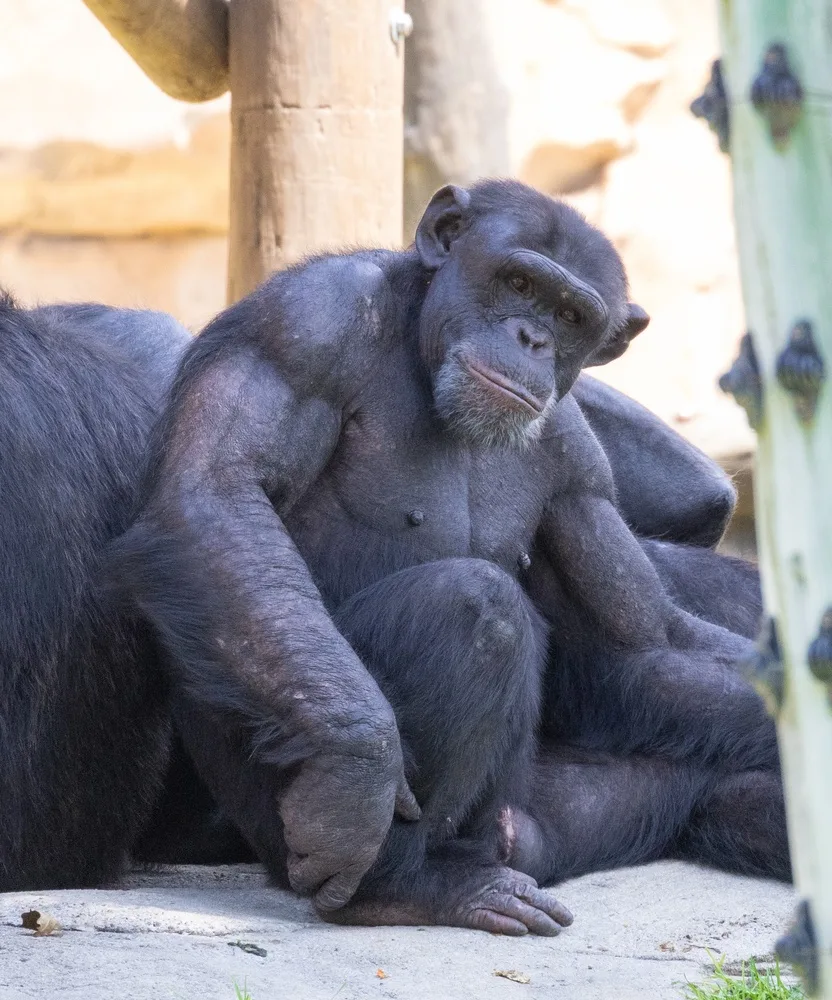
An MMA opponent moves in recognisable human patterns, understands the rules, can tap out, can be stopped by a referee, and isn’t trying to disable your hands, face or genitals as a primary strategy. A chimpanzee shares none of that. It doesn’t enter a cage intending to exchange clean strikes or accept a submission when a joint is under pressure. A chimpanzee attack is a close-range mauling, not a bout, and it’s built around long piercing teeth, massive grip strength and explosive, unpredictable movement with zero sporting convention behind any of it.
The moment you ban the behaviours that make a chimpanzee genuinely dangerous, you’re no longer testing a chimpanzee. The moment you allow them, you’re no longer running a sport. Johnson’s own plan, quoted above, allows the teeth and the claws. That’s the whole problem in one sentence.
The strength myth, corrected
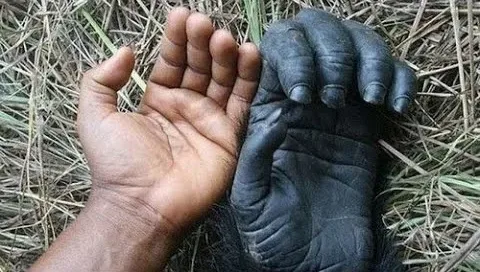
The “chimps are five times stronger than a man” line gets repeated constantly online, and it’s wrong, or at least wildly overstated. A 2017 study on chimpanzee muscle found that chimpanzee muscle produces roughly 1.35 times the maximum dynamic force and power of comparable human muscle, not five times anything. The gap traces back to fibre type: chimpanzees carry a far higher proportion of fast-twitch fibres, built for explosive climbing and swinging, while humans evolved toward slow-twitch endurance capacity suited to sustained movement rather than short bursts of raw power.
Here’s the catch: correcting the number doesn’t make the fight sensible. A 1.35x muscle-force advantage, applied through teeth, four-limb grip and total disregard for the rules of engagement, isn’t a fair fight with slightly better odds for the chimp. It’s still not a fight at all. Viral strength claims rarely survive proper scrutiny, and this one doesn’t either, it’s just wrong in the opposite direction than people assume.
The animal nobody asked
This is the part the internet keeps treating as a punchline, and it shouldn’t. The Royal New Zealand SPCA is explicit: “the infliction of pain, distress, fear and/or suffering on any animal for sport or entertainment is unacceptable,” and activities where animals are “induced or trained to fight other animals or humans are intolerable and must not be permitted in society.” It’s not just a position statement, either. Under New Zealand’s Animal Welfare Act 1999, it’s an actual offence to keep, train or breed an animal for the purpose of having it participate in an animal fighting venture. The chimpanzee here isn’t a villain and isn’t a joke. It’s a real animal being discussed as though it already agreed to a contract it obviously can’t read.
Why men keep taking the bait
The actual reason this story exists has very little to do with primatology.
“Could you beat a chimpanzee?” is a masculinity test dressed up as a hypothetical. Refuse it and you look weak. Accept it and you look brave, right up until someone points out you’d be facing an animal that bites your balls, nose, cock. It’s the same shape as the “100 men versus a gorilla” argument that cycles through the internet every year or so: never really about zoology, always about status, and whether a man believes he can physically impose himself on something stronger than he is.
Johnson’s own quote after his one and only pro win captures the tone perfectly: “I 100% wholeheartedly believe that I could beat a chimpanzee in a brawl… and all that’s going to piss a lot of you guys off who don’t have a brain.” That’s not a training update. It’s a performance, aimed at an audience that rewards total confidence over actual competence, every time.
The business model underneath it
Whether Johnson genuinely means to go through with this or is deep into a bit that got away from him, the online system around the story doesn’t actually care which. Make an outrageous claim. Let people argue about whether it’s real. Let other accounts reshare it. Add a countdown. The uncertainty itself, “is this actually happening?”, is worth more in engagement than a straight announcement ever would be. A joke that gets enough attention eventually gets treated as a product, whether or not the person who made it originally meant to sell anything.
Why?
Strip away the countdown timer and the DM offers, and there are two honest outcomes here. If this is a stunt, it’s a genuinely useful one, a clean demonstration of how internet attention turns a dumb boast into a business. If it’s real, it shouldn’t happen, not because a chimpanzee would definitely win, but because nobody sensible puts a person and an unconsenting animal in a cage together to settle an argument that started as a joke.
Want more like this?
One email a week. The best new stories from Men’s Fitness Online, no fluff, unsubscribe anytime.
Sign up free