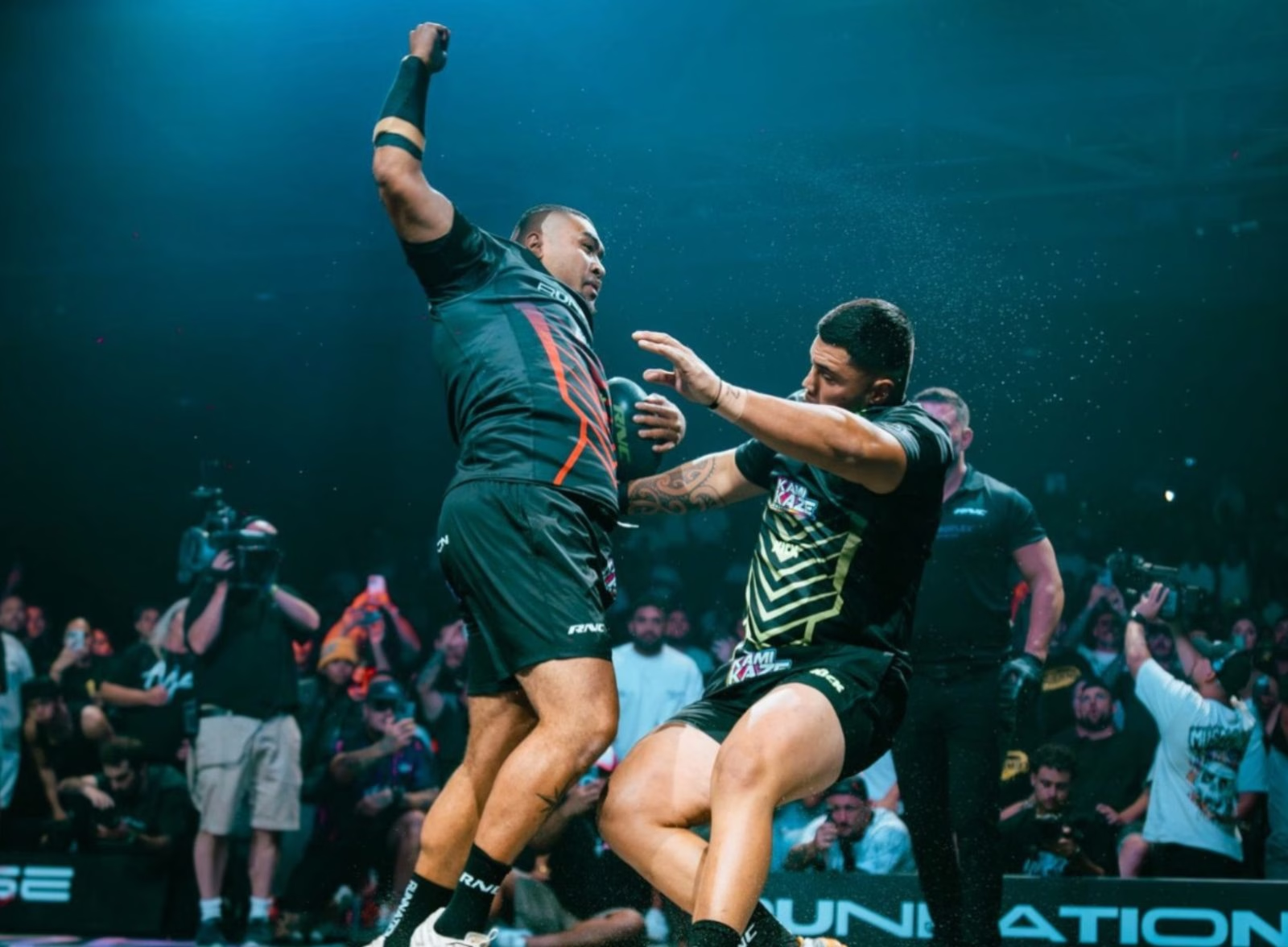

Run Nation Championship (RNC) — the made-up sport better known online as “run it straight” — is built on one idea: two men sprint at each other and collide, with points awarded for the hit and whatever happens next. Its founders call it “controlled chaos.” A Supreme Court judge just called it something simpler — a combat sport, the one thing Run Nation went to court insisting it wasn’t.
Co-founder Tremaine Fernandez took the NSW Combat Sports Authority to the Supreme Court seeking a declaration that RNC wasn’t a combat sport, after the Authority moved to shut the format down under the Combat Sports Act 2013. On 10 September, the judge found it “overwhelmingly clear” that hitting an opponent was the activity’s primary objective — and that no amount of relabelling the contact a “tackle” in RNC’s own rulebook changed what the sport actually is. Run Nation, the judgment noted, had been on notice of the Authority’s concerns since 29 May.
The ruling landed two days before Saturday’s RNC04 at Royal Randwick, where premium tickets reportedly ran as high as $999. That event is now postponed. Fernandez is adamant this isn’t the end: RNC “is here to stay,” he says, and will return later this year as a properly regulated combat sport, with ticket holders’ seats carrying over to the rescheduled date. It’s worth being precise here — nothing about the ruling bans the sport. It just refuses to let it operate as though a full-speed collision is something other than combat.
Combat Sport vs. Regular Sport: What’s the Legal Difference?
Under the NSW Combat Sports Act 2013, a combat sport is any sport, martial art or activity where the primary objective of each competitor is to strike, kick, hit, grapple with, throw or punch an opponent. That’s the entire legal test — not the equipment, not what the rulebook calls the contact, just what the competitor is actually trying to do to the other person.
Rugby, AFL and boxing all involve serious contact, but only one of those exists to make contact the point. In footy, a tackle is a means to stop a play; nobody wins by tackling harder, they win by scoring. In boxing, landing the hit is the entire contest.
That distinction is why combat sports carry their own regulatory layer. Promoters must be registered, contests need a permit from the Combat Sports Authority (CSA), and events run under rules built specifically around deliberate, sanctioned violence — not bolted onto a sport designed for something else.
Why This Story Writes Itself
You don’t need much editorialising for this one. A company builds a sport whose entire design brief is “hit the other man as hard as you can,” markets it as chaos, and sells tickets to watch it, and then argues with a straight face in the Supreme Court that none of that constitutes combat. That it lost is barely the twist — the twist is that the argument was made at all.
It’s also not a one-off. Around the same time an amateur MMA fighter was making headlines for claiming he’d fight a chimpanzee on pay-per-view — a different stunt, same underlying pattern: male bravado escalating into content, with the actual danger treated as a footnote to the spectacle. It’s the same pull that turned a regional Queensland town into an influencer boxing card off the back of a promoter’s follower count rather than anyone’s actual record. RNC just happens to be the version with a court transcript attached.

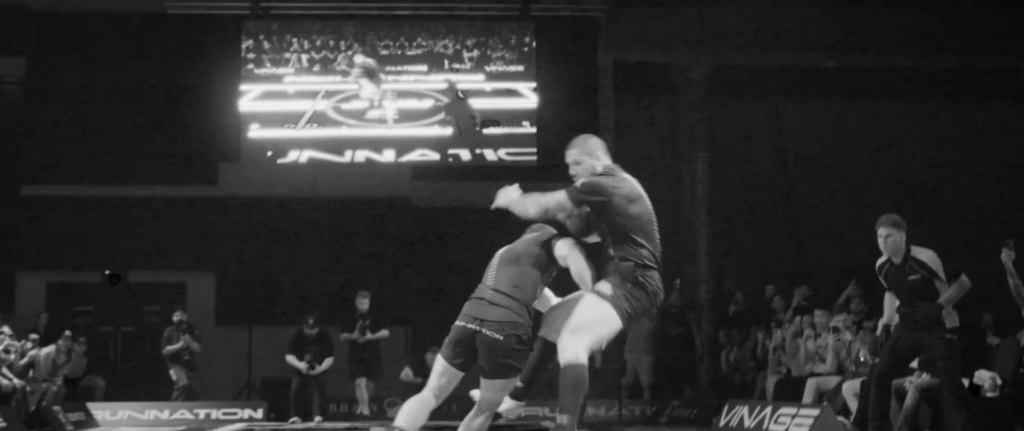
The stranger detail sits underneath the court case rather than in it. Fernandez told the court that after RNC2, two competitors were concussed — and that the response was to bring in former NRL player Sandor Earl to rework the rules around the kind of contact seen in rugby league. That’s the sport’s own co-founder testifying, under oath, that the collisions needed re-engineering for safety.
What’s Actually Confirmed, and What Isn’t
A genuine correction to make on the original framing: Run Nation can keep running RNC events once it satisfies the Combat Sports Authority under the same Act it just lost against — what exactly that compliance process looks like hasn’t been made public, and neither has the full written judgment, so specifics beyond what the judge said in court should be treated as provisional until that’s published.
The concussion detail also deserves a caveat: it comes from Fernandez’s own testimony, not an independently released medical or event report — a real admission, but one side’s account of its own numbers. Separately, brain-injury body Synapse has raised general concerns about concussion risk in “run it straight”-style collisions; that’s a broader statement about the format, not a claim about RNC’s own safety record specifically, and the two shouldn’t be blurred together.
RNC’s card also isn’t short of star power — names like former Sydney Roosters forward Dylan Napa and ex-Bulldogs enforcer Sam Kasiano were on the bill, which is presumably a big part of why premium tickets were selling for the price of a decent gym membership’s entire year.
The Takeaway
For now, run it straight’s highest-profile event is on ice rather than in the grave. Fernandez says RNC is “here to stay” and plans to relaunch later in 2026 once it’s registered as a properly sanctioned combat sport rather than trying to sit outside that category — existing tickets carry over automatically to whatever date replaces this Saturday’s. Whether that relaunch lands on schedule, and what “properly sanctioned” actually requires in practice, is the part worth watching once the written judgment and a real compliance timeline surface.