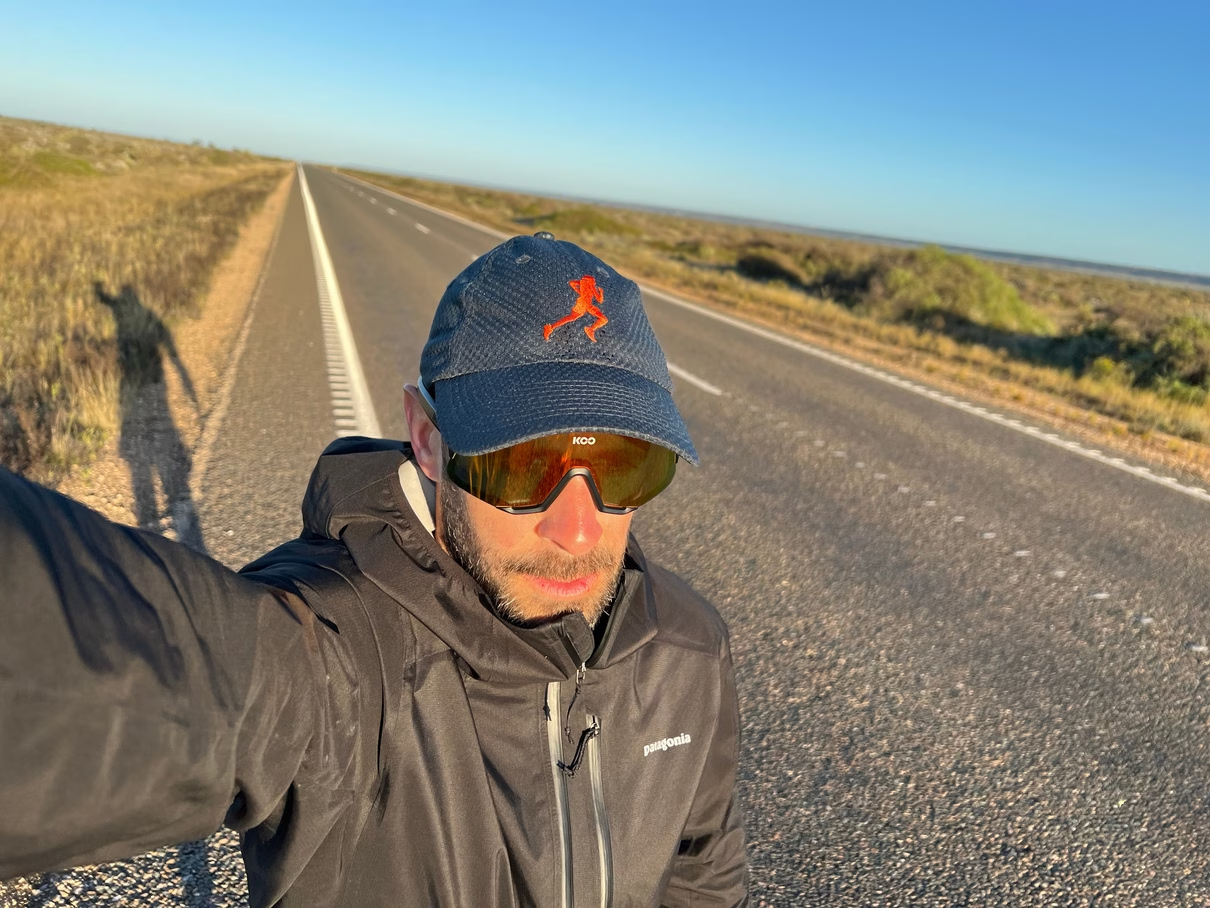
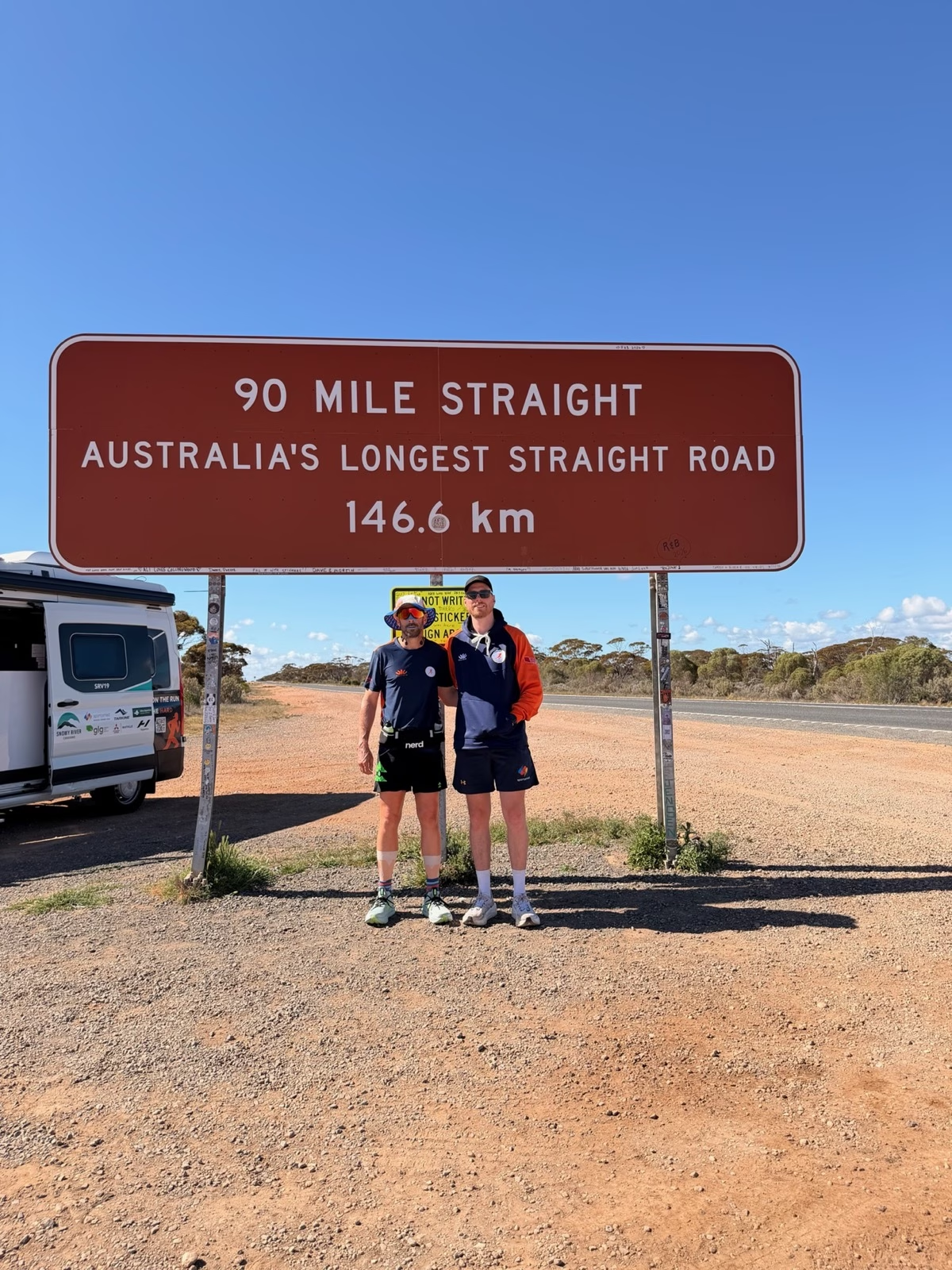
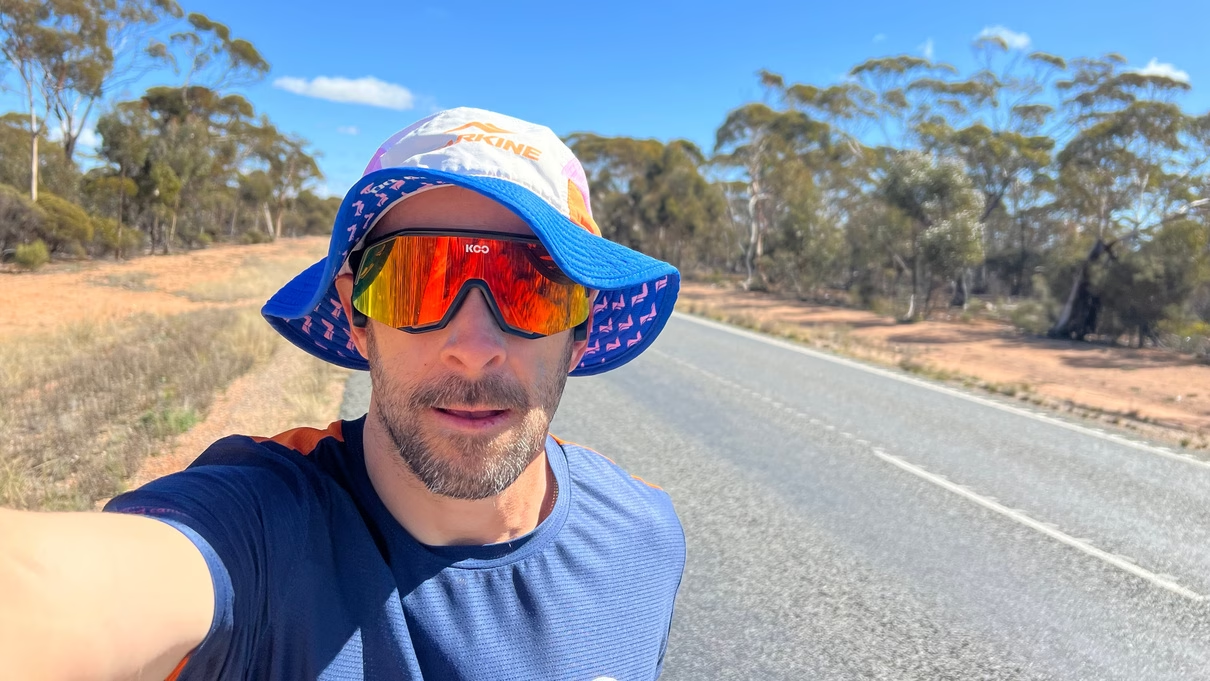
The human body is astonishing. Take the example of Eddie Tchigique, 43, who ran from Cottesloe Beach in Perth to Bondi in 42 days this year, on cake, ice cream and Red Bull. Pretty amazing by itself, but then consider he ran a third of Australia with a stress fracture. Five weeks after he finished, a scan found it in his ankle. He thinks it started about 1,400 km from Sydney. The Adelaide father of two, known as the Frenchman because he grew up in south-west France, told us how a day out there worked, what broke, and why he’d do it again.
- Age 43: lives in Adelaide, father of two
- Nickname: the Frenchman, because he grew up in south-west France and moved to Australia in his early twenties
- 3,962 km: Cottesloe Beach to Bondi Beach, by his watch
- 42 days: finishing in September 2026
- About 95 km a day: and about 109,000 steps
- 9 pairs of shoes: all cut open to make room for a blister
- 8,000 to 9,000 calories a day: and he still lost only 4 to 5 kg
- $110,000+: raised for Redkite, and counting
A day on the road
The plan was 100 km a day, the pace needed to beat the record. This is what a day looked like, in his words:
- 4:30amAlarm.
- 5:30amOut the door in the dark. Thirty minutes of walking and answering messages before he runs.
- 21 kmHalf marathon done.
- 42 kmMarathon done.
- 50 kmHalfway. “From then on, it was the battle” to reach 100.
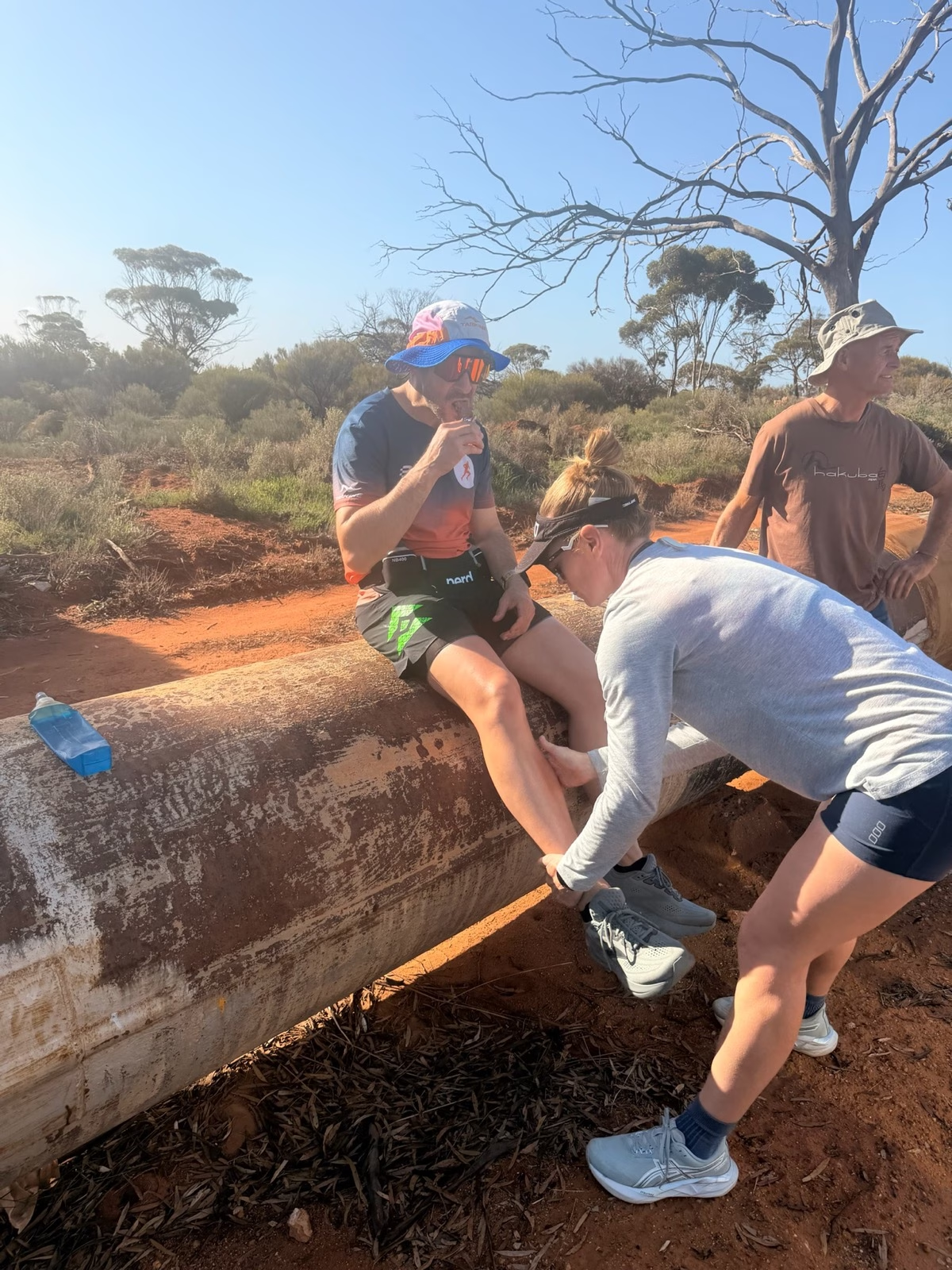
- Every 5–8 kmCrew stop: lights off, new cap and shoes, sunscreen, tape, food.
- Last 2–3 kmWalks it in, eating dinner as he cools down.
- 8pmStops, often later. An hour on injuries, then a 60-second shower.
- 9pmBed. Tomorrow, the same again.
Source: Eddie Tchigique
No gels: cake, ice cream and Red Bull
- Breakfast: a protein shake, then a Nutella sandwich an hour into the run
- On the road: cakes, ice cream, lollies and chocolate, washed down with Red Bull and Coke
- Meals: pasta bake, chicken and mayo wraps
- Dinner: paella, burritos, pasta and rice dishes
- Sports food: none. “I did not touch a single sports-specific food”
“I ate well,” he said. “In fact I only lost about 4 to 5 kg over the whole crossing, which is extraordinary given I was burning roughly 8,000 to 9,000 calories a day.”
What broke
He had run 8,000 km in training over 18 months. It didn’t matter. “Nothing could prepare me for the shock of having to run 100 km daily, with heavy traffic, for days on end.”
| When | What happened |
|---|---|
| Day 4 | Body “starting to not cooperate fully” |
| Day 8 | Quad strain. Walked for 17 hours to cover 70 km |
| About 1,400 km from Sydney | Stress fracture in the talus, the ankle bone, probably begins |
| Day 29 | The ankle pain starts. He keeps running |
| Day 42 | Bondi |
| Five weeks later | MRI finds the fracture. Crutches, then a boot |
Also on the list: dermatitis on both thighs, inflamed shins, Achilles tendinitis, peroneal tendinopathy, knee synovitis and night sweats so bad he woke in “a pool of my own sweat”.
The worst day
What was the worst day, and what got you moving the next morning?
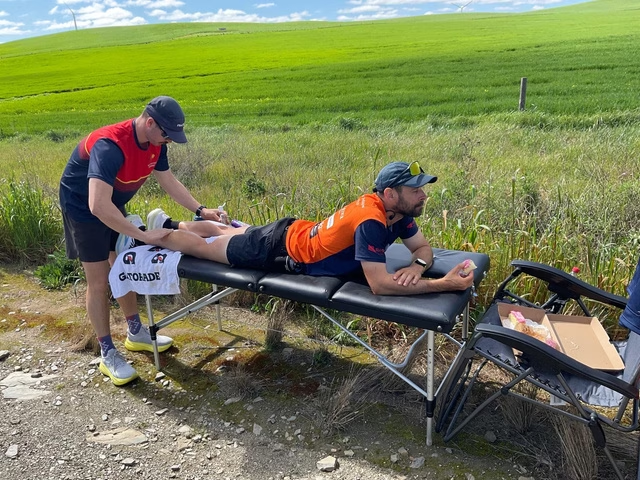
My worst day was day eight. I tried to run all day but was unable to, due to a quad strain. I ended up walking for 17 hours, covering 70 km that day. I still had over 3,000 km ahead of me and I didn’t know how my body would get better, as I never let it rest or recover.
This crossing had become much more than just my run. It was my crew’s run; they had taken a lot of time away from their families. It was Redkite’s and the families facing childhood cancer’s run. It was my family’s run.
Quitting was simply never a real option.
Eddie Tchigique
38 days was the plan
You went in aiming for 38 days and finished in 42. What went wrong?
I just lost too much time in the first two weeks. I was rather quickly 300 km, or three days, behind the record. And with every passing day the amount of additional distance I had to cover to catch up went up. Eventually I realised that the record was too far gone. I was at peace with it. I gave it my all.
If I was to do it again, I’d be much more mentally prepared. I know what’s coming, intrinsically. My body would know also.
Two months on: crutches
Running won’t happen until the new year. The 4 kg he lost is back on, a toe infection is still healing, and for five or six weeks he was simply exhausted. He tried to run in the second or third week and it felt wrong, “like my brain wasn’t sending a normal signal to my leg”. Then came the MRI.
I was happy to just be, as opposed to being on the clock like I had been for nearly six weeks.
Eddie Tchigique
- Cut the day up: he met his crew every 5 to 8 km so each stretch felt manageable
- Walk the last bit: his final 2 to 3 km were walked, eating dinner as he cooled down
- Real food works: if it goes down and you keep eating, it doesn’t have to be gels
- Expect the first fortnight to hurt: his body adapted after two weeks; the problems didn’t vanish, he got better at managing them
- Get the sore spot scanned: pain that won’t settle in one place is worth an X-ray or MRI. His fracture wasn’t found until five weeks after Bondi
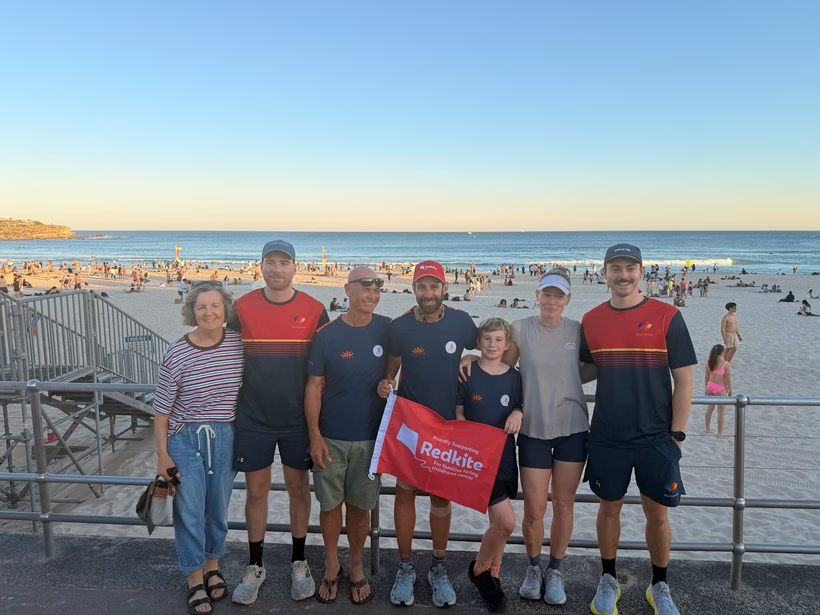
Eddie is still raising money for Redkite. Donate and follow him at frenchmanontherun.com. More from the far end of endurance: how far the human body can go, Alex Barbas, who ran 182 marathons in a row, and this year’s Coast to Kosci.
Interview by email, 23 November 2026. Answers lightly edited for spelling and length.