
A grizzly bear can outrun Usain Bolt, dig a den in under a week and turn a “bear-proof” bin into a chew toy. You are not winning this one, but it’s worth knowing exactly how badly you’d lose.
Here’s how big grizzlies get, how fast they really run, what the evidence says about their strength (and which viral numbers don’t hold up), how they stack up against the strongest men alive, and what the US National Park Service says to do if you meet one.
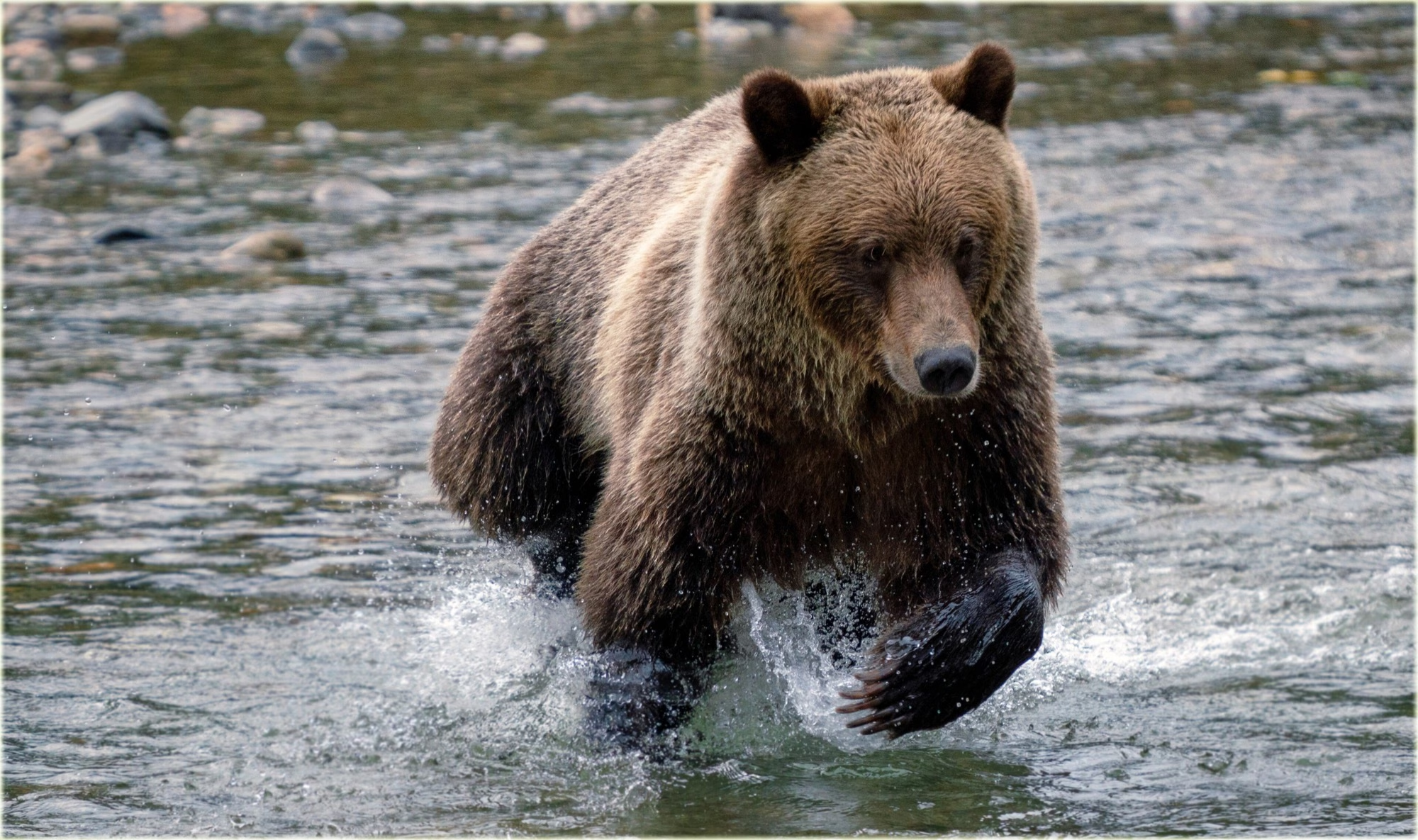
- Weight: adult male grizzlies in the lower 48 US states weigh roughly 135 to 270 kg (sources differ). Females are about 110 to 160 kg
- Height: about 1 to 1.4 m at the shoulder hump on all fours, and more than 2.4 m standing up
- Top speed: about 56 km/h (35 mph) in a sprint
- Claws: about 10 cm long, built for digging
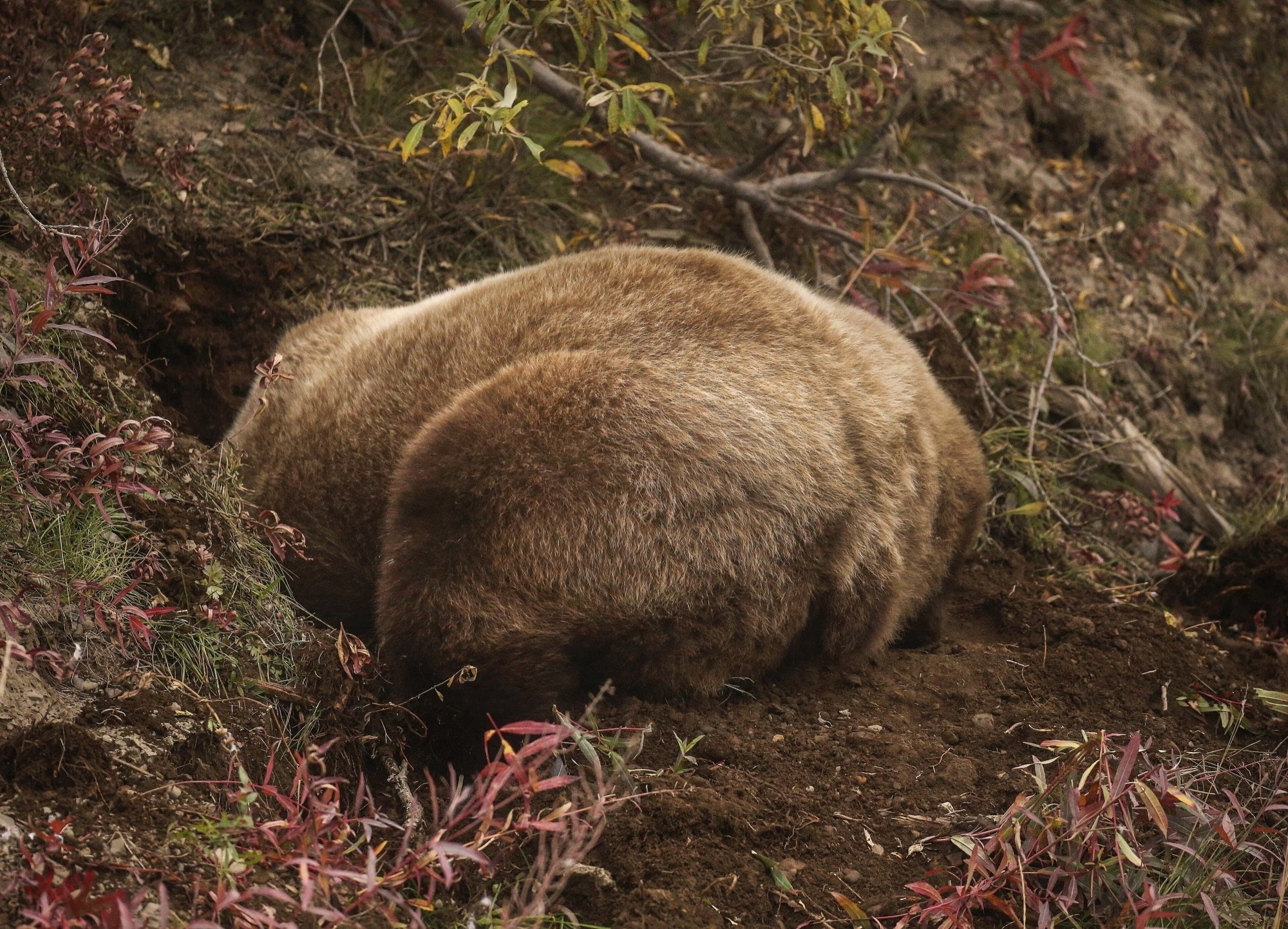
- Digging: a bear can dig its winter den in 3 to 7 days, moving up to a ton of material
- Bite force: the popular “1,160 psi” figure has no published measurement behind it that we could find
- If one attacks: the NPS says play dead against a grizzly, unless the attack keeps going
How big is a grizzly bear?
Big, and it depends on where it lives and what time of year you weigh it. The grizzly is the inland North American form of the brown bear. The salmon-fed brown bears of coastal Alaska are bigger again.
- Males: Montana Fish, Wildlife & Parks puts the average male grizzly in the lower 48 states at 400 to 500 pounds (about 180 to 230 kg). The National Wildlife Federation says 400 to 600 pounds (up to about 270 kg). Glacier National Park lists 300 to 440 pounds (about 135 to 200 kg). Sources differ, so call it 135 to 270 kg.
- Females: 250 to 350 pounds (about 110 to 160 kg), according to both Montana FWP and the NWF.
- Height: 3.5 to 4.5 feet (about 1 to 1.4 m) at the hump on all fours, and more than 8 feet (2.4 m) standing on its hind legs (Montana FWP). The National Park Service says very large brown bears can stand almost 9 feet tall.
- Coastal brown bears: much bigger. The NPS gives brown bears a range up to 1,000 pounds (about 450 kg), and the NWF says big coastal males can go well past that.
That shoulder hump is solid muscle: “a mass of muscle anchored to the backbone that powers the front legs”, says the NWF.
How fast can a grizzly bear run?
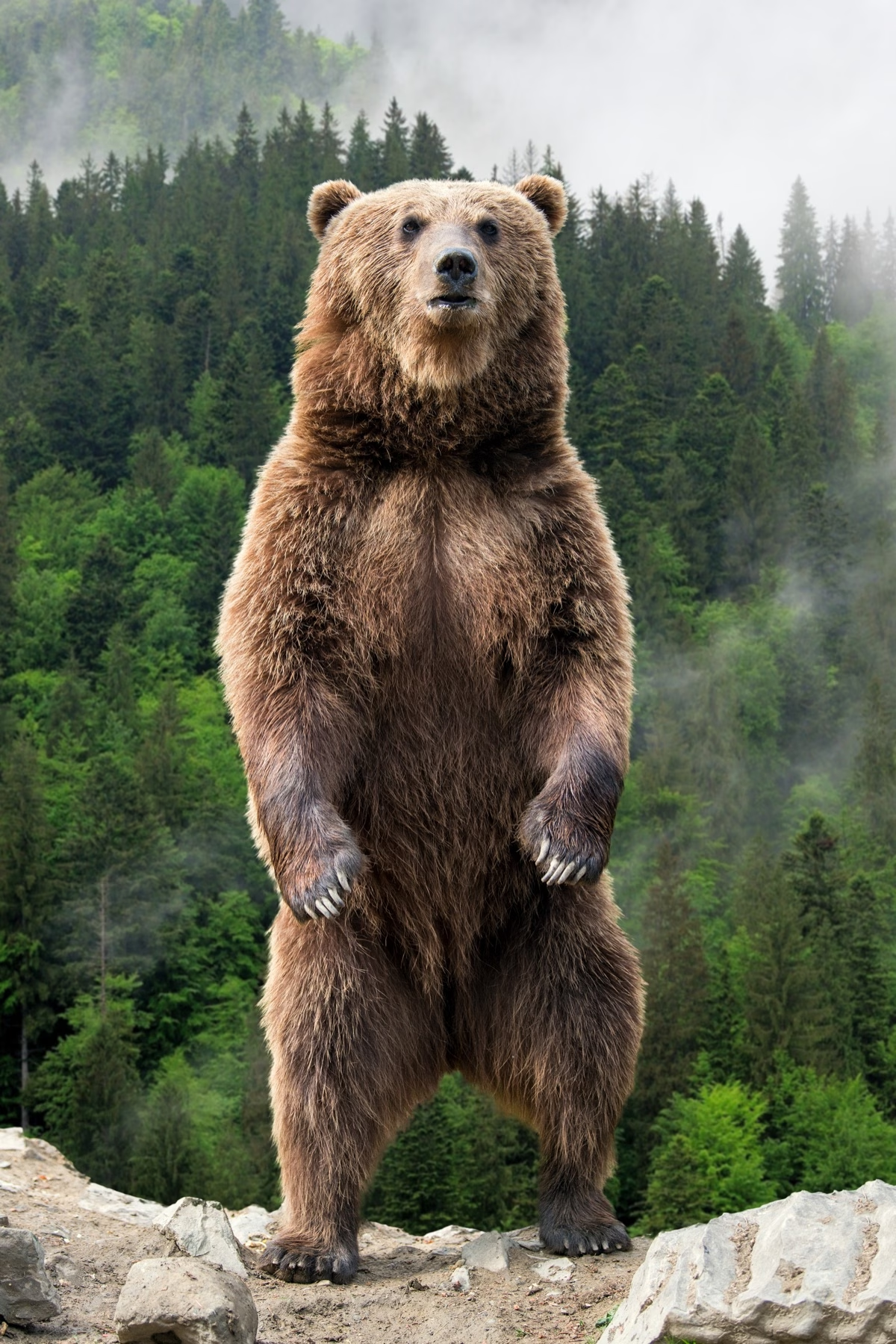
The figure you’ve heard, about 56 km/h, checks out. Glacier National Park lists a grizzly’s top speed as 35 mph (56 km/h). Montana FWP says the same: grizzly muscle is built “for massive strength, quickness, and running speeds up to 35 miles per hour”. The NWF also gives 35 mph, in short sprints.
That’s well beyond the fastest human. Usain Bolt’s 100 m world record of 9.58 seconds (World Athletics) works out to an average of about 37.6 km/h. The NPS puts it simply: bears “can run as fast as a racehorse both uphill and down”. (Here’s how you compare with a racehorse, if you need more bad news.)
Our read: the speed matters more than the strength. You can’t outrun a grizzly, and the NPS says not to try, because, like dogs, bears chase things that flee.
How strong is a grizzly bear? The evidence
Honest answer: nobody has put a grizzly on a deadlift platform, and there’s no “grizzly lifts X kg” study. What we have is what grizzlies do every year, and what happens when people test gear on them.
Digging: a ton in under a week
Grizzlies dig their own winter dens. Yellowstone National Park’s website said that “major den excavation is completed in 3-7 days during which a bear may move up to a ton of material” (NPS Yellowstone, archived). Montana FWP gives the same figures. A US ton is about 900 kg.
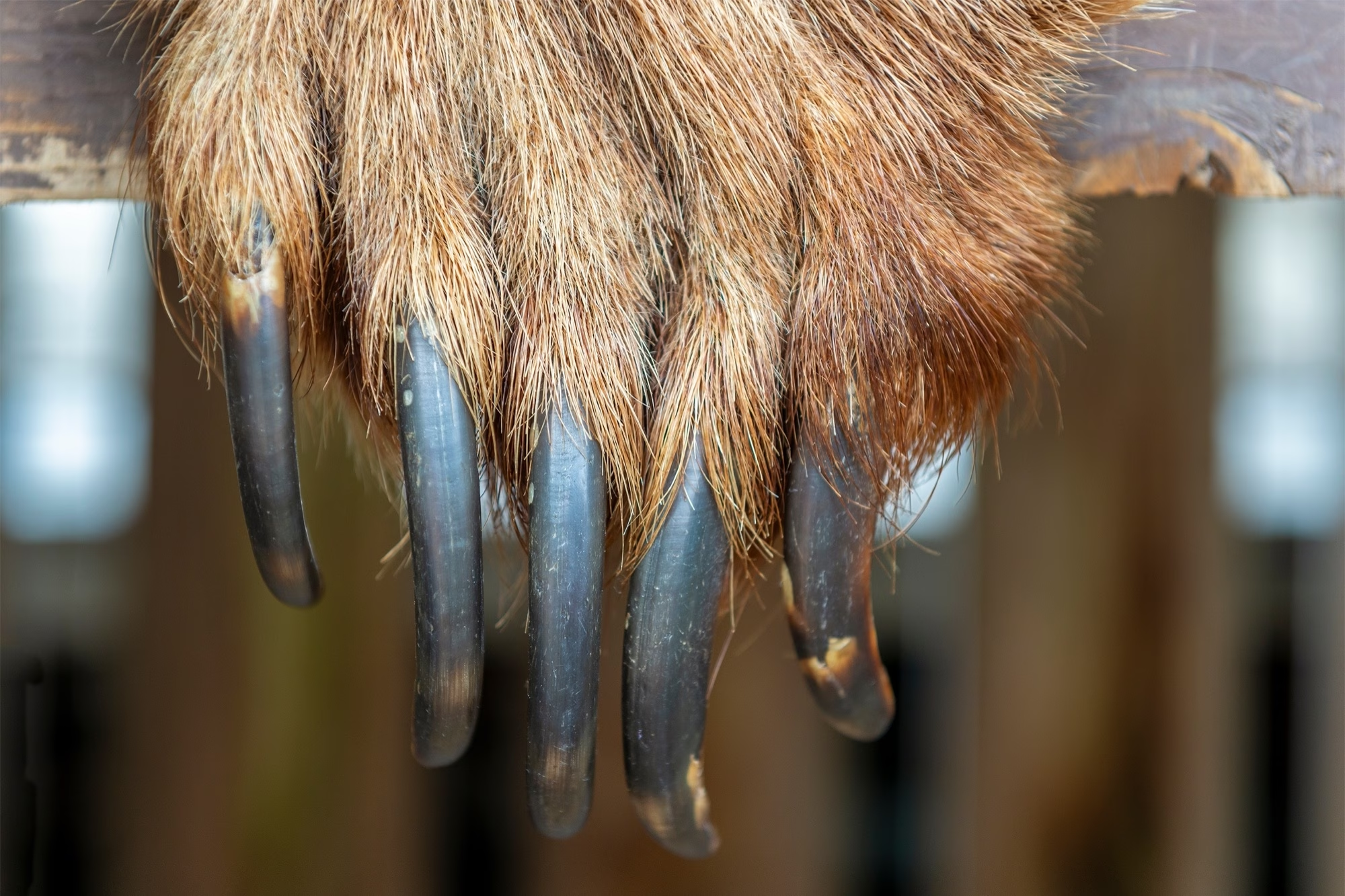
Those claws are about 4 inches (10 cm) long and slightly curved, “making them good for digging”, according to Glacier National Park. The NPS says grizzlies’ “long claws and strong shoulders allow them dig efficiently for food”, from roots and bulbs to ground squirrels.
The bear-proof bin test
The best real-world strength test is at the Grizzly & Wolf Discovery Center in West Yellowstone, Montana, where captive grizzlies test bins, coolers and other gear sold as bear-resistant. The rule is 60 minutes of bear contact. If the bears can’t get in within that hour, the product passes (NPR; Cowboy State Daily).
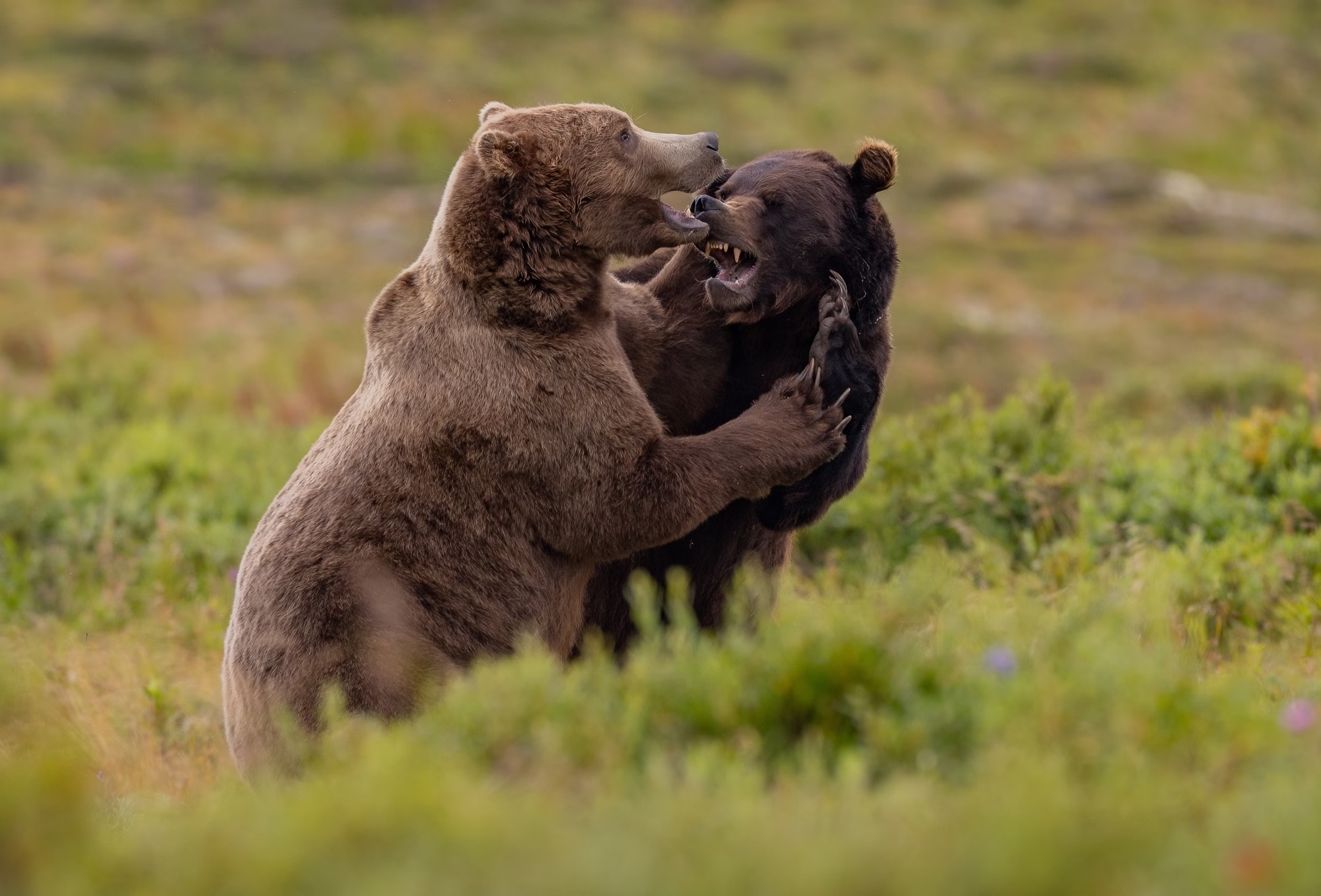
NPR watched an Alaskan grizzly called Kobuk flip a dumpster-sized “super cooler” over “easily”, then rip off its plastic seals. Facilities manager Randy Gravatt told Cowboy State Daily that on garbage cans especially, the bears use what he calls “the CPR method”: “They put their front paws together and just jump up and down on it.” They’ve also seen bears throw containers into the air so they land on rocks. “When we started testing 22 years ago, maybe 10% of the products passed,” Gravatt told the paper in 2024.
Numbers that don’t hold up
- “A grizzly is 2.5 to 5 times stronger than a man.” It’s credited to a Montana State University test for a National Geographic documentary, in which bears shoved a 700 lb dumpster and shook logs fitted with sensors. We couldn’t find the study itself, so treat it as a TV estimate, not a measurement.
- “Bite force of 1,160 psi.” Repeated across hundreds of animal-fact sites, but we couldn’t trace it to a published measurement on a grizzly. We’ve left it out of the numbers.
- “A grizzly can lift 500 kg” or “flip a 600-pound boulder”. No source we could open backs a specific figure. Grizzlies do roll rocks and logs to find food, but the kilos are guesswork.
It’s the same story as the “chimps are five times stronger” myth: a dramatic number that spreads faster than the evidence. Here’s how strong a chimp really is.
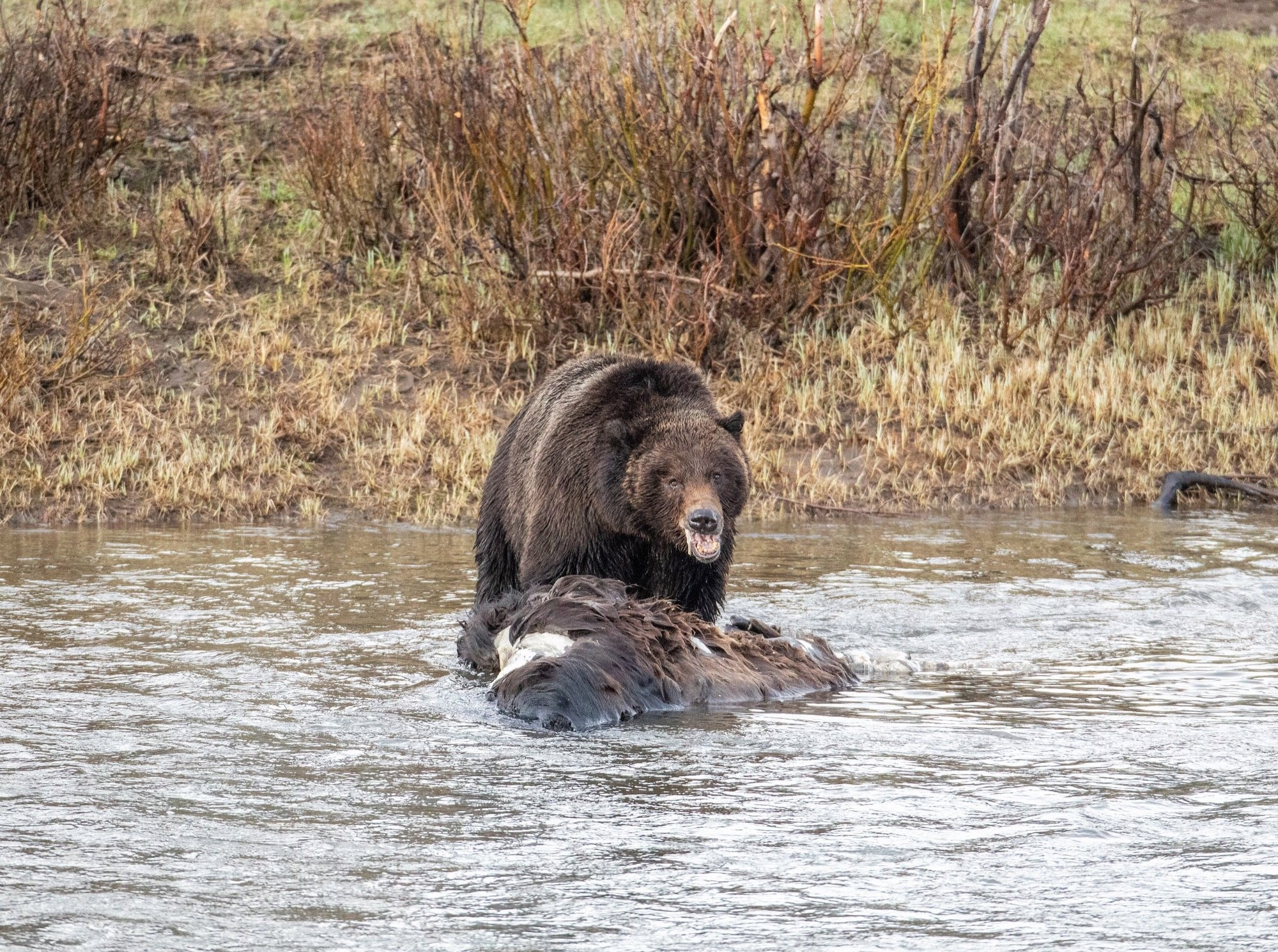
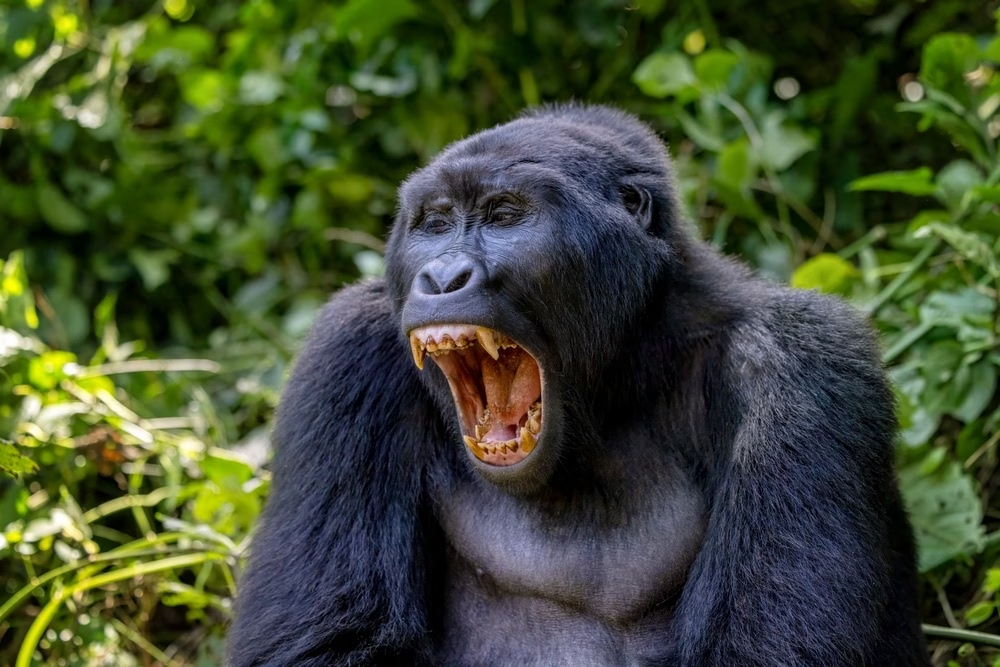
Bear vs ape is a different fight. We fact-checked Joe Rogan’s version here: grizzly vs gorilla.
Grizzly vs the strongest humans
The heaviest deadlift ever is 511 kg, pulled by Mexican strongman Raúl Flores at the World Deadlift Championships in Birmingham, England, in September 2026. That beat Hafþór Björnsson’s 510 kg by a kilo (Fitness Volt; BroBible). Here’s how Flores did it.
That’s half a ton, lifted once. A grizzly moves a ton of dirt in a few days with no equipment, then sleeps for the winter.
| Measure | Grizzly vs human |
|---|---|
| Top speed | 56 km/h vs Bolt’s 37.6 km/h average over 100 m |
| Adult male weight | About 135 to 270 kg |
| Height standing | More than 2.4 m |
| Claws | About 10 cm |
| Heaviest human deadlift | 511 kg, once (Flores, 2026) |
| Den digging | Up to a ton in 3 to 7 days |
| Measured bite force | No reliable figure |
Our read: even the strongest man in the world would be giving away serious bodyweight to a big male grizzly, plus 10 cm claws, a mouthful of teeth and a big speed edge. This isn’t a fight. It’s a safety briefing.
What to do if you meet a grizzly
The US National Park Service’s bear safety advice says most encounters end without injury and attacks are rare. Advice varies by park, so check locally. The main points:
- Don’t surprise them. Make noise, hike in groups and keep your distance. Most bears avoid people if they hear them coming.
- If a bear notices you: talk calmly so it knows you’re human, stand your ground and slowly wave your arms. A standing bear is usually curious, not threatening.
- Don’t run, scream or climb a tree. Bears chase fleeing animals, and grizzlies can climb. If the bear is still, move away slowly and sideways.
- Keep your pack on. It protects your back and keeps your food from the bear.
- Never get between a mother and her cubs.
- If a grizzly attacks: play dead. Lie flat on your stomach, hands clasped behind your neck, legs spread so it’s harder to roll you. Stay still until it leaves. If the attack keeps going, fight back hard and hit it in the face.
- The exception: if any bear attacks you in your tent, or stalks you and then attacks, don’t play dead. Fight back.
- Carry bear spray where parks allow it. It must be an EPA-approved bear spray, not human pepper spray.
How strong is a grizzly bear? FAQ
Is a grizzly bear stronger than a human?
By a long way. A big male is heavier than most strongmen, runs much faster and can dig up to a ton of earth in under a week. There’s no reliable “times stronger” figure, because no one has measured a grizzly’s strength like a lift.
How fast can a grizzly bear run?
Up to about 56 km/h (35 mph) in short sprints, according to Glacier National Park, Montana FWP and the National Wildlife Federation. That’s faster than Usain Bolt.
How much does a grizzly bear weigh?
Adult males in the lower 48 US states usually weigh about 135 to 270 kg, depending on the source. Females are about 110 to 160 kg. Coastal Alaskan brown bears can be much heavier.
What is a grizzly bear’s bite force?
You’ll often see 1,160 psi, but we couldn’t find a published measurement behind it.
Can you outrun a grizzly bear?
No. The NPS says not to run at all, because bears chase fleeing animals. Stand your ground, talk calmly and back away slowly and sideways.
Should you play dead with a grizzly bear?
If a grizzly attacks, yes: the NPS says lie flat on your stomach with your hands behind your neck. If the attack keeps going, or the bear attacks you in a tent, fight back.
Sources: NPS Glacier National Park; NPS Brown Bears; NPS Staying Safe Around Bears; NPS Yellowstone, denning (archived); Montana Fish, Wildlife & Parks; National Wildlife Federation; NPR; Cowboy State Daily; World Athletics; Fitness Volt; BroBible.