The 2026 Backyard Ultra World Team Championships start at 11pm AEDT on Saturday 17 October (12:00 UTC), with teams of 15 from more than 70 countries racing at the same time on their own home courses. Australia’s team runs at Kembla Grange, near Wollongong, without world record holder Phil Gore, who is injured. Belgium are the defending champions. You can watch on the Backyard Ultra Live YouTube channel and follow every loop on live results.
- Start: Saturday 17 October 2026, 11pm AEDT (12:00 UTC); expected to run four days or more
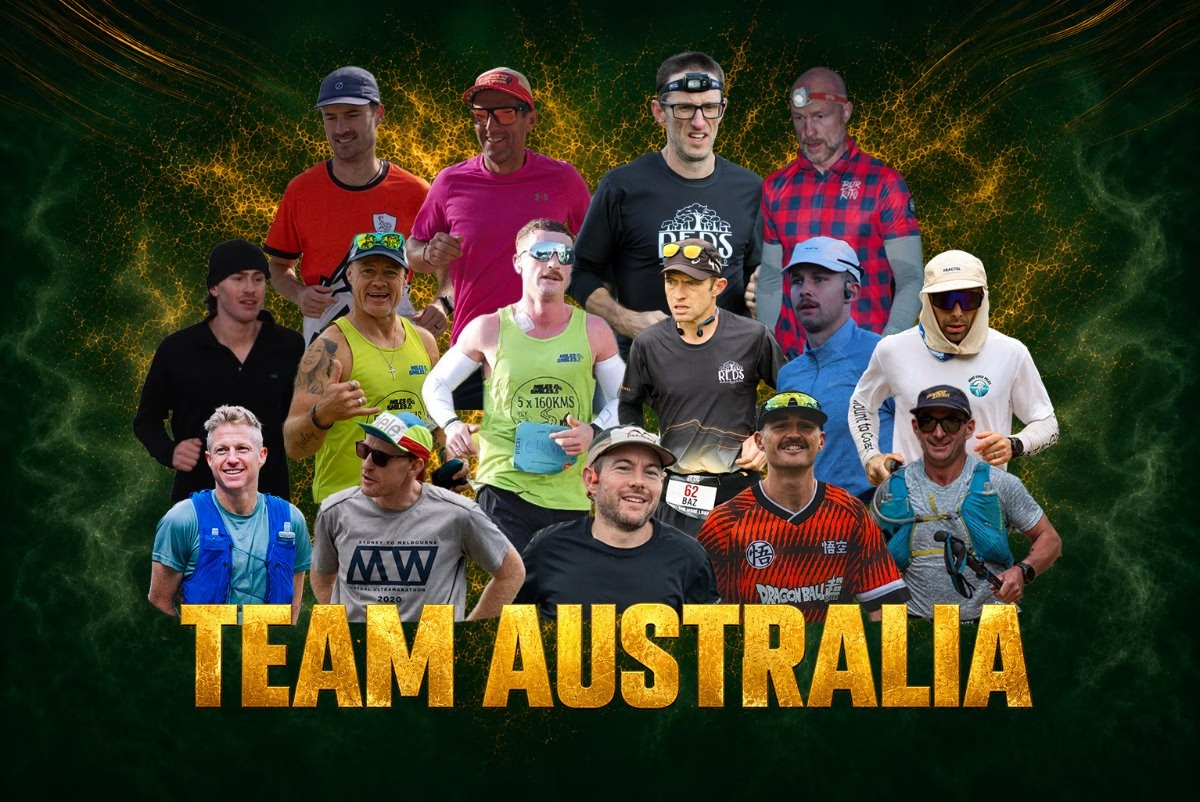
- Team Australia: Kembla Joggers Cross Country Park, Integral Energy Park, Kembla Grange, NSW
- Format: a 6.706 km loop every hour, on the hour, until one runner is left at each site
- Scoring: every loop by a country’s 15 runners counts; most loops wins
- Watch: Backyard Ultra Live on YouTube; Australian live results
- Last time (2024), team totals: Belgium 1,147 loops, Australia 971, USA 969
Live updates
Final update. Newest first.
The USA won the 2026 Backyard Ultra World Team Championships with 1,120 loops (7,510 km across the team). Australia, racing at home at Kembla Grange, finished 2nd with 1,069. The last runners in the world were Belgium’s Merijn Geerts and Ivo Steyaert, who both stopped on yard 125, level on 124 loops (831.5 km), so Belgium had no national winner. (official dashboard)
Final standings and every Australian’s loops are in the Results section.
Belgium take bronze off Japan. Merijn Geerts and Ivo Steyaert both finished yard 115, and Belgium move to 1,040, two past Japan’s final 1,038 (official dashboard). Belgium can’t drop back now, so Japan finish fourth.
Both are still going, but the laps are slowing: about 55 minutes 40 seconds on yard 115, nearly three minutes slower than the yard before. To take second from Australia (1,069) both need to reach yard 130, about 15 more hours; the USA’s 1,120 would take yard 156.
Belgium are four yards from bronze. Merijn Geerts and Ivo Steyaert both finished yard 111 in under 52 minutes, and Belgium are on 1,032 (official dashboard). If both keep going, they pass Japan’s 1,038 at yard 115, which ends about 6pm AEDT.
Every other nation has finished, so the totals ahead are final: second would need both Belgians to reach yard 130 (Australia, 1,069), and first yard 156 (USA, 1,120).
The USA have all but won. Mark Dowdle, the last American, stopped after yard 107, and the USA finish on 1,120 (official dashboard). Belgium are the last nation running, on 1,024: to catch the USA, Merijn Geerts and Ivo Steyaert would both have to reach about 155.
Australia’s 1,069 is second. The race that’s still open is for bronze: Japan finished on 1,038, and Belgium pass them if both their runners reach yard 115, about eight more hours.
Japan’s race is over, one yard short of a national record. Kazuhiro Kawahata stopped after yard 105, one short of his own Japanese record of 106, and Japan finish on 1,038 (official dashboard). They’re third for now: Belgium, on 1,022 with two runners left, would pass them if both reach yard 115.
Four men are still going after 106 yards (710.8 km): Americans Jon Noll and Mark Dowdle, who lead on 1,119, and Belgium’s Merijn Geerts and Ivo Steyaert. The USA are 28 yards short of the championship record, Belgium’s 1,147 from 2024, and would pass it at yard 121 if both keep going. That would also take both men past Phil Gore’s individual world record of 119.
Australia’s 1,069 is still second, and safe: Belgium’s two would each need to reach about 130.
Six runners are still going into day six, two each from the USA, Japan and Belgium. After loop 103 (6am, 690.7 km each) the USA have 1,113 loops, Japan 1,035 and Belgium 1,016 (official dashboard). Australia’s 1,069 is still second.
Japan’s last two would each have to reach 120 loops just to draw level with Australia, one past Phil Gore’s world record of 119. Belgium’s would need about 130.
Jon Noll and Mark Dowdle (USA), Kengo Takahashi and Kazuhiro Kawahata (Japan) and Merijn Geerts and Ivo Steyaert (Belgium) are all on 103. Kawahata is three loops short of his national record of 106. France’s Christophe Baud is still running on 101.
Australia’s second place is all but safe. After loop 94 (9pm, 630.3 km each) Japan has 1,017 loops with two runners left, 52 behind Australia’s 1,069, and Belgium has 998 with two (official dashboard). To pass Australia, Japan’s last two would each have to go past about 120 loops, beyond Phil Gore’s world record of 119.
The USA lead with 1,095 and two runners still going, Jon Noll and Mark Dowdle. Nicholas Steel and Greg Fall have stopped.
Kazuhiro Kawahata is still going for Japan on 94 loops, 12 short of his national record of 106.
Australia’s race is over: 1,069 loops. The official dashboard lists Australia as out after loop 87, with Dan Camac the last Australian standing on 87 loops (583.4 km) (official dashboard). That’s 98 more than the 971 Australia ran to take silver in 2024.
The USA lead with 1,085 after loop 91 and four runners still going, so they can’t be caught. Australia is second for now: Japan (1,009, three running) need about 60 more loops between them to pass 1,069, and Belgium (992, two running) about 78.
Ben Nicholls stopped during loop 87. Camac finished it in 53:50 but didn’t complete loop 88.
Australian results: my.raceresult.com.
The USA has gone ahead. After loop 89 (4pm, 596.8 km each) the USA has 1,077 loops, with all four of its remaining runners, Nicholas Steel, Greg Fall, Jon Noll and Mark Dowdle, still going (official dashboard).
Australia’s official count hasn’t moved since 2pm. The results feed still lists Dan Camac on 87 loops and still competing, so Australia officially stands on 1,069. Any loops he has finished since then will be added when the Kembla Grange timing catches up; we’ll update as soon as it does.
Japan has passed 1,000: 1,004 loops after 89, with all three runners still going. Kazuhiro Kawahata is 17 loops short of his own national record of 106. Belgium are on 988 with two left.
Live Australian results: my.raceresult.com.
Dead level: 1,069 each. After loop 87 (2pm, 583.4 km each) Australia and the USA have exactly the same team total (official dashboard). Ben Nicholls couldn’t finish loop 87 inside the hour and is out after 86 loops, so Dan Camac is now Australia’s last runner. The USA also lost Levi Yoder after 86.
Four Americans are still going: Nicholas Steel, Greg Fall, Jon Noll and Mark Dowdle. If all four finish loop 88, the USA leads by three at 3pm, and the gap grows by three every hour after that. Australia’s total now rises by one loop for every hour Camac keeps going.
Camac finished loop 87 in 53:50. Japan (997, three running) and Belgium (985, three running) are third and fourth.
Live Australian results: my.raceresult.com.
Australia is still in front, just. After loop 86 (1pm, 576.7 km each) Australia has 1,068 loops to the USA’s 1,065 (official dashboard). The lead change expected at 1pm didn’t happen because the USA lost two of its biggest names this morning: Harvey Lewis stopped after 83 loops and Nick Petterson after 84.
Five Americans are left against Australia’s two, so the USA still gains three loops an hour. If nobody else stops, the teams are level on 1,070 after loop 87 (2pm) and the USA goes ahead after loop 88 (3pm).
Ben Nicholls is starting to slow: 57:45 for loop 86, his slowest of the race, after 53:46 and 53:37 for the two before. Dan Camac ran 53:21.
Japan (995) and Belgium (982) have three runners each, with Kazuhiro Kawahata still going for Japan.
Live Australian results: my.raceresult.com.
Australia’s last two are still going, and the lead is 13. After loop 83 (10am, 556.6 km each) Australia has 1,062 loops to the USA’s 1,049, with Japan on 986 and Belgium on 973 (official dashboard). Ben Nicholls (47:43) and Dan Camac (50:07) both finished loop 83 with ten minutes or more to spare.
The USA lost a runner after loop 82 and has seven left, so it now gains five loops an hour, not six. That means no tie at noon: if nobody else stops, Australia still leads by three after loop 85, and the USA goes ahead after loop 86 (1pm AEDT). To stay in front, Australia needs Americans to stop: each one who drops slows the USA by a loop an hour.
Japan and Belgium have three runners each.
Live Australian results: my.raceresult.com.
Australia is down to two runners, and the USA is closing. After loop 79 (6am, 529.7 km each), with every leading nation reported, Australia has 1,054 loops, the USA 1,018, Japan 973 and Belgium 961 (official dashboard). Ben Nicholls and Dan Camac are Australia’s last two; the USA still has eight runners going, including Harvey Lewis and Jon Noll.
Nine Australians stopped overnight. Mathieu Dube reached 78 loops, Brady Nankervis 77 and Jack Hanley 76; Tim Kacprzak and Jayden McCormack made 75, Brandon-Lee Grech and Sam Christie 73, James Blanton 72 and Barry Keem 70.
Eight runners against two means the USA gains six loops every hour. If nobody else stops, the USA draws level after loop 85 (noon AEDT) and goes ahead after loop 86 (1pm). Every American who stops pushes that back.
Nicholls and Camac both finished loop 79 in about 50 minutes, with ten minutes to spare.
Live Australian results: my.raceresult.com.
The USA has taken second from Japan. After loop 69 (8pm), with every leading nation reported, Australia has 986 loops, the USA 932, Japan 930 and Belgium 919 (official dashboard). The USA still has ten runners going; Japan is down to six after Mamoru Haga stopped after 68.
Australia has also banked loop 70 (469.4 km each): all eleven made it, taking the team to 997. Brady Nankervis, Jayden McCormack and Sam Christie are now two loops past their personal bests of 68.
Mathieu Dube was again the quickest Australian (47:05 for loop 70). Barry Keem (55:15) and Brandon-Lee Grech (55:12) were the slowest, with about five minutes to spare.
Live Australian results: my.raceresult.com.
Australia has passed its 2024 total. After loop 68 (7pm, about 456 km each) Australia has 975 loops, already four more than the 971 that won silver last time, and 51 clear of Japan (924) (official dashboard). The USA is on 922 and Belgium on 914.
The fight for second is about to change hands. All ten Americans still running are going, against seven for Japan, so the USA should pass Japan on loop 69 unless someone stops. Belgium, the defending champions, are down to five, with 2024’s 110-loop pair Merijn Geerts and Ivo Steyaert both still in.
Eleven Australians are still running. Scott Cameron is the only one to go since this afternoon: he finished 64 loops but not the 65th inside the hour.
Mathieu Dube is still the quickest Australian (43:24 for loop 68, average 44:33). Jayden McCormack (54:21) and Sam Christie (53:58) were the slowest of the Australians this hour, still five-plus minutes inside the cut-off.
Live Australian results: my.raceresult.com.
Australia’s lead is growing. After loop 63 (2pm, 422.5 km each) Australia has 919 total loops, 33 ahead of Japan (886), with Belgium on 879 and the USA on 872 (official dashboard). Twelve Australians are still going, against eight each for Japan and Belgium and ten for the USA, so Australia pulls away from Japan by four loops an hour.
Two Australians have gone since this morning. Jason Rantall, the reserve who took Phil Gore’s place, stopped after 61 loops, and Colin Moulden couldn’t finish loop 63 inside the hour, so he is out after 62.
Japan passed their 2024 team total of 883 on loop 63, with all eight of their remaining runners, including Kazuhiro Kawahata, still going.
Mathieu Dube is still the quickest Australian (42:23 for loop 63, average 44:40). Scott Cameron needed 56:15 for loop 63, the closest any Australian came to the cut-off this hour.
Live Australian results: my.raceresult.com.
Australia now leads the world on total loops. After loop 58 (9am) Australia has 852, ahead of Japan (844), Belgium (833) and the USA (822). Japan lost three runners in the last three hours and has 9 left, so Australia, with 14 of its 15 still going (388.9 km each), now gains five loops an hour on them (official dashboard).
No other nation has more than 11 left: Belgium has 11, the USA 10, France 9, the UK 8, and New Zealand and Canada 7.
More big names have gone since 6am: Germany’s Hendrik Boury (qualified with 100 loops) after 57, Belgium’s Brecht Vandamme (98) after 58, and the USA’s Scott Snell (88) after 56. Still going: Sam Harvey (NZL, 118), Łukasz Wróbel (POL, 116), Ivo Steyaert (BEL, 113), and Harvey Lewis and Jon Noll (USA, 111). Across the world, 109 of 990 starters are left, in 19 nations.
Mathieu Dube is still the quickest Australian (42:09 for loop 58, average 44:37). Sam Christie is closest to the cut-off: he needed 55:48 for loop 58. Colin Moulden took 52:40.
Live Australian results: my.raceresult.com.
Australia still has 14 of its 15 runners after the third night. All 14 finished loop 55 at 6am (368.8 km each). No other nation has more than 12 left: Japan and Belgium have 12, the USA 11, and the UK, France and Poland 9 (official dashboard).
Japan leads on total loops with 816, six ahead of Australia on 810, then Belgium (797) and the USA (791). With two more runners still going than Japan, Australia gains two loops an hour and would draw level after loop 58 if no one else stops.
Some big names went overnight: Belgium’s Kevin Sneyders (qualified with 79 loops) after 50, the USA’s Jennifer Russo (76) after 49, and New Zealand’s Simon Mclean (90) after 53. Still going: Sam Harvey (NZL, 118), Łukasz Wróbel (POL, 116), Ivo Steyaert (BEL, 113), and Harvey Lewis and Jon Noll (USA, 111). Across the world, 122 of 990 starters are left, in 18 nations.
Mathieu Dube is still the quickest Australian, averaging 44:42. Sam Christie and Jayden McCormack both needed 54:59 for loop 55, and Colin Moulden 54:39, so they’re the ones closest to the cut-off.
Live Australian results: my.raceresult.com.
Australia has lost its first runner. Jonathan Ash, who qualified with 100 loops at Dead Cow Gully, stopped after 40 loops (268.2 km), going over the hour on loop 41. He had been the Australian closest to the cut-off since Sunday night, and his last three loops took 55:27, 57:54 and 57:49.
The other 14 all finished loop 42 at 5pm (281.7 km each), so Australia is on 628. That’s two behind the USA, Japan and Belgium, the only nations still at full strength, on 630 (official dashboard). The UK is next on 617 with 13 runners left, then Canada (607) and New Zealand (605).
Brandon-Lee Grech had a scare on loop 40, needing 57:43, but was back under 50 minutes for the next two. Sam Christie (51:57 on loop 42) is now the slowest Australian still running, and Mathieu Dube still the quickest, averaging 44:11.
Live Australian results: my.raceresult.com.
37 hours in, Australia still hasn’t lost a runner. All 15 finished loop 37 at midday (248.1 km each), so the team stays on 555 loops, the most possible.
Only four nations are still perfect: Australia, Belgium, the USA and Japan, level on 555 (official dashboard). The UK has lost its first runner and is on 548, and the dashboard shows Hungary down to 13, though Hungary is still entering results. Worldwide, 312 of the 990 starters are still going, and 19 nations are out.
Mathieu Dube is banking the most rest, with the team’s quickest average loop (44:01). Jonathan Ash (55:19) and Sam Christie (54:04) were again the slowest Australians on loop 37, with five minutes or less to spare.
Live Australian results: my.raceresult.com.
31 hours in, Australia still hasn’t lost a runner. All 15 have now run 31 loops (207.9 km each) through two nights at Kembla Grange: 465 loops for the team, the most possible.
Only six nations are still perfect: Australia, Belgium, the USA, Japan, the UK and Hungary, all on 465 (official dashboard; some nations are still entering results). France has lost two runners, and New Zealand, Canada and Poland one each. Worldwide, fewer than half the 990 starters are still going.
The loops are slowing. Jonathan Ash took 54:45 for loop 31 and Sam Christie 53:04, the closest any Australian has come to the hour cut-off, while Dan Camac ran the quickest Australian loop of the morning in 41:06.
Live Australian results: my.raceresult.com.
Eight hours in, nobody from Team Australia is out. All 15 have finished eight loops (53.6 km each) at Kembla Grange, so Australia has 120 loops on the board.
It’s the same story for the big rivals: Belgium, the USA and the UK still have all 15 runners on 120 loops, and dozens of nations are level on that maximum (official dashboard). The real racing starts on the second night, when the first runners begin to drop.
Jason Rantall, the reserve who took Phil Gore’s place, has the quickest average lap of the Australians so far (43:35). Jonathan Ash, the team’s 100-loop man, is taking it slowest, averaging 49:52 a loop.
Live Australian results: my.raceresult.com.
Start time in Australia and around the world
Every course starts at the same moment, 12:00 UTC on Saturday 17 October.
| Where | Start time |
|---|---|
| Sydney, Melbourne, Canberra, Hobart | 11pm Saturday (AEDT) |
| Adelaide | 10:30pm Saturday (ACDT) |
| Brisbane | 10pm Saturday (AEST) |
| Darwin | 9:30pm Saturday (ACST) |
| Perth | 8pm Saturday (AWST) |
| New Zealand | 1am Sunday (NZDT) |
| London | 1pm Saturday (BST) |
| New York | 8am Saturday (EDT) |
| Los Angeles | 5am Saturday (PDT) |
How the World Team Championships work
It’s a backyard ultra, run in more than 70 countries at once. Every runner starts a 6.706 km loop, a “yard”, at the top of each hour and has to finish it inside the hour. Miss the cut-off, or miss the next start, and you’re out. Each site keeps going until one runner is left, which usually takes days. Our guide explains how a backyard ultra works.
The difference is the scoring. Every loop completed by a country’s 15 runners goes into the national total, and the country with the most loops is world team champion. A runner who drops out after 30 hours still adds 30 to the team. Strength in depth matters as much as one star.
How to watch
- Live stream: the Backyard Ultra Live YouTube channel, which the Australian organisers link for the championships.
- Live results: My Race Results for the Australian course, updated every loop. Big’s Backyard Ultra posts the global picture on its news page.
- Updates from Kembla Grange: Red’s Backyard Ultra, which hosts Team Australia, is posting on Instagram and Facebook throughout.
- In person: spectators are welcome at Integral Energy Park, Kembla Grange. The organisers suggest bringing a chair.
| When | At Kembla Grange |
|---|---|
| Friday 4pm | Meet the team |
| Saturday 8pm | Food and coffee open |
| Saturday 9:30pm | Welcome to Country and smoking ceremony |
| Saturday 11pm | Start |
| Sunday onwards | Food and coffee from 6am, dinner from 5pm |
Schedule from Red’s Backyard Ultra.
Team Australia
Australia finished second at the last team championships in 2024, 176 loops behind Belgium and two ahead of the US. This year’s 15, with their personal bests in loops:
| Runner | Best (loops) |
|---|---|
| Jonathan Ash | 100 |
| Dan Camac | 93 |
| James Blanton | 82 |
| Tim Kacprzak | 82 |
| Scott Cameron | 75 |
| Jack Hanley | 74 |
| Barry Keem | 73 |
| Mathieu Dube | 73 |
| Ben Nicholls | 72 |
| Brandon-Lee Grech | 72 |
| Brady Nankervis | 68 |
| Jayden McCormack | 68 |
| Sam Christie | 68 |
| Jason Rantall | 67 |
| Colin Moulden | 59 |
Team list from Red’s Backyard Ultra.
Jonathan Ash leads the team with a best of 100 loops, a mark only about 20 runners in the world have reached, according to the organisers. Jason Rantall, from Trafalgar, was first reserve and is in because Phil Gore, the world record holder and individual world champion, needed leg surgery after his Project 168 run.
What to watch for
- Belgium defending. Belgium won in 2024 with a team total of 1,147 loops (Australia 971, USA 969), when Merijn Geerts, Ivo Steyaert and Frank Gielen all reached 110. Steyaert was the last man to go with Gore at Big’s in 2025, completing 113 loops before stopping in the 114th hour.
- USA at Big’s. Team USA races at Laz Lake’s farm in Bell Buckle, Tennessee, where the format began. Harvey Lewis and Jon Noll, both with bests of 111, lead them, according to Multiday Running.
- The women’s record holder. Britain’s Sarah Perry, who ran a women’s world record of 95 loops at Big’s in 2025, leads the UK team.
- Germany’s record holder. Hendrik Boury, who set the German record of 100 at Big’s, heads Germany’s team.
- France without its record holder. Nicolas Cointepas (105) is out injured, so Christophe Baud, France’s second 100-loop runner, leads a team that finished fifth in 2024. Read our Team France preview in French.
- Norway’s best squad yet. Eivind Svellingen, who set the Norwegian record of 66 loops in April, leads a team racing at Muruvik near Trondheim, with women’s record holder Nora Kojen Stubbe (47). Read our Team Norway preview in Norwegian.
- A rebuilt Sweden. Seventh in 2024 with 729, Sweden race on Svanö near Kramfors on the High Coast, led by Niklas Sjöblom (86 at Big’s 2025) in a team with only four 2024 starters. Read our Team Sweden preview in Swedish.
- Can Australia hold second or better without Gore? In 2024 Australia’s 15 beat the US team’s total by just two loops.
Could a world record fall?
The world record is Gore’s 119 loops. A new one would need 120, and the most anyone has run at a team championships is 110, by Belgium’s three in 2024. Here’s the full backyard ultra world record history, including why a 123 in Russia doesn’t count.
Five days on your feet is only one of the limits the body runs into. Our guide to how far the human body can go covers the rest, from muscle breakdown and heat stroke to sleep loss and cold water.
Results
The USA won the 2026 Backyard Ultra World Team Championships with 1,120 loops (7,510 km across the team). Australia, racing at home at Kembla Grange, finished 2nd with 1,069. The last runners in the world were Belgium’s Merijn Geerts and Ivo Steyaert, who both stopped on yard 125, level on 124 loops (831.5 km), so Belgium had no national winner. Full standings: official dashboard.
| Nation | Loops |
|---|---|
| 1. USA | 1,120 |
| 2. Australia | 1,069 |
| 3. Belgium | 1,058 |
| 4. Japan | 1,038 |
| 5. Great Britain | 939 |
| 6. France | 889 |
| 7. Poland | 840 |
| 8. New Zealand | 834 |
| 9. Canada | 830 |
| 10. Neutral athletes (AIN) | 732 |
Team Australia, final loops
| Runner | Loops |
|---|---|
| Dan Camac | 87 |
| Ben Nicholls | 86 |
| Mathieu Dube | 78 |
| Brady Nankervis | 77 |
| Jack Hanley | 76 |
| Tim Kacprzak | 75 |
| Jayden McCormack | 75 |
| Brandon-Lee Grech | 73 |
| Sam Christie | 73 |
| James Blanton | 72 |
| Barry Keem | 70 |
| Scott Cameron | 64 |
| Colin Moulden | 62 |
| Jason Rantall | 61 |
| Jonathan Ash | 40 |
World Team Championships FAQ
What time do the Backyard Ultra World Team Championships start in Australia?
11pm AEDT on Saturday 17 October 2026 (10pm in Brisbane, 8pm in Perth). Every course in the world starts at 12:00 UTC.
Where is Team Australia racing?
At Kembla Joggers Cross Country Park, Integral Energy Park, Kembla Grange, near Wollongong in NSW, hosted by Red’s Backyard Ultra.
Is Phil Gore in the Australian team?
No. He is recovering from leg surgery after Project 168. Jason Rantall has taken his place.
How long will it last?
There’s no set finish. Each course runs until one runner is left, and the organisers expect at least four days.
How do teams win?
Every loop completed by a country’s 15 runners counts. The country with the highest total is world team champion.
Who won last time?
Belgium, in 2024, with 1,147 loops. Australia was second with 971 and the USA third with 969.
The championships are on our October events calendar.