
On Tuesday afternoon a field of Thoroughbreds will run 3,200 metres at Flemington in a little over three minutes and twenty seconds. No human comes close over that distance, and the gap is not about effort. A racehorse is built around an engine twice the size of yours. Here is how your body stacks up against one, from top speed to heart size, and the one place where you win.
- Top speed: about 70 km/h for a racehorse in a sprint, against about 44 to 45 km/h for Usain Bolt at his fastest.
- The Melbourne Cup: 3,200 m. The record is 3:16.3, set by Kingston Rule in 1990, an average of about 59 km/h for more than three minutes.
- The engine: a fit Thoroughbred uses roughly twice as much oxygen per kilo as an elite human athlete, and its heart can pass 240 beats a minute.
- Phar Lap’s heart: 6.35 kg, against 3 to 4 kg for an average Thoroughbred and about 330 g for a man.
- Where you win: long and hot. Runners have beaten the horses five times at the Man v Horse Marathon in Wales.
How fast can a horse run?
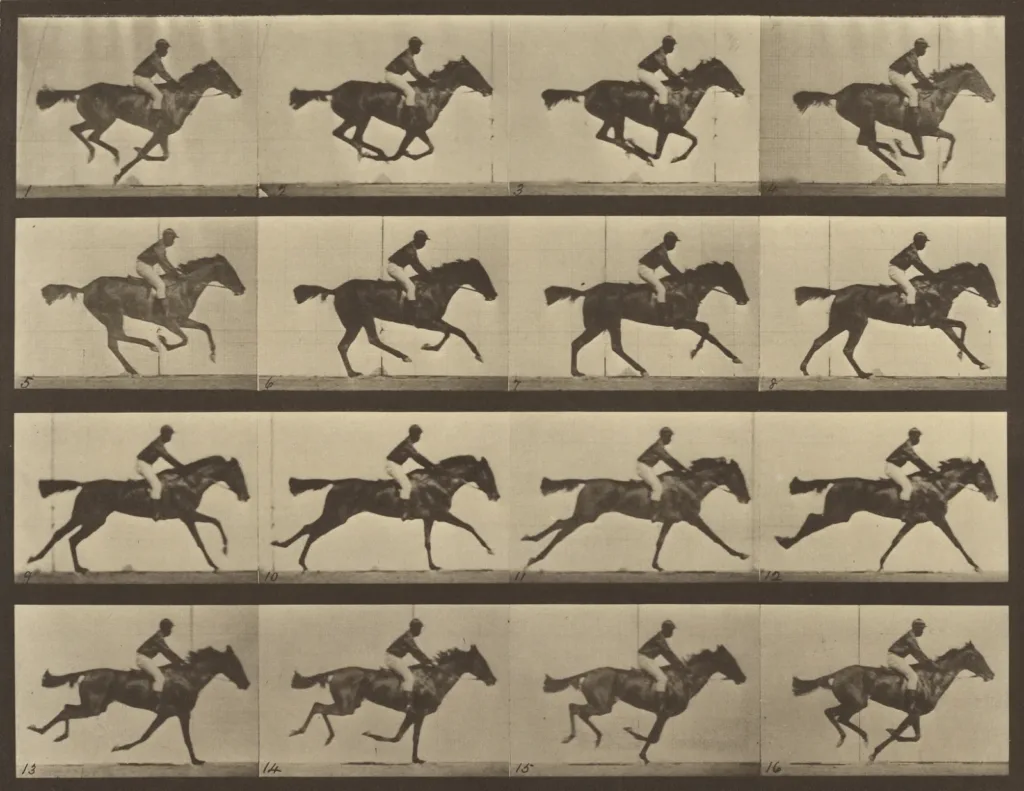
The fastest recorded racehorse is Winning Brew, a two-year-old filly who ran two furlongs (402 m) in 20.57 seconds at Penn National in Pennsylvania in 2008, about 70 km/h (Guinness World Records). Over a staying race like the Cup, horses settle into a pace that is slower than their sprint but still faster than any human has ever run, even for a few strides.
| Who | What | Speed |
|---|---|---|
| Winning Brew (horse) | 402 m in 20.57 s, 2008 | about 70 km/h |
| Kingston Rule (horse) | Melbourne Cup record, 3,200 m in 3:16.3, 1990 | about 59 km/h average |
| Usain Bolt | Peak speed in his 9.58 s 100 m, 2009 | about 44 to 45 km/h |
| Usain Bolt | 100 m world record, average | about 37.6 km/h |
| A fit club runner | 5 km in 20 minutes | 15 km/h |
The numbers that matter: a Cup horse holds a pace for more than three minutes that is well above the fastest a human has ever moved on foot. Bolt’s top speed, measured by laser, was 12.3 to 12.5 metres a second, reached between about 50 and 70 m into the race (Štuhec et al., 2023); his 9.58 s world record still stands.
How long is the Melbourne Cup?
3,200 metres, run as a handicap at Flemington. It was two miles until Australia went metric in 1972. The record, 3:16.3, was set by Kingston Rule in 1990 and still stands.
For scale, 3,200 m is eight laps of a running track. A runner holding 4 minutes per kilometre, a strong club pace, would take 12 minutes 48 seconds, nearly four times as long as the horses. Our free marathon training plan will get you round 42 km; it will not get you round Flemington in under 13 minutes.

How big was Phar Lap’s heart?
Phar Lap’s heart weighs 6.35 kg, more than one and a half times the 3 to 4 kg of an average Thoroughbred (National Museum of Australia display, reported by Region Canberra). An adult man’s heart weighs about 330 g on average (Molina and DiMaio, 2012), so Phar Lap’s was roughly 19 times heavier. Some older sources give 6.2 kg.
Phar Lap won 37 of his 51 races, including the 1930 Melbourne Cup, carrying about 62.5 kg (9 stone 12 pounds). The saying “a heart as big as Phar Lap” still means courage and staying power in Australia.
Where is Phar Lap’s heart? At the National Museum of Australia in Canberra, preserved in a sealed case. It went back on display in August 2025 after two years out during gallery work, and entry is free. His hide is at Melbourne Museum and his skeleton at Te Papa in Wellington, New Zealand.
The engine: why a horse beats you over 3,200 m
Oxygen
VO2max is the most oxygen your body can use, per kilo of bodyweight, per minute. Elite human endurance athletes sit around 70 to 85 mL/kg/min. Trained Thoroughbreds reach roughly 160 to 200, about twice as much (a review of equine exercise physiology). That is the gap between a good engine and a very different machine. To raise your own, try these workouts to improve your VO2 max.
Heart rate
A racehorse’s heart can beat about 240 times a minute flat out. A fit man maxes out somewhere around 180 to 200.
A built-in blood boost
A horse’s spleen holds a reserve of red blood cells and squeezes them into the bloodstream when the horse works hard. The share of the blood made up of red cells (haematocrit) rises from about 32 to 46 per cent at rest to 60 to 70 per cent at full effort (same review). More red cells means more oxygen to the muscles, on demand. Humans have nothing like it.
Where humans win: the heat and the long haul
Over a long run on a hot day, the gap closes. Humans shed heat unusually well: we sweat heavily, carry little body hair and can breathe through the mouth while running, which is why people have long been able to run animals down over distance (Daniel Lieberman, Harvard). A 2020 study of race results found heat slows horses more than it slows people, though horses still usually win (Halsey and Bryce, reported by Outside). For how runners went the distance long before gels and GPS watches, see endurance lessons from the ancient runners.
The best test is the Man v Horse Marathon in Llanwrtyd Wells, Wales, started in 1980 after a pub argument about which was faster over rough country (Guinness World Records). The course is about 22 miles (35 km) of hills, bog and forest, though the route has changed over the years. Horses win most years, but runners have beaten them five times:
| Year | Runner | Time |
|---|---|---|
| 2004 | Huw Lobb | 2:05:19 |
| 2007 | Florian Holzinger | 2:20:30 |
| 2022 | Ricky Lightfoot | 2:22 |
| 2023 | Daniel Connolly | 2:24:38 |
| 2025 | Dewi Griffiths | 2:23:54 |
In 2026 the horses won again: Rachel Lima on Zameel finished in 2:31:37 on a new, longer route, eight minutes ahead of the first runner, Daniel Connolly (Herald.Wales). For more on how far the human body can go, read the science of endurance and the Barkley Marathons.
Could you train like a racehorse?
Not the speed. But the lesson from the horse is the engine: a big aerobic base, built by plenty of steady running, lets you hold a hard pace for longer. Start with a 16-week marathon plan or, if you already run, the sub-4-hour plan. Both are free PDFs.
And spare a thought for the riders. A jockey weighs about a ninth of the horse and steers it at close to 60 km/h. How much jockeys weigh, and what it takes to ride explains.
FAQ
How fast can a horse run?
About 70 km/h in a short sprint: the record is Winning Brew’s 402 m in 20.57 seconds in 2008. Over the 3,200 m Melbourne Cup, the record pace is about 59 km/h.
How heavy was Phar Lap’s heart?
6.35 kg, about one and a half times an average Thoroughbred heart and roughly 19 times a man’s.
Where is Phar Lap’s heart kept?
At the National Museum of Australia in Canberra, where it has been back on display since August 2025.
How long is the Melbourne Cup?
3,200 metres. It was two miles until 1972.
Can a human beat a horse in a race?
Over a sprint, no. Over long distances in heat, sometimes: runners have beaten the horses five times at the Man v Horse Marathon in Wales, most recently in 2025.