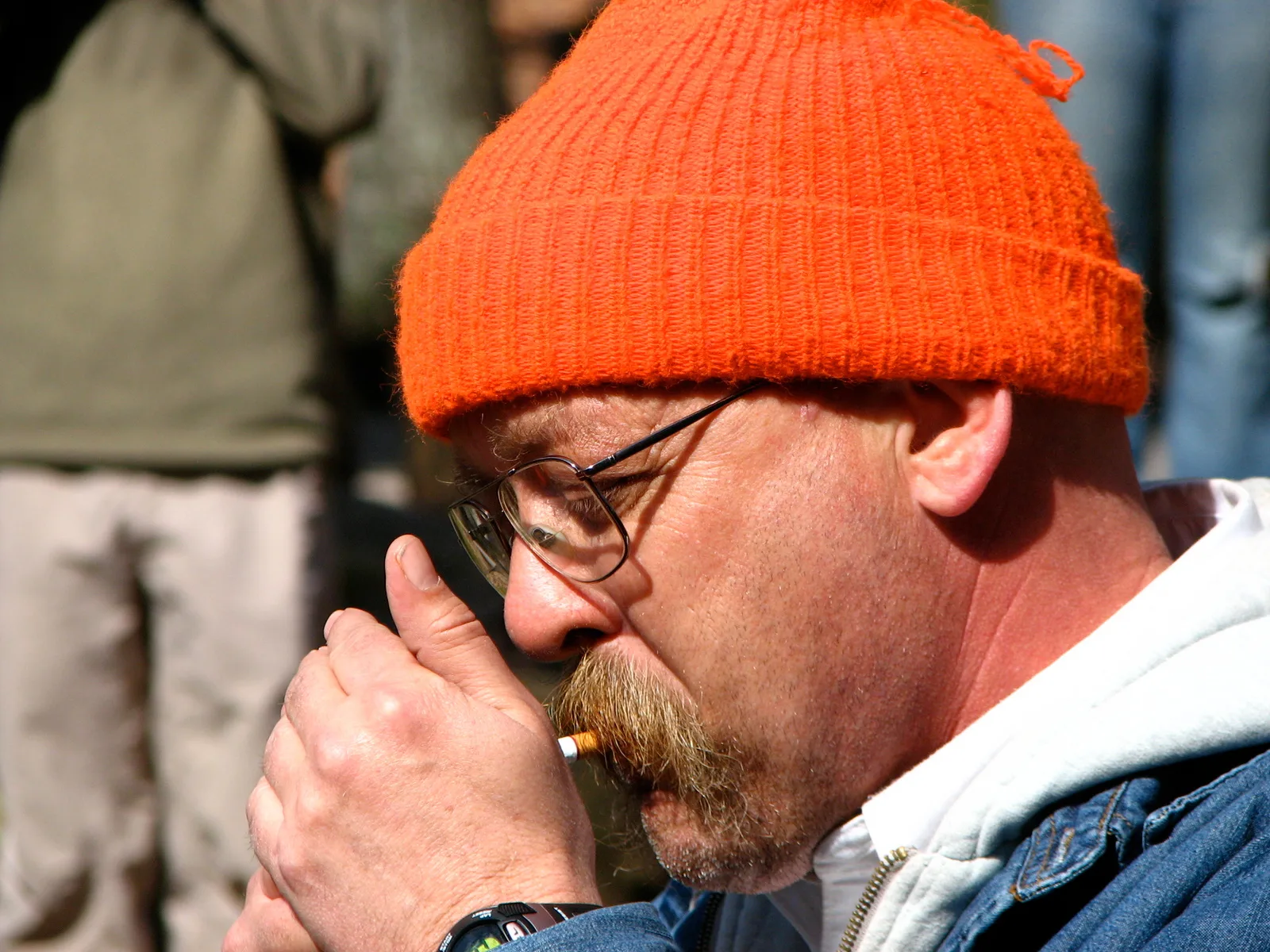
Forty of the toughest ultrarunners in the world line up at a yellow gate in the Tennessee woods. Nobody knows exactly when the race will start. When the race director lights a cigarette, they’re off: five loops of an unmarked course with no GPS, no aid stations and 60 hours to finish. Most years, nobody does.
That’s the Barkley Marathons, a race so hard that in about 40 years only 20 people have ever finished it. The last two editions, in 2025 and 2026, ended with no finishers at all.
The Barkley Marathons is an ultramarathon held each year in Frozen Head State Park, Tennessee. Runners have 60 hours to complete five loops of an unmarked course, officially 100 miles in total but, by the race director’s own estimate, closer to 130. There is no GPS and no aid. Runners prove they have done each loop by tearing pages from books hidden along the way. Since the current format began in 1995, only 20 people have finished, the latest in 2024.
- Where: Frozen Head State Park, Morgan County, Tennessee, USA
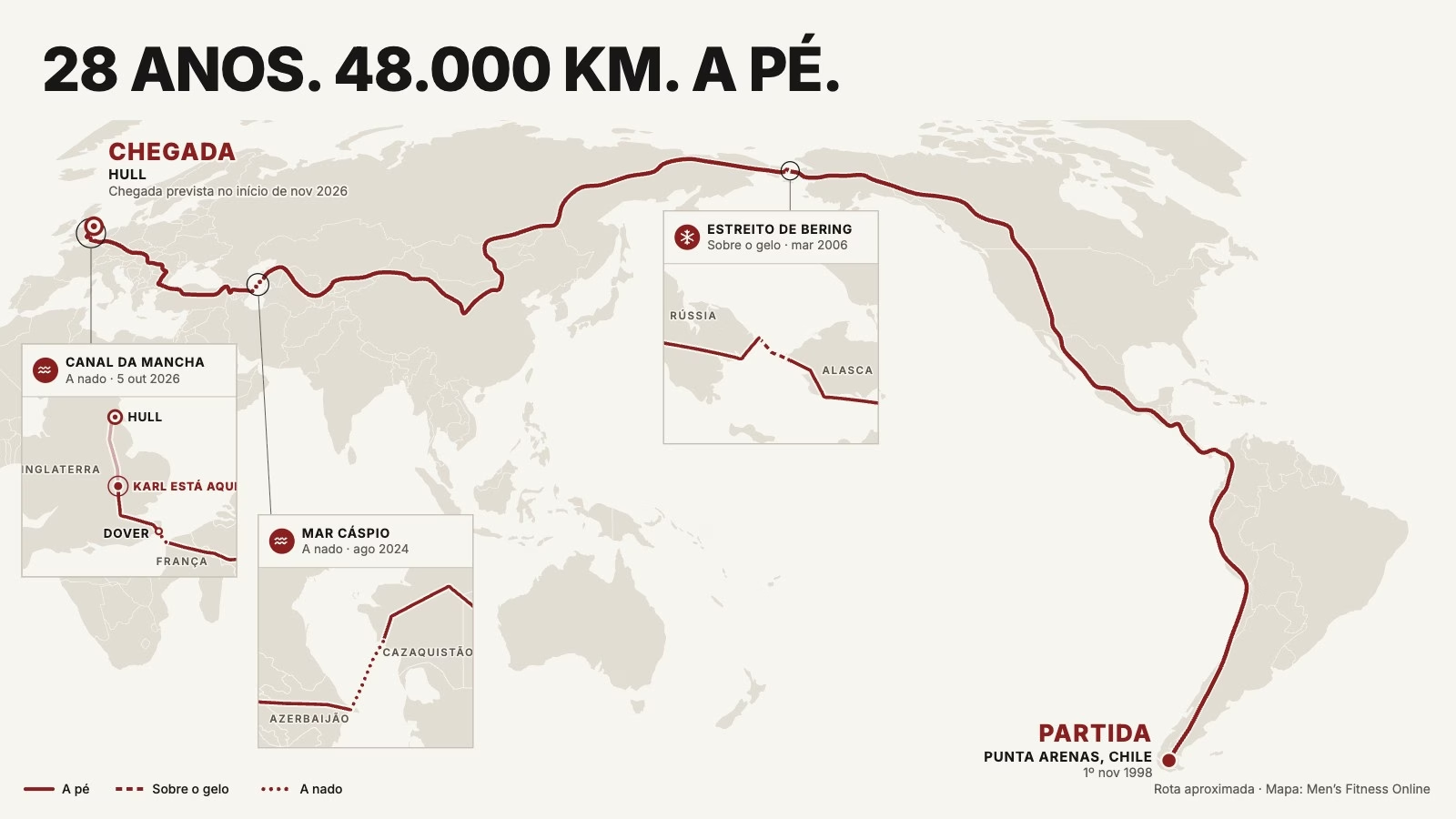
- Created by: Gary “Lazarus Lake” Cantrell and Karl “Raw Dog” Henn, first held in 1986
- Distance: five loops, officially 20 miles (32 km) each; Lazarus Lake’s own estimate is closer to 26 miles (42 km)
- Climb: commonly quoted at about 60,000 ft (18,000 m), an estimate
- Time limit: 60 hours; loop 4 must start by the 36-hour mark
- Field: about 40 runners (40 started in 2026)
- Entry fee: US$1.60
- Finishers: 20 runners, 26 finishes in total (as of 2026)
- Course record: 52:03:08, Brett Maune (USA), 2012
- Next race: 2027, date secret (2026 started on 14 February)
Where did the Barkley Marathons come from?
The race started with a prison break. In 1977, James Earl Ray, the man convicted of assassinating Martin Luther King Jr, escaped from Brushy Mountain State Penitentiary, next to what is now Frozen Head State Park. After more than two days on the run through the hills, he had covered only a few miles before he was caught. Gary Cantrell, a local runner better known as Lazarus Lake, reckoned he could have done 100 miles in that time.
He and Karl Henn set out to prove it. The first Barkley, in 1986, was about 50 miles with a 24-hour limit, and nobody finished. It is named after Barry Barkley, Cantrell’s neighbour and an early running companion. The course grew to 100 miles in 1989, and the current format of roughly 20-mile loops with a 60-hour limit began in 1995. That year, Britain’s Mark Williams became the first person to finish, in 59:28:48.
Lazarus Lake also created Big’s Backyard Ultra, the last-one-standing race now run all over the world. Australia’s Phil Gore holds the backyard ultra world record in that format.
How does the Barkley Marathons work?
Almost everything about the Barkley is designed to make it harder.
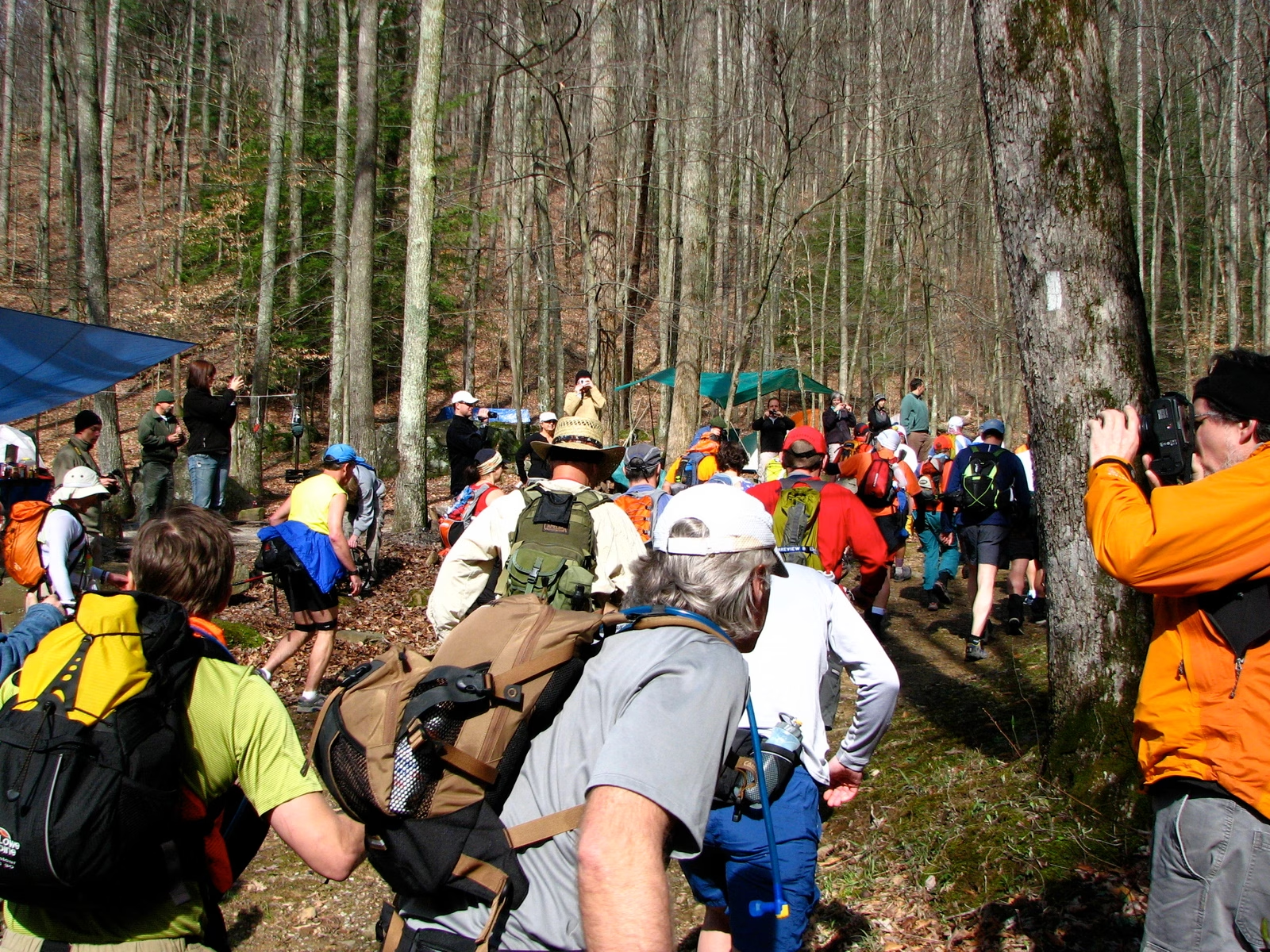
- The start is secret. Runners know only the window. A conch shell is blown about an hour before the start, and the race begins when Lazarus Lake lights a cigarette.
- Five loops, 60 hours. That’s an average of 12 hours a loop, and the clock keeps running while you rest at camp. Every loop starts and finishes at the yellow gate.
- No markings, no GPS. Runners navigate with a map and compass through briars and steep, trackless climbs with names like Rat Jaw. There are no aid stations, only water at a couple of points.
- The books. Books are hidden around the course, and runners tear out the page that matches their bib number to prove they’ve been there. They get a new number each loop. A missing page means disqualification.
- The direction changes. Loops alternate between clockwise and counterclockwise, and the pattern varies year to year. On loop 5, the leader picks a direction and anyone else on the loop has to go the other way.
- Taps. When a runner quits, a bugler plays Taps, the military funeral call, as they return to camp.
Runners who complete three loops inside 40 hours finish the “Fun Run”. That’s officially 60 miles, and in most years it’s the best anyone manages.
How do you get into the Barkley Marathons?
There is no website and no registration page. Applications go by email at a secret time, and the process changes from year to year. Applicants write an essay on “Why I should be allowed to run in the Barkley”, and the lucky ones receive a “letter of condolence”. The entry fee is US$1.60.
First-timers, known as virgins, also bring a licence plate from their home state or country. Returning runners bring whatever item Lazarus Lake asks for, such as a white shirt, a flannel shirt or socks. And every year one runner is picked as the “human sacrifice”: the entrant he thinks least likely to finish a single loop, who wears bib number 1.
Has anyone ever finished the Barkley Marathons?
Yes, but not many. As of 2026, 20 runners have finished, with 26 finishes between them, which works out to around 2% of starters. Most years, nobody finishes at all.
| Record | Who and when |
|---|---|
| First finisher | Mark Williams (UK), 1995, 59:28:48 |
| Course record | Brett Maune (USA), 2012, 52:03:08 |
| Most finishes | Jared Campbell (USA), 4 (2012, 2014, 2016, 2024) |
| Most finishers in one year | 5, in 2024 |
| First woman to finish | Jasmin Paris (UK), 2024, 59:58:21 |
The closest near miss belongs to Canada’s Gary Robbins, who reached the yellow gate in 2017 six seconds after the 60-hour cut-off, and had also come in by the wrong route. Robbins’ attempts are the subject of the film Where Dreams Go to Die.
2024: a record five finishers
The 2024 race, which started on 20 March, broke the Barkley’s own rules of thumb. Five runners finished, beating the previous record of three in a year. Ukraine’s Ihor Verys, who lives in Canada, won it in 58:44:59. John Kelly earned his third finish and Jared Campbell his record fourth, and Jasmin Paris became the first woman ever to finish, with 99 seconds to spare (iRunFar, Canadian Running).
| 2024 finishers | Time |
|---|---|
| 1. Ihor Verys (Ukraine/Canada) | 58:44:59 |
| 2. John Kelly (USA) | 59:15:38 |
| 3. Jared Campbell (USA) | 59:30:32 |
| 4. Greig Hamilton (New Zealand) | 59:38:42 |
| 5. Jasmin Paris (UK) | 59:58:21 |
2025 and 2026: no finishers
Then the course bit back. In 2025 the race started on 18 March at 11:37am, the latest start on record, on a course runners described as more overgrown than ever. Only about 10 runners finished the first loop inside the cut-off, nobody finished, and John Kelly was the only Fun Run finisher, in 39:50:27 (iRunFar).
In 2026 Lazarus Lake moved the start to Saturday 14 February, the earliest ever, which meant shorter days and colder nights. Forty runners from 15 countries started in rain, mud, cold and fog, including Britain’s Damian Hall, France’s Mathieu Blanchard and America’s Max King. All three were out on loop 3. France’s Sébastien Raichon was the only Fun Run finisher, in 38:05:46, but missed the 36-hour cut-off to start loop 4, and for the second year running there were no finishers (iRunFar).
View this post on InstagramA post shared by Les français de la Barkley (@barkley_marathons_french_team)
The weather at the Lookout Tower on top of Rat Jaw during the 2026 race. (Photo by Ashley Harris, shared by Keith Dunn.)
When is the 2027 Barkley Marathons?
Nobody outside the race knows, and that’s the point. The date is never announced in advance. For years the race ran in mid-March to early April, often around April Fools’ Day, but 2026 started in mid-February. Our read: expect late winter again, and expect to find out only once the runners are already out there.
There is no official tracker. The race’s unofficial news channel is Keith Dunn, who posts updates on X and Bluesky, and outlets such as iRunFar report the results loop by loop.
Has an Australian finished the Barkley?
Not yet. No Australian is among the 20 finishers. Victoria’s Isobel Ross has started three times, most recently in 2025. The closest Australasian finisher is New Zealand’s Greig Hamilton, fourth of the five finishers in 2024. For Australian endurance runners, the race to watch is the backyard format: see our list of Australian backyard ultras.
Has David Goggins run the Barkley Marathons?
No. Despite plenty of searches suggesting otherwise, David Goggins has never started the Barkley. He isn’t on the finishers list or in the 2024, 2025 or 2026 results. A story claiming he would run the 2026 race was an April Fools’ joke, as the site that published it later noted. Goggins has run another Lazarus Lake race: he won the Strolling Jim 40 in Tennessee.
Where to watch the Barkley Marathons documentary
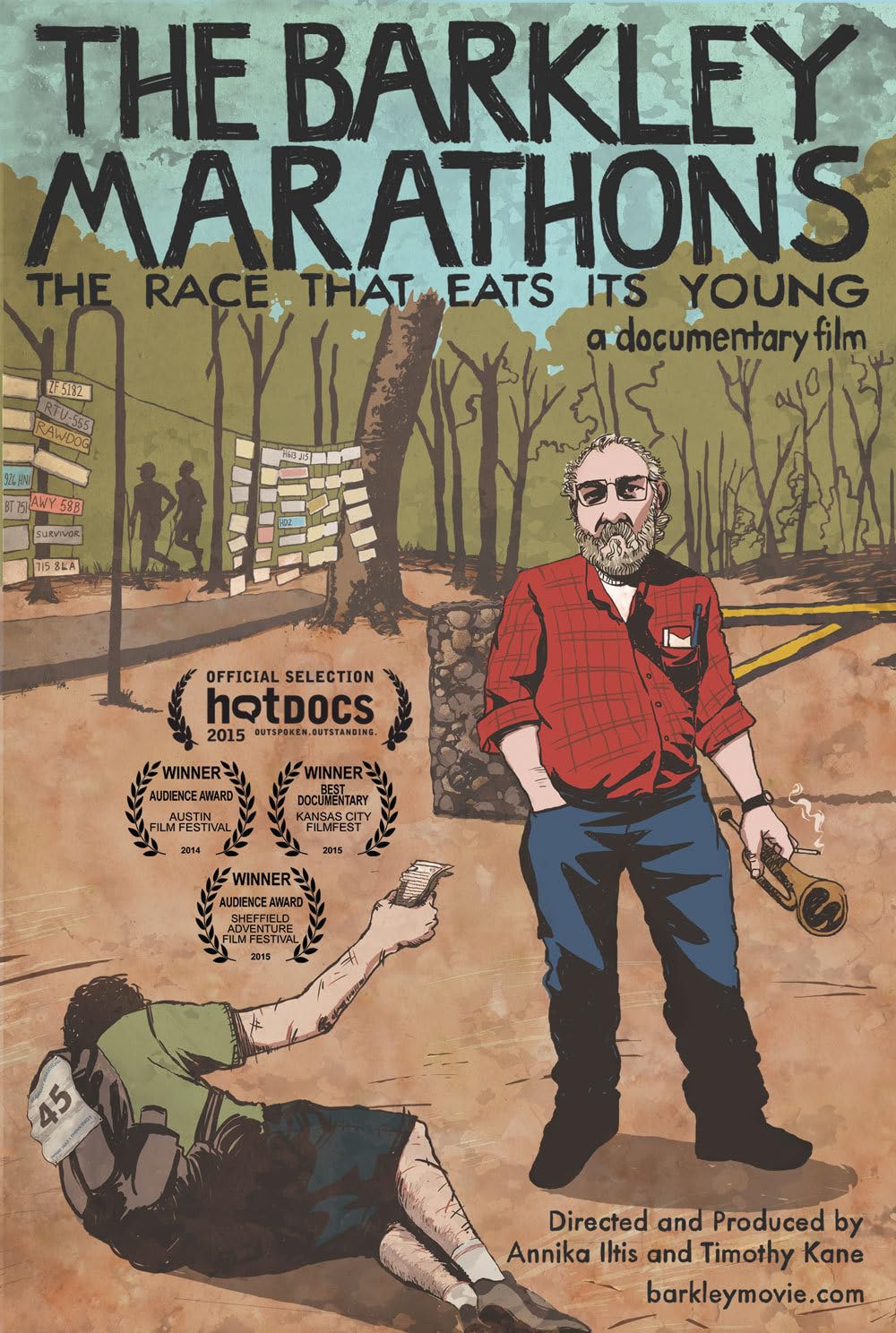
- The Barkley Marathons: The Race That Eats Its Young (2014), the film that made the race famous, follows the 2012 race. In the US it’s on Prime Video; in Australia you can rent or buy it on Apple TV. It isn’t on Netflix. Streaming listings change, so check JustWatch for your country.
- The Finisher: Jasmin Paris and the Barkley Marathons (2025), from Singletrack, tells the story of Paris’s three-year quest. It premiered free on Singletrack’s YouTube channel and has screened at the Banff Mountain Film Festival.
- Where Dreams Go to Die (2017), by Ethan Newberry, follows Gary Robbins’ 2016 and 2017 attempts and that six-second miss.
Why the Barkley matters
Most races are designed so that you can finish if you’re fit enough. The Barkley is designed so that you probably can’t, and that’s why the best ultrarunners in the world keep going back. Our read: in an era of GPS watches, aid stations every 10 km and live tracking, it’s one of the last races where you’re truly on your own, and a finish is worth more than a win almost anywhere else.
If you’d like to start a little smaller, our free 16-week marathon training plan is a good first step. And for the record, Phil Gore’s story of running 119 hours shows what the other Lazarus Lake race asks of a body.
FAQ
How long is the Barkley Marathons?
Officially 100 miles (161 km) over five loops of 20 miles. Lazarus Lake’s own estimate puts each loop at closer to 26 miles, so the real total is around 130 miles (about 210 km), with a 60-hour limit.
How many people have finished the Barkley?
Twenty runners, with 26 finishes between them, as of 2026. Nobody finished in 2025 or 2026.
Why does the Barkley cost $1.60 to enter?
The tiny fee is part of the race’s deadpan humour. The real price of entry is the essay, the licence plate for first-timers and the 60 hours.
Can you watch the Barkley live?
No. There’s no broadcast and no tracker. Follow Keith Dunn’s posts on X and Bluesky and the loop-by-loop reports from iRunFar.
Who was the first woman to finish the Barkley?
Britain’s Jasmin Paris, in 2024, in 59:58:21, less than two minutes inside the 60-hour limit.
Main photo: Lazarus Lake lights the cigarette that starts the race. Photo: Michael Hodge, CC BY 2.0.