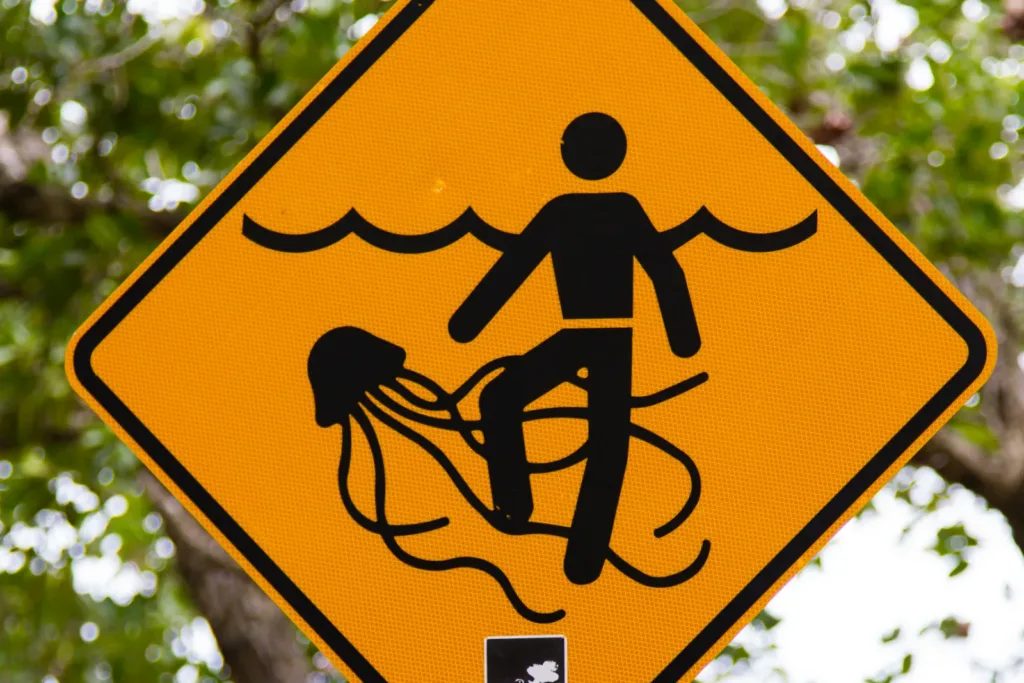
Oceans swimmers, kyakers and surfers beware, every year from November, the warm water off tropical Australia brings box jellyfish and Irukandji close to shore. Here’s when stinger season runs, where it applies, what stinger nets and stinger suits do and don’t protect you from, and what to do if someone is stung.
- When: November to May in tropical Queensland, though stingers can be in the water all year (Queensland Government).
- Where: box jellyfish in shallow tropical water north of Agnes Water; Irukandji north of southern K’gari (Fraser Island) (Surf Life Saving Queensland). Also WA’s north-west, where Exmouth’s peak is November to April.
- Protection: swim at patrolled beaches, inside stinger nets, and consider a full-body lycra stinger suit.
- If stung: call 000, pour vinegar on the sting, and be ready to start CPR.
When is stinger season?
The Queensland Government gives the marine stinger season as November to May, and says stingers are present in tropical Queensland waters all year, with the risk higher in season (Qld Government). Local councils put stinger nets in for the season; Cassowary Coast Regional Council, south of Cairns, heads its beach page “Stinger Season November to May” (Cassowary Coast). In Western Australia, Parks and Wildlife says box jellyfish and Irukandji around Exmouth are most likely “from November until April” (WA Parks).
Where are box jellyfish and Irukandji found?
| Box jellyfish (Chironex fleckeri) | Irukandji (Carukia barnesi) | |
|---|---|---|
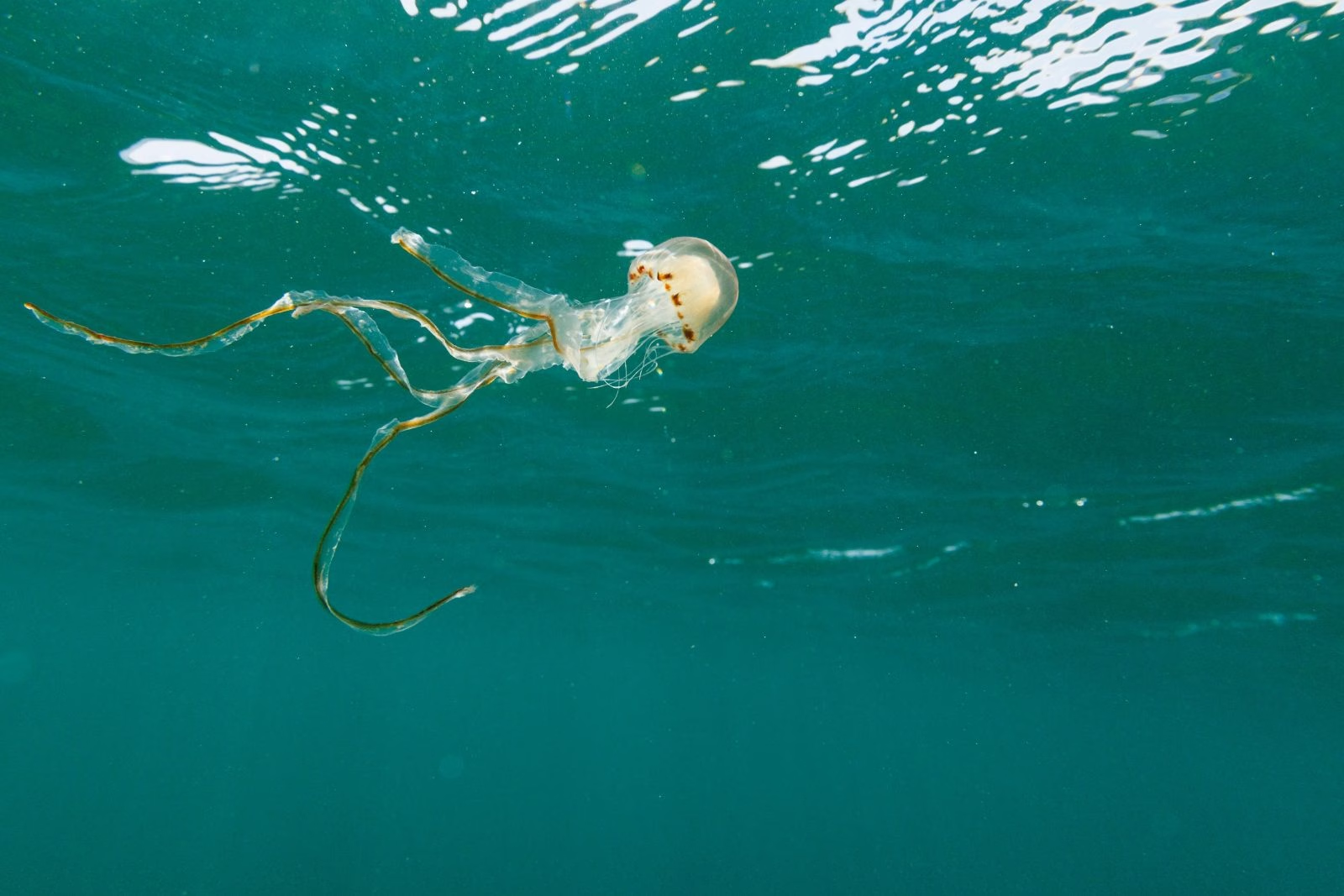
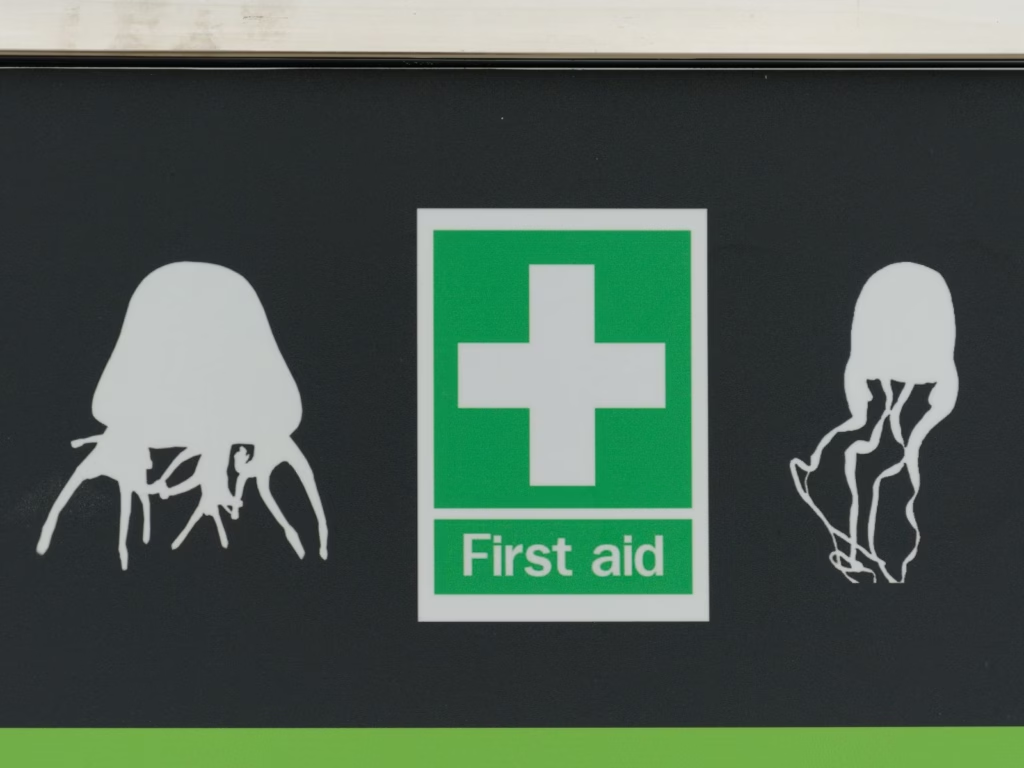
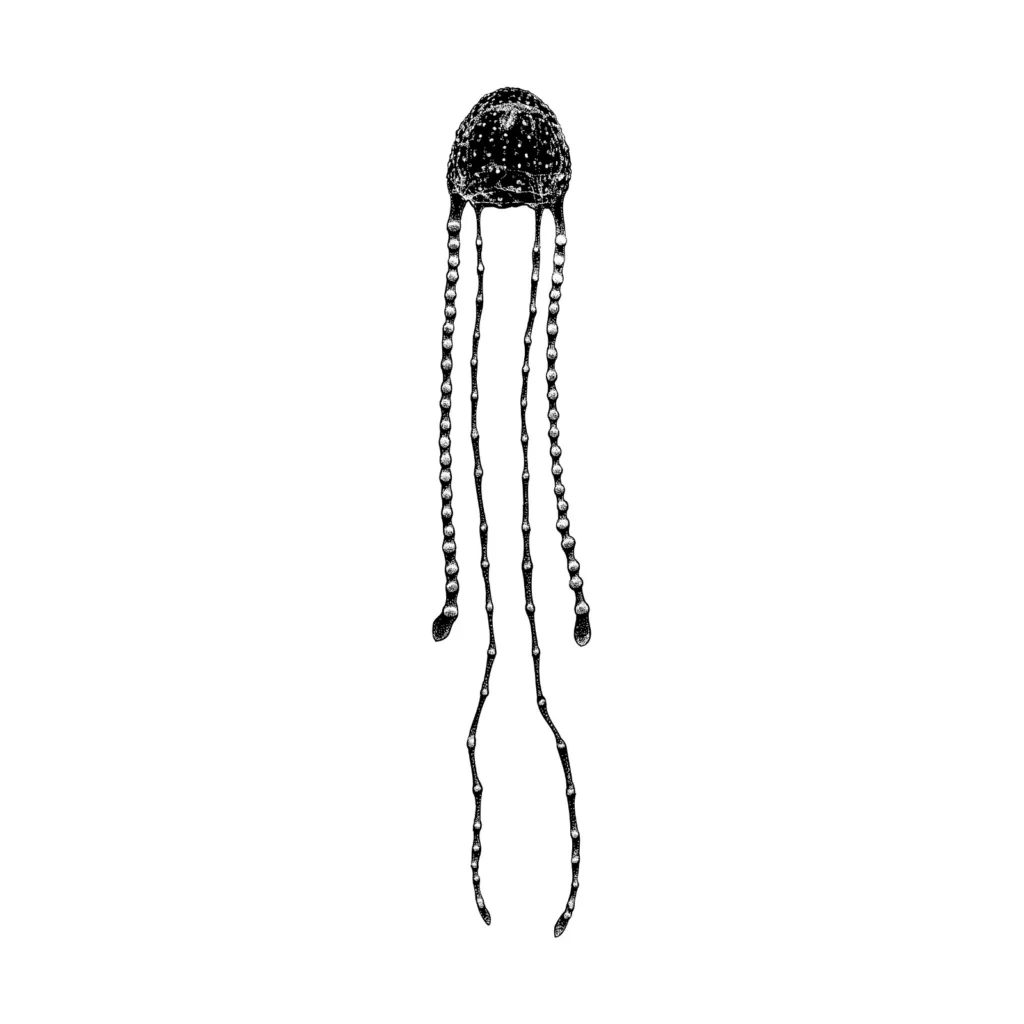
| What it looks like | Large but almost transparent, with a box-shaped bell up to 38 cm across | Small and transparent, 1–2 cm across, usually not seen |
| Where (Qld) | Shallow tropical waters north of Agnes Water | Tropical waters north of southern K’gari (Fraser Island) |
| Stopped by stinger nets? | Yes, nets protect against box jellyfish | No, they’re small enough to get through |
| Symptoms | Immediate, severe pain | Can take 20–40 minutes to develop |
Stingers are a risk across tropical northern Australia, not just Queensland. Brisbane and Gold Coast beaches sit south of both ranges given above; there, bluebottles are the more familiar sting, and they’re treated differently (see first aid below).
Do stinger nets work?
Partly. Cassowary Coast council puts it simply: stinger nets “protect against box jellyfish stings but don’t stop smaller jellyfish like bluebottles and Irukandji” (Cassowary Coast). The nets are still the safest place to swim in season, but a net isn’t a guarantee, which is why the Queensland Government pairs them with patrolled beaches and lycra suits.
Stinger suits: what they are and whether you need one
A stinger suit is a thin, full-length lycra or similar suit that covers the arms, legs and body, often with a hood and gloves. The Queensland Government advises people to “consider wearing a full-body lycra suit to protect against marine stings” (Qld Government), and WA Parks says stinger suits “may protect the parts of the body they cover” (WA Parks). That last part matters: your face, hands and feet are still exposed unless you cover them.
You’re most likely to need one snorkelling or diving on the reef and around the islands, where there are no nets. Many reef tours supply stinger suits, so check when you book.
Stinger suit vs wetsuit
Tropical water is warm: Cairns averages 24–29°C and Darwin 26–31°C through the year, and in that a neoprene wetsuit is usually too hot to wear for long, which is why lycra suits exist. A thin wetsuit also covers skin, but a stinger suit is the lighter, cooler option. Our wetsuit temperature guide shows where neoprene starts to make sense: below about 24°C.
First aid for jellyfish stings
This is a summary of Surf Life Saving Queensland’s advice (SLSQ). In any serious case, call Triple Zero (000) first and follow lifeguards.
- All stings: get the person out of the water if it’s safe, and check DRSABCD.
- Box jellyfish: pour vinegar on the sting for at least 30 seconds, then pick off any tentacles. Start CPR immediately if needed.
- Irukandji: call 000, douse the area with vinegar, and keep the person out of the water, somewhere safe, and watched for 45 minutes.
- Bluebottles and other stings: rinse with seawater and apply heat for 20 minutes; use cold packs if heat doesn’t help. Get medical help if symptoms persist.
If you’re not sure what stung someone in tropical water, the Queensland Government says to seek medical aid, because Irukandji symptoms can be delayed.
FAQ
When does stinger season start?
The Queensland Government gives the season as November to May, so from 1 November. Stingers can be in tropical waters all year.
Is there stinger season on the Gold Coast or in Brisbane?
Box jellyfish and Irukandji are found north of Agnes Water and southern K’gari respectively, both well north of the Gold Coast and Brisbane. Bluebottles are common in the south east.
Do stinger suits protect against Irukandji?
They protect the skin they cover. WA Parks says stinger suits “may protect the parts of the body they cover”, so exposed hands, feet and face can still be stung.
Should you put vinegar on a bluebottle sting?
No. Surf Life Saving Queensland’s advice for bluebottles is to rinse with seawater and apply heat for 20 minutes. Vinegar is for box jellyfish and Irukandji.