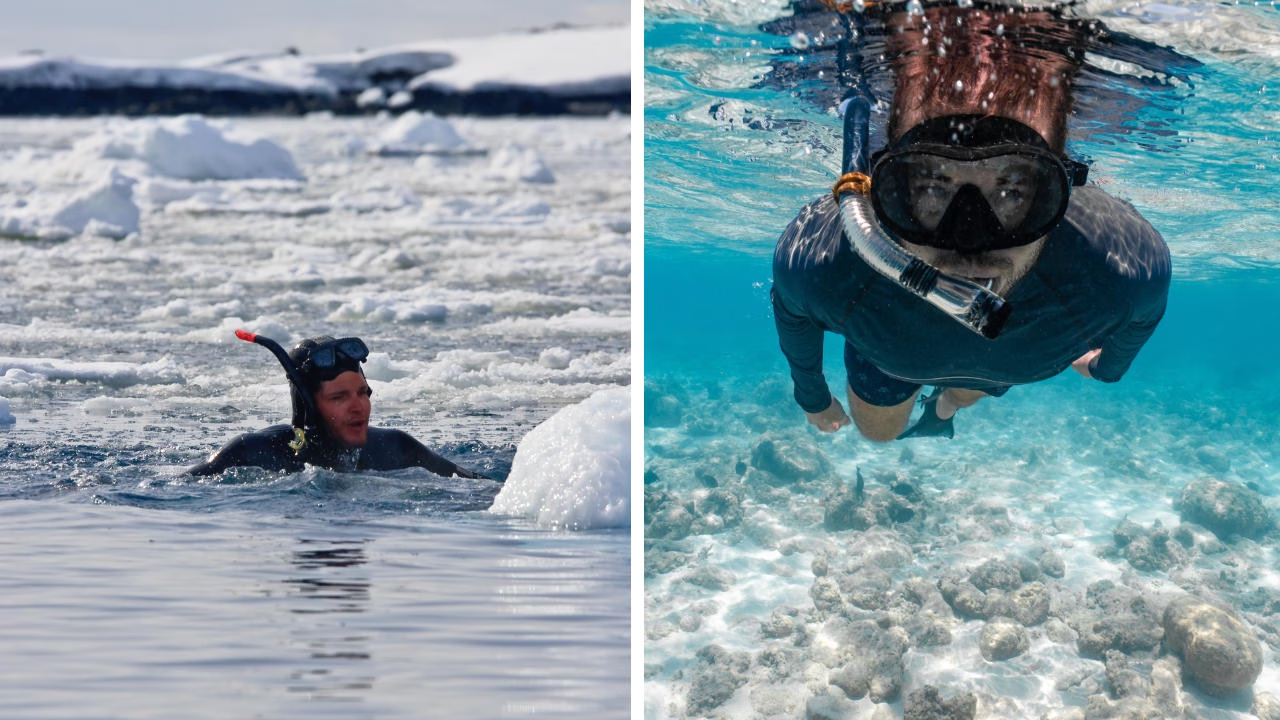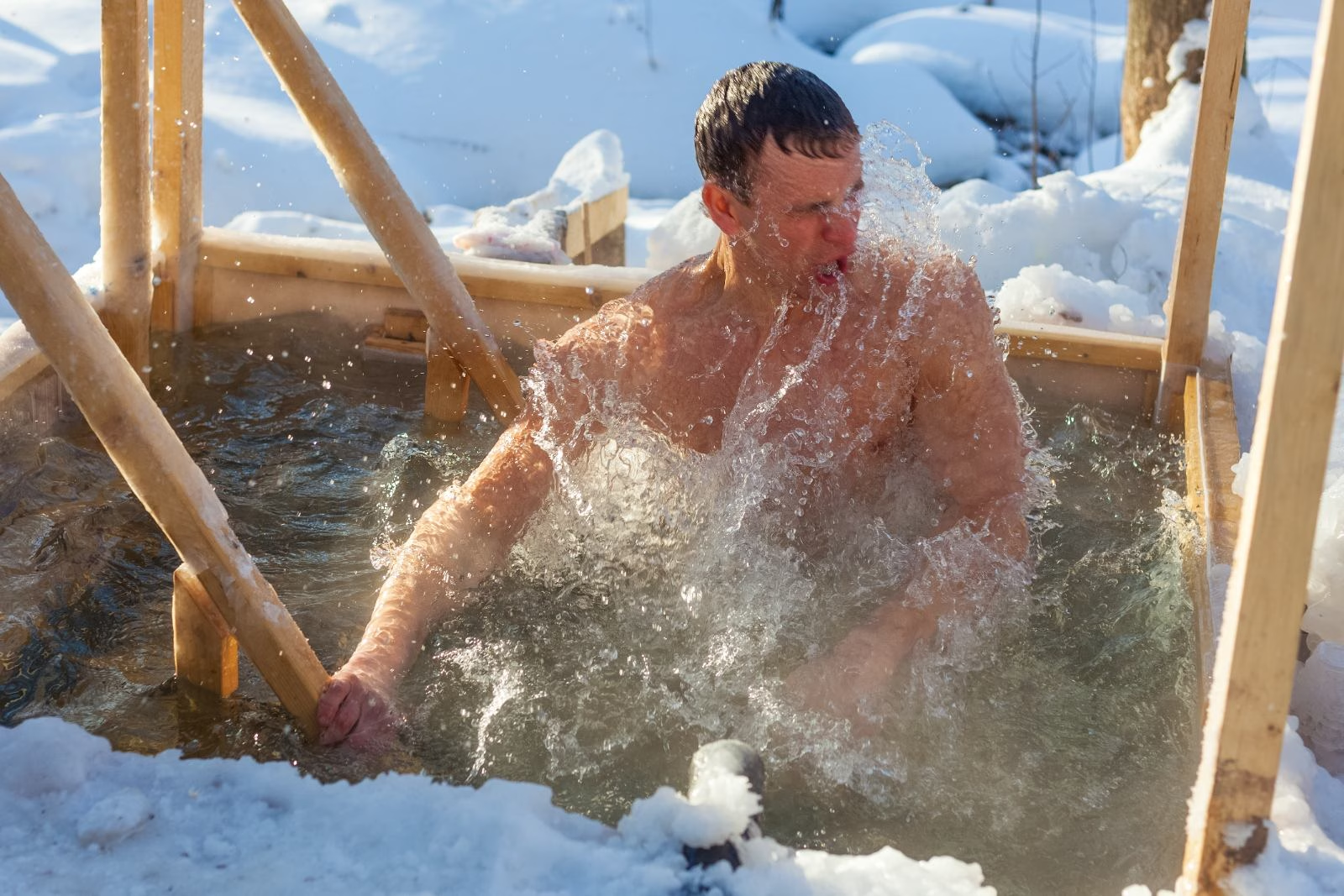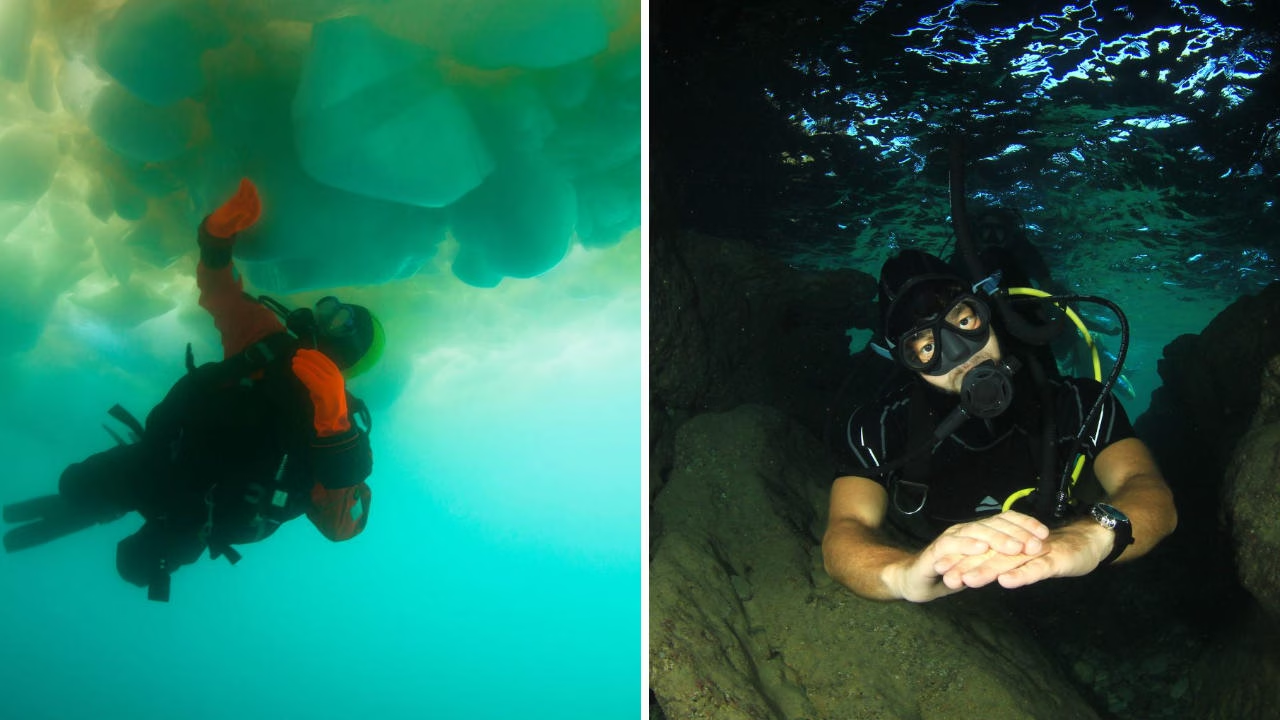
It’s the age-old choice of divers. Both keep you warm in cold water, but in opposite ways. A wetsuit lets a little water in and uses your body heat to warm it. A drysuit keeps water out completely. Here’s how each works, when you need which, and where a rash vest fits in.
A wetsuit traps a thin layer of water that your body warms; a drysuit keeps water out with seals and uses air and the layers underneath to insulate (PADI). For surfing, swimming and most paddling in Australian water, a wetsuit is enough. PADI says water below 10°C (50°F) calls for a drysuit when diving, and drysuits need specific training to use safely.
How a wetsuit keeps you warm
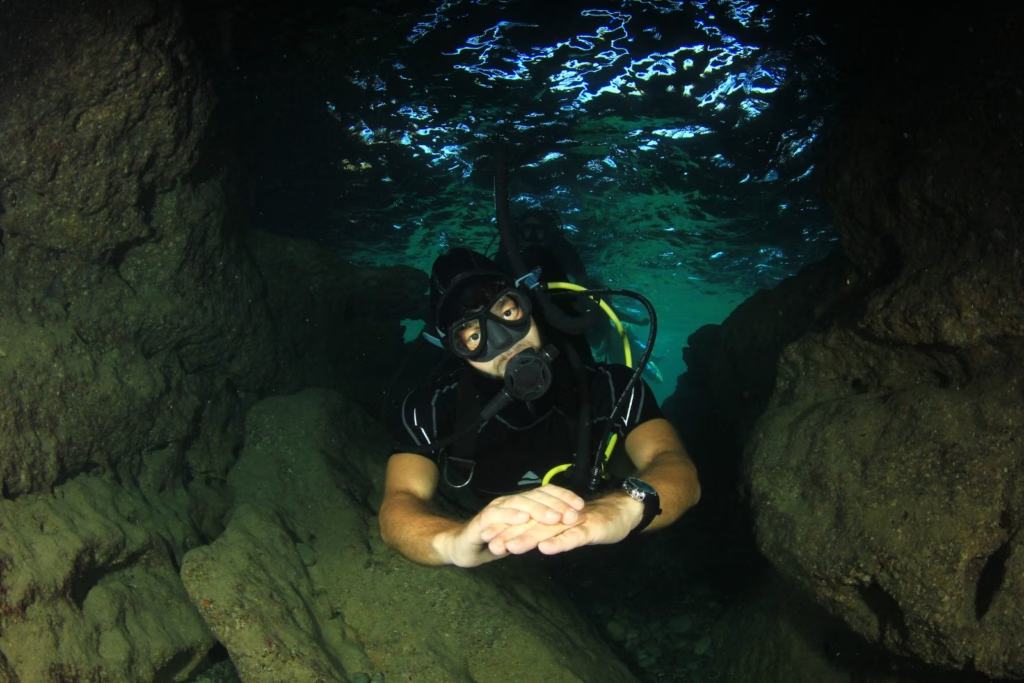
A wetsuit is made of neoprene, a foam rubber full of tiny gas bubbles. In PADI’s words, wetsuits “trap water between your skin and the suit, which is then warmed by your body heat” (PADI). The tighter the fit, the less that warmed water gets flushed out and replaced by cold water. Thicker neoprene insulates better but restricts movement more; our wetsuit temperature guide shows which thickness suits which water.
How a drysuit keeps you warm
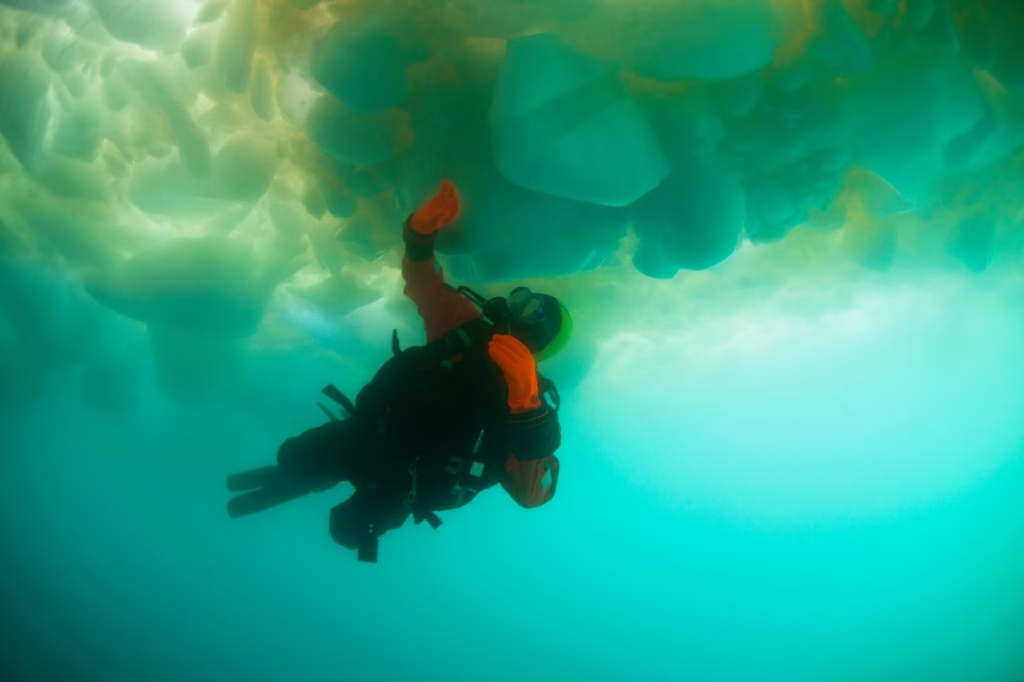
A drysuit is made from waterproof neoprene or a trilaminate membrane, with wrist and neck seals, a waterproof zip and built-in boots or socks to keep water out (PADI). It’s looser than a wetsuit and insulates with air rather than water. On its own a drysuit isn’t especially warm: the warmth comes from the undergarments you wear underneath, which you can change to suit the water.
For divers, that air space has to be managed: it compresses and expands with depth, and divers add and release air to stay comfortable and control buoyancy. PADI says you need extra skills to use a drysuit safely and recommends a course such as its Dry Suit Diver specialty.
Wetsuit vs drysuit compared
| Wetsuit | Drysuit | |
|---|---|---|
| Keeps you warm by | Warming a thin layer of water | Keeping water out; layers underneath insulate |
| Fit | Skin-tight | Looser, room for undergarments |
| Water inside | Yes, by design | No, if the seals work |
| Best for | Surfing, swimming, paddling, diving in mild to cool water | Diving and paddling in cold water, long exposure, cold air |
| Training needed | No | Yes, for diving |
| Upkeep | Rinse and dry | Seals and zip need care |
When do you need a drysuit?
- Diving below 10°C (50°F): PADI’s threshold (PADI).
- Paddling in cold water: the American Canoe Association’s cold-water guidance says that in water of 60°F (about 15.5°C) or colder a wetsuit is a must and a drysuit is highly recommended.
- Long, still exposure: boat crews, fishers and divers doing long or repeated dives lose heat faster than someone swimming hard.
In Australia, that mostly means winter diving and paddling in Tasmania and southern Victoria, where the sea drops to around 13°C. In the US, it covers New England, the Pacific Northwest and Northern California for much of the year.
Where does a rash vest fit in?
A rash vest (Americans say rash guard) is a thin lycra or polyester top. It protects against sun and chafing, and adds little warmth. On its own it suits water above about 24°C; under a wetsuit it stops rubbing at the neck and arms. It isn’t a wetsuit substitute in cool water.
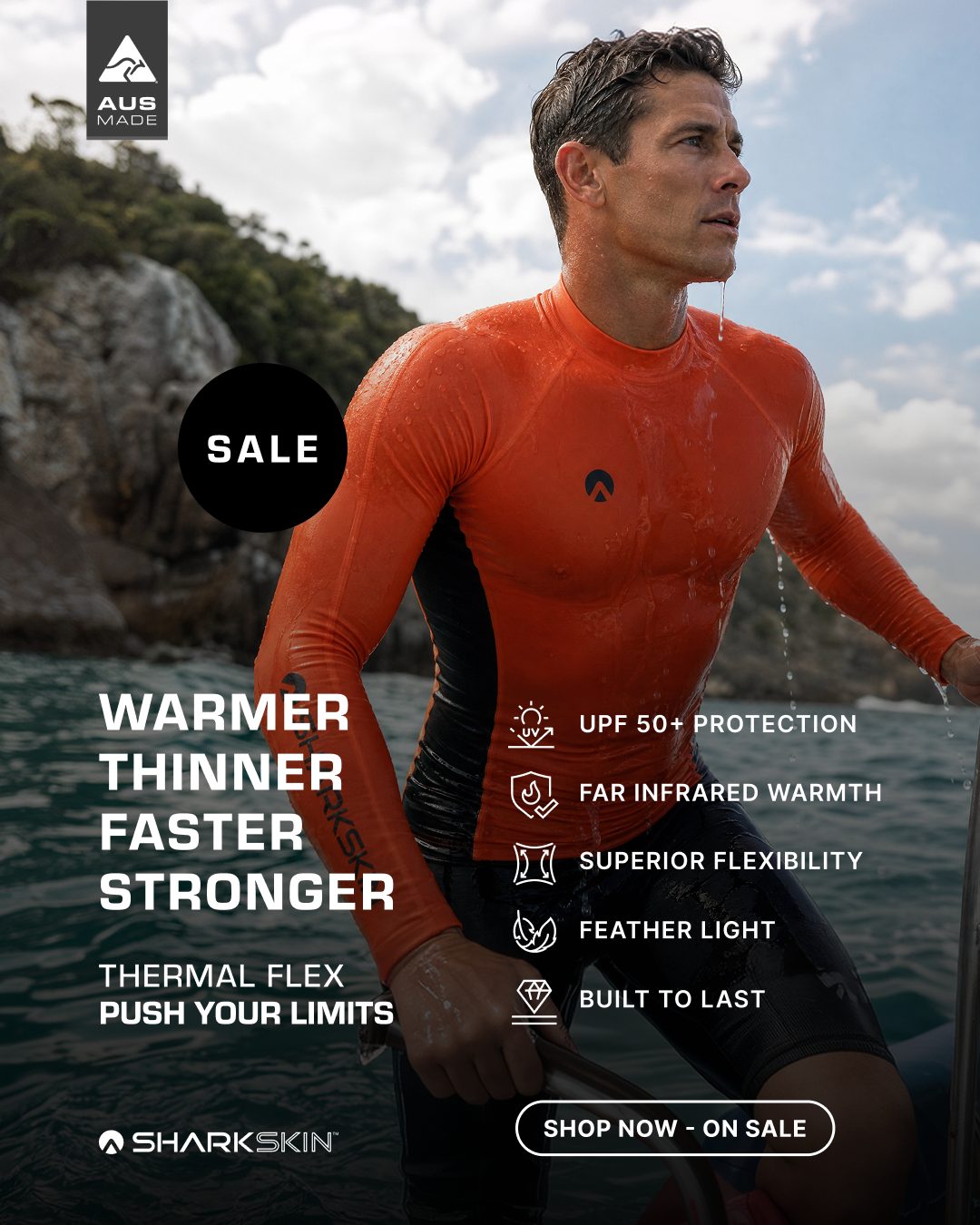
In the tropics, the full-length version is a stinger suit, worn for protection from jellyfish rather than cold (stinger season guide). And between a rash vest and a wetsuit there are thermal tops, including non-neoprene options such as Sharkskin, which Sharkskin says is “equivalent to a 3mm neoprene wetsuit underwater” (Sharkskin); see our Sharkskin explainer.
FAQ
Is a drysuit warmer than a wetsuit?
In cold water, with the right undergarments, yes. PADI says a drysuit “reduces heat loss more than a wetsuit” because it insulates with air instead of water.
Do you need training to use a drysuit?
For diving, yes. PADI says you need extra skills to use one safely and recommends a dry suit course.
What’s the difference between a rash vest and a rash guard?
Nothing: it’s the same garment. Australians say rash vest or rashie; Americans say rash guard.
Can you wear a rash vest instead of a wetsuit?
Only in warm water, roughly 24°C and above. A rash vest gives sun and chafe protection, not real warmth.
More on what to wear in the water
- Wetsuit temperature guide: what to wear in any water
- What to wear kayaking and paddle boarding
- What is Sharkskin? The Australian wetsuit alternative
- Stinger season: when it starts and how to stay safe
- Cold water shock and hypothermia, minute by minute
Sharkskin advertises on Men’s Fitness Online. Product claims in this article are Sharkskin’s own and are labelled as such.