
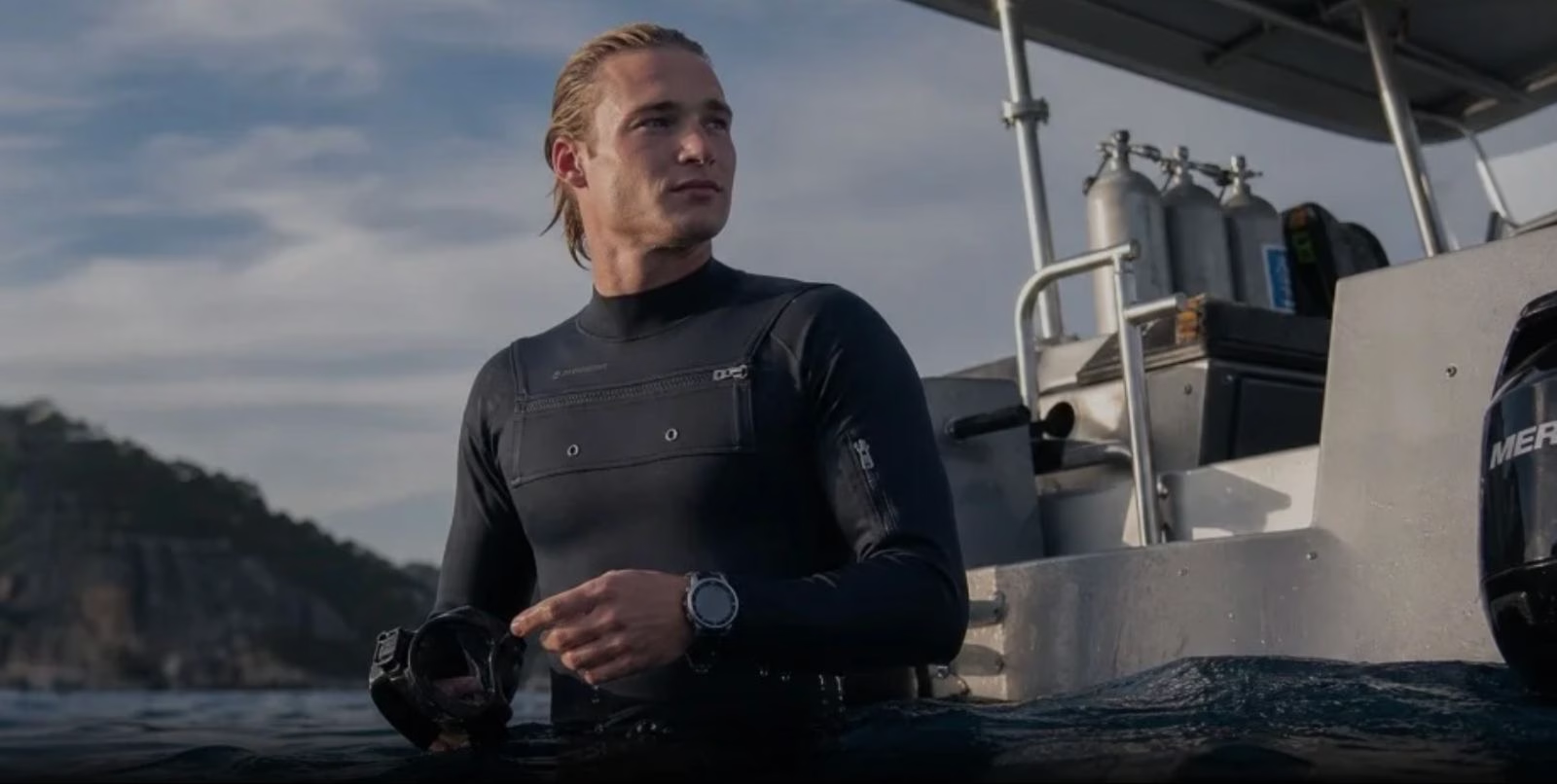
Spend enough time around dive boats, winter ocean swims or a cold boat ramp at dawn and you’ll eventually spot someone peeling off a sleek black top that clearly isn’t neoprene and looks suspiciously comfortable. Odds are it’s Sharkskin.
The Australian brand has built a loyal following among divers, spearos, paddlers and ocean swimmers who want warmth without wrestling themselves into a clammy wetsuit. But how does such thin fabric keep you warm, and is the more expensive titanium version genuinely better or just clever marketing?
One quick clarification: Sharkskin will tell you it isn’t technically a wetsuit. They’re right. But “Sharkskin wetsuit” is what everyone Googles for, so if you ended up here, go with me we will and sort out the distinction later.
What is Sharkskin?
Put simply clothing to stay warm in and out of the water. Sharkskin is an Australian water-sports apparel brand based in Newcastle, NSW. It began more than 25 years ago with a straightforward problem: how to keep scuba divers warm in the water and, just as importantly, on the boat afterwards.
Unlike a conventional wetsuit, Sharkskin isn’t one thick, full-body garment. It is a system of thermal tops, pants, vests, jackets and full suits that can be worn separately or layered to suit the conditions.
Most of the range is built around the company’s core Chillproof fabric.
How does Sharkskin keep you warm?
Chillproof is made from three layers, each with a different job. The stretchy outer layer provides abrasion and UV protection and has a durable water-repellent finish that helps shed spray and surface water.
Under that is a breathable, windproof membrane. This blocks the wind that can turn a wet boat ride or post-swim coffee into an exercise in controlled shivering.

Against the skin sits a hollow-fibre fleece. It wicks moisture and continues to insulate when wet. Together, the three layers produce something lighter and less restrictive than neoprene but still capable of providing meaningful warmth in and out of the water.
In the water versus out of the water
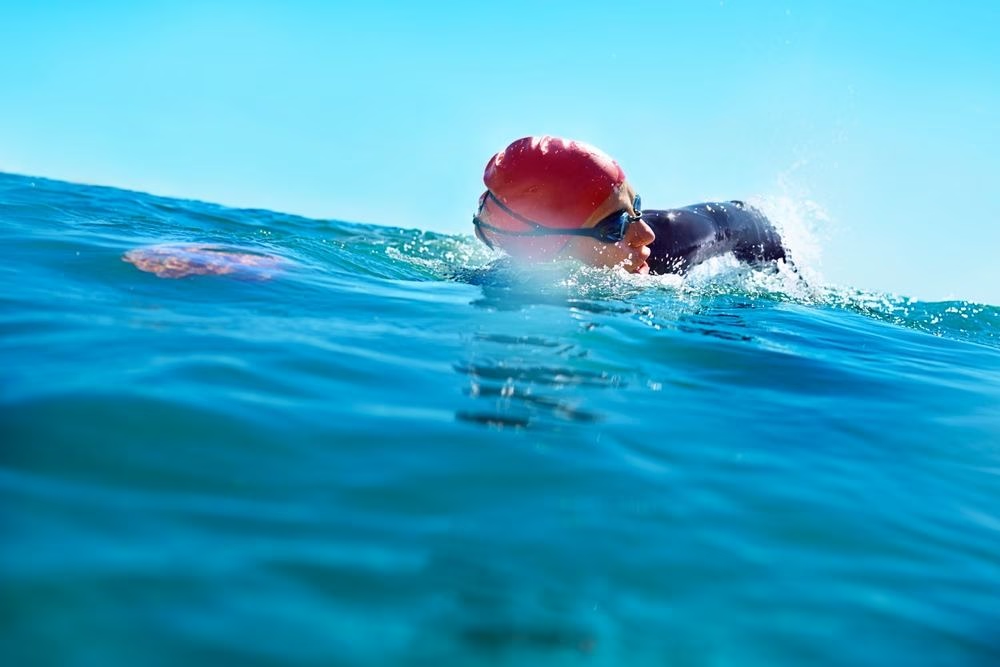
In the water, a snug-fitting Sharkskin garment traps a thin layer of water close to the body and limits the constant flushing of cold water across the skin.
Unlike neoprene, it contains little buoyant foam. That means divers generally need less additional weight to counteract it. It also does not compress at depth and progressively lose insulation in the way neoprene does.
Out of the water, Sharkskin has an even clearer advantage. The windproof membrane reduces evaporative cooling, while the outer layer sheds spray and dries relatively quickly. It can also be machine washed on a cold, gentle cycle, without the soaking and slow drying associated with a conventional wetsuit.
Sharkskin rates standard Chillproof as providing warmth roughly comparable with 3 mm neoprene, while its titanium-enhanced T2 fabric is promoted as closer to 5 mm.
Treat those figures as a guide, not a guarantee. Water temperature, activity level, wind, body composition and individual cold tolerance all affect how warm you will feel.
Sharkskin versus neoprene
Sharkskin’s advantages are straightforward:
- Less bulk and restriction
- Minimal additional buoyancy
- No loss of insulation through compression at depth
- Better protection from wind after leaving the water
- Faster drying
- Easier washing
- Simpler layering
- Considerably less wrestling when getting dressed
Neoprene still wins when maximum insulation is the priority. For long dives, very cold water or extended periods with little movement, a thick wetsuit or drysuit remains the safer choice. A basic neoprene suit will also usually cost less.
Sharkskin’s sweet spot is mild to cool water, active water sports, repeated sessions and days when you move between the water, wind and boat deck. It is not a magic replacement for a 7mm wetsuit in a Tasmanian winter.
What about the titanium and far-infrared claims?
The titanium version isn’t simply a thicker Sharkskin. Its fabric is designed to absorb body heat and re-emit some of it as far-infrared energy back towards the skin. The immediate benefit is extra warmth, which is the strongest and easiest claim to accept.
The idea isn’t confined to sports clothing. Ceramic and far-infrared fabrics have been used for years in horse rugs, leg wraps and saddle pads, particularly before work and during recovery. Trainers use them to help keep muscles warm and potentially support circulation without an external heat source. A small equine study has even reported improvements in locomotion after horses wore ceramic-fabric rugs, although that does not prove the same effect will occur in humans.
The human recovery evidence is more promising than conclusive. A 2021 systematic review found some encouraging results for thermoregulation, circulation, exercise performance and recovery, but the studies were small and used different garments and protocols. One trial found no meaningful recovery benefit after damaging eccentric exercise, while a small 2025 pilot study found better recovery in jump performance and perceived readiness over the following 48 hours. The study involved only 10 people, however, and found no difference in the measured fatigue biomarkers.
So there may be something happening beyond simple insulation, particularly through warmth, local blood flow and tissue oxygenation. We just don’t know yet how large or consistent that effect is. Claims about improved metabolism remain the weakest part of the pitch.
The sensible way to view T2 is as a warmer garment with a plausible recovery benefit still being investigated. If you already need the additional warmth, the technology is an interesting extra rather than empty marketing. Just don’t expect it to perform miracles overnight.
Who is Sharkskin best for?
Sharkskin makes the most sense for people who spend time both in and around the water:
- ocean swimmers who want warmth without a bulky wetsuit;
- scuba divers and snorkellers in temperate conditions;
- freedivers and spearos who want less buoyancy;
- kayakers, SUP paddlers, surfers and sailors exposed to wind and spray; and
- boaters and fishers who need something warm, flexible and quick-drying.