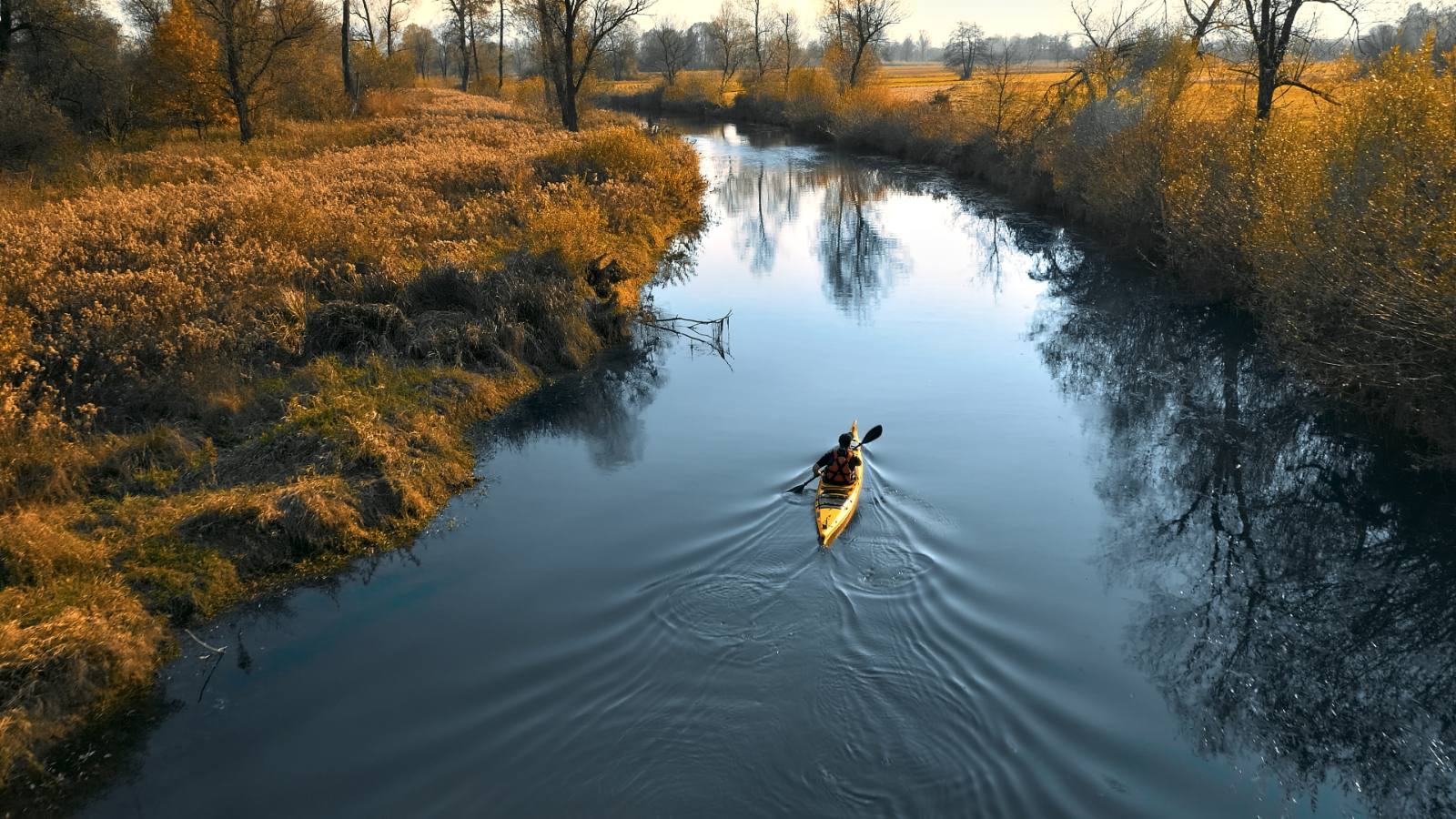
The most common mistake on a kayak or paddle board is dressing for the weather. Dress for the water instead, because that’s where you end up if you fall in. Here’s what to wear kayaking and stand-up paddle boarding in warm, cool and cold water, and the lifejacket rules in NSW.
- Above 24°C water: rash vest or UPF top, quick-dry shorts, hat, sunscreen, water shoes.
- 18–24°C: add a 2 mm spring suit or neoprene top, plus a windproof spray jacket.
- 15–18°C: a 3/2 mm wetsuit or wetsuit pants and top, booties, spray jacket.
- Below 15°C: a wetsuit at minimum; a drysuit is the safer choice.
- Always: a lifejacket (PFD), and no cotton.
Dress for the water, not the air
The US National Center for Cold Water Safety puts it bluntly: when you fall in, “the air temperature is irrelevant” (NCCWS). It recommends thermal protection whenever the water is below 21°C (70°F), and says most people without a wetsuit or drysuit will get maximum-intensity cold shock in water between 10 and 15°C. A warm spring day on a lake still fed by cold water is the classic trap.
Check the water temperature before you go. Our wetsuit temperature guide has monthly averages for 13 Australian locations and nine US coasts.
What to wear kayaking, by water temperature
| Water temperature | Body | Over the top | Feet and head |
|---|---|---|---|
| Above 24°C | Rash vest or UPF50+ top, quick-dry shorts | Nothing, or a light spray top in wind | Water shoes, wide-brim hat |
| 18–24°C | 2 mm spring suit or neoprene top and shorts | Windproof spray jacket | Water shoes or thin booties |
| 15–18°C | 3/2 mm wetsuit (or neoprene pants and top) | Spray jacket | Booties, beanie on cool days |
| Below 15°C | Wetsuit minimum; drysuit with thermal layers recommended | Drysuits are already windproof | Booties, gloves or pogies, warm hat |
The American Canoe Association’s cold-water guidance says that in water of 60°F (about 15.5°C) or colder, a wetsuit is a must and a drysuit is highly recommended. Our wetsuit vs drysuit guide explains the difference.
Layers that work, and what to avoid
- No cotton. Cotton holds water and pulls heat from your body when wet. Use synthetics, fleece, neoprene or polypropylene.
- Sun first in Australia. On warm days the bigger risk is UV: long sleeves in UPF50+ fabric, a hat that stays on, and sunscreen on the backs of your hands and legs.
- Wind protection. A light spray jacket stops wind chill on wet skin, which is what makes a mild day feel cold on the water.
- Feet. Water shoes or booties protect against rocks, oysters and hot sand at launches.
- A dry bag. A spare warm layer and a towel for the end of the paddle.
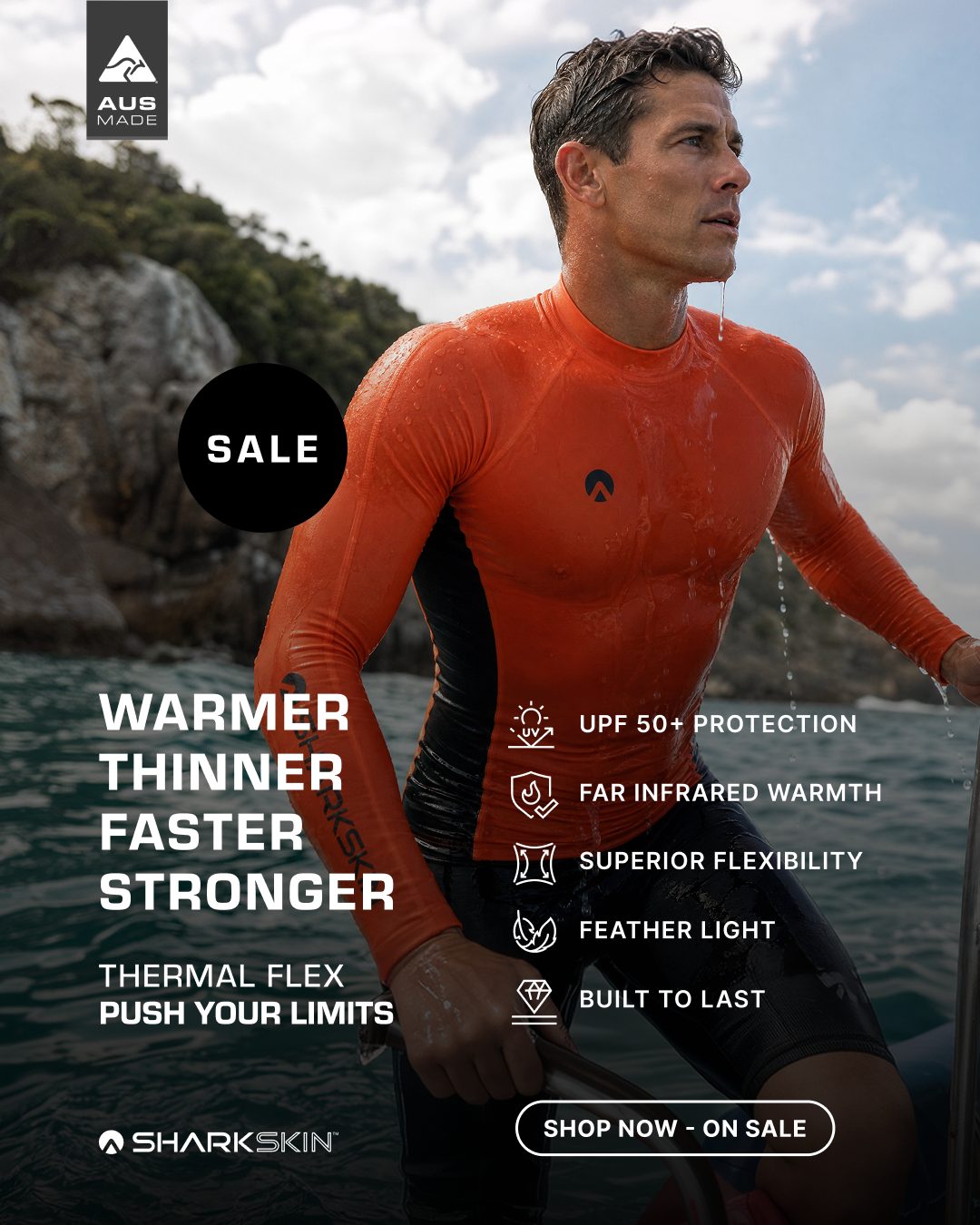
Some brands make thin, non-neoprene tops aimed at this kind of in-and-out paddling. Sharkskin, for example, pitches its Rapid Dry range for kayaking, SUP and surfing, with “UPF50+ coverage for watersport activities in warmer conditions” (Sharkskin). More in our Sharkskin explainer.
What to wear paddle boarding
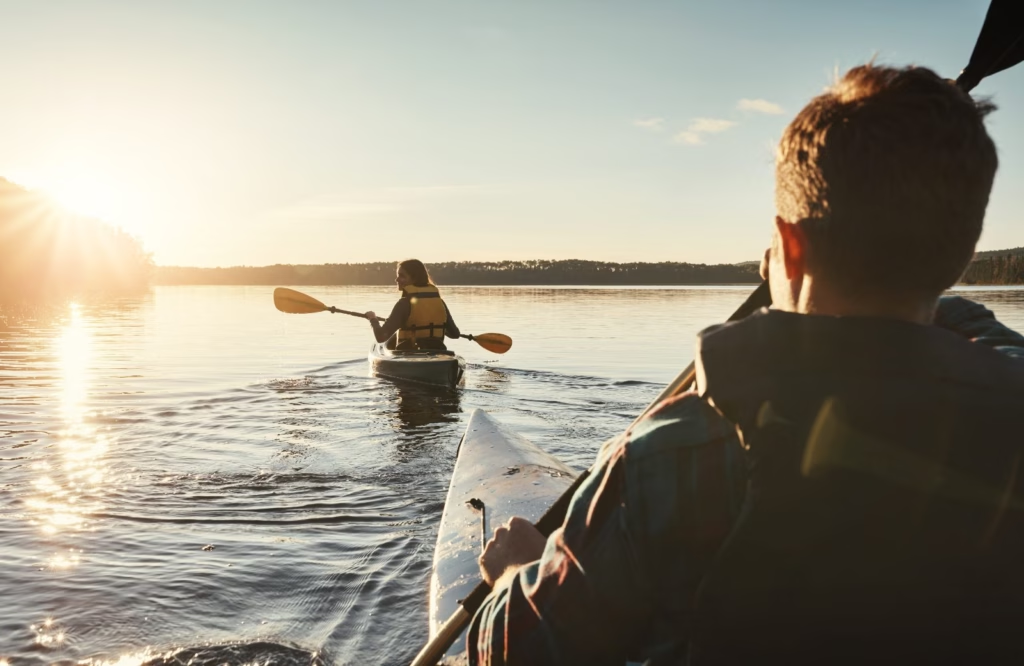
Stand-up paddle boarding follows the same water-temperature rules, with one difference: you fall in more often, especially learning. So dress to get wet from the start. In warm water that means a rash vest and boardies rather than a T-shirt; in cool water, a spring suit or 3/2 that lets you move freely. A leg rope keeps the board with you.
Lifejacket rules for kayaks and SUPs in NSW
Rules differ by state, so check your local maritime authority. In NSW, Transport for NSW requires a lifejacket rated Level 50S or above on canoes and kayaks (NSW Government):
- On open water and when crossing coastal bars: at all times.
- On alpine waters: at all times.
- On enclosed waters: when you’re alone (including with children under 12 on board) or at night.
- Stand-up paddle boards: a lifejacket is recommended; if that’s not possible, use a leg rope so you don’t get separated from your board.
A lifejacket isn’t thermal protection, but it’s what keeps your head up during the first minutes of cold shock.
FAQ
What should I wear kayaking in summer?
In warm water, a UPF50+ rash vest or long-sleeve top, quick-dry shorts, a hat, sunscreen, water shoes and a lifejacket. Skip cotton.
Do I need a wetsuit to kayak?
Below about 18°C water, yes for most people; below about 15°C, US cold-water guidance treats a wetsuit as the minimum and recommends a drysuit.
Do you have to wear a lifejacket on a kayak in NSW?
On open and alpine waters, and when crossing coastal bars, yes, at all times. On enclosed waters, when you’re alone or at night. It must be Level 50S or above.
Do you need a lifejacket on a stand-up paddle board in NSW?
Transport for NSW recommends one, and a leg rope if a lifejacket isn’t practical.
More on what to wear in the water
- Wetsuit temperature guide: what to wear in any water
- Wetsuit vs drysuit: which do you need?
- What is Sharkskin? The Australian wetsuit alternative
- Stinger season: when it starts and how to stay safe
- Cold water shock and hypothermia, minute by minute
Sharkskin advertises on Men’s Fitness Online. Product claims in this article are Sharkskin’s own and are labelled as such.