
If you take turmeric for knee pain, or you’ve been eyeing the curcumin capsules at the chemist, there’s a new review you should know about. Cochrane, the independent group that weighs up medical evidence, has gone through the trials. The pain relief it found was too small to matter.
- Who: Cochrane, published 19 November 2026
- What: 9 trials, 1,245 people with knee osteoarthritis
- Pain: 0.72 points better than a dummy pill on a 10-point scale. It needed 1.5 to count
- How sure: low-certainty evidence, from trials of three months or less
- Left out: 10 more trials, set aside over doubts about whether they could be trusted
What the review found
The reviewers looked for trials of turmeric or curcumin taken by mouth for osteoarthritis, the most common type of arthritis. Nine made the cut. Four tested turmeric against a placebo (379 people), four against anti-inflammatory tablets such as ibuprofen or diclofenac (673), and one against paracetamol (193) (Cochrane).

Against placebo, the numbers were small:
| Turmeric v placebo | Result |
|---|---|
| Pain (0 to 10) | 0.72 points better |
| Function (0 to 100) | 3.5 points better |
| Quality of life (0 to 100) | 2.19 points better |
| Called it a success | 191 in 1,000 v 107 in 1,000 |
Everyone’s pain dropped a bit, including the men and women on the dummy pill: 1.57 points with placebo, 2.29 with turmeric. The gap between them was 0.72. The reviewers set the bar for a difference you’d notice at 1.5 points, and turmeric didn’t reach it (review abstract).
There was one bright spot. More people on turmeric rated their treatment a success. But that comes from two trials and 170 people, so don’t lean on it.
What about turmeric against painkillers? Cochrane’s summary is one line: compared with placebo and anti-inflammatory drugs, turmeric “was not shown to be more effective” (Cochrane).
A few cautions. Cochrane rates its confidence in these results as low. The trials were short, from four weeks to three months. And they tested different products, with curcuminoid content anywhere from 23% to 88%. Only one used a formula built to be absorbed better, which matters because curcumin is poorly absorbed in the first place.
Why ten trials were left out
This is the part that sets the review apart. Before counting a trial, the reviewers ran it through a screening tool that asks a blunt question: can we trust this study?
Ten trials raised concerns. The reviewers are waiting on answers from the people who ran them. Until then, those ten sit in a holding category called “awaiting classification”, and none of their results were counted (Cochrane). That’s not an accusation of fraud. It means the questions haven’t been answered yet.
It matters because earlier reviews mostly said turmeric helps with pain and function. Cochrane says some of those findings may have been shaped by trials nobody had checked this way. Earlier reviews also cast a wider net, taking in turmeric that wasn’t swallowed, and products that mixed curcumin with other active ingredients.
“This review highlights the importance of assessing the trustworthiness of clinical trials,” said lead author Dr Ivan Shirinsky, a rheumatologist.
Our read: this is the lesson for every supplement, not just turmeric. A pile of small positive trials can look convincing on a label or in a headline. Take out the ones that can’t be vouched for, and the benefit can shrink to almost nothing.
So is turmeric worth the money?
Our read: not for knee pain, on this evidence. The review doesn’t prove turmeric does nothing. The evidence is thin and longer trials could change the picture. But if you’re paying every month for a capsule, you want more than a difference too small to feel.
Shirinsky was asked if he’d recommend it. “I would not routinely recommend turmeric supplements to my patients with knee osteoarthritis,” he said, adding that he’d explain what is and isn’t known to anyone who asked, and help them decide (Cochrane).
Not sure which supplements are worth it for you? Our free What-Supp quiz takes a couple of minutes. We’ve also checked the five supplements one exercise scientist says are worth taking. Turmeric isn’t on the list.
Is turmeric safe?
Mostly, but not always. Australia’s medicines regulator, the TGA, warned in August 2023 that turmeric and curcumin supplements can cause liver injury in rare cases. It had 18 reports of liver problems. In four, no other ingredient was a likely cause. Two of those were severe and one person died (TGA).
- The risk may be higher with high doses and with products made for better absorption.
- If you have, or have had, liver problems, the TGA says to avoid these supplements.
- Stop taking it and see a doctor if you notice yellowing skin or eyes, dark urine, nausea, vomiting, unusual tiredness, stomach pain or loss of appetite.
The Cochrane review couldn’t settle the safety question. About 22 in 100 people reported side effects whether they took turmeric or placebo, but the reviewers rate that evidence as very uncertain.
What does help sore knees
Nothing here is a miracle either, but these have far more behind them. Britain’s NICE guideline names exercise and weight management as the core treatments for osteoarthritis (NICE).
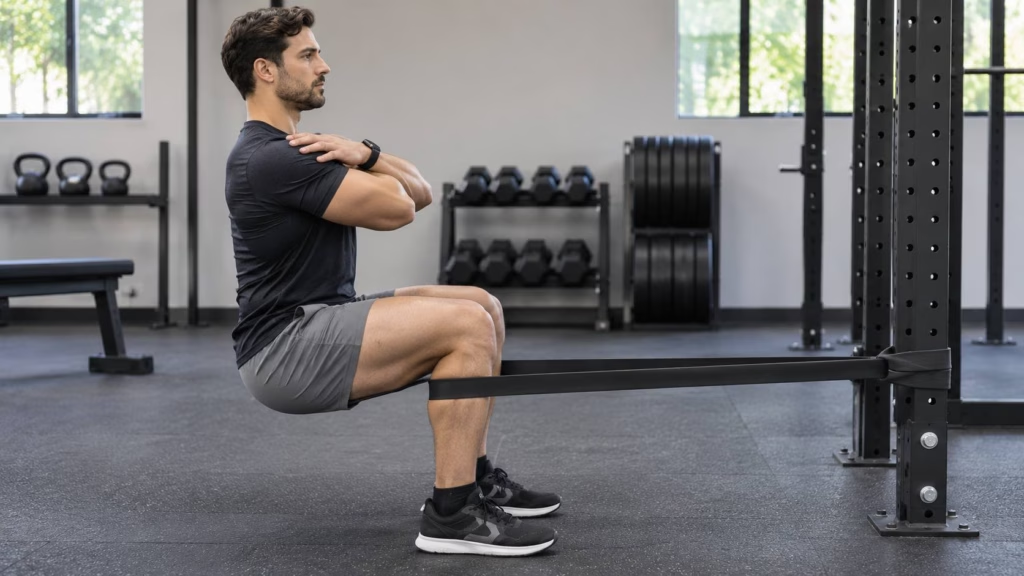
- Exercise. NICE says to offer it to everyone with osteoarthritis, including muscle strengthening and general aerobic fitness. A Cochrane review of 139 trials and 12,468 people found exercise likely improves how the knee works, by about 11 points on a 100-point scale, and may ease pain slightly (Cochrane). The reviewers aren’t sure that’s a difference everyone will notice. But that’s ten times as many people as the turmeric trials had, and exercise is free.
- Expect it to hurt a bit at first. NICE says joint pain may go up when you start, and that sticking with it is what brings the benefit.
- Weight loss, if you’re carrying extra. NICE says any loss is likely to help, and that losing 10% of your body weight is likely better than 5%.
- Anti-inflammatory gel. NICE recommends a rub-on anti-inflammatory for knee osteoarthritis before tablets. It also says there’s no strong evidence for paracetamol or glucosamine. Ask your GP or pharmacist what suits you.
Where to start in the gym: the Spanish squat builds your quads while taking load off the front of the knee. And here are the bodyweight moves that are hardest on knees. If you’re not sure what your knee can take, talk to your GP or a physio first.
Turmeric for knee pain FAQ
Does turmeric in food count?
The review only tested supplements, so it can’t tell you. The TGA says its liver warning doesn’t apply to turmeric eaten in normal amounts as food. Keep making the curry.
Does turmeric help arthritis in the hips or hands?
Nobody knows. Every trial in the review was in knee osteoarthritis, and the reviewers want future studies to cover hips and hands.
Would a longer course work better?
That hasn’t been tested. No trial in the review ran past three months, and the reviewers say future ones should.
I already take it and my knees feel better. Should I stop?
That’s your call, and one to make with your GP. People on the dummy pill felt better too, which is why trials use one. If you carry on, know the liver warning signs above.
Who paid for the review?
Nobody outside. The authors report no external funding.
Sources: Shirinsky et al, Cochrane Database of Systematic Reviews, 19 November 2026 (abstract); Cochrane news, 19 November 2026; Therapeutic Goods Administration, 15 August 2023; NICE guideline NG226, 2022; Lawford et al, Cochrane Database of Systematic Reviews, 2024. Checked 20 November 2026. This is general information, not medical advice.