
A new Renaissance Periodization video cuts through most of the supp noise with a list of what exercise scientist Dr Mike Israetel calls the only five supplements worth taking. Big call.
The video pulled more than 58,000 views in its first seven hours, which tells you how hungry people are for a straight answer. Israetel’s five are protein powder, creatine monohydrate, omega-3 fats, vitamin D and a fibre supplement, usually psyllium husk.
It is a sensible list. It is also not quite a universal shopping list.
To his credit, Israetel says so himself: “No supplements are mandatory for fitness.” Food, training, daily movement and sleep still do almost all the heavy lifting. His argument is that these five can fill common gaps and make a sound routine work a little better.
That is a more defensible claim. Here is how each one stacks up.
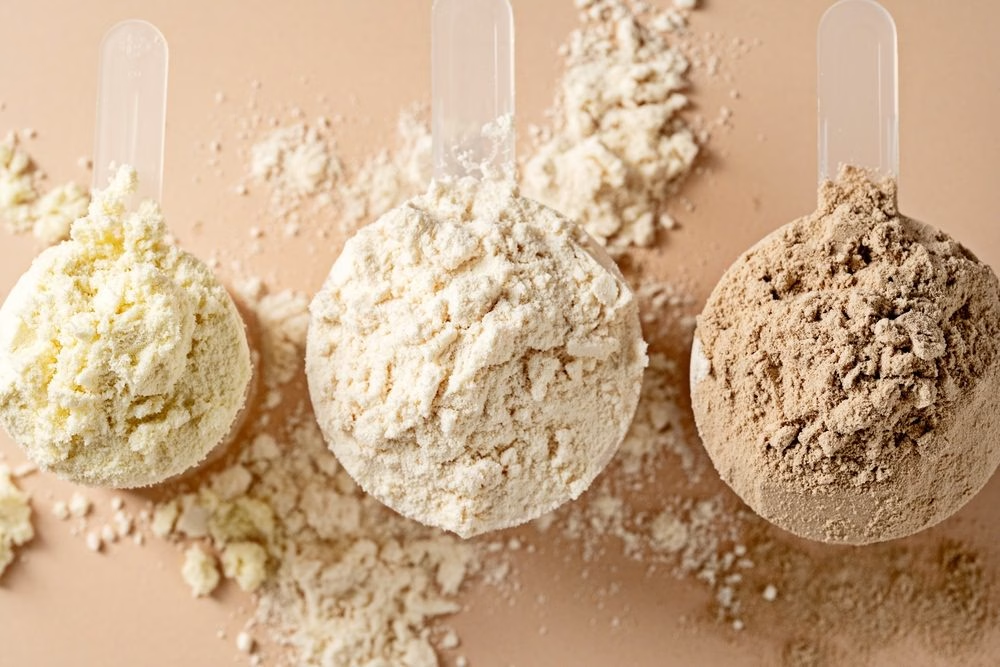
1. Protein powder
The claim: Use protein powder to fill the gaps while aiming for roughly 2.2 g of protein per kg of body weight each day.
The MFO verdict: Useful, but certainly not essential.
Protein powder is basically food with most of the chewing removed. It can make a high-protein diet cheaper and easier, particularly when you are busy, dieting or struggling to eat enough. It is not superior to eggs, yoghurt, fish, lean meat, soy or other quality protein sources. For the bigger picture on what’s actually worth your money, start here.
The daily target also needs context. A major meta-analysis found that the muscle-building benefit of extra protein during resistance training appeared to level off at about 1.6 g/kg per day, although the upper end of the confidence interval reached 2.2 g/kg. That makes Israetel’s figure a reasonable high target, not a minimum everyone must hit.
For a 90 kg man, the difference is substantial: about 144 g versus 198 g per day. If you can reach an appropriate target through meals, you do not need the tub.
2. Creatine monohydrate
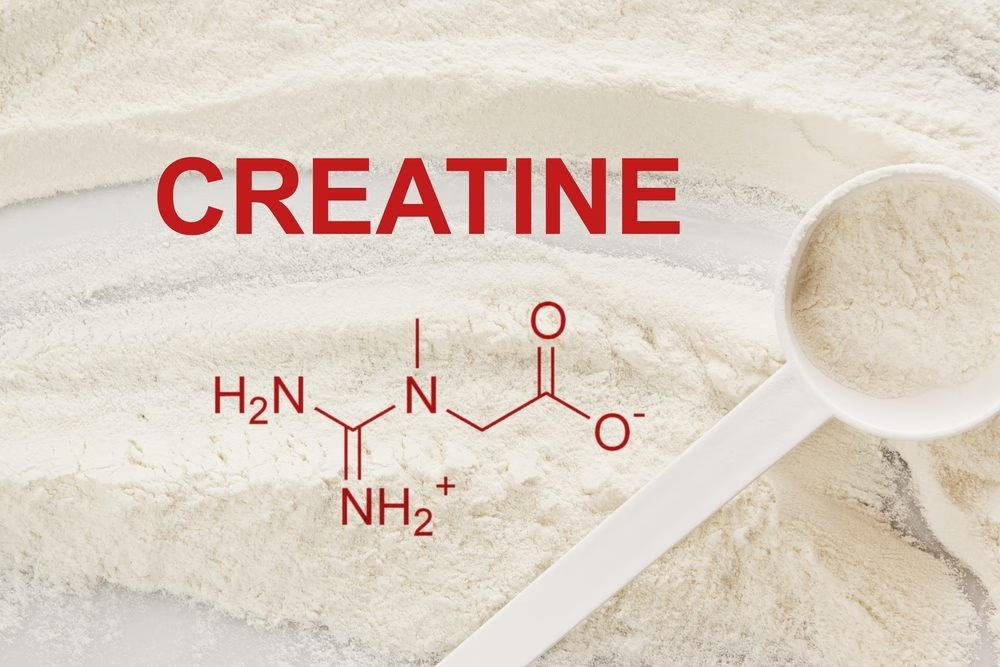
The claim: Take 5 g every day. Timing barely matters; consistency does.
The MFO verdict: The strongest inclusion on the list.
Creatine monohydrate is one of the best-supported sports supplements available. It can improve repeated high-intensity performance and help produce modestly greater gains in strength and lean mass when combined with resistance training.
The dose is also on solid ground. Research reviews generally support 3–5 g daily, and a loading phase is optional rather than necessary. Taking it at breakfast instead of after training will not ruin your gains.
Still, nobody needs creatine to build muscle. It improves the conditions around good training; it does not replace good training. People with kidney disease or other relevant medical conditions should discuss it with their doctor before starting.
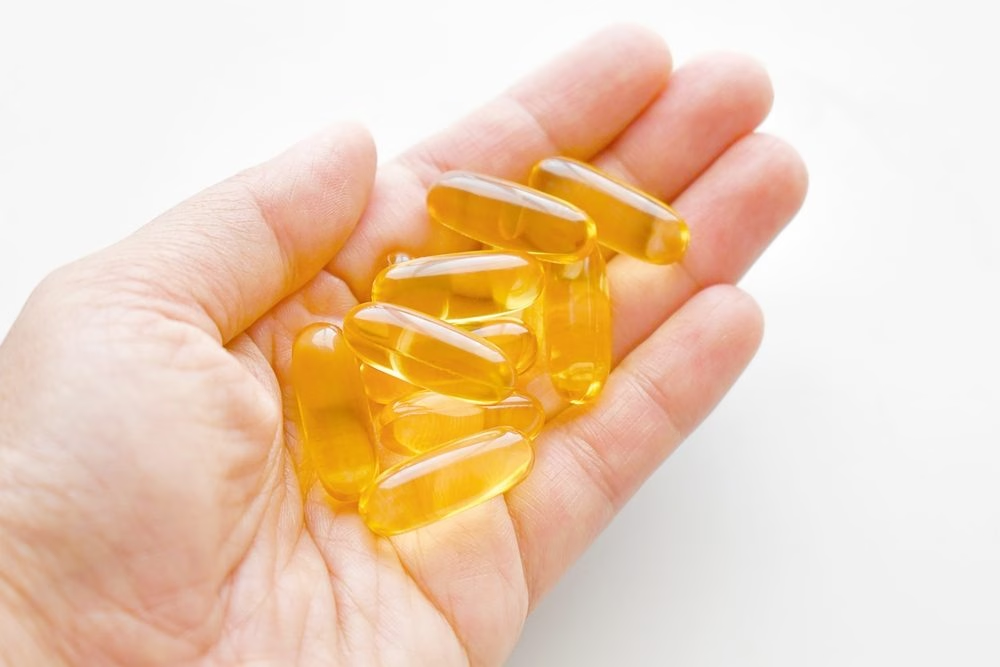
3. Omega-3 fats
The claim: Aim for 1 g per day of EPA plus DHA, not simply 1 g of “fish oil”.
The MFO verdict: Read the back of the bottle, but check the fridge first.
Israetel is right about the label. A 1000 mg fish-oil capsule may contain much less than 1000 mg of the active omega-3 fats EPA and DHA.
His dose, however, is higher than the general Australian target. The Heart Foundation recommends 250–500 mg of marine-sourced EPA and DHA per day, which can be achieved with two to three serves of fish a week.
If you rarely eat salmon, sardines, mackerel or other oily fish, a supplement may be a practical way to close the gap. If fish is already a regular part of your diet, automatically adding another gram in capsule form is harder to justify. Omega-3s support health, but they will not strip fat from your waist or reveal your abs.
4. Vitamin D
The claim: Around 1500 IU daily, with the dose adjusted according to blood tests.
The MFO verdict: Reasonable for a deficiency, not a blanket Australian recommendation.
Vitamin D matters for bone and muscle function, and correcting a low level is worthwhile. But much of the online vitamin D conversation comes from countries with long, dark winters.
Healthdirect notes that many Australians can obtain enough vitamin D through regular outdoor activity while still following sun-safety advice. Risk changes with age, skin colour, location, sun exposure, clothing, health conditions and some medications.
That makes the second half of Israetel’s advice more important than the first: establish whether you are low and use an appropriate dose. Taking more when your level is already adequate does not create extra muscle, immunity or testosterone, and excessive vitamin D can cause harm.

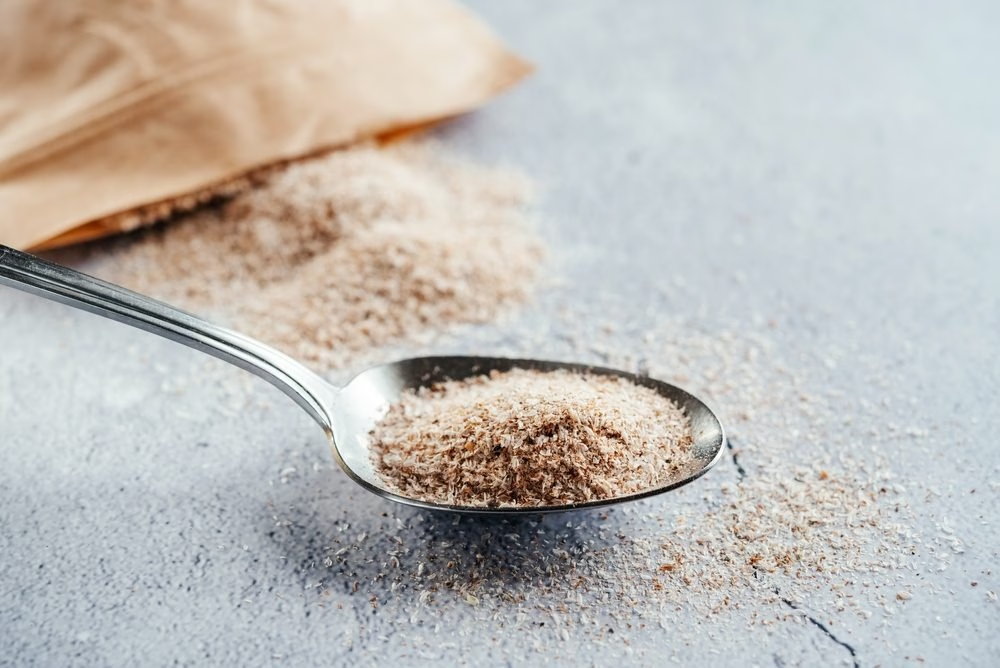
5. Psyllium fibre
The claim: Start at 5 g per day and increase towards 10 g if needed, always with plenty of water.
The MFO verdict: The least glamorous inclusion, and possibly the most useful surprise.
Australian men are advised to consume about 30 g of fibre a day, with a higher suggested target of 38 g associated with reduced chronic-disease risk. Plenty do not get there.
Psyllium is not a replacement for vegetables, fruit, legumes and whole grains, which provide a broader mix of fibres and nutrients. It can, however, help close a genuine shortfall. Meta-analyses have found that psyllium can produce modest improvements in LDL cholesterol, while the clearest blood-sugar benefits appear in people who already have poor glycaemic control.
The practical warnings matter. Mix it with at least 240 mL of liquid and drink it promptly. Psyllium can also affect the absorption of some medicines, so anyone taking regular medication should check the timing with a pharmacist rather than guessing.
What did not make the list?
Caffeine, magnesium and beta-alanine receive honourable mentions. Caffeine works, but can damage sleep and raise anxiety, heart rate and blood pressure. Magnesium is valuable when intake is low, not automatically useful when it is already adequate. Beta-alanine can help with certain hard efforts lasting one to several minutes, but it is more sport-specific than universal.
Taurine and L-carnitine are absent too. That does not make them worthless. It means their potential benefits are narrower, less consistent or more dependent on the person and the goal. A five-item list aimed at almost everybody sets a much higher bar.
So, do you need all five?
No. The headline promises certainty that the evidence cannot quite deliver.
Creatine is the easiest recommendation for a healthy person who trains seriously. Protein powder is a convenience product. Omega-3, vitamin D and psyllium make sense when they correct something your diet, lifestyle or blood work shows is missing.
That is the useful lesson behind Israetel’s list. Do not begin with a supplement stack. Begin with a problem. If there is no clear gap to fill, you may not need another tub, capsule or powder at all.
Sources
- Watch the original Renaissance Periodization video
- Protein supplementation and resistance training: systematic review and meta-analysis
- Creatine supplementation: common questions and misconceptions
- Heart Foundation Australia: omega-3 and heart health
- Healthdirect Australia: vitamin D deficiency
- Australian dietary fibre reference values
- Psyllium and LDL cholesterol: systematic review and meta-analysis
- MedlinePlus: psyllium use and medication precautions