
- L-carnitine helps transport fatty acids into the mitochondria, where they can be used to produce energy.
- Supplementing with L-carnitine does not automatically increase fat burning or produce significant weight loss.
- L-carnitine L-tartrate has more promising evidence for reducing exercise-related soreness and markers of muscle damage.
- It appears to work better through regular use than as a one-off pre-workout supplement.
Take a Google srcoll for L-carnitine and you’ll be presented with rows upon rows of expensive fluro tubs making all sorts of claims, from fat burning to engery enhancement. You’ll notice too, it’s expensive. Secondly, there’s lots of them. So what does it do, and does it really work and is it worth your hard-earned dollars?
Does L-carnitine actually burn fat?
L-carnitine is a naturally occurring compound made from the amino acids whose main job is helping transport fatty acids into the mitochondria, so they can be converted into energy. In sports supplements, it commonly appears as L-carnitine L-tartrate, a form widely used in exercise and recovery research. Technically, carnitine is essential for fat metabolism. Essential does not mean taking more of it forces your body to burn noticeably more fat.
You can see how the sales pitch practically writes itself: more of this “essential” compound implies more fat transported, which means more fat burned and, presumably, less of you wobbling when you sneeze. Unfortunately, the body is a tad more complex.
And as we all know, fat loss also depends on diet, activity levels, gut health and several other factors that refuse to fit neatly on the front of a supplement tub. “MEGA Shred Rapid Fat Burner” sells better than a 1000-word pub-med article.
Your body makes its own carnitine, and you also get it from food, particularly red meat — carnis, latin meat, is how the word is derived — as well as dairy, fish and poultry. Healthy adults generally produce enough to meet normal requirements.
However … a meta-analyses have found that L-carnitine supplementation may produce modest reductions in body weight, body mass index and fat mass, particularly in people overweight or obese.
The effect, however, is small. One review of 37 randomised controlled trials found an average reduction of about 1.2 kg compared with control groups, not the dramatic transformation implied by its reputation as a fat burner.
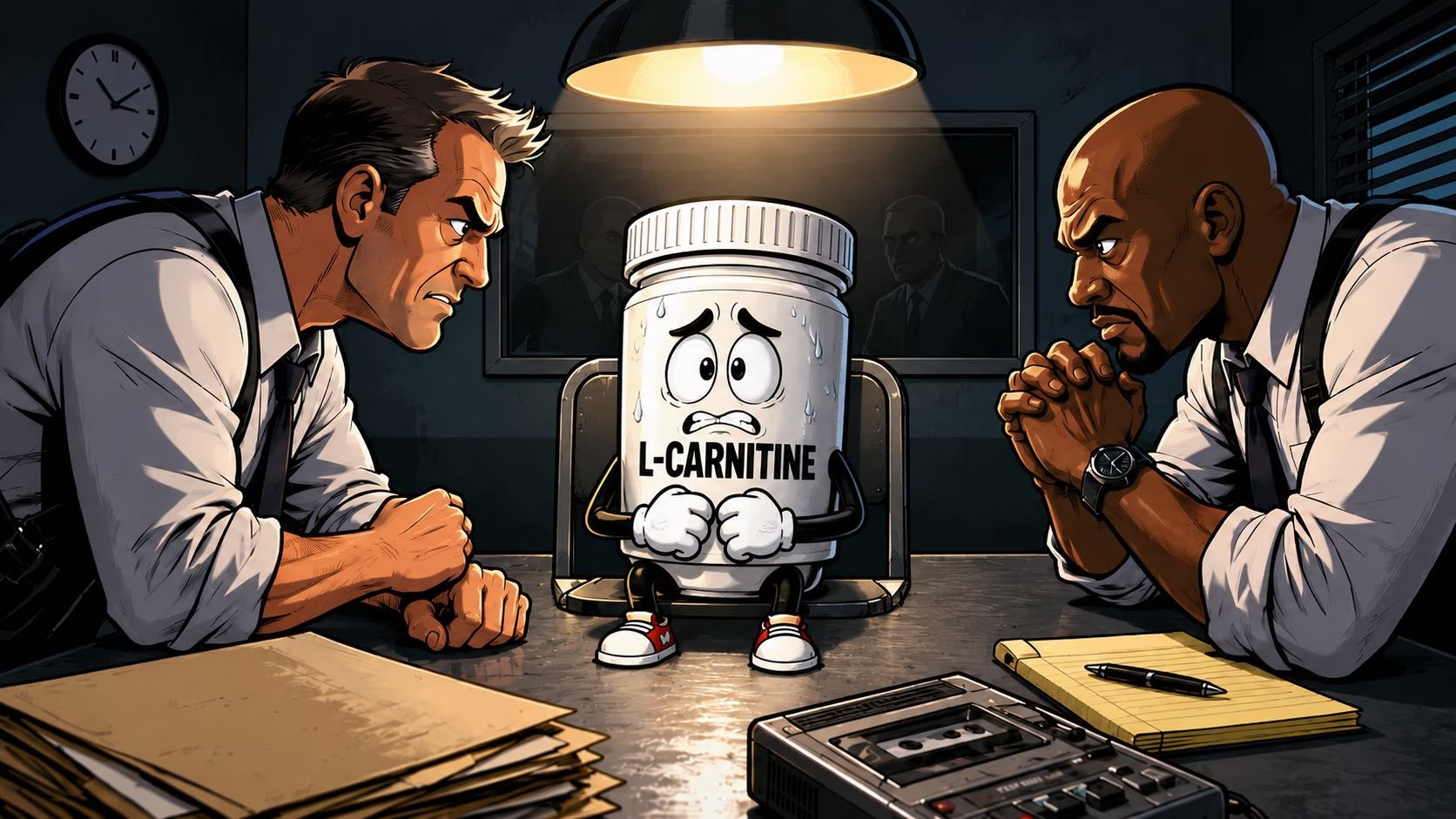
L-carnitine may help at the margins. It will not locate your abs and uncover them on old mate (above) even if he megadosed.
What about energy and performance?
Because carnitine plays a central role in energy production, it is also promoted as an endurance and performance supplement.
Here again, the evidence is mixed. Studies have used different forms, doses and supplementation periods, producing inconsistent results.
A systematic review found that the effects varied according to exercise intensity and supplementation protocol. Acute doses produced uneven results, while some longer-term studies reported benefits during high-intensity exercise. Neither approach consistently improved moderate-intensity performance.
A placebo-controlled study in trained recreational CrossFit athletes found that taking 3 g of L-carnitine L-tartrate 90 minutes before exercise did not improve workout performance.

That reinforces an important point: L-carnitine is not caffeine. You should not expect to swallow it before training and suddenly become more energetic or enthusiastic about burpees and kipping.
The better case may be recovery
L-carnitine L-tartrate’s most useful sporting role may have less to do with burning fat and more to do with what happens after a session, where the real body work is done. Trials using this form have reported reductions in muscle soreness and markers associated with exercise-induced muscle damage.
A five-week placebo-controlled study also found improvements in perceived recovery and fatigue, along with lower creatine kinase (researchers use blood creatine kinase levels as a marker of muscle damage after hard exercise) and smaller declines in strength and power following an exercise challenge.
Possible explanations include improved blood flow around working muscle, reduced oxidative stress and less disruption to muscle-cell membranes.
That does not mean L-carnitine rebuilds damaged muscle by itself, but it may help reduce some of the collateral damage from strenuous training.
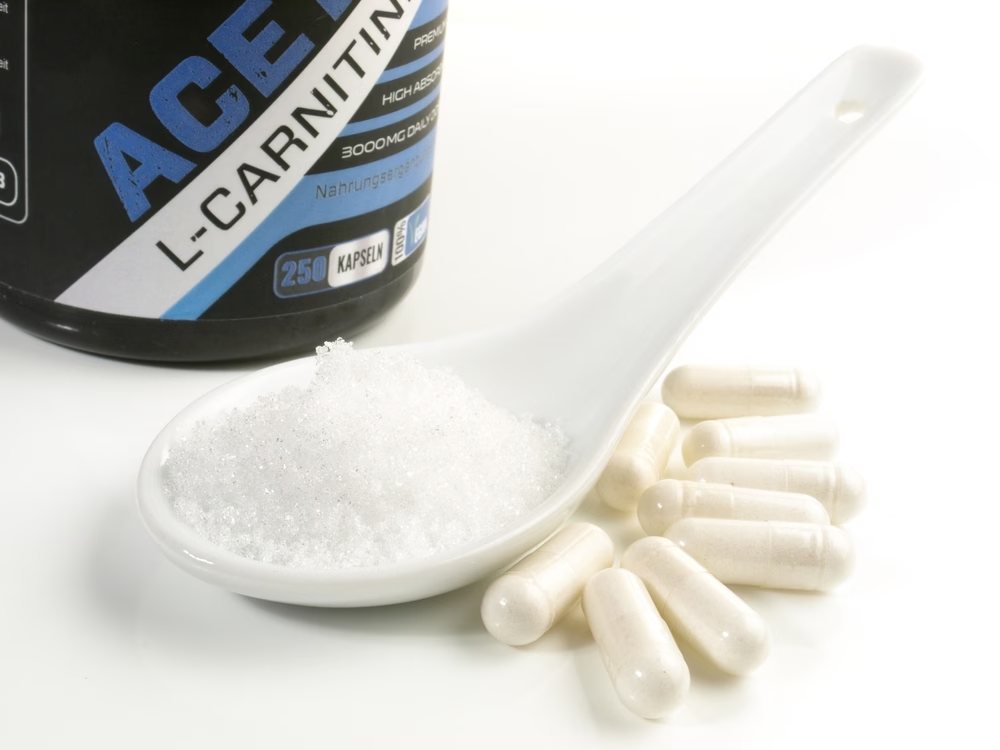
The results are encouraging rather than conclusive. Many of the studies are small, use different exercise protocols and measure blood markers rather than meaningful long-term improvements in training or muscle growth.
In practical terms, L-carnitine L-tartrate looks to be less useful for setting fire to body fat than for helping you walk downstairs normally after leg day.
The ideal pairing
For men, the most sensible pairing is creatine monohydrate, with adequate protein doing the real foundational work.
L-carnitine L-tartrate and creatine complement rather than duplicate each other. The former has its better sporting evidence around recovery and markers of muscle damage, while creatine has much stronger evidence for increasing strength and lean mass when combined with resistance training, including in older adults.
One small eight-week trial in adults aged 55–70 tested 1.5 g of L-carnitine alongside 3 g of creatine, 2 g of leucine and vitamin D3.
The combination improved a composite measure of muscle mass and strength compared with placebo. However, the study included only 42 participants, used four ingredients together and did not establish that L-carnitine L-tartrate specifically was responsible for the improvement.
Dose and regularity matter
Most exercise and recovery studies use L-carnitine regularly rather than as a last-minute pre-workout. Typical research doses sit around 1–3 g per day, often taken for several weeks. L-carnitine L-tartrate is the form most commonly used in sports-recovery research. Around 3 g a day or more appears more likely to cause gastrointestinal side effects.
Verdict
L-carnitine performs an essential job inside the body, but that does not make supplementation essential for everyone. Its fat-burning reputation is exaggerated, and the evidence for an immediate performance boost is inconsistent.
Its stronger case is as a regular recovery supplement, particularly in the L-carnitine L-tartrate form, which may reduce soreness and markers of muscle damage following hard training. You know, DOMs. That is less exciting than “turn fat into fuel”. It is also considerably more believable.