
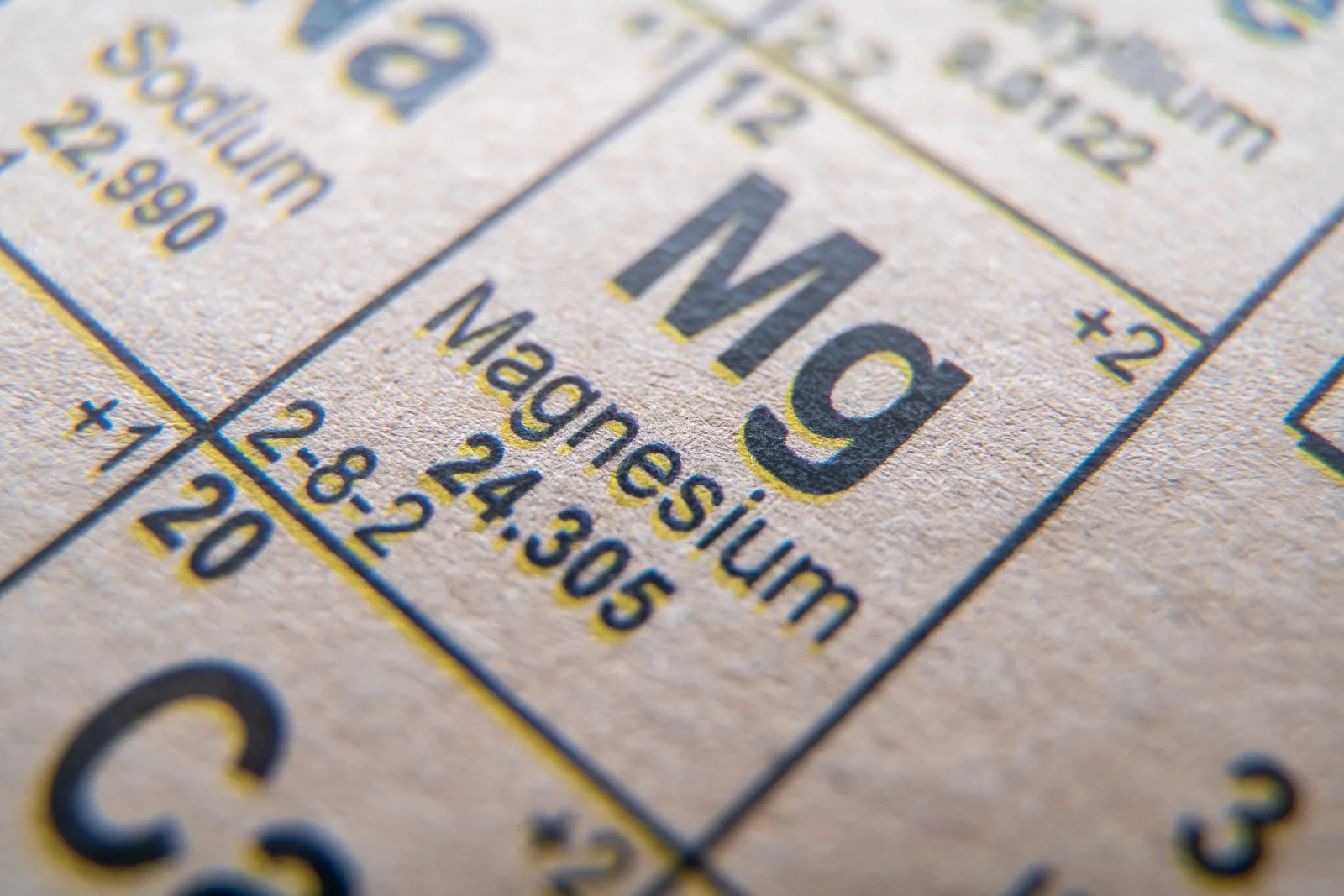

Updated 30 October 2026. Rewritten around magnesium glycinate, with the 2025 bisglycinate sleep trial and a 2026 review of 12 sleep trials.
Magnesium glycinate has become a popular night-time ritual: one capsule, a glass of water, and the hope that your brain will finally stop replaying an awkward conversation from 2009. The claims are broad: better sleep, calmer muscles, less stress. The evidence is narrower.
Magnesium is essential. Magnesium glycinate may be a convenient way to take it. But the supplement is not a sleeping pill, and the best reason to use magnesium is to address a real shortfall or a clinician-identified need.

- What it is: magnesium bound to the amino acid glycine; also sold as magnesium bisglycinate
- How much men need: 400 mg a day for men aged 19–30, 420 mg from 31 on, from food and supplements combined (NHMRC)
- Upper limit: 350 mg a day from supplements and medicines; magnesium in food doesn’t count towards it
- Sleep: one 2025 trial found a small benefit; a 2026 review of 12 trials says magnesium isn’t a routine insomnia treatment
- Best form?: no trial has compared forms for sleep; citrate has the better absorption data
- Food first: 30 g of pumpkin seeds has about 159 mg; 30 g of almonds about 80 mg
What is magnesium glycinate?
Magnesium glycinate, also called magnesium bisglycinate, is magnesium bound to glycine, an amino acid. Magnesium itself is involved in more than 300 enzyme reactions, including those behind energy production, muscle and nerve function, blood glucose control, blood pressure regulation and bone structure (Linus Pauling Institute). That makes it important. It does not mean taking extra magnesium will improve all of those things if you already get enough.
Your body cannot make magnesium, so it has to come from food or supplements. About 50–60 per cent of it is stored in bone and most of the rest in muscle and other soft tissue; less than one per cent is in your blood. That’s why a normal blood test is good at spotting serious deficiency but a blunt tool for measuring your total stores. It’s also why every ache, twitch or bad night shouldn’t automatically be blamed on low magnesium. Fatigue, cramps and poor sleep have dozens of causes.
Glycine has been studied for possible effects on sleep, which is part of the theory behind this pairing. The other popular claim is that glycinate is better absorbed or gentler on the stomach than other forms. There is not enough direct clinical evidence to call it the best form for sleep, or to say it works better than other types. A 2026 review of magnesium and sleep found no trial directly comparing magnesium forms (Lopresti and colleagues, 2026; NutraIngredients).
Magnesium glycinate vs magnesium bisglycinate
The names are commonly used for the same chelated form: magnesium joined to glycine. Check the product label for the amount of elemental magnesium. The weight of the whole compound is not the same as the amount of magnesium your body receives.
What are the benefits of magnesium glycinate?
Magnesium supports normal body functions, including muscle contraction, nerve signalling, energy production and bone health. If someone has a magnesium deficiency, correcting it matters. But for healthy adults who already get enough, a supplement is no guarantee of extra energy, fewer cramps or better general wellbeing. It should not be treated as a shortcut to better blood sugar or blood pressure control.
Where the evidence is firmer, it’s about magnesium in general rather than glycinate in particular. Magnesium treats diagnosed deficiency, and some forms (citrate, oxide, hydroxide) are reliable laxatives. For blood pressure, a meta-analysis of 34 trials and 2,028 people found supplements lowered it by about 2 mm Hg systolic and 1.8 mm Hg diastolic on average: real, but small (Zhang and colleagues, 2016). Results for preventing migraine are mixed (Linus Pauling Institute).
Most Australians can get magnesium from food. Leafy greens, legumes, nuts, seeds and wholegrains are useful sources. Pumpkin seeds, chia seeds, almonds and cashews are particularly magnesium-rich.

Food first
A 30 g serve of pumpkin seeds contains about 159 mg of magnesium; 30 g of almonds has about 80 mg (Australian Food Composition Database). That is a good start, and it comes with actual food rather than another bottle on the bedside table.
Does magnesium glycinate help you sleep?
Possibly a little for some people, but the evidence does not support treating it as a reliable insomnia fix.
A 2025 randomised, placebo-controlled trial tested 250 mg of elemental magnesium as bisglycinate each day for four weeks in 155 adults who reported poor sleep. The magnesium group’s insomnia scores improved slightly more than the placebo group’s: 3.9 points against 2.3 on the 28-point Insomnia Severity Index. The difference was small, and the study did not find significant differences in its other psychological measures (Schuster and colleagues, 2025). It is a useful first trial of this form, not proof that everyone who has trouble sleeping should take it.
A 2026 systematic review looked across 12 randomised trials of magnesium and sleep. Results were inconsistent, and the certainty of the evidence was low to very low. The reviewers concluded that current evidence does not support oral magnesium as a routine treatment for insomnia (Lopresti and colleagues, 2026). In plain English: the early signal is interesting, but the verdict is still out.
An earlier review of three small trials in 151 older adults found magnesium cut the time it took to fall asleep by about 17 minutes, but the evidence was rated low to very low quality (Mah and Pitre, 2021).
Magnesium may be more useful when intake is low or there’s a genuine deficiency. It is not a substitute for regular sleep hours, less alcohol, less evening caffeine or putting the phone down. Our guide to falling asleep fast covers the habits with better evidence, and if you train at night, here’s what late workouts do to your sleep.
Magnesium glycinate vs citrate vs oxide
No single form has been crowned champion, and for sleep there’s no head-to-head trial at all. For absorption, the best-known comparison gave 46 healthy people 300 mg of elemental magnesium a day for 60 days as citrate, an amino-acid chelate (the family glycinate belongs to) or oxide. Citrate and the chelate were absorbed better than oxide, citrate produced the highest blood levels, and oxide did no better than placebo (Walker and colleagues, 2003).
Magnesium citrate
Citrate is one of the better-studied forms and is generally well absorbed. It is a sensible all-purpose choice. The catch is that it can draw water into the bowel, particularly at higher doses. That makes it useful for constipation but potentially inconvenient before a long run, work meeting or interstate flight.
Magnesium glycinate
Glycinate is widely promoted as the best form for sleep and anxiety, and as gentler on the stomach. The sleep claim rests on one small trial; we couldn’t find a head-to-head trial showing it’s gentler. It’s a reasonable choice if you prefer it or find citrate too laxative, but you’re paying for a premium the research hasn’t yet confirmed.
Magnesium oxide
Oxide contains a high percentage of elemental magnesium and is usually cheap. Unfortunately, it is poorly soluble, tends to be less well absorbed and is more likely to cause diarrhoea. It works perfectly well when the desired result is a laxative effect. It is simply a weaker choice when the main goal is topping up your magnesium.
How much magnesium glycinate should you take?
There is no established magnesium glycinate dose for sleep. The 250 mg dose in the trial is a research dose, not a universal recommendation. For context, Australia’s upper level for magnesium from supplements and medicines is 350 mg a day for adults. That limit does not include magnesium naturally present in food. It is a safety ceiling, not a target, and a clinician may prescribe a different amount for a diagnosed deficiency or other medical reason.
How much magnesium do men need?
Australian nutrient reference values set the recommended dietary intake at:
- 400 mg a day for men aged 19–30
- 420 mg a day for men aged 31 and over
- 310–320 mg for adult women
These figures cover your total intake from food and supplements.
The important catch: the upper limit for magnesium from supplements and medicines is 350 mg a day for adults. Food doesn’t count towards it (NHMRC).
Read the label carefully: a capsule might list the weight of magnesium glycinate, then separately state how much elemental magnesium it provides. A product with 500 mg of a magnesium compound does not give you 500 mg of magnesium. Use the elemental figure when adding up your daily supplement intake. Taking it with food may reduce stomach upset, and splitting a larger amount into two doses can help too. For which other supplements are worth your money, see what supplements you actually need.
What’s the best way to take magnesium?
Through food first, then a sensible oral supplement if you need one. Not through your skin.

Powder or tablet? A powder dissolved in water may start dissolving sooner because a tablet has to break apart first. That doesn’t necessarily mean more magnesium is absorbed overall. The compound, the elemental dose and your gut matter more than whether it arrives as powder, capsule or tablet. Choose powder because you prefer drinking it or have trouble swallowing tablets, not because the label claims “instant” absorption.

Sprays and baths? This is where the marketing gets ahead of the science. Magnesium oil is not actually an oil: it’s usually magnesium chloride dissolved in water. The claim is that magnesium passes through the skin and bypasses the gut. The problem is that intact skin is designed to keep things out. A review in Nutrients concluded that claims for transdermal magnesium are scientifically unsupported (Gröber and colleagues, 2017). One small pilot study gave 25 people a cream providing 56 mg of magnesium a day for two weeks and found no significant overall rise in blood magnesium; a significant result appeared only in a subgroup (Kass and colleagues, 2017). A warm Epsom-salt bath may relax you before bed. Take the bath because baths are good, not to fix a magnesium shortfall.
Does magnesium help muscle cramps?
Magnesium is essential for normal muscle function. That fact is often turned into the assumption that extra magnesium must prevent cramps. The trials do not support that leap.
A Cochrane review of 11 trials with 735 people found magnesium was unlikely to give meaningful protection from cramps in older adults; the evidence in pregnancy was conflicting, and there were no trials at all on exercise-associated cramps (Garrison and colleagues, 2020). Magnesium may help when a cramp is linked to a genuine deficiency, but most exercise cramps are more complicated than one missing mineral: fatigue, training load, heat, previous cramping and neuromuscular factors may all play a part.
Is magnesium glycinate safe?
Common problems from too much supplemental magnesium include diarrhoea, nausea and stomach cramps (healthdirect). People with impaired kidney function should get medical advice first because the kidneys remove excess magnesium, and impaired kidneys can let it build up. Magnesium can also affect the absorption of some antibiotics and osteoporosis medicines (bisphosphonates); some reflux medicines (proton-pump inhibitors) and diuretics can lower magnesium levels (Linus Pauling Institute). Check with a pharmacist before combining a supplement with regular medication.
If sleep trouble is persistent, disruptive or getting worse, talk with a health professional instead of escalating the supplement dose. Magnesium glycinate may have a place, particularly when intake is low, but it is not a substitute for finding out why sleep has gone sideways.
Magnesium glycinate FAQ
Is magnesium glycinate better than citrate or oxide?
Better than oxide for absorption, probably; better than citrate, unproven. In the best-known comparison, citrate and an amino-acid chelate were absorbed better than oxide, and citrate gave the highest blood levels (Walker and colleagues, 2003). For sleep, no trial has compared the forms directly (Lopresti and colleagues, 2026). Choose glycinate if you prefer it or find citrate too laxative; choose citrate if constipation is part of the picture.
When should I take magnesium glycinate?
If you’re taking it for sleep, the 2025 trial had people take it 30–60 minutes before bed. For a general top-up, the timing matters less than the dose; taking it with food and splitting a larger amount into two doses can reduce stomach upset. If you take an osteoporosis medicine (a bisphosphonate), keep them at least two hours apart; some antibiotics are affected too, so ask your pharmacist about your own medications.
Is it OK to take magnesium glycinate every night?
For most healthy men, a supplement that keeps you at or under Australia’s upper level of 350 mg a day of elemental magnesium from supplements is considered safe. The sleep trial ran for only four weeks, so there’s no good evidence about nightly use for months or years. If you have kidney disease or take regular medication, check with your GP or pharmacist first.
Does magnesium glycinate help with cramps?
Probably not, unless you’re low in magnesium. A Cochrane review found magnesium unlikely to give meaningful protection from cramps in older adults, and it found no trials at all on exercise-associated cramps (Garrison and colleagues, 2020).
How long does magnesium glycinate take to work?
In the 2025 trial the small improvement in insomnia scores was measured over four weeks. If you see no change after a month, it is probably not the answer to your sleep problem.
And the verdict is…
Magnesium glycinate is a reasonable way to take magnesium, not a sleeping pill. The best trial so far found a small improvement in insomnia scores, and the latest review says the evidence isn’t strong enough to recommend magnesium as a routine insomnia treatment. Citrate has the better absorption data; oxide is cheap but poorly absorbed; powder isn’t automatically better than a pill; sprays and baths aren’t proven ways to correct low magnesium. Start with food, keep supplements under 350 mg a day, and fix the sleep basics first.
Sometimes a supplement fills a genuine gap. Sometimes it is just an expensive way to make your evening water taste faintly of lemon.
Sources: Schuster, Cycelskij, Lopresti and Hahn (2025), Nature and Science of Sleep; Lopresti, Smith and Drummond (2026), Journal of Dietary Supplements; Mah and Pitre (2021), BMC Complementary Medicine and Therapies; NHMRC nutrient reference values: magnesium; Food Standards Australia New Zealand, Australian Food Composition Database; Walker and colleagues (2003), Magnesium Research; Garrison and colleagues (2020), Cochrane Database of Systematic Reviews; Gröber and colleagues (2017), Nutrients; Kass and colleagues (2017), PLoS One; Zhang and colleagues (2016), Hypertension; Linus Pauling Institute: magnesium. Checked 30 October 2026.