
Here is the annoying truth about falling asleep fast: trying harder makes it worse. The only way to reliably get to sleep quickly is to stop treating bedtime as a problem to solve in the moment and start treating the hour before it, and your daytime habits, as the actual lever.
This is a practical guide, not a wellness pep talk. It covers how to fall asleep fast tonight, why your sleep schedule might be the real problem, what your bedroom is doing to sabotage you, how much sleep you actually need, and why sleep belongs in your training plan alongside your lifting and your protein intake.
Why can’t you fall asleep?
Before technique, it helps to know what you’re actually fighting. Most nights of bad sleep come down to one or more of these:
Your body isn’t cooling down. Core body temperature needs to drop for sleep onset to kick in. A hot room, a hot shower too close to bed, or a doona built for winter in the middle of an Australian summer can all keep that drop from happening.
Your brain is still switched on. Work stress, doom-scrolling, or a hard training session too late in the evening all keep cortisol and mental arousal elevated well past the time you climbed into bed.
Your schedule is inconsistent. Sleeping in until 11am on Saturday after five nights of 1am finishes confuses the body clock that’s supposed to make you sleepy at a predictable time.
Something you consumed is still active. Caffeine, nicotine and, despite how sedating it feels, alcohol all interfere with either falling asleep or staying asleep.
Fix the lever that actually applies to you, rather than trying every trick on the internet at once.
How to fall asleep fast: 6 techniques that actually work
These aren’t hacks. They’re the small set of techniques with a real mechanism behind them, ranked roughly by how much evidence backs each one.
- Drop your core temperature. A lukewarm shower 60–90 minutes before bed, or simply a cooler bedroom, mimics the temperature drop your body uses as a signal to start producing melatonin.
- Use the military method. Progressive muscle relaxation combined with slow breathing and visualisation, detailed below, was built specifically for falling asleep somewhere loud, uncomfortable and stressful. Your bedroom is easier than a cockpit.
- Try 4-7-8 breathing. Inhale through the nose for 4 seconds, hold for 7, exhale slowly through the mouth for 8. Repeat 4 times. It works by forcing your breathing rate down, which is one of the fastest ways to manually lower physiological arousal.
- Get out of bed if you’re not asleep in 20 minutes. Lying there getting frustrated teaches your brain to associate the bed with wakefulness. Get up, do something boring and dim in another room, and go back only when you feel drowsy.
- Stop clock-watching. Turn the clock face away or leave your phone in another room. Checking the time mid-wake-up is one of the most reliable ways to turn a 10-minute wake-up into a 90-minute one.
- Visualise somewhere specific and boring. Not a highlight reel, an actual dull walk you know well, step by step. Vivid, low-stakes imagery occupies the part of your brain that would otherwise be running through tomorrow’s emails.
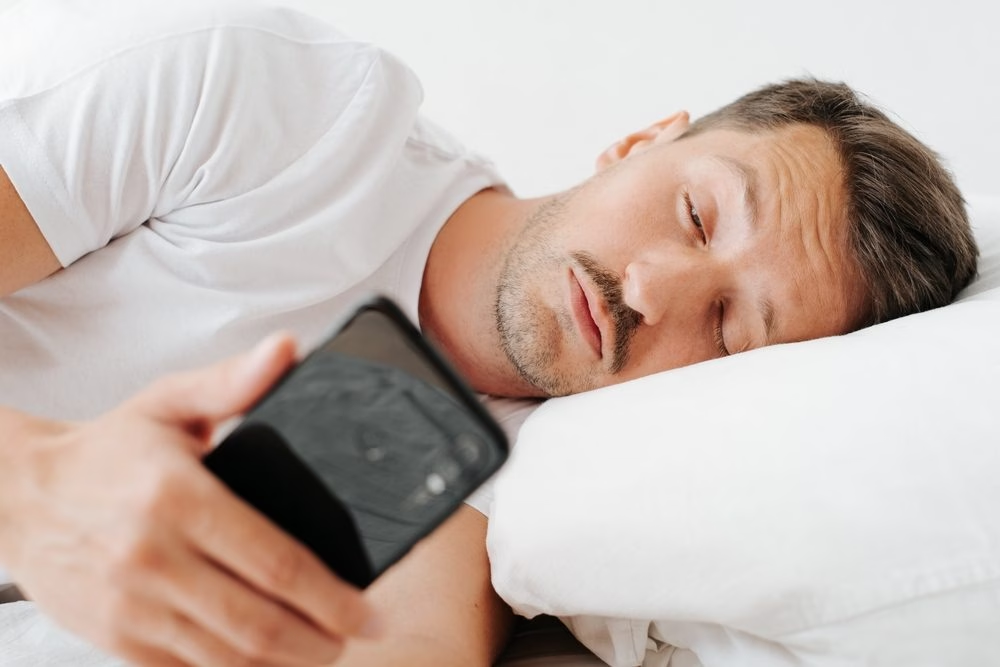
The military sleep method, step by step
The technique traces back to the U.S. Navy Pre-Flight School during World War II and was popularised in Lloyd Bud Winter’s 1981 book Relax and Win. The oft-repeated claim is that pilots could learn it well enough to fall asleep within two minutes, even sitting upright with gunfire in the background, in about six weeks of practice. That figure comes from anecdote rather than a controlled study, so treat it as a good technique worth trying, not a guaranteed timer.
The steps, as most sleep clinicians now describe it, according to Cleveland Clinic:
- Relax every muscle in your face, including your jaw, tongue and the muscles around your eyes.
- Drop your shoulders as low as they’ll go, then let your upper arms fall loose, one side at a time.
- Exhale and relax your chest, then let your legs go heavy from your thighs down to your feet.
- Clear your mind for 10 seconds by picturing one calm, specific scene.
- If your mind wanders back to your day, say the words “don’t think” to yourself and return to the image.
The whole thing takes under two minutes to run through. Do it lying down, in the dark, after you’ve already handled the room-temperature and screen basics below, not as a substitute for them.
Fix your sleep schedule if that’s the real problem
If falling asleep fast isn’t the issue but falling asleep at a reasonable hour is, techniques won’t fix it. You need to reset the schedule itself.
Anchor your wake time, not your bedtime. Getting up at the same time every day, including weekends, is the single most reliable way to reset your body clock. Bedtime will naturally follow once your wake time is fixed and you’re building up enough sleep pressure during the day.
Get morning light. Ten to fifteen minutes of real daylight shortly after waking helps anchor your circadian rhythm far more effectively than any evening routine can undo on its own.
Don’t try to fix it in one night. Shifting your schedule by more than an hour or two at a time tends to fail. Move your target bedtime by 15–30 minutes every few days instead of forcing an overnight reset.
Kill the long weekend lie-in. An extra 20–30 minutes is fine. Sleeping three hours later on Sunday than you did all week is basically self-imposed jet lag heading into Monday.
The best sleep environment for men
Temperature matters more than most men give it credit for. Sleep Foundation research puts the ideal range at roughly 15.6–20°C (60–68°F), with about 18°C as a sensible target for most people. If your room runs hot, a fan or lighter bedding will do more for your sleep than most supplements will.
Darkness is non-negotiable. Even small amounts of light, a phone charging face-up, a streetlight through thin curtains, can suppress melatonin production enough to delay sleep onset.
Noise doesn’t have to mean silence. Consistent background noise (a fan, white noise) is often more useful than dead quiet, because it masks the sudden, variable sounds that actually wake people up.
Your mattress and pillow matter less than the internet wants to sell you, but genuine discomfort, a mattress sagging in the middle, a pillow that leaves your neck at an angle, is worth fixing rather than sleeping around.

What to avoid before bed
Caffeine. Its average half-life is around 5 hours, but that range runs anywhere from 2 to 12 hours depending on your own metabolism. A 3pm coffee can still have a meaningful amount of caffeine in your system at 11pm. If sleep is a genuine issue, move your cut-off to at least 8 hours before bed.
Alcohol. It feels sedating because it is, initially. What it actually does is fragment sleep in the second half of the night and suppress REM sleep, which is why a big night out reliably produces a 3am or 4am wake-up regardless of how tired you were.
Screens. The blue light from a phone or laptop suppresses melatonin and, just as importantly, most of what’s on the other side of that screen (email, news, an argument in the group chat) is mentally arousing, not relaxing.
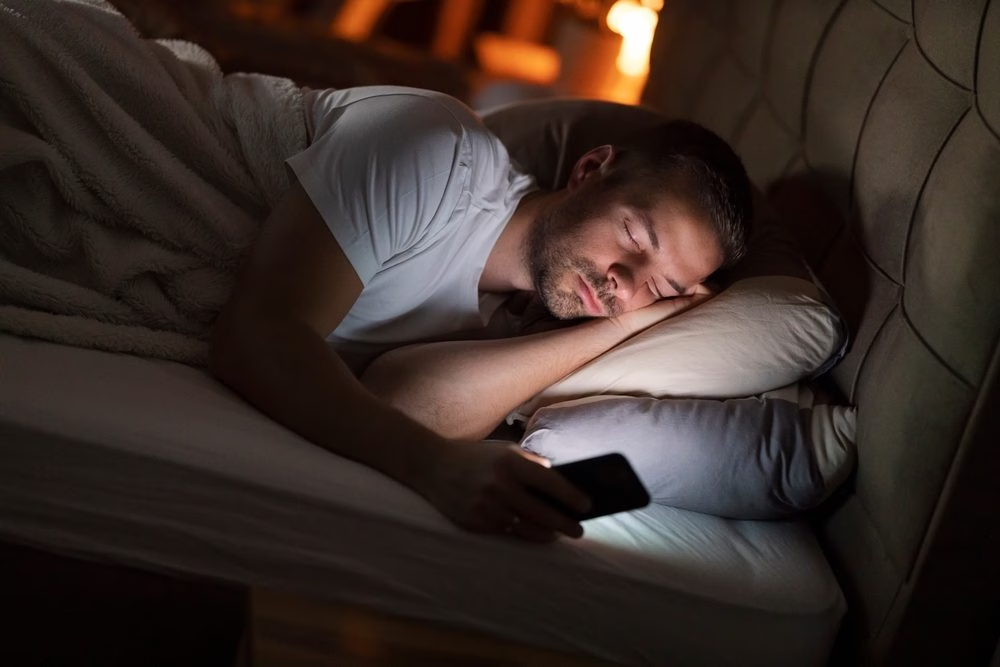
Late, hard training sessions. For most men this matters less than the internet suggests, but a genuinely maximal session within an hour or two of bed can leave your nervous system too wound up to switch off. See whether your evening workout is actually the problem before assuming it is.
Helps you fall asleep
- A cool, dark, quiet room
- A consistent wake time, seven days a week
- Morning sunlight within an hour of waking
- A wind-down routine you actually repeat
- Magnesium-rich food or a modest supplement, if deficient
Works against you
- Caffeine after early-to-mid afternoon
- Alcohol as a sleep aid
- Checking the clock during a wake-up
- A big weekend schedule shift
- Scrolling in bed “just for ten minutes”
How much sleep do you actually need?
The American Academy of Sleep Medicine and Sleep Research Society put the number at 7 or more hours a night for adults, with most people needing somewhere in the 7–9 hour range to function well. Australian guidance lines up with that: 7–9 hours for adults aged 18–64, and 7–8 hours once you’re past 65.
Is 7 hours enough? For a lot of men, yes, but it’s the floor, not a target to aim for. If you’re training hard, under more stress than usual, or simply feel wrecked on 7, that’s your body telling you it needs closer to 8 or 9, not a personal failing.
Sleep debt is real but doesn’t work like a bank account you can top up on the weekend. One long lie-in after a bad week helps a little; it doesn’t undo five nights of 5 hours.
Sleep, muscle and testosterone: why sleep is part of training
Sleep isn’t separate from your training program, it’s part of it. Most of your nightly testosterone release and a significant share of muscle repair happen during deep sleep, which is exactly the stage that gets cut short first when you stay up late or sleep poorly. Better sleep genuinely is the missing link in a lot of stalled training programs, not just a wellness talking point.
If you’re training hard and still not recovering, the volume of your training, not just your sleep, may be the actual problem, so check both before assuming one fixes the other. And if your testosterone has been trending down, ruling out chronically short sleep is one of the cheapest checks you can do before reaching for anything else.
One specific gap worth knowing about: if you supplement with creatine, it doesn’t fix sleep deprivation, and it isn’t a substitute for actually sleeping more.
Supplements and aids: what’s actually worth it
Magnesium has decent supporting evidence for men who are genuinely low in it, largely by helping the nervous system relax rather than by acting as a sedative. Here’s how to actually take it properly if you want to try it.
Melatonin is useful for shifting your body clock (jet lag, shift work) rather than as a nightly knockout pill. Taking a large dose every night to force sleep isn’t what it was designed for.
Everything marketed as a “natural sleep aid” is worth reading the label on. Many are just antihistamines with sedating side effects, which cost you next-day grogginess without addressing why you weren’t sleeping in the first place.
If sleep tracking and recovery trends are your thing rather than supplements, the broader sleepmaxxing trend is worth a look, some of it is genuinely useful, some of it is expensive nonsense.
A simple nightly routine for better sleep
You don’t need an elaborate ritual. You need the same few things, in roughly the same order, most nights:
- Set a caffeine cut-off around 8 hours before your target bedtime.
- Dim the lights and put screens away 30–60 minutes before bed.
- Take a lukewarm shower or drop the thermostat, if that’s an option.
- Do something boring and analogue: reading, stretching, folding laundry.
- In bed, run the military method or 4-7-8 breathing if your mind is still going.
- Wake up at the same time tomorrow regardless of how the night went.
That last step matters more than people think. Consistency, not any single trick, is what actually compounds into good sleep over weeks rather than one good night.
The bottom line
There’s no single trick that guarantees a perfect night’s sleep. There’s a cool, dark room, a consistent wake time, a caffeine cut-off you actually respect, and a wind-down routine you repeat often enough that your body starts recognising it as the signal to switch off.
Use the military method or 4-7-8 breathing for the nights your brain won’t quiet down. Use the schedule fixes for the weeks your body clock has drifted. And treat 7–9 hours as the target it actually is, not a nice-to-have you sacrifice first when life gets busy.
FAQ
Drop your core temperature (a cool room or a lukewarm shower), get off screens 30–60 minutes beforehand, and use a technique like the military method or 4-7-8 breathing once you’re in bed. If you’re not asleep in 20 minutes, get up and reset rather than lying there frustrated.
It’s a genuine progressive-muscle-relaxation and breathing technique with a real WWII pilot-training origin. The often-quoted 96% success claim comes from anecdote rather than a controlled study, but the underlying relaxation mechanism is sound and worth trying.
The American Academy of Sleep Medicine and Sleep Research Society recommend 7 or more hours a night, with most adults needing 7–9 hours. Australian sleep guidelines match this for adults aged 18–64.
It’s the minimum most health bodies recommend, not necessarily your ideal number. If you’re training hard or under more stress than usual, closer to 8 or 9 hours is often more appropriate.
Sleep hygiene is the set of daily habits, consistent wake time, a dark and cool bedroom, limited caffeine and screens before bed, that support falling and staying asleep. It’s cumulative, not a single fix.
Yes, for two reasons: the blue light suppresses melatonin, and most phone content (news, email, social media) is mentally stimulating rather than relaxing, both of which delay sleep onset.
The most common causes are alcohol earlier in the evening, a bedroom that’s too warm, or stress keeping your nervous system on alert. Alcohol specifically tends to fragment sleep in the second half of the night, which is a common pattern for a consistent 3am or 4am wake-up.
Not inherently, but a nap after 3pm or longer than 20–30 minutes can reduce the sleep pressure you need to fall asleep easily that night.
Magnesium can genuinely help if you’re deficient. Melatonin is best used for shifting your body clock rather than as a nightly sedative. Many over-the-counter “natural sleep aids” are just antihistamines and come with next-day grogginess.