
Your height, arm span, leg length, torso length and body mass change the mechanical problem your body has to solve when you run, lift, swim, cycle or play sport.
That doesn’t mean your measurements determine what you’ll be good at. They don’t. Fitness, skill, strength, coordination, training history and sheer persistence matter enormously. But your proportions can give you advantages and disadvantages. And they’re considerably more useful than deciding you’re an “ectomorph”, using the traditional male body-type classification system.
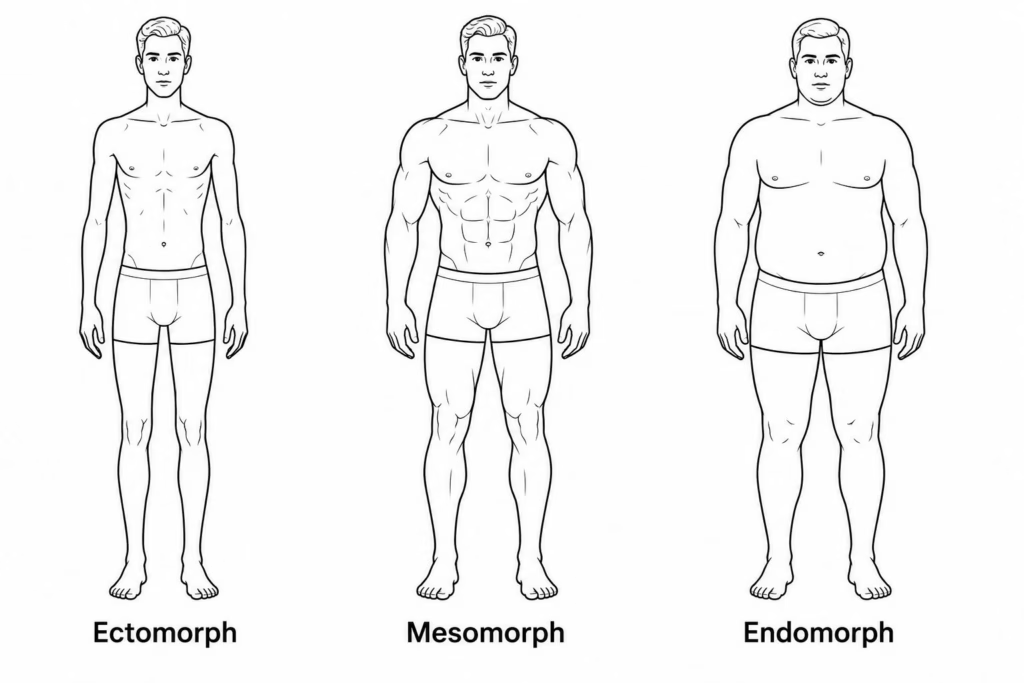
The Three Body Problem: ectomorph, mesomorph and endomorph
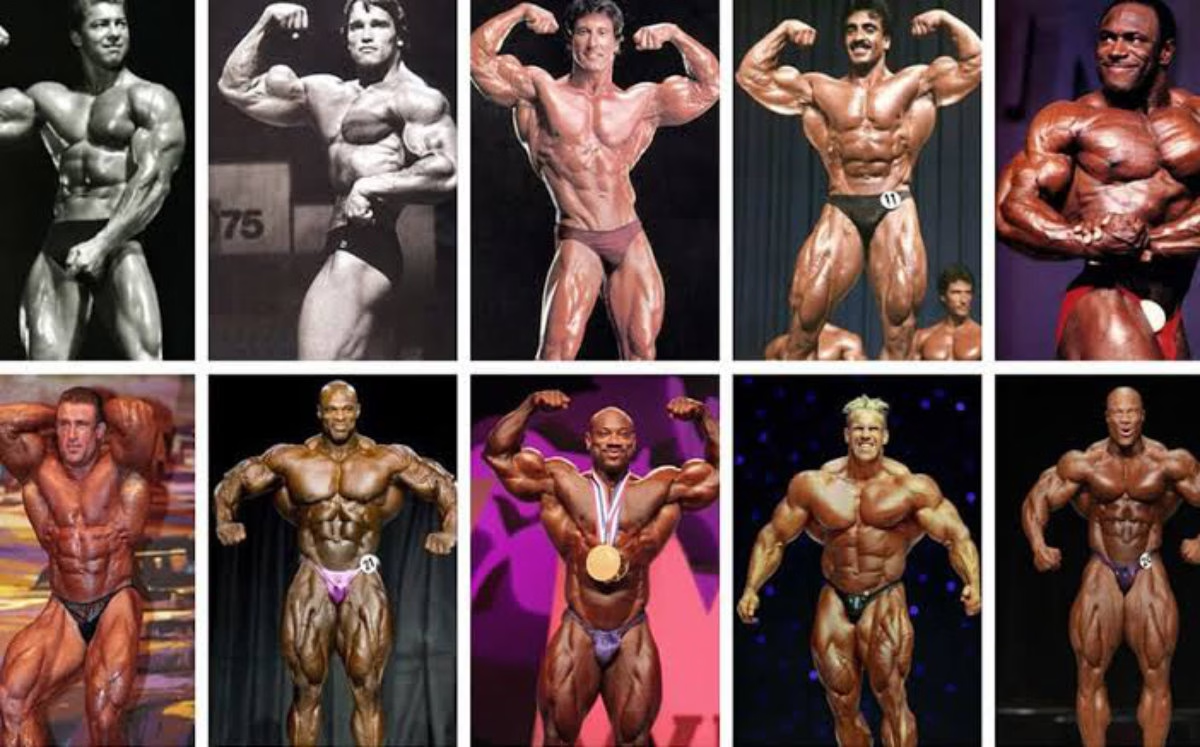
The old three-body-type system is at best, meaningless, and at worst it’s every fitness parrot’s excuse to why he isn’t what he wants to be. You’re skinny? Ectomorph. Naturally muscular? Mesomorph. Carry weight easily? Endomorph.
The problem is that those labels don’t tell you much about how your body actually moves. Two men can both stand 183 cm tall and weigh 85 kg while having substantially different proportions. One might have long arms and legs with a relatively short torso. The other could have shorter limbs and a longer torso.
Ask them to squat, bench press, deadlift or row and you’ve given them different mechanical tasks. That’s where biomechanics becomes useful.
Start with the ape index
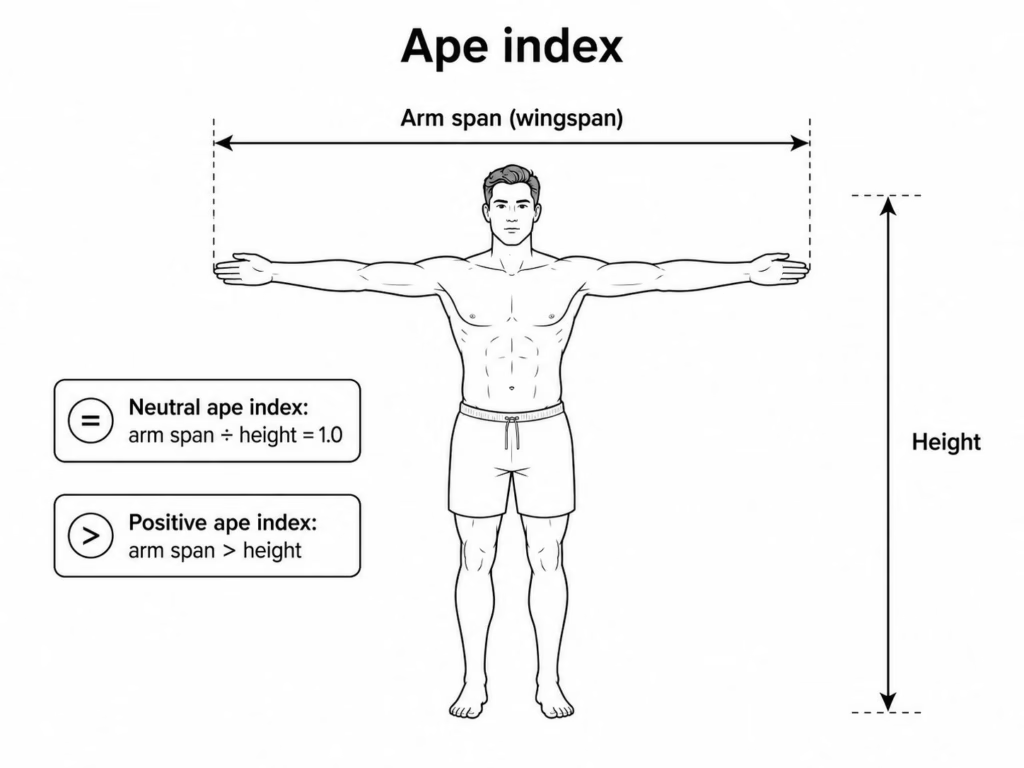
One of the easiest measurements is your ape index, which compares your arm span with your height. Stand against a wall with your arms stretched horizontally and measure fingertip to fingertip. Then compare that number with your height. If you’re 180 cm tall with a 180 cm wingspan, your ape index is neutral.
If you’re 180 cm tall with a 186 cm wingspan, you’ve got relatively long arms. If you’re 180 cm tall with a 175 cm wingspan, you’ve got relatively short arms. That seemingly small difference can matter. A lot. Look at Connor McGregor’s reach, for example.
Long arms: built to pull?
Long arms can be very handy when the job involves reaching, pulling or moving your body or an object through a large space.
Think:
Where a positive ape index can help
Deadlifting
Longer arms mean you don’t have to raise the bar as far before reaching lockout. They can also allow a more favourable starting position.
Swimming
Greater arm span can potentially contribute to stroke length and propulsion. A systematic review of swimming research found height and arm span were among the anthropometric characteristics associated with better front-crawl performance.
Rowing
Height and limb length can contribute to stroke length, although rowing performance is ultimately the product of anthropometry, technique, force production and physiology rather than simply being tall.
Boxing and combat sports
Reach is an obvious tactical advantage when you can hit an opponent from farther away.
Climbing
Extra reach can open movement options that simply aren’t available to someone with shorter arms, although long limbs aren’t universally advantageous.
But those same arms can turn against you.
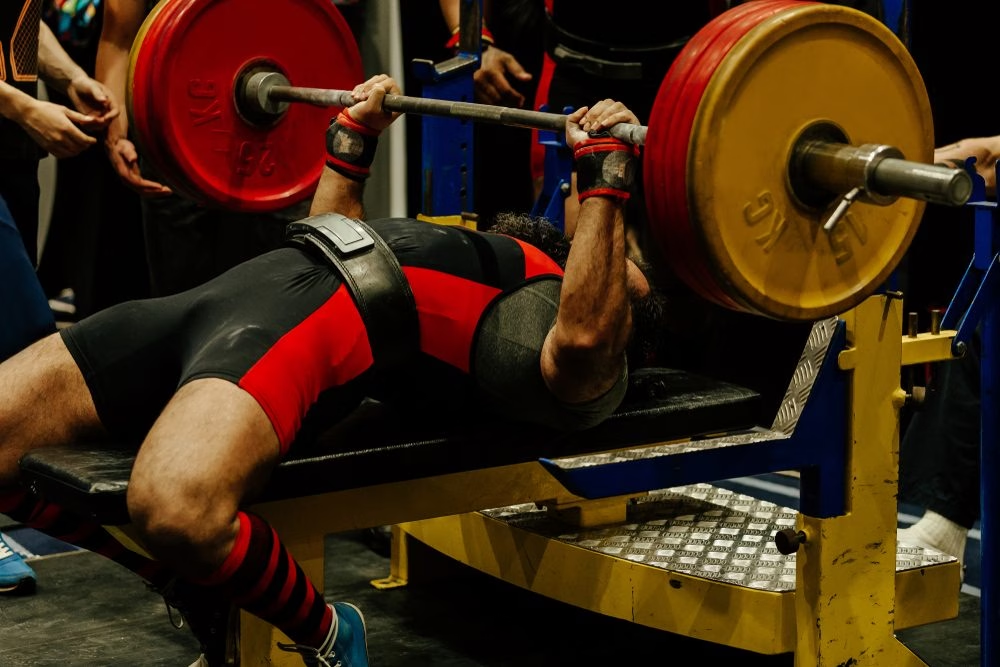
Long arms meet the bench press
Imagine two men pressing a barbell from their chest. One man’s arms are 5 cm longer. Every repetition requires him to move the load through a greater distance. Over ten reps and multiple sets, that additional range of motion adds up.
The shorter-armed lifter may therefore have a mechanical advantage in the bench press, particularly if he also has a relatively thick torso.
It doesn’t mean long-armed men can’t build enormous benches. It means they have a different job to do. And that’s the important distinction throughout this discussion.
Long legs can completely change your squat
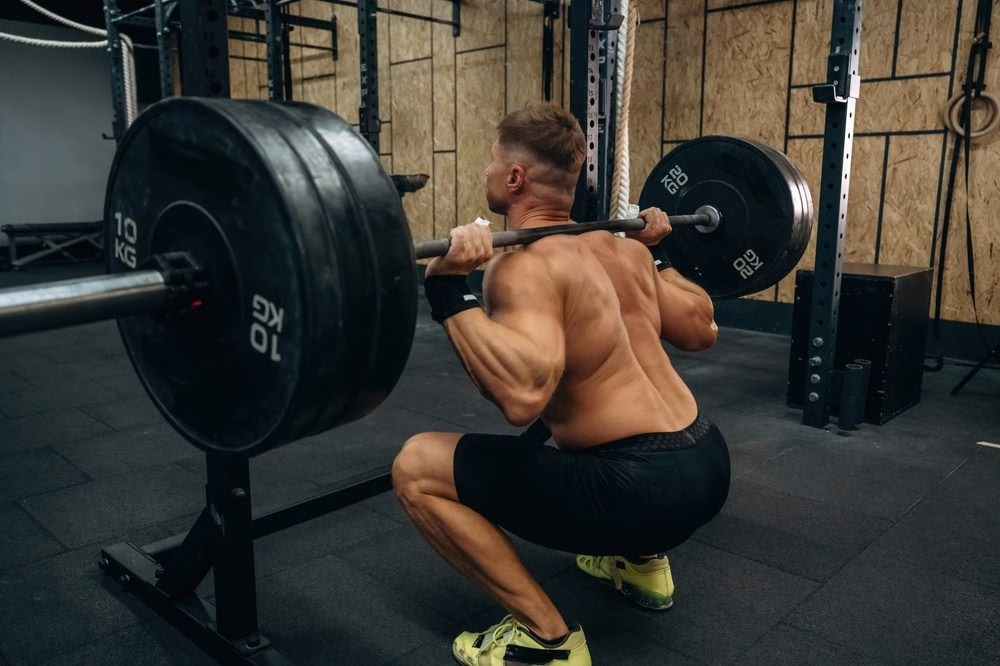
This is where body proportions become particularly obvious. Watch a group of men squat and you’ll see remarkably different movements.
The bloke with relatively short femurs and a longer torso may be able to descend while remaining fairly upright. Give another man long femurs and a shorter torso and things change.
His hips need to travel farther backwards to keep his centre of mass over his base of support. His torso will generally have to incline farther forward.
From the side, his squat can look dramatically different even if both men are performing the movement effectively. So if you’re a lanky 190 cm bloke wondering why you don’t squat like the compact 170 cm bloke demonstrating the movement on Instagram, the answer may not be poor technique. You’re working with different geometry.
Shorter men have advantages too
Height dominates a surprising amount of sporting discussion because being tall is so visibly advantageous in sports such as basketball, volleyball and rowing. But compact builds can be extremely useful.
Shorter limbs generally mean shorter ranges of motion in many strength exercises. A compact lifter with favourable proportions can potentially move a bar through less distance during a squat or bench press than a much taller lifter.
Gymnastics and calisthenics can also reward compactness. Moving a long body around a bar or holding it horizontally creates different rotational demands than doing the same thing with a shorter body.
And when bodyweight itself has to be moved repeatedly, being enormous isn’t necessarily a gift.
What about running?
This gets more complicated. You think you know what a runner looks like, but do you? You might assume long legs automatically make someone a better runner because each stride can cover more ground.
It isn’t that simple. Look at Lachlan Kennedy’s Australian-record sprint. It was remarkable for more than the time on the clock. An informal analysis suggests he covered 100 metres using an unusually rapid 48 steps, revealing a sprinting style built around extreme leg turnover.
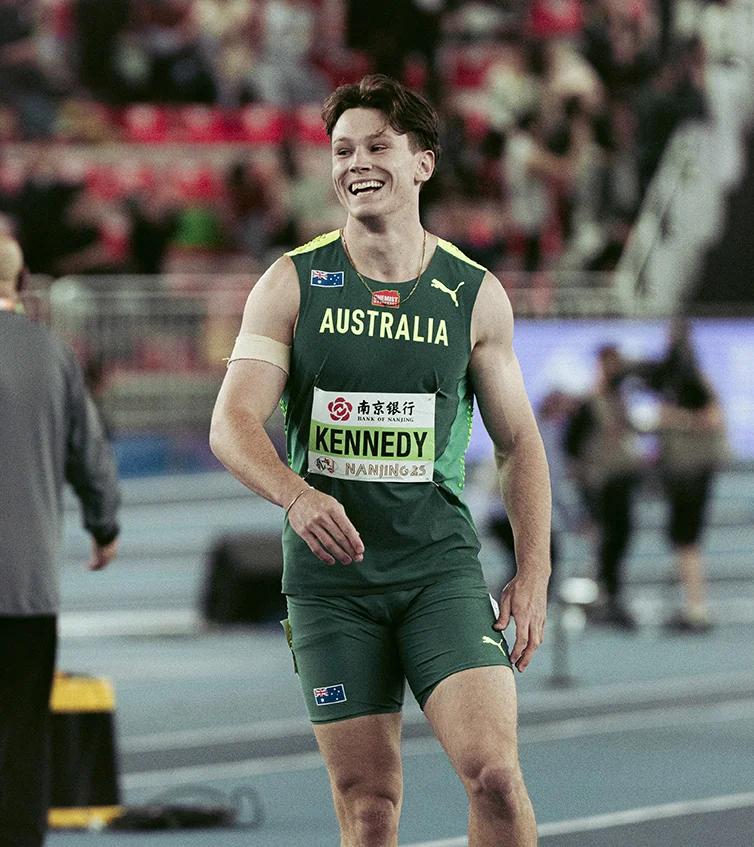
Running performance depends heavily on aerobic capacity, running economy, tendon behaviour, muscle architecture, body mass, technique and training. Distance running also places a premium on repeatedly moving your own body mass.
That’s why the physiques selected by elite endurance running look very different from those selected by heavyweight strength sports.
At recreational level, however, don’t look at a 195 cm runner and conclude he wasn’t “built to run”. Anthropometry is only one piece of the performance puzzle, and research doesn’t support reducing endurance ability to a simple body-type formula.
Swimming is where body shape gets interesting
If there is a sport where anthropometry is particularly difficult to ignore, it’s swimming.Height, arm span, hand size, body mass and lean mass have all been investigated in relation to swimming performance.
A systematic review covering 43 studies found a fairly consistent relationship in front crawl between greater height and arm span and favourable stroke characteristics and performance. More recent work has continued to find relationships between anthropometric characteristics, in-water force and performance.
That doesn’t mean measuring a positive ape index identifies the next Olympic champion. One study of elite male swimmers, for example, found no significant relationship between ape index itself and performance. That’s an important warning against turning useful biomechanics into fortune telling.

Big and powerful? Some sports reward mass
Then there is the other end of the spectrum. If you’re naturally broad, muscular and heavy, moving your own body over long distances costs energy.
But put an external object in front of you and tell you to move that, and the equation changes. Powerlifting, throwing events, strongman and some football positions can reward absolute strength and mass.
The physique of elite athletes varies substantially between sporting disciplines precisely because different sports impose different physical demands. Recent research reviewing elite athlete physiques continues to find marked differences between endurance, strength and other sporting populations. A 105 kg man isn’t necessarily “unfit” because he struggles to match a 70 kg runner over 10 km.
Likewise, the runner shouldn’t be surprised when the 105 kg bloke picks up something enormously heavy. They’re different physical problems as evidenced by Will Tennyon’s latest vid.
So what might your build suit?
Treat these as clues, not prescriptions.
Tall with long arms and long legs
You may find your proportions useful in swimming, rowing and sports where reach matters. Deadlifting may feel relatively natural. Squats and bench presses may involve greater ranges of motion and require more attention to individual setup.
Tall with relatively short arms
You retain some of the reach and stride characteristics associated with height, but won’t necessarily receive the same mechanical advantage in pulling movements. Depending on torso and leg proportions, pressing may suit you surprisingly well.
Shorter and compact
Strength training, Olympic lifting, gymnastics and calisthenics may suit your mechanics, particularly where reduced lever lengths or ranges of motion are advantageous.
Long legs with a short torso
Running and cycling may feel natural, depending on the rest of your physiology, while squatting can require considerable forward torso inclination. Don’t automatically interpret that as bad technique.
Long torso with relatively short legs
Squatting may feel more natural because maintaining a relatively upright torso can be easier. Your mechanics in rowing, running and cycling will be different from someone of the same height whose legs make up more of his stature.
Long arms relative to height
Deadlifting, swimming, climbing, rowing and reach-dependent sports are worth exploring. Bench pressing may require considerably more bar travel.
Heavy, muscular build
Sports and activities rewarding absolute strength, power and momentum may play to your strengths. Long-distance running and high-volume bodyweight exercise ask you to repeatedly transport more mass, which changes their energetic cost.
Find the thing your body likes doing
There’s a useful experiment here, particularly if you’ve spent years doing the same gym routine because that’s simply what you’re supposed to do. Try different things. Get on a rowing machine. Swim some laps. Try climbing. Sprint. Cycle. Deadlift. Squat. Carry something heavy. Try calisthenics.
You may discover that one of them feels strangely natural. That doesn’t necessarily mean you were “born for it”. But occasionally your skeleton gives you a hint. And that’s probably worth listening to. Curious how your numbers stack up more generally? Our BMI Calculator for Men Who Lift is a good next stop.
Related: for more on working with the body you actually have, see how to change your body shape.