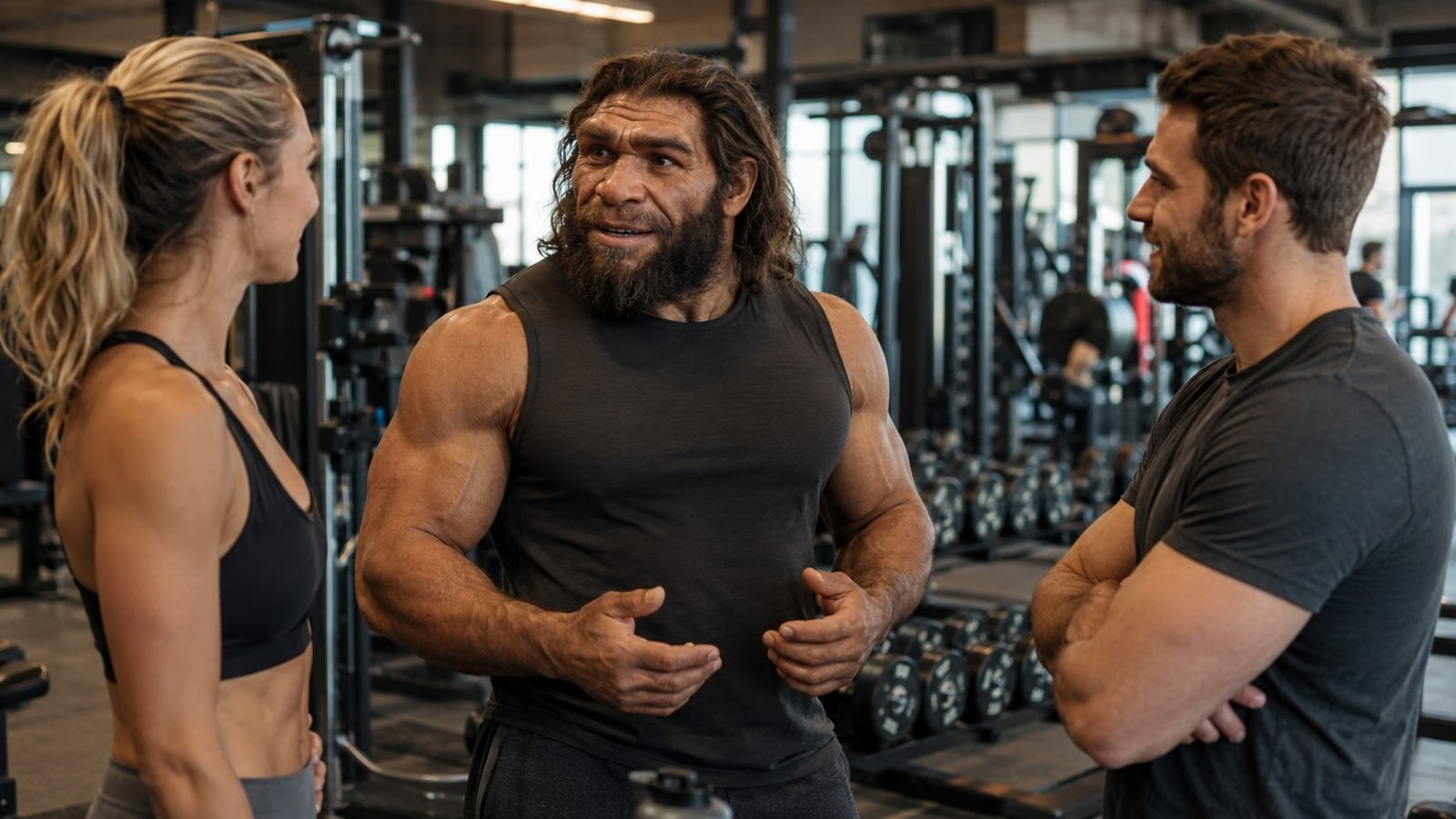

You know how some blokes just look different? Maybe it’s you. Thick set, built like a tank, sort of indesctutible? They may be carrying a piece of muscle-building machinery inherited from Neanderthals roughly 47,000 years ago.
A new study published in Current Biology released August 05, 2026 has found that some modern humans possess a Neanderthal version of the growth hormone receptor. It makes cells respond more strongly to growth hormone and is associated with slightly greater muscle mass in adults, with emphasis on slightly. But it does exist. Here it is in layman’s terms.
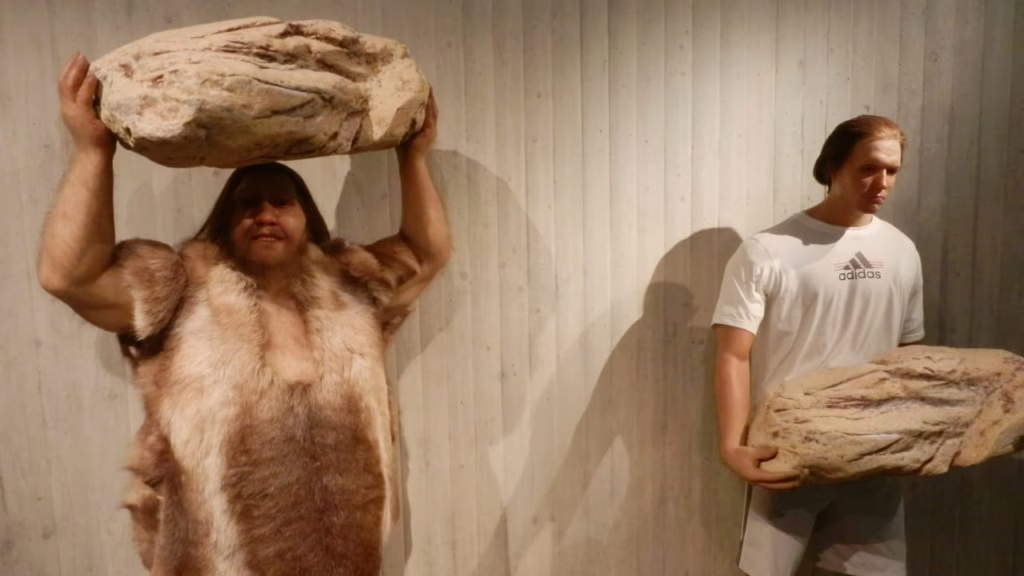
The Neanderthal Muscle Gene
Growth hormone does not simply float around the body yelling at your biceps to grow. It binds to receptors on cells, which then pass along the message.
Researchers found that the Neanderthal receptor responds more strongly to that signal. In laboratory experiments, cells carrying the ancient variant grew about 40 per cent more when exposed to growth hormone than cells carrying the most common modern version.
The researchers then examined genetic and health data from more than 1.1 million adults.
Each inherited copy of the variant was associated with roughly 285 g of extra body mass, almost all of it muscle. Carry two copies and the difference could exceed half a kilogram.
That is real, but let’s maintain some perspective. Half a kilogram of extra muscle will not turn an accountant into Conan the Barbarian. It is the sort of difference that becomes convincing across a million people, not necessarily something you will spot while waiting for the office kettle.
No effect was detected among more than 6,000 children aged 11 or younger, suggesting the muscle difference begins to emerge around puberty.

Carriers also showed subtle differences in jaw shape and slightly shorter tooth roots, both traits that point back towards their Neanderthal inheritance.
The Ancient Advantage
- 47,000 years Approximately when the variant entered the modern human gene pool
- 1.1 million Adults included in the analysis
- 40 per cent Greater cell growth in laboratory testing
- 285 g Approximate additional muscle per inherited copy
- Up to 24 per cent Proportion carrying it in some Asian populations
Does that mean Neanderthals were stronger than us?
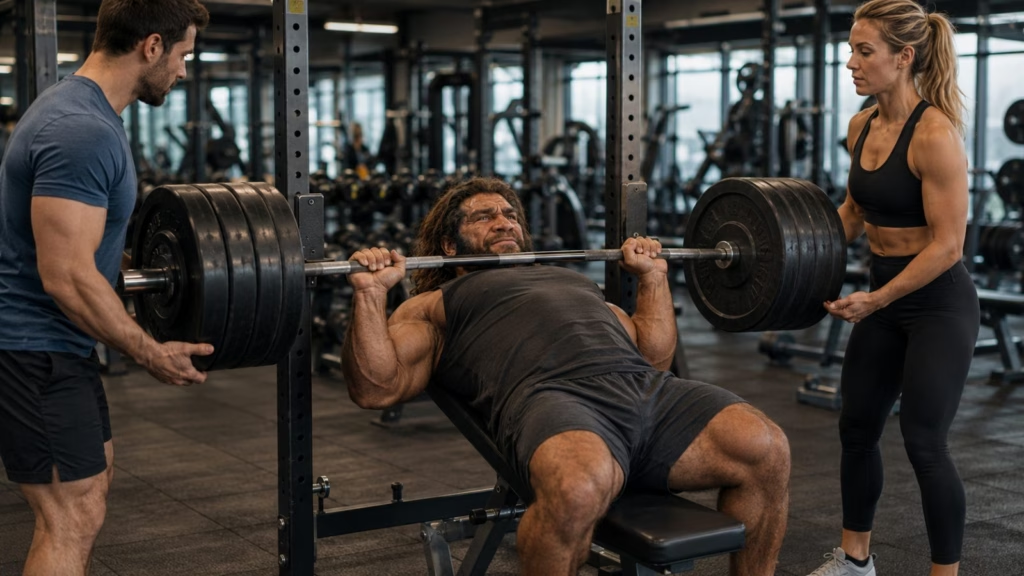
Probably, but nobody knows by how much. There was no Neanderthal bench press. No fossilised squat rack has been found at the back of a French cave. Anyone confidently telling you a Neanderthal was twice as strong as a modern human has wandered beyond the evidence.
What we do have is a large collection of skeletons.
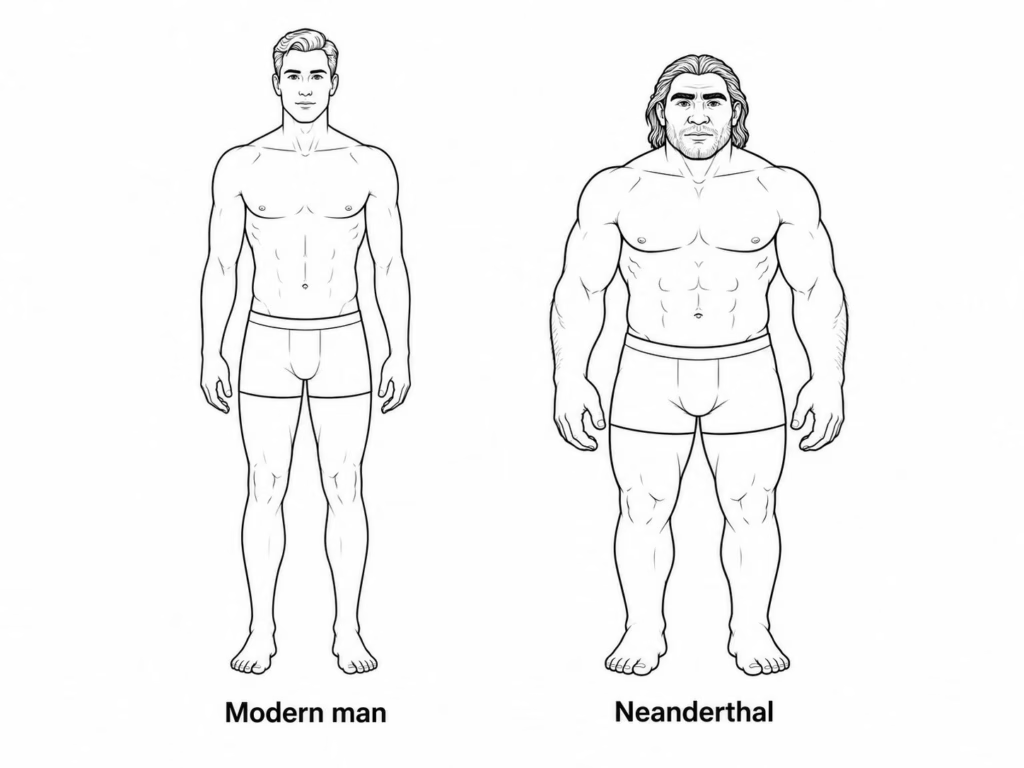
Neanderthals generally stood between about 150 and 175 cm and weighed roughly 64 to 82 kg. They were shorter and much more compact than many modern humans, with broad trunks, wide hips and shoulders, large joints and relatively short lower arms and legs.
They were not lumbering apes. They were humans, closely related to us, but assembled on a sturdier chassis.
Their long bones were generally more robust than ours. Some fossils show thicker shafts, more cortical bone and greater resistance to bending and twisting. Male Neanderthal upper-arm bones also show evidence consistent with greater muscle mass and heavy repeated loading.
This is often lazily described as “greater bone density”, but that is not quite the same thing. Scientists cannot put a 50,000-year-old skeleton through a modern DEXA scan and compare the number with yours. What the fossils reveal is greater robusticity: differences in the size, shape and distribution of bone that made the skeleton better able to handle heavy forces.
Some of that was probably genetic. Some was the result of beginning a physically demanding life during childhood and never really stopping.
Bones respond to load. A lifetime of walking over broken ground, making tools, carrying wood, hauling meat and wrestling with uncooperative wildlife leaves a rather different skeleton from a lifetime of emails followed by three sets of cable flyes.
Neanderthal versus modern office man
| Neanderthal | Modern office man | |
|---|---|---|
| Build | Short, broad and heavily muscled | Usually taller and more lightly built |
| Limbs | Shorter forearms and lower legs | Longer, more slender limbs |
| Bones | Large joints and robust long bones | Generally lighter, more gracile skeleton |
| Daily movement | Walking, carrying, digging, climbing and hunting | Sitting, driving and occasional disagreement with the printer |
| Hands | Powerful forearms, but also capable of precise tool work | Uses a keyboard and a phone with both thumbs. |
| Training plan | Daily Survival | Saved in Socials, never looked at. |
| Rest day | Death | Every second day |
Built for Hard, Ugly work
A Neanderthal body makes sense when you consider the job. They survived repeated periods of extreme cold across Europe and western Asia. Their short limbs and broad bodies helped conserve heat, but those same proportions may also have favoured force production at close range.
Archaeological evidence shows that Neanderthals hunted large animals with spears. At one German site, injuries found on 120,000-year-old deer bones were consistent with hunters driving wooden spears into the animals at close quarters.
Other discoveries indicate that Neanderthals hunted cave lions and butchered animals as large as straight-tusked elephants.
There is some debate over how often they threw their weapons rather than thrusting them. Either way, their version of obtaining protein involved considerably more commitment than tapping “add chicken” on a delivery app.
Their broad ribcages may also have supported unusually large lungs. One reconstruction estimated Neanderthal lung capacity at about 20 per cent greater than that of modern humans of similar size and sex, although reconstructing respiratory performance from ancient ribs necessarily involves some educated estimation.
The emerging picture is not simply of a powerful brute. Neanderthals were active, technically skilled hunters who combined strength, endurance, cooperation and fine hand control.
Studies of their hands suggest they regularly used precision grips while making and handling tools. The old cartoon of a clumsy caveman dragging his knuckles has not aged particularly well.
So, could you be one?
No, of course not. Neanderthals disappeared around 40,000 years ago and you are emphatically Homo sapiens, whatever your mates may claim.
You could, however, carry this particular Neanderthal gene variant. Without DNA testing, you would have no way of knowing. An extra 285g of muscle is not enough to identify its owner across a crowded gym, and being thick-set, strong or difficult to fit into a business shirt proves nothing.
Even if you do carry it, the advantage is small. Muscle and strength still depend far more on training, diet, age and hundreds of other genes. As study co-author and CrossFitter Miriam Berreiter put it: “Not even a Neanderthal growth hormone receptor can replace training.”
Forty-seven thousand years later, you still have to lift the weight yourself.