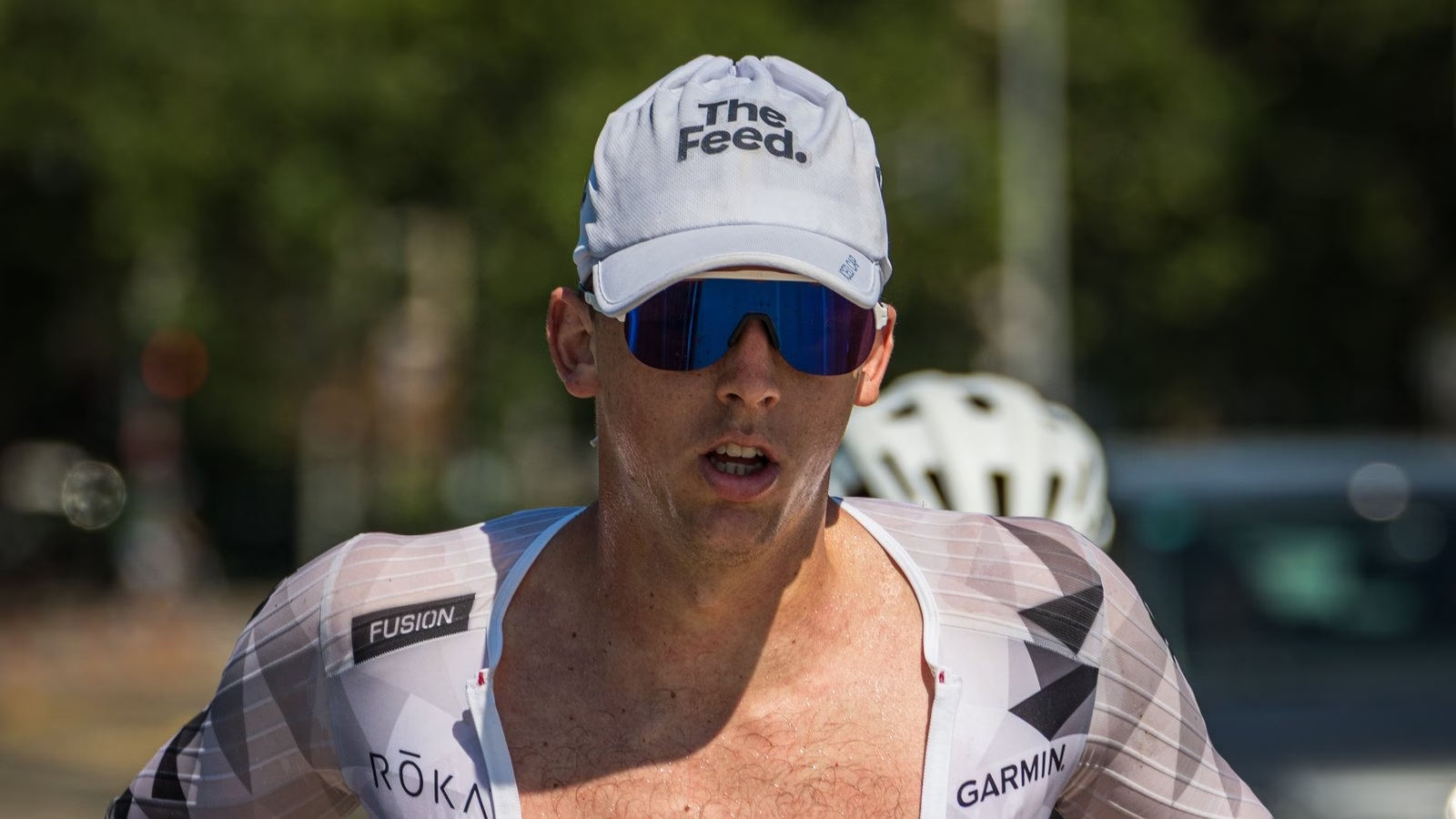
Seven hours, 19 minutes and 17 seconds. That’s how long Magnus Ditlev took to swim 3.8 km, ride 180 km and run a marathon in Florida on Saturday, and nobody has ever done an IRONMAN faster. Four weeks earlier he was walking in Kona. Here are the numbers, what they mean, and how he turned it around.
- Who: Magnus Ditlev, Denmark, 29
- Where: IRONMAN Florida, Panama City Beach, Saturday 7 November 2026
- Time: 7:19:17, the fastest iron-distance time ever recorded
- Splits: swim 47:52, bike 3:51:16, run 2:33:31
- Margin: 14:08 ahead of Rudy Von Berg
- Previous best: 7:21:04, Sam Laidlow, Challenge Roth, July 2026
- Kona: led for most of the World Championship on 10 October, then did not finish
How he did it
Ditlev came out of the 3.8 km swim 10 seconds behind the leader, Britain’s Andrew Horsfall-Turner. Then he rode away from everyone. He was more than six minutes clear at halfway on the bike and more than 11 minutes clear by the second transition, according to Slowtwitch.
His 3:51:16 ride is the fastest bike split ever in a full-distance race, Slowtwitch and Triathlon Magazine Canada both report. It was also nearly eight minutes quicker than the Florida course best he set himself in 2023 (3:59:02).
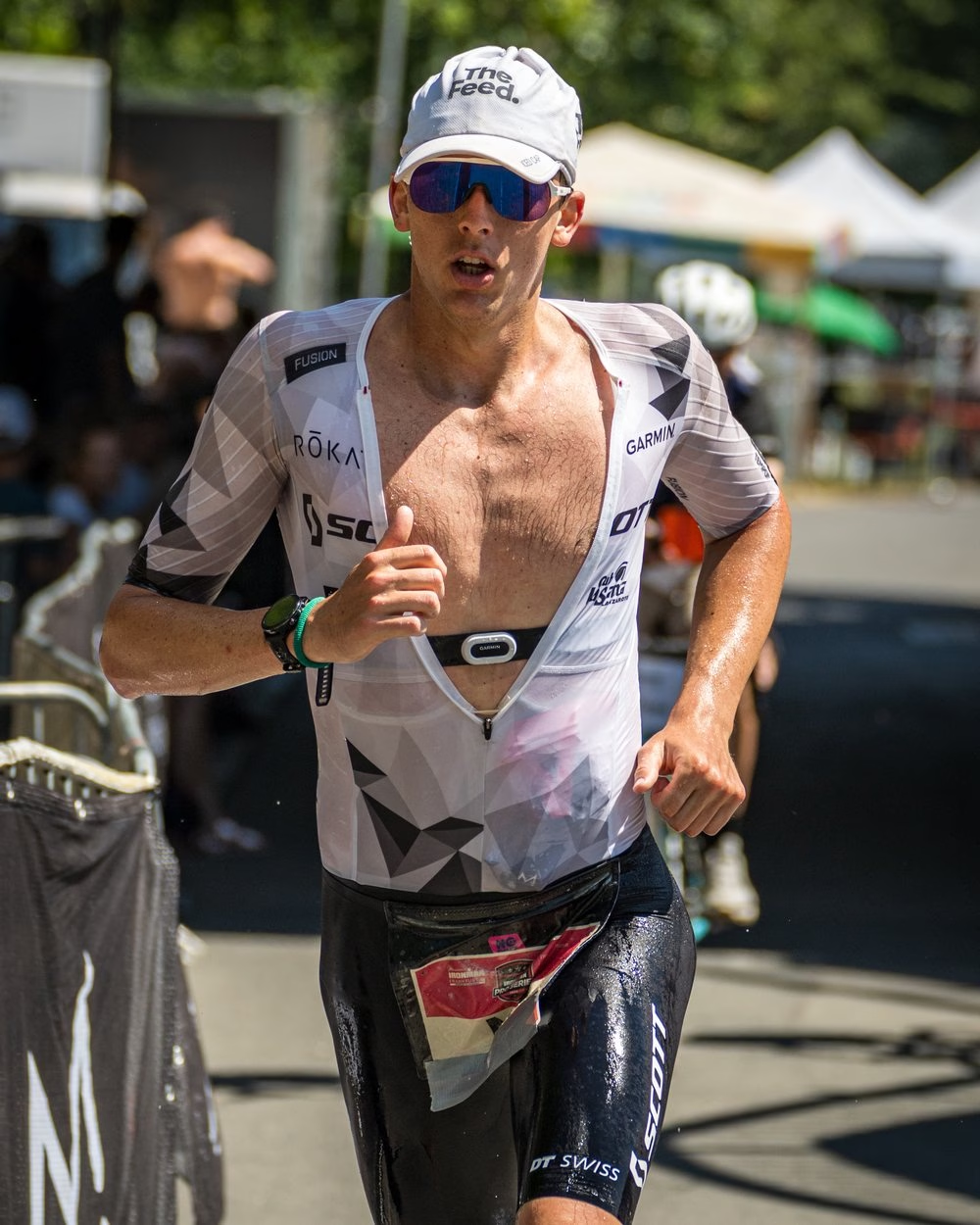
Then he ran a 2:33:31 marathon and won by 14 minutes 8 seconds. IRONMAN’s own post calls him the first to ever go under 7:20.
A post shared by IRONMAN Triathlon and Magnus Ditlev (@magnuselbaekditlev)
IRONMAN Florida 2026 results: men
| Pro men | Time |
|---|---|
| 1. Magnus Ditlev (Denmark) | 7:19:17 |
| 2. Rudy Von Berg (USA) | 7:33:25 |
| 3. Matt Hanson (USA) | 7:35:48 |
| 4. Sam Long (USA) | 7:38:59 |
| 5. Justin Metzler (USA) | 7:45:00 |
Matt Hanson ran the fastest marathon of the day, 2:28:07, to climb onto the podium. In the women’s race, Switzerland’s Alanis Siffert won in a course-record 8:07:37 from Britain’s Holly Lawrence and Germany’s Laura Jansen (tri2b).
What a 2:33 marathon off a 3:51 bike means
Our maths, from the official splits:
The bike: 180 km in 3:51:16 is an average of about 46.7 km/h, held for nearly four hours.
The run: 2:33:31 for 42.2 km is 3:38 per kilometre. A sub-4-hour marathon needs 5:41 per kilometre on fresh legs. Ditlev ran two minutes a kilometre faster than that after the swim and the ride.
The swim: 47:52 for 3.8 km works out at about 1:15 per 100 m, held for the best part of an hour.
Our read: the ride won it. He wasn’t the fastest runner in the field (Hanson was), but a 3:51 bike gave him a cushion the runners never closed. It’s the same lesson we keep finding in the science of endurance: at the top, it’s about how fast you can go without paying for it later.
World record or world best?
Some outlets are calling it a world record. Triathlon doesn’t ratify records over this distance, because no two courses are the same: currents, wind, hills and road surfaces all differ. So the accurate term is world best, which is how Slowtwitch and IRONMAN describe it.
The mark Ditlev beat was Sam Laidlow’s 7:21:04 at Challenge Roth in Germany in July. Ditlev was 1:47 faster. He also took 15:24 off the Florida course record, Von Berg’s 7:34:41 from 2023.
Was the course full length? The race was over the standard 3.8 km, 180 km and 42.2 km (tri2b), and none of the reports we read mentions a shortened leg. Florida has a reputation as a quick course, and Ditlev said before the race he was hoping for “good and fast conditions”.
From a Kona DNF to the fastest ever
On 10 October, at the IRONMAN World Championship in Kona, Ditlev led for most of the day. He took over on the bike, held a lead of about four minutes deep into the marathon, then faded on the way back from the Energy Lab and slowed to a walk (Slowtwitch). He did not finish (Triathlete).
“Less than 30 min away from achieving my biggest dream yesterday,” he wrote on Instagram the next day.
Twenty-eight days later he won Florida, which also books his place in Kona in 2027 (Triathlon Magazine Canada). Von Berg, second in Florida, had also pulled out in Kona, Slowtwitch reports.
Who is Magnus Ditlev?
Ditlev is a Danish professional triathlete, born on 31 October 1997, so he turned 29 a week before the race. He won Challenge Roth in 2022, 2023 and 2024 and was second at the IRONMAN World Championship in Kona in 2024.
What it means for age-groupers
For context, the average man finishes an IRONMAN in about 12 hours 34 minutes, according to Triathlete‘s analysis of 2021 and 2022 results. Ditlev finished more than five hours quicker than that.
A 2024 study of nearly 690,000 IRONMAN age-group finishes found the fastest men were aged 30 to 34 (Knechtle et al., PLoS One). Ditlev is 29.
If this has you thinking about your own first one, start shorter: our first triathlon in 8 weeks plan, then what to eat on race day. Closer to home, read our reports from IRONMAN Port Macquarie and Noosa Triathlon.
Fastest IRONMAN FAQ
What is the fastest IRONMAN ever?
7:19:17, by Magnus Ditlev at IRONMAN Florida on 7 November 2026. He is the first person to finish an iron-distance race in under 7 hours 20 minutes.
Is it a world record?
Not officially. Iron-distance triathlon has no ratified world records because courses differ, so it’s called a world best. It is the fastest time ever recorded over the distance.
Whose record did Ditlev beat?
Sam Laidlow’s 7:21:04, set at Challenge Roth in July 2026. Ditlev was 1:47 faster.
What were Magnus Ditlev’s splits?
Swim 47:52, bike 3:51:16 and run 2:33:31, for 7:19:17 including transitions.
What is an average IRONMAN time?
For men, about 12 hours 34 minutes, according to Triathlete’s analysis of 2021 and 2022 IRONMAN results.
Sources: Slowtwitch; Triatlon Noticias; tri2b; Triathlon Magazine Canada; IRONMAN on Instagram; Slowtwitch (Roth); Slowtwitch (Kona); Triathlete; Triathlete (average times); PLoS One. Checked 10 November 2026. Main image: Jürgen Matern, Wikimedia Commons (CC BY-SA 4.0), cropped.