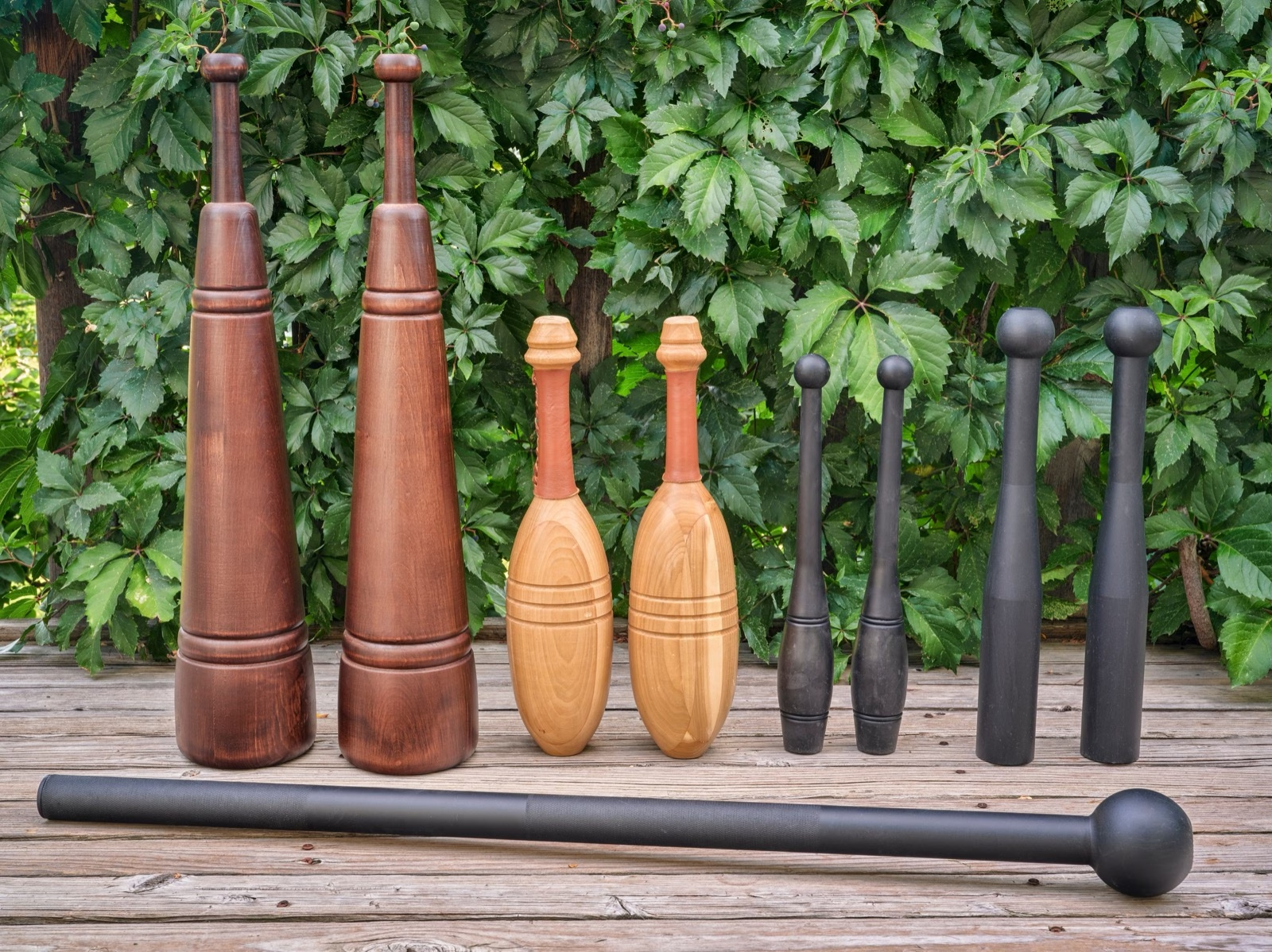

If you sit at a desk all week, lift twice a week, and your shoulders feel stiff, Indian clubs are the cheapest thing to try. They’re light wooden or steel clubs you swing in circles, and in the 1800s soldiers in the British and US armies swung them as part of their drill. Here’s where they came from, what weight to buy, and the four swings to learn first.
- What they are: bottle-shaped clubs, usually swung one in each hand, in big and small circles.
- What weight: 0.5 kg (1 lb) each to start; 1 kg (2 lb) at most. Lighter than you’d think.
- Military history: British soldiers took up club swinging in India and brought it home; the US Army’s 1897 drill manual included it.
- Learn first: front circles, wrist circles, then the inside and outside mills.
- The honest bit: good as a warm-up; the shoulder-rehab claims have little research behind them.
How Indian clubs got into army training
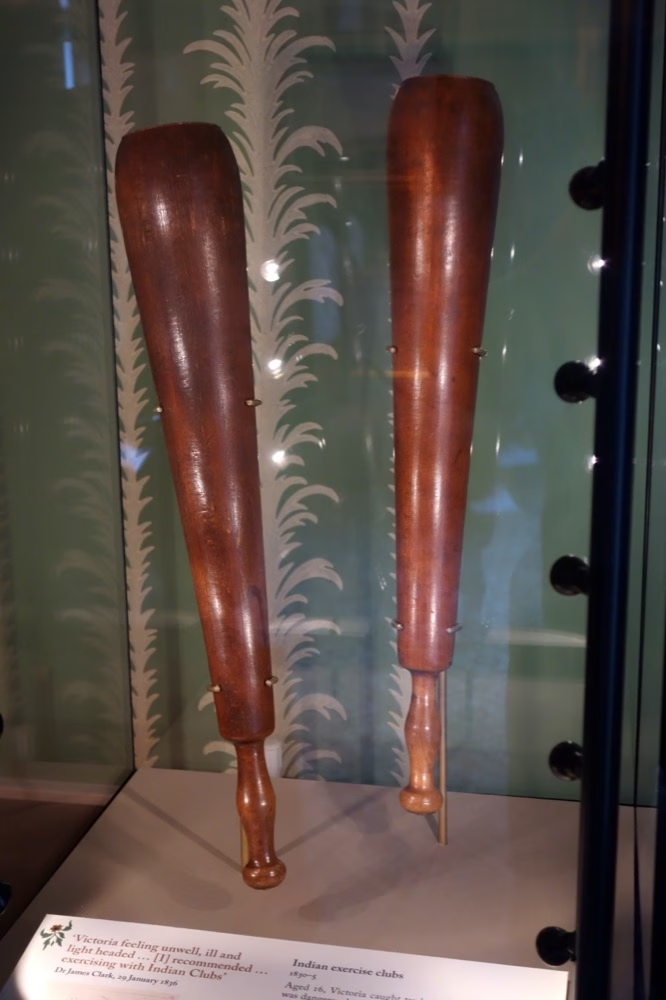
Wrestlers in India have long swung heavy wooden clubs. When British soldiers stationed there in the 1800s saw them, they adopted the exercise into their own physical training and brought it back to England (Science Museum Group). The British remodelled the clubs into much lighter versions (Conor Heffernan, University of Cambridge).
The army connection shows up in print early. Walker’s Manly Exercises, a best-selling British fitness manual, has a section titled ‘The Indian club exercise: the portion adopted in the army’, followed by ‘the new and more beautiful portion now added from the Indian practice’ (Walker, 1855 edition).
Club swinging was popular in England by the middle of the century and, by the end of the American Civil War, had become one of the main pieces of gymnastics kit in the US (Joseph Alter, 2004). In 1897 Captain Edmund Butts put it in his Manual of Physical Drill for the United States Army. His rules: clubs of ‘three or four pounds each, not more’, the lower body kept still, and once the men had the combinations, swinging to music. ‘Almost any waltz music can be used’ (Butts, 1897).
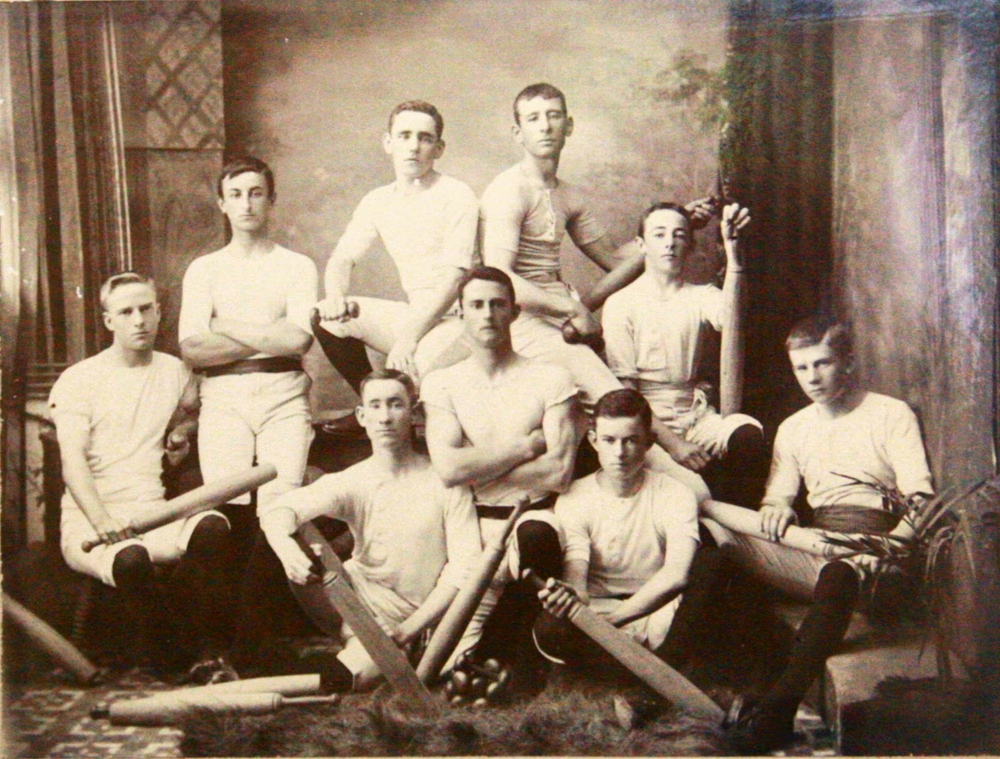
Indian clubs were even an Olympic event, twice: St Louis in 1904 (Olympedia) and Los Angeles in 1932, when the clubs weighed 0.7 kg. The 1904 champion, Ed Hennig of Cleveland, won 13 US titles over 47 years, the last at 71 (Olympedia).
Indian clubs, clubbells and steel maces: what’s the difference
| Tool | What it’s for |
|---|---|
| Indian clubs (0.5–1.5 kg, pairs) | Light, fast circles: shoulder and wrist mobility, coordination, warm-ups |
| Clubbells / steel clubs (about 2–18 kg) | Heavier swings and casts: grip, shoulder and rotational strength |
| Steel mace (3–10 kg+) | Two-handed swings around the head: shoulders, trunk, grip, conditioning |
What weight Indian clubs to buy
Buy the lightest pair you can find: 0.5 kg (1 lb) each, or 1 kg (2 lb) at most. Swung fast at arm’s length, even a light club pulls hard on your shoulder and wrist. Brett McKay of Art of Manliness started with 3 lb clubs, found them tough and said he should have bought 2 lb (Art of Manliness). If you’re after strength rather than mobility, that’s a job for heavier steel clubs or a steel mace.
Four Indian club exercises for beginners
Learn each one with a single club first, slowly, then try both clubs together. Find a room with space all round, away from windows and the TV.
1. Front circles
Hold a club in each hand at your sides, arms straight. Swing them forward, up past your face and overhead, and round behind you in a big circle, like a slow windmill. Ten forwards, ten backwards. Keep your legs and trunk still: the arms do the work.
2. Wrist circles
Hold the club upright in front of you, elbow bent. Let it drop and make small circles with the wrist and forearm, the club circling behind your arm. These train the wrist and forearm, and set up the mills. The 1897 Army manual built its whole routine from these large and small circles (Butts).
3. Inside mill
Start with the club upright in front of your shoulder. Drop it behind you, circle the elbow inward, bring the club round in front and cast it out and up into a ‘Y’, then return to the start. Keep the upper arm close to your ribs: the most common mistake is reaching too far across the body (Dangerously Fit).
4. Outside mill
The inside mill in reverse: the elbow circles outward. Pause at each position at first, then speed up as it starts to feel natural (Dangerously Fit). Once both mills are smooth, alternate arms.
A 10-minute Indian club workout
| Block | What to do |
|---|---|
| 1. Warm-up (2 min) | Front circles: 30 seconds forwards, 30 backwards, twice. |
| 2. Wrist circles (2 min) | 30 seconds each arm, each direction. |
| 3. Mills (4 min) | 1 minute each: inside mill left, inside mill right, outside mill left, outside mill right. |
| 4. Flow (2 min) | Alternate inside mills, both arms, continuously. |
Use it as a warm-up before upper-body sessions, or on its own most days. It also works before a military calisthenics session.
What they’re good for, and what’s hype
Physios and coaches use Indian clubs as a shoulder warm-up and for rehab, and Victorian manuals promised everything from a better posture to better health. The research hasn’t caught up. The best-designed study we found is a 2024 pilot with seven people: eight minutes of club swinging slightly raised shoulder strength in one diagonal movement, with no change in range of motion (Phillips and Rothstein, 2024).
Our read: they’re a cheap, low-risk way to move your shoulders through ranges a gym rarely asks for, and a good warm-up. Don’t expect them to fix an injured shoulder; for that, see a physio, and check our list of exercises that make shoulder pain worse.
Indian clubs FAQ
What weight Indian clubs should I buy?
Start with a pair of 0.5 kg (1 lb) clubs, or 1 kg (2 lb) at most. They feel heavier than they are once you swing them. The US Army’s 1897 drill manual said ‘three or four pounds each, not more’ (Butts, 1897), and the 1932 Olympic event used clubs of just 0.7 kg (Olympedia).
Are Indian clubs good for your shoulders?
Many physios and coaches use them as a shoulder warm-up, but the research is thin: a seven-person pilot study in 2024 found slightly higher strength in one shoulder movement after eight minutes of swinging, with no change in range of motion (Phillips and Rothstein, 2024). If your shoulder hurts, see a physio first.
Indian clubs vs a steel mace: which should I get?
Clubs are light, cheap, quiet and good for a warm-up or a desk worker’s shoulders. A mace is heavier and works more of the body, with more conditioning.
What’s the difference between Indian clubs and clubbells?
Indian clubs are light (usually 0.5–1.5 kg) and swung in pairs for rhythm and mobility. Clubbells, heavy clubs and steel clubs are heavier (from about 2 kg to 18 kg) and used more like a kettlebell, for strength. Persian meels are the very heavy wooden clubs of traditional Iranian strength training.
How long does it take to learn Indian clubs?
In the 2024 pilot, seven of eight beginners learned a basic routine well enough in eight one-hour sessions (Phillips and Rothstein).
Sources: Science Museum Group; Conor Heffernan (University of Cambridge MPhil); Joseph Alter, Comparative Studies in Society and History, 2004; Walker’s Manly Exercises (1855); Edmund L. Butts, Manual of Physical Drill, United States Army (1897); Olympedia; Phillips and Rothstein, 2024; Dangerously Fit.