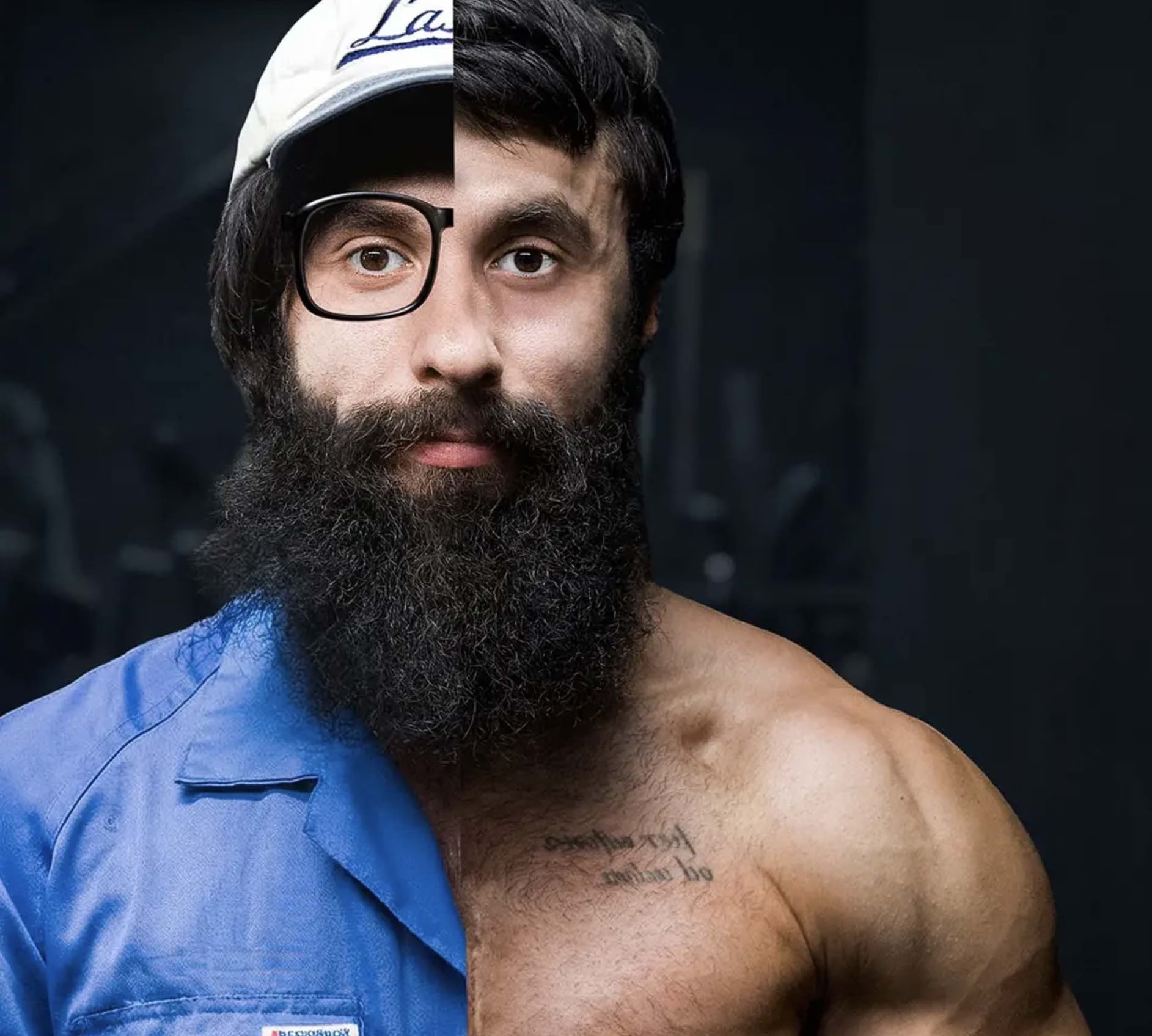
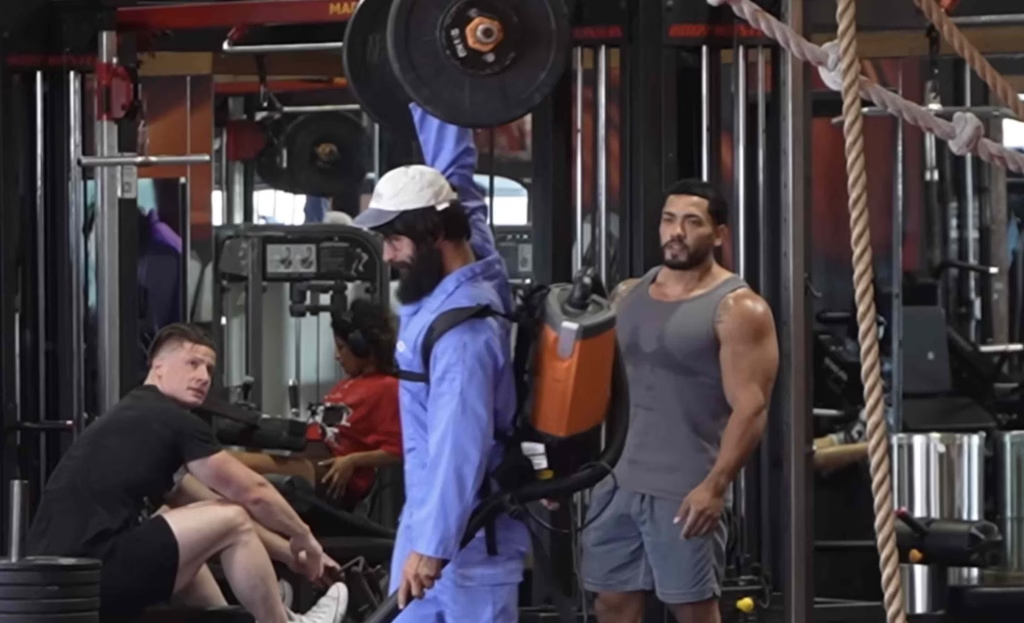
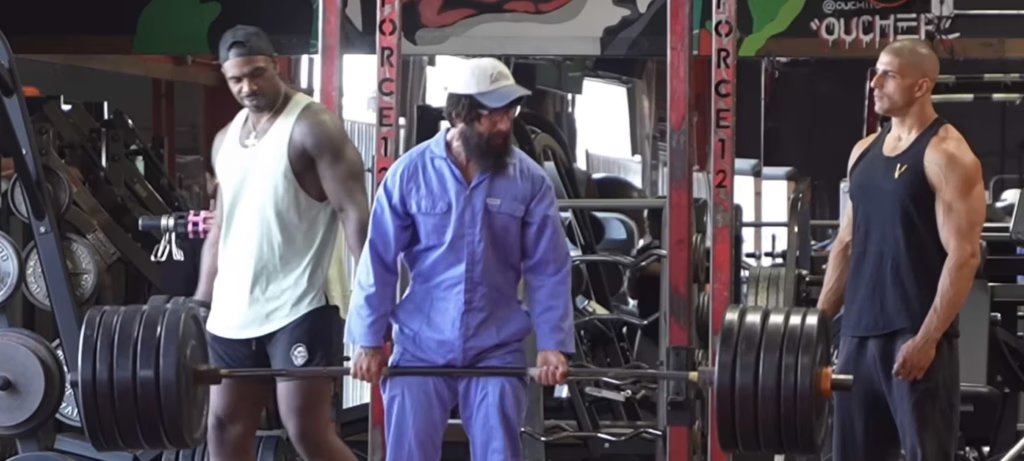
Anatoly walks into a gym dressed like a cleaner, politely asks to mop under someone’s barbell, then picks the thing up as though it is blocking the vacuum cleaner. The reactions are predictable: disbelief, wounded pride and the occasional thousand-yard stare from a bloke who has just watched the janitor casually lift his deadlift max. But strip away the costume, editing and comedy. How strong is Anatoly really?
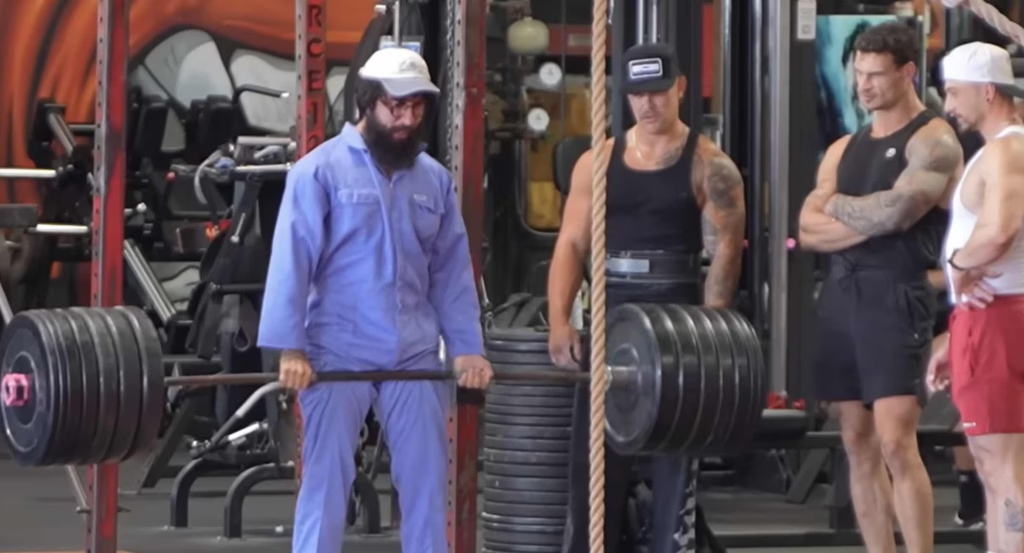
The answer is slightly less ridiculous than the videos suggest, but only slightly. Vladimir Shmondenko, the Ukrainian powerlifter behind the Anatoly character, is genuinely strong for his size. He is not one of the strongest powerlifters in the world, however, and some of the personal-best numbers repeated online are not supported by public competition results. That distinction matters.
Who is Anatoly?
Anatoly is the fictional alter ego of Vladimir Shmondenko, a Ukrainian strength athlete and content creator. His videos generally involve disguising himself as a cleaner or elderly gym-goer before surprising much larger lifters with heavy deadlifts, squats and overhead lifts.
Shmondenko also has a genuine competitive powerlifting record. The OpenPowerlifting database lists him under the spelling Volodimir Shmondenko and records two competitions from 2018.
At the April 2018 Ukrainian Championships, competing at a bodyweight of 65.6 kg in the teenage division, he recorded:
- 140 kg squat
- 105 kg bench press
- 185 kg deadlift
- 430 kg total
Later that year, at the Kyiv Cup, he weighed 73.7 kg and competed in a push-pull event, meaning bench press and deadlift only. He completed a 115 kg bench press and a 207.5 kg deadlift.
Those are verified competition numbers. They are not internet mythology, gym estimates or weights lifted while wearing a fake moustache.
What about Anatoly’s 290 kg deadlift?
Numerous profiles claim Shmondenko has deadlifted 290 kg and squatted 210 kg. Those figures are widely repeated, including in media profiles, but they do not appear in his available OpenPowerlifting competition history.
That does not necessarily mean the lifts are fake. Athletes regularly hit personal bests in training that never appear in sanctioned competition. Shmondenko may also have improved considerably since his last publicly listed meet in 2018. It does mean the claims need to be described accurately.
A 290 kg deadlift is best treated as a reported gym personal best, not a verified competition result. His publicly documented competition best is 207.5 kg. That difference is about the weight of a fully grown man, so it is not a minor footnote.
How strong are his verified lifts?
At 73.7 kg, Shmondenko’s 207.5 kg competition deadlift was approximately 2.8 times his bodyweight. That is seriously strong. At 65.6 kg, his 430 kg three-lift total was about 6.6 times his bodyweight. His individual lifts worked out at roughly:
| Lift | Weight | Multiple of bodyweight |
|---|---|---|
| Squat | 140 kg | 2.1 times |
| Bench press | 105 kg | 1.6 times |
| Deadlift | 185 kg | 2.8 times |
| Total | 430 kg | 6.6 times |
These were his teenage results rather than his presumed current abilities, but they establish the central point: the man playing Anatoly was already a capable competitive powerlifter before he became internationally famous for embarrassing bodybuilders.
For comparison, Strength Level’s aggregated standards classify a male deadlift of roughly 2.5 times bodyweight as elite, although any label depends heavily on age, training history, equipment and the population being compared.
Among ordinary gym members, a 2.8-times-bodyweight deadlift is exceptional. Among serious competitive powerlifters, it is impressive but not extraordinary.
Would a 290 kg deadlift make him elite?
At a reported bodyweight of approximately 75–80 kg, a 290 kg deadlift would equal around 3.6–3.9 times bodyweight.
That would be an elite-level lift by almost any reasonable recreational standard. It would also place him around the upper end of deadlifts recorded across male powerlifting competitors generally. Competition-data analysis places a 288 kg deadlift around the 90th percentile across male lifters, although that broad comparison combines different bodyweights and divisions. It still would not make him the strongest powerlifter in the world.
Top international specialists in nearby weight classes can deadlift well beyond 300 kg under competition conditions. Elite powerlifting is not judged by whether a lift looks astonishing in a commercial gym. It is judged against other genetically gifted people who have arranged their entire lives around moving absurd amounts of iron. Anatoly is extremely strong. World-record powerlifters occupy another postcode.
Why do his prank lifts look so impossible?
The costume does a lot of work. Loose overalls conceal Shmondenko’s muscularity, while the cleaner character encourages people to judge him as an untrained employee rather than a competitive lifter. When he then handles a weight that a visibly larger man is struggling with, the contrast becomes the joke. He is also very good at selecting lifts that suit the format.
Many gym-goers judge strength by appearance, but muscle size and maximal strength are not identical. Strength is influenced by technique, neural efficiency, limb proportions, bracing, grip, training specificity and experience under heavy loads.
A smaller powerlifter who has practised the deadlift for years can comfortably outlift a larger bodybuilder whose training is primarily aimed at muscle growth.
There is likely some production theatre as well. The clips are edited entertainment, not live powerlifting broadcasts. Viewers usually do not see every warm-up, failed attempt, repeated take or conversation preceding the lift.
That does not make the strength fake. It makes the video a performance built around real strength.
Is Anatoly stronger than the people he pranks?
Often, probably yes, at least on the lift being shown. A muscular physique does not automatically produce a large squat or deadlift. Some of the people in the videos may train mainly with machines, moderate repetitions or bodybuilding movements. Others may be strong but are being shown in a fatigued state or using an unfamiliar exercise.
Shmondenko has the advantage of knowing what is about to happen. He can choose the weight, prepare for the lift and use a movement he has rehearsed repeatedly. The unsuspecting gym member gets a mop, a camera and an immediate existential crisis.
So How Strong is Anatoly, really?
Anatoly is not merely an actor moving fake plates. Vladimir Shmondenko has documented powerlifting results, including a 207.5 kg deadlift at 73.7 kg bodyweight and a 430 kg total at 65.6 kg. Those numbers confirm that he possesses exceptional relative strength.
The frequently quoted 290 kg deadlift may be legitimate, but it should be described as a reported training lift unless stronger competition evidence emerges. So, is Anatoly genuinely strong?
Absolutely. Is he among the strongest powerlifters on Earth? No.
He occupies a more entertaining middle ground: strong enough to make an ordinary gym lifter question everything, technically skilled enough to make difficult weights look casual, and clever enough to realise that deadlifting in a singlet gets fewer views than doing it while holding a mop. Recently, a viral video claimed someone finally beat him — here’s what actually happened.
You can see his wbsite here: https://anatolyfit.com/
Whatever your own numbers look like, the basics still apply. See our 10 strength training tips that will never die for the fundamentals worth building on.