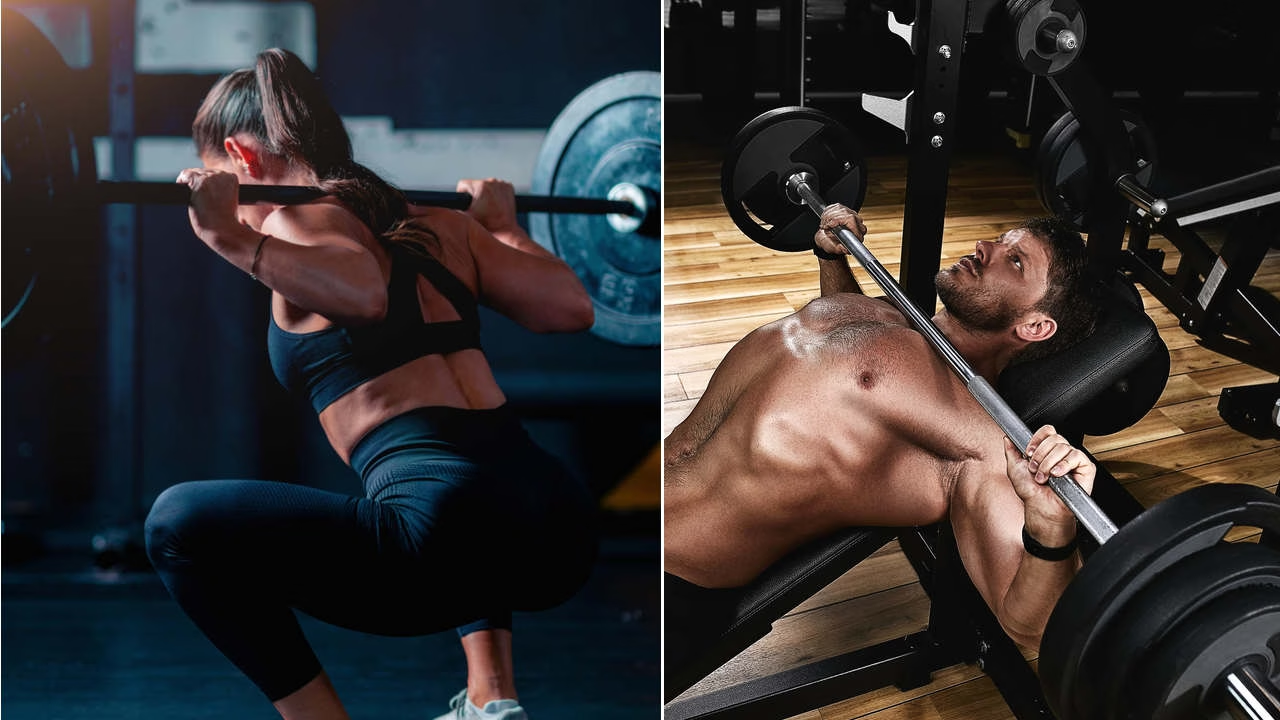

The old gym stereotype says men train chest and arms while women concentrate on glutes and legs. Now, data from more than 231,000 training blocks suggests there is considerably more truth to it than many lifters would admit.
Renaissance Periodization analysed 231,741 mesocycles created through its RP Hypertrophy App. These included 203,086 male training blocks and 28,655 female training blocks.
Users had logged more than one million workouts since the app launched in 2023. However, the analysis focused specifically on the muscle groups they selected to “emphasise” when building their programs.
That distinction matters. The figures show what RP app users intended to prioritise, not necessarily every set they completed. A training block is also not the same as an individual lifter because one user can create multiple blocks.
Even with those qualifications, the divide is difficult to miss.
Men overwhelmingly prioritised upper body
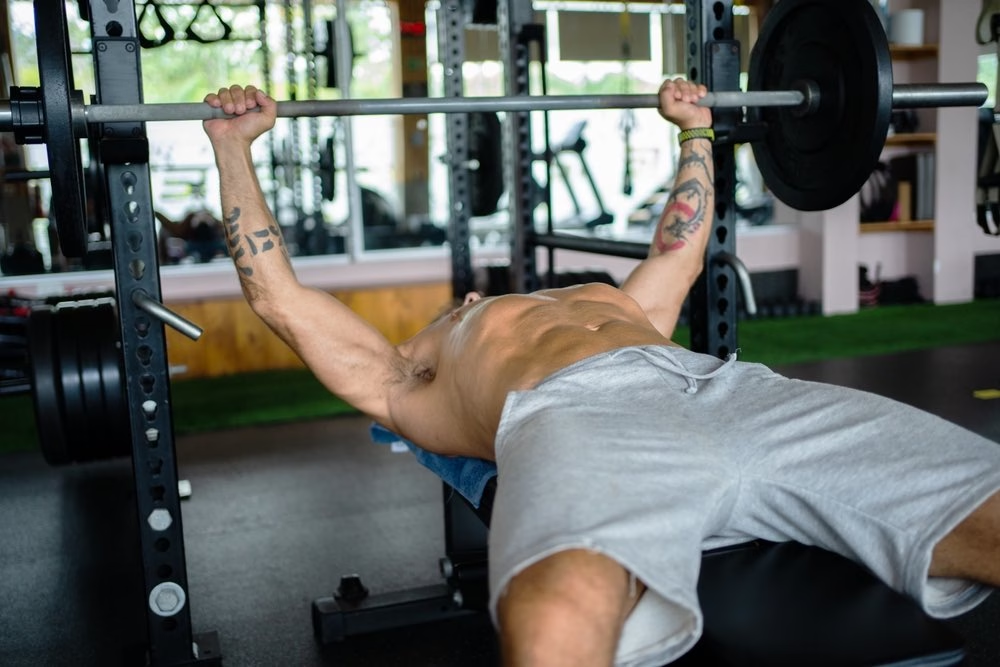
Chest was the most frequently emphasised muscle group among male users, appearing as a priority in 64.5 per cent of training blocks.
Biceps, triceps and delts followed closely, with back still being prioritised in 61.3 per cent of male programs. Then came an enormous drop.
Forearms were emphasised in 29.4 per cent of male training blocks, followed by quads at 22.2 per cent and hamstrings at 18.8 per cent. Calves were selected in just 15.7 per cent, while traps finished last at 10 per cent.

What Men and Women Chose to Emphasise
| Men | Women |
|---|---|
| Chest: 64.5% | Glutes: 75.1% |
| Back: 61.3% | Quads: 70% |
| Forearms: 29.4% | Hamstrings: 69.7% |
| Quads: 22.2% | Abs: 43.5% |
| Hamstrings: 18.8% | Calves: 30.4% |
Based on 231,741 training blocks created by RP Hypertrophy App users.
In other words, the finding is not simply that men like training chest. It is that male app users collectively placed far more importance on the major upper-body muscles than anything below the waist.
That does not mean their legs received no training. Users could select a muscle group to grow or maintain rather than emphasise it, and muscles such as the traps and forearms receive considerable indirect work during rows, deadlifts, carries and other compound exercises.
Still, when men were invited to put a muscle group at the front of the queue, legs rarely won.
Women showed the opposite pattern
Among female users, glutes were the leading priority at 75.1 per cent. Quads followed at 70 per cent and hamstrings at 69.7 per cent.
Abs were a distant fourth at 43.5 per cent, while calves were emphasised in 30.4 per cent of female training blocks.
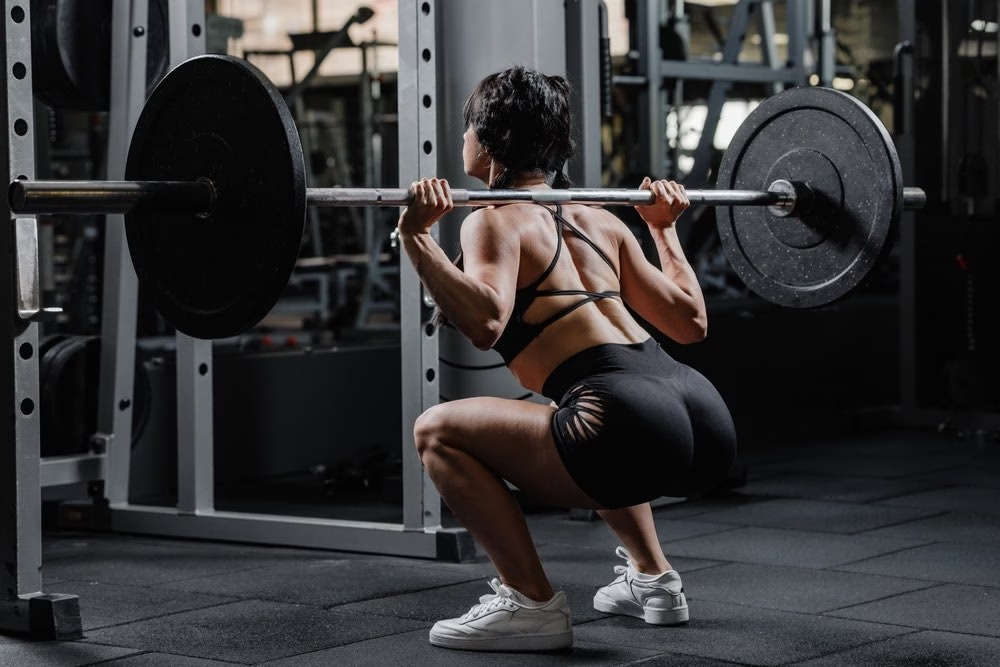
Chest appeared as a priority in only 16.6 per cent. Forearms and traps were effectively absent from most programs, at 4.1 and 2.1 per cent respectively.
The female sample was much smaller than the male sample, reflecting RP’s predominantly male audience. However, almost 29,000 training blocks still provide a substantial look at the choices made within this particular group of hypertrophy-focused women.
Is this really evidence of skipped leg day?
Not quite.
The data came from self-selected users of one hypertrophy app, rather than a random cross-section of everyone who trains. These users are also likely to be more interested in muscle growth and structured programming than the average gym member.
The results therefore cannot prove that men generally neglect their legs or that women neglect their upper bodies.
They do, however, fit with previous research. A 1997 study by Linda Mealey found that men and women used weight-training equipment in ways that tended to exaggerate existing physical differences between the sexes. A later 2007 study published in The Journal of Social Psychology also reported differences in the exercise behaviours and motivations of men and women.
The reasons could include aesthetics, sporting goals, social expectations and simple personal preference. Claims that the divide can primarily be explained by evolutionary psychology are more speculative than the app figures themselves.
The useful lesson for your own program
There is nothing automatically wrong with prioritising the muscles you most want to develop. Enjoying your training is one of the things that keeps you doing it.
But preference can become a blind spot.
If your program has contained repeated chest and arm specialisation blocks while your lower body has remained on permanent maintenance, it may be worth reversing the order for a training cycle.
You do not have to abandon the physique you want. Just make sure your program reflects a deliberate decision rather than the exercises you happen to enjoy most.
Sometimes the muscle group you least want to emphasise is the one that most needs your attention.
The complete analysis is available in the Renaissance Periodization video.