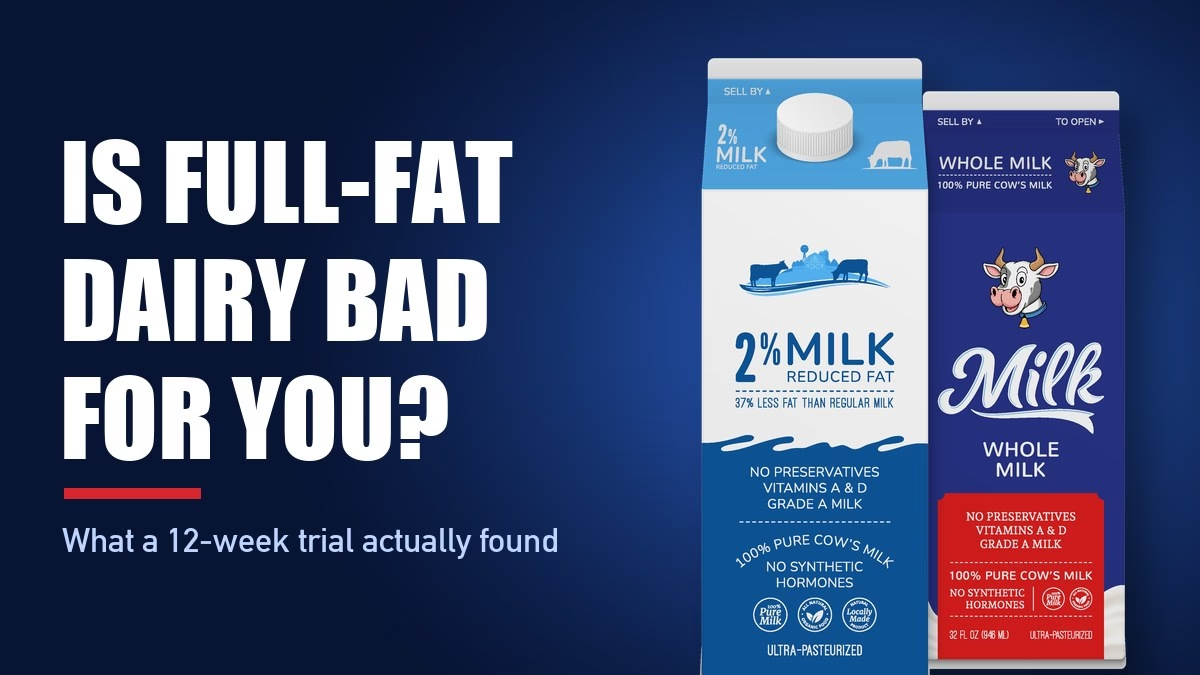

It’s the question that’s never really been answered satisfactorily and pops up in my head every time I pick up three litres from Woolies. Well, a small Canadian trial doing the rounds again this month says full-fat dairy may not be the villain it was made out to be. Here’s what it found, what it doesn’t prove, and which milk makes sense for how you train.
- For most healthy men, no. Australia’s Heart Foundation says you can choose full-fat or reduced-fat milk, yoghurt and cheese.
- The new trial: three serves a day of full-fat dairy for 12 weeks didn’t raise weight, body fat or blood cholesterol in overweight adults.
- The difference is calories: a glass of full-cream milk has about 65 more than skim, with the same protein.
- High cholesterol or heart disease? Stick with reduced-fat.
What the new study found
The trial comes from the University of Toronto and was published in the Journal of Nutrition early this year (Anderson et al., 2026). It isn’t new: it made headlines in August and was re-run by ScienceDaily and others in November (ScienceDaily).
Seventy-four adults aged 25 to 60, all overweight or obese, finished the 12 weeks. They were split three ways:
- a calorie-cut diet with little dairy
- three serves a day of full-fat dairy, eating at maintenance calories
- three serves a day of full-fat dairy, with no calorie limit
The researchers supplied the dairy. Compared with the low-dairy group, the dairy groups showed no meaningful differences in weight gain, body composition or blood cholesterol. They had better blood pressure and got more protein, calcium and vitamin D (University of Toronto). Only the calorie-cut group lost weight, which is what calorie cuts do.
What it doesn’t prove
- It’s small and short. Seventy-four people for 12 weeks can show what happens to blood markers. It can’t show whether full-fat dairy changes heart attacks or strokes over decades. The authors say larger, longer trials are needed.
- It was in overweight adults. Not people with heart disease, diabetes or high cholesterol.
- It was dairy-funded, in part. The money came from Dairy Research Cluster 3, a federal Canadian research program co-funded by Dairy Farmers of Canada and other dairy groups (Dairy Farmers of Canada), plus the Mitacs research program. That doesn’t make the result wrong, but it’s worth knowing.
- It doesn’t cover butter, cream or ice cream. It’s milk, yoghurt and cheese.
What the bigger picture says
The Toronto trial fits a long run of research finding that full-fat dairy is less of a problem than its saturated fat would suggest. An earlier trial in people with metabolic syndrome found full-fat dairy didn’t change fasting LDL or HDL cholesterol compared with low-fat dairy or a dairy-limited diet (AJCN, 2021).
Australia’s Heart Foundation changed its advice in 2019. Healthy people can choose full-fat or reduced-fat unflavoured milk, yoghurt and cheese. People with heart disease or high cholesterol should choose reduced-fat, because dairy fat raises their cholesterol more. Butter, cream and ice cream still aren’t part of a heart-healthy diet (Heart Foundation).
Whole milk vs skim milk: what matters if you train
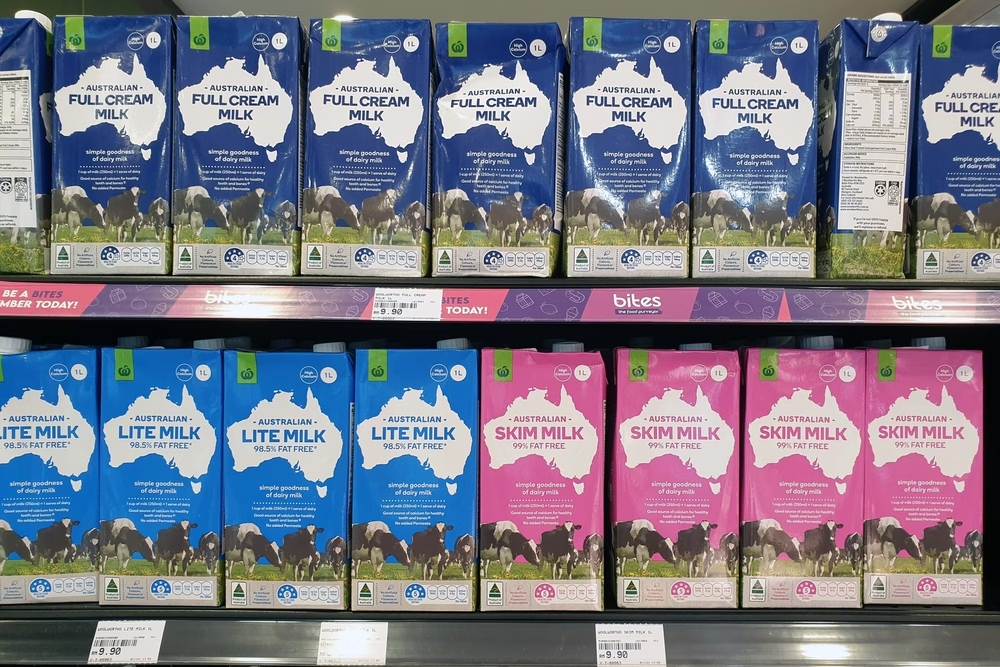
The protein is the same. The difference is fat, and so calories (USDA FoodData Central; Australian brands vary a little):
| Per glass (about 250 ml) | Full-cream (whole) | Skim |
|---|---|---|
| Calories | about 150 | about 85 |
| Protein | about 8 g | about 8.5 g |
| Fat | about 8 g | under 0.5 g |
| Calcium | about the same | about the same |
Three glasses a day of full-cream instead of skim is roughly 200 extra calories, about a muesli bar. That’s handy when you’re trying to put on size and a cost when you’re cutting.
Milk after training
Milk is one of the cheapest recovery drinks there is. It has whey and casein, carbs and fluid, and studies comparing it with sports drinks after training hold up well (JISSN review). If you want the powder version, our WPC vs WPI guide explains the two kinds of whey.
Greek yoghurt and cheese
Full-fat Greek yoghurt has roughly twice the protein of milk, gram for gram, and cottage cheese is one of the best protein-per-calorie foods you can buy. Both are on our list of high-protein foods.
- Bulking or struggling to eat enough: full-cream. Easy calories, same protein.
- Cutting: skim or light. Spend the 65 calories a glass somewhere you’ll notice them.
- Maintaining and healthy: whichever you’ll actually drink. The evidence doesn’t separate them.
- High cholesterol or heart disease: reduced-fat, as the Heart Foundation advises.
Full-fat dairy FAQ
Is whole milk bad for you?
Not for most healthy adults. The Heart Foundation calls unflavoured milk, yoghurt and cheese neutral for heart health and lets healthy people choose full-fat or reduced-fat (Heart Foundation). The exception is people with high cholesterol or heart disease, who should choose reduced-fat.
Whole milk vs skim milk: which is better?
Neither, on health grounds alone, for healthy people. Skim has about 65 fewer calories a glass and the same protein, which suits a cut. Full-cream is more filling and easier calories, which suits a bulk.
Does full-fat dairy make you fat?
Only the way any calories do. In the Toronto trial, people eating three serves a day at maintenance calories didn’t gain weight or body fat in 12 weeks (University of Toronto).
Is full-fat dairy bad for your cholesterol?
In healthy people, the trials so far don’t show much effect: the Toronto trial and an earlier trial in people with metabolic syndrome (American Journal of Clinical Nutrition, 2021) found no meaningful rise. People who already have high cholesterol respond more, which is why they’re told to choose reduced-fat.
Is milk good after a workout?
Yes. It has fast and slow proteins, carbs and fluid, and it’s cheap (Journal of the International Society of Sports Nutrition review). Skim or full-cream both work.