
Padel is about to receive the sort of Australian publicity most emerging sports can only dream about. On 15 and 16 August, a custom-built padel court will take over the Northern Broadwalk of the Sydney Opera House for the inaugural Padel Invitational.
Former tennis world No. 1 Pat Rafter headlines the event. Now a member of Australia’s national padel team, the Aussie Crocs, Rafter will be joined by Casey Dellacqua and eight international players from Spain, Argentina and Great Britain.
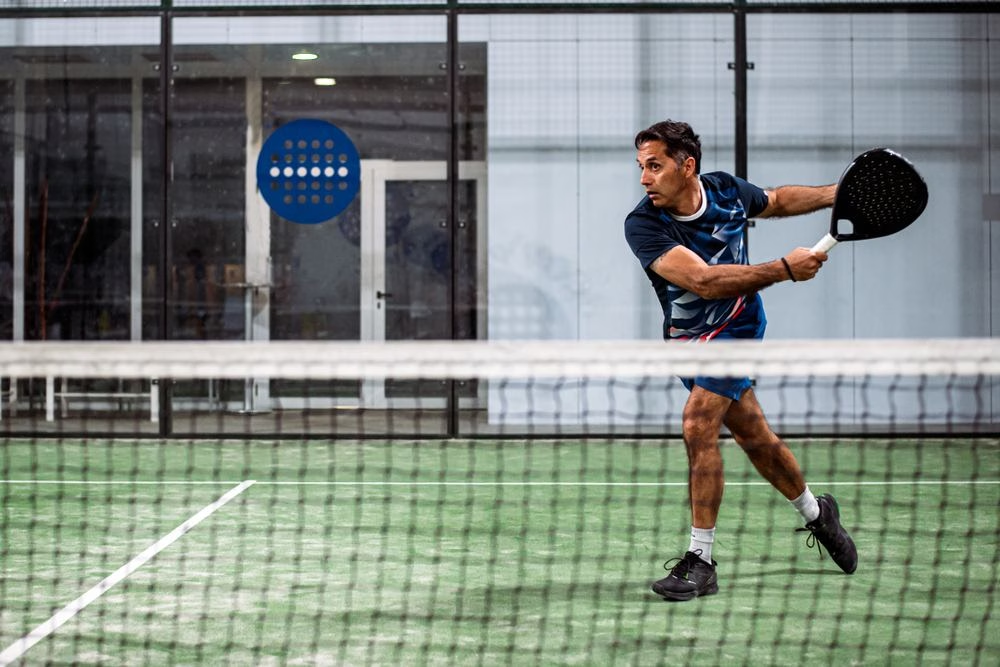
The professional field includes Juan Martín Díaz, who spent 13 consecutive years as padel’s world No. 1, and Alejandra Salazar, winner of 59 professional titles and seven FIP World Championships with Spain. Martín Di Nenno, Maxi Sánchez, Pablo García, Marina Lobo, Aimee Gibson and junior world champion Mar Munuera are also scheduled to play.
Olympic swimming champion Kaylee McKeown helped Rafter launch the event with an exhibition hit overlooking Sydney Harbour in July. The full weekend will combine professional matches, Australian club finals, community sessions and a celebrity one-point competition. Tennis Australia confirmed the player line-up and event format.
That is the promotional pitch. The more useful question is whether padel is simply the latest fashionable racquet sport or something worth trying.
What exactly is padel?
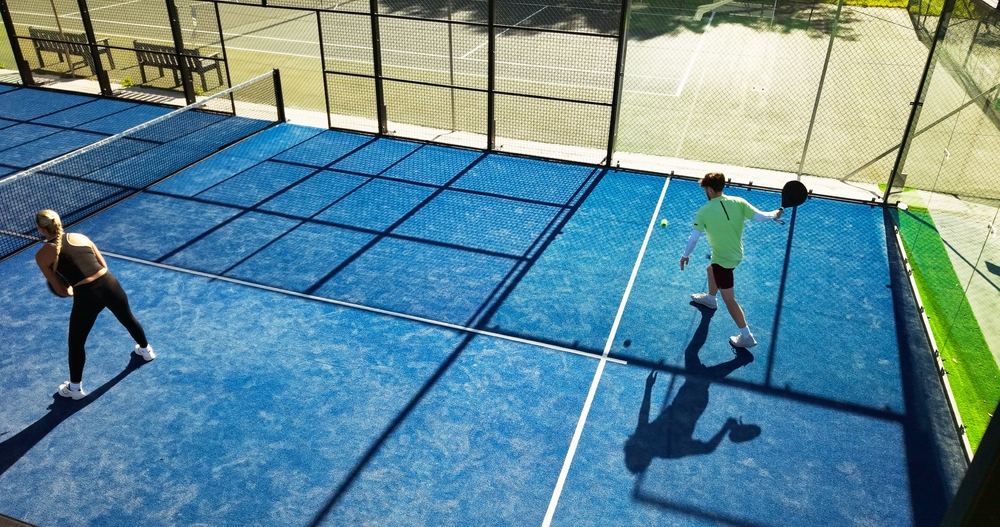
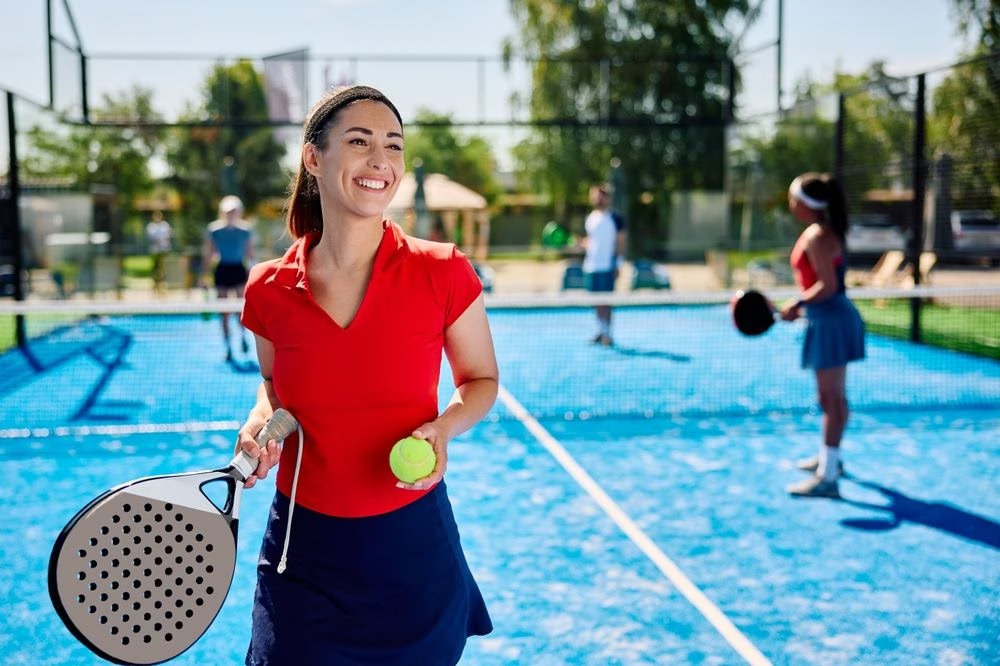
Padel looks like tennis played inside a glass box, with a little squash thrown in. It is normally played as doubles on a 20 by 10-metre enclosed court. That is roughly one-third the size of a tennis court. Players use solid, perforated racquets and serve underarm from below waist height.
The scoring system is largely the same as tennis, but the surrounding walls remain part of the game. After the ball bounces on your side, it can rebound from the glass before you return it.
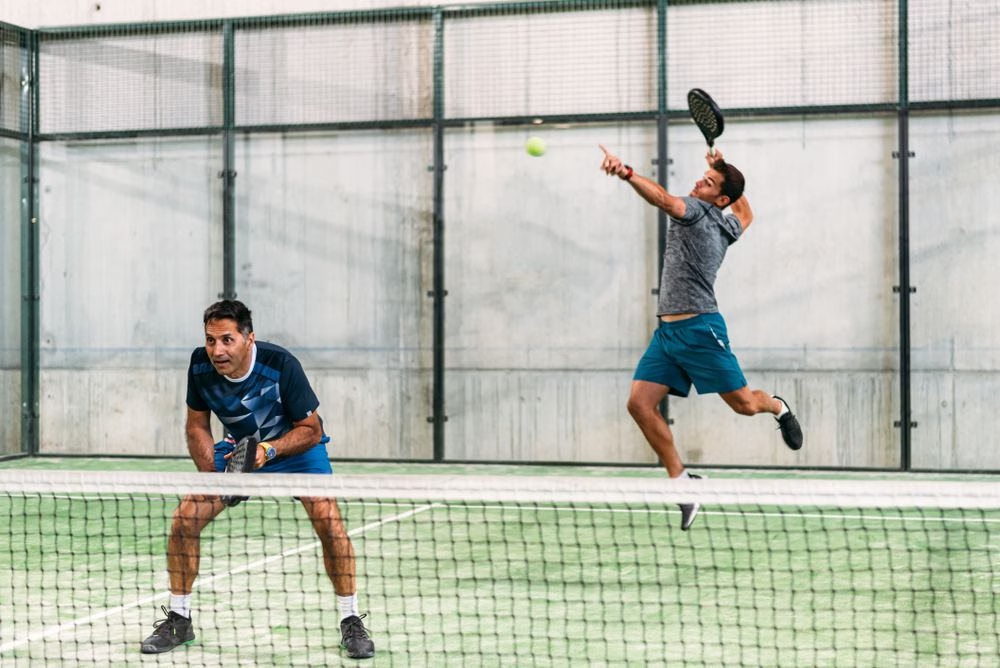
That produces longer rallies, unusual angles and fewer dead balls sailing into the next suburb. The smaller playing area also makes the sport less intimidating for beginners who cannot cover a full tennis court.

The basic rules are straightforward enough to learn in one introductory session. Reading the walls, controlling the net and working effectively with a partner take considerably longer.
Padel Australia provides a simple breakdown of the court, serve, scoring and wall rules.
Why is padel suddenly everywhere?
Padel has three qualities that sporting organisations and commercial operators love. It is social, because four people play at once. It is accessible, because the underarm serve and smaller court reduce some of tennis’s technical barriers. It also works as both casual recreation and serious competition.
The International Padel Federation says more than 38 million people now play across more than 170 countries. It expects participation to exceed 105 million by 2030.
Those are the governing body’s own figures and forecast, so they should not be treated as independent market research. Even allowing for that interest, the decision to install a temporary court at the Opera House shows how aggressively the sport is pursuing an Australian audience.
Padel Australia reported in December 2025 that more than 90,000 Australians had played the sport, up 50 per cent on the previous year. Again, that number comes from the organisation responsible for growing padel, but the direction is difficult to miss.
The Opera House event is therefore more than an exhibition. It is a highly visible attempt to move padel from unfamiliar overseas sport to mainstream Australian recreation.
Is padel a legitimate workout?
Yes, although the intensity depends heavily on the standard of the players. A review of 13 padel studies involving 231 players found that participants typically worked at approximately 70 to 80 per cent of their maximum heart rate during competition. The researchers also noted considerable variation between playing levels and match situations. The review was published in Frontiers in Sports and Active Living.
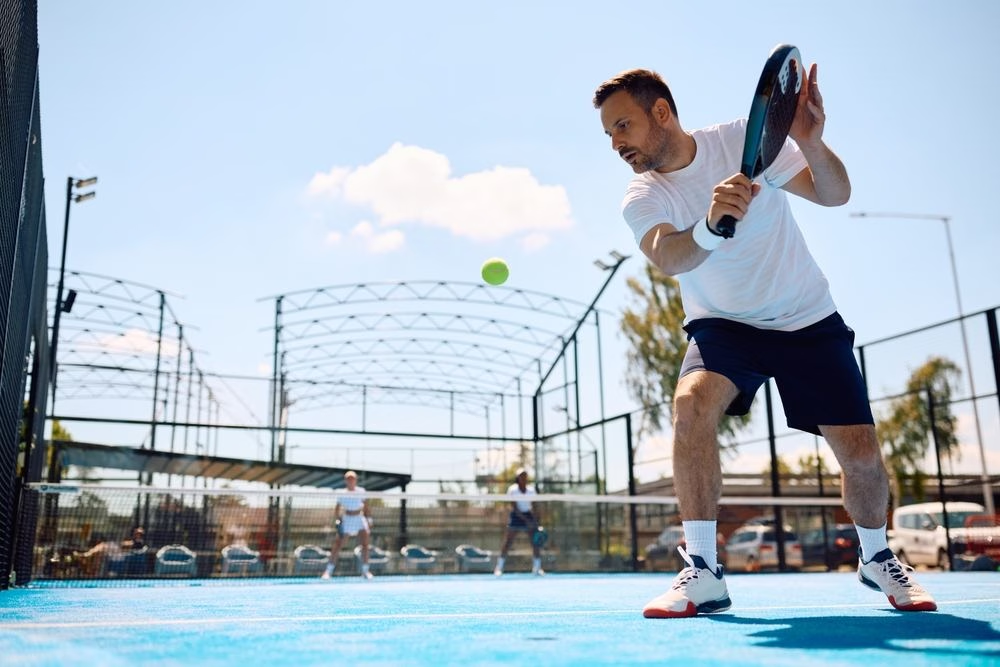
That makes padel a useful form of aerobic conditioning for many recreational players. You repeatedly accelerate, brake, change direction, reach, rotate and react, with short breaks between points.
It will not replace a proper strength program. Nor is a relaxed social hit automatically equivalent to a hard interval session. But it can add movement, coordination and conditioning without feeling like another scheduled cardio workout.
That matters because the most effective exercise is not merely the theoretically perfect session. It is the activity you are willing to repeat.
A bloke who avoids the treadmill but happily plays padel with three mates every Thursday may accumulate more useful conditioning than someone with an immaculate running plan he never follows.
The smaller court does not make it injury-proof
The enclosed court reduces the amount of long-distance running, but padel still involves sudden stops, lateral movement and repeated racquet swings. A systematic review estimated approximately three injuries per 1,000 hours of padel training and eight injuries per 1,000 matches. The elbow was the most frequently affected area, followed by the knee, shoulder and lower back. Tendon and muscle problems featured prominently. The researchers also cautioned that the available injury evidence remains limited and inconsistent.
The common beginner mistake is treating an accessible sport as an effortless one. If you have spent the past decade lifting in straight lines, your first competitive match is not the ideal time to rediscover lateral movement. Warm up your calves, ankles, hips and shoulders. Wear footwear designed to tolerate changes of direction rather than soft running shoes built primarily for forward movement.
Start with an introductory session or a social game. Learn how to position yourself before trying to chase every ball like Rafter.
Should you try it?
Padel makes sense if you want conditioning with a competitive element, miss playing team sport or need an activity that provides more social interaction than another gym session.
A sensible week could include two or three strength sessions, one padel match and some lower-intensity walking or cycling. That gives you resistance training, aerobic work, rapid movement and recreation without asking one activity to do everything.
The major Australian limitation is still access. Padel requires a purpose-built enclosed court, and availability varies significantly between cities and states. Padel Australia maintains a state-by-state court directory.
For spectators, the Opera House event offers the chance to see what elite padel looks like before booking a court yourself. Saturday’s program includes the international showcase and one-point competition, while Sunday includes community finals and further exhibition matches.
The Sydney Opera House lists Saturday tickets at $50 and Sunday tickets at $30, with prices subject to change.
Padel does not need to replace tennis, squash, running or your gym program to justify its existence. If it gets more men moving hard, competing and meeting their mates regularly, it has already done something useful.
The glass court outside the Opera House will generate spectacular photographs. What happens after it comes down will tell us whether Australian padel is a genuine participation story or simply a well-produced weekend.