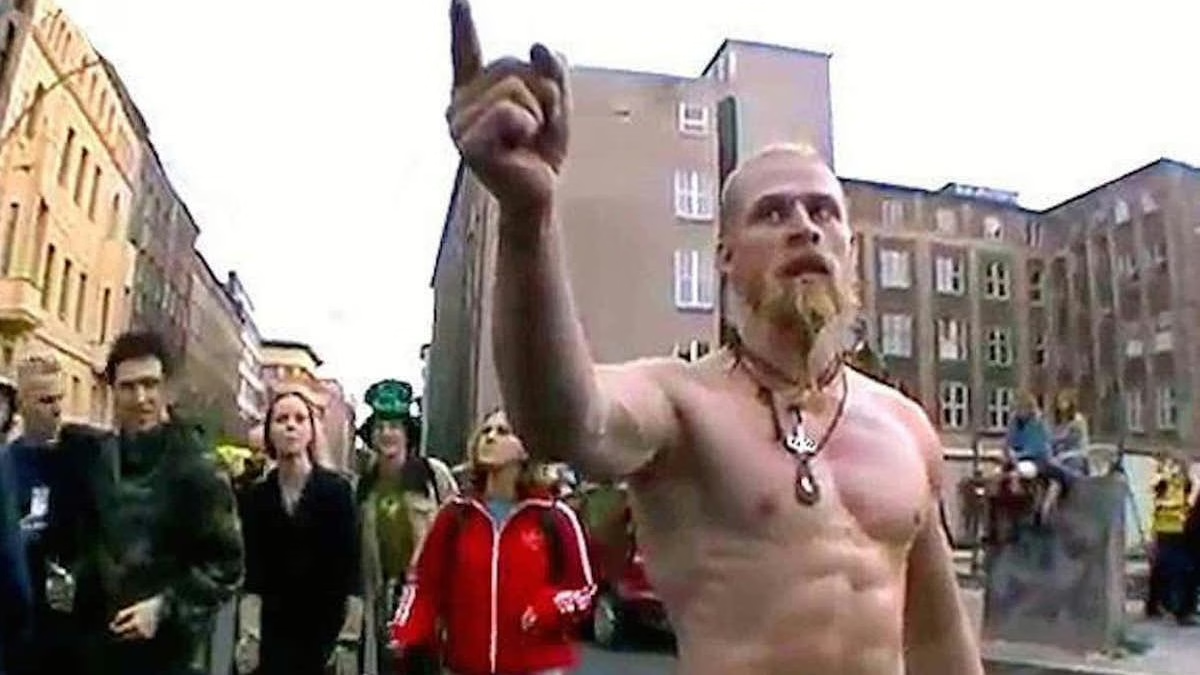
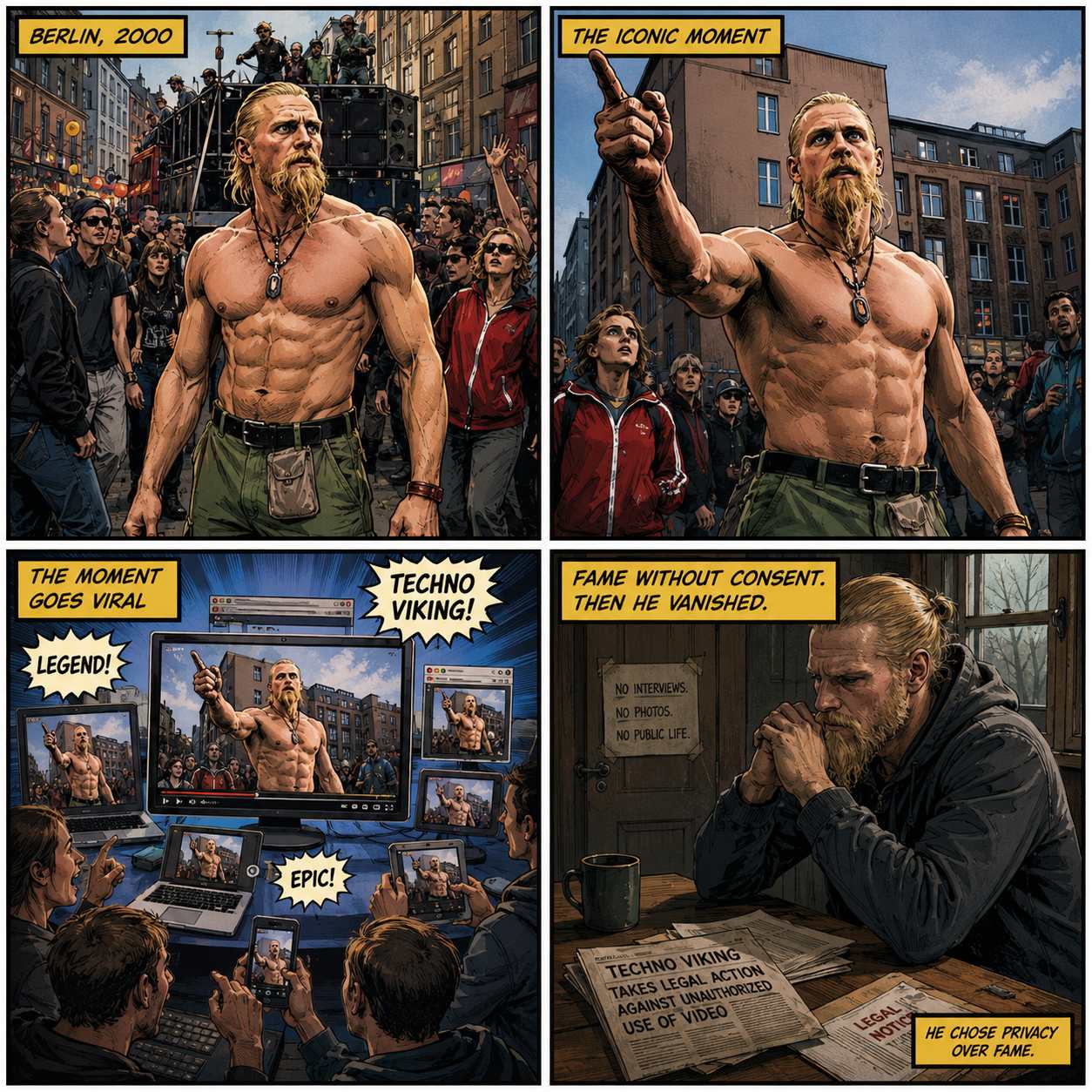
Before instagram influencers and viral video, there was a towering, shirtless man with braided hair and the build of a Norse god marching through a Berlin street party. The internet would later call him Techno Viking.
Quick answer: where is Techno Viking now?
Nobody publicly knows. The man in the 2000 Berlin video has never revealed his name or shown his face since. In 2013 he won a German court case that stopped the filmmaker from showing his image, and he has stayed out of public view ever since. The “Techno Viking today” photos and TikTok “sightings” that circulate online have never been verified.
Who is the Techno Viking?
If you were online in the late 2000s, you probably saw the clip. A tall, shirtless man with braided hair and a hammer pendant marching through a techno parade in Berlin. His physique looked carved from stone. At one point he calmly confronts a man who has shoved a woman in the crowd, silently pointing a finger in warning before escorting her away.
Then, as the music kicks in, he starts dancing. And not just swaying to the music, but with an intensity and the co-ordination of a true raver.
The moment is strangely cinematic. Calm authority followed by pure rhythm. Within seconds you realise this isn’t just another rave video. You’re watching a meme being born.
Where the Techno Viking video came from
The footage was filmed on 8 July 2000 at Berlin’s Fuckparade, a counter-culture street festival. The cameraman was German media artist Matthias Fritsch, who was documenting the event as part of a video project called Kneecam No.1. For several years the footage sat largely unseen.
Fritsch put the clip online in 2001, but it was a 2006 re-upload to YouTube by someone else that set it loose, according to Wikipedia. The internet quickly discovered it. Forums shared it. YouTube edits appeared. Remixes, parodies and animated versions spread across early meme culture. Somewhere along the way, the nickname “Techno Viking” stuck.
The name made sense. The man looked like a Norse warrior who had wandered into a rave. By the late 2000s the clip had become one of the first truly global viral videos. At its peak in 2007 it was reportedly being watched more than a million times a day, and by 2010 it had passed 20 million YouTube views, not counting the countless remixes.
But there was one problem. The man in the video never agreed to any of it.
The lawsuit: Techno Viking vs the filmmaker
In 2009 the dancer’s lawyers sent Fritsch a cease-and-desist letter. He argued that he had never consented to being filmed, let alone turned into an internet meme, and Fritsch stopped taking YouTube payments from the clip. The dispute ended up in a Berlin court, where the case opened in January 2013.
In June 2013 the court ruled largely in the Techno Viking’s favour. According to the Daily Dot, Fritsch was ordered to hand over about €8,000 he had earned from YouTube and pay a share of the legal costs, around €15,000 in total. The court rejected the man’s separate €10,000 claim for pain and suffering.
More importantly, Fritsch was barred from publicly showing any footage or stills in which the Techno Viking could be recognised. Even pixelating his face wasn’t enough, the court said. The ruling became one of the earliest legal precedents around viral media and a person’s right to control their own image. It only bound Fritsch, though. The thousands of copies and remixes uploaded by other people stayed online.
Where is Techno Viking now?
It also had another consequence. The identity of the man remained private.
To this day, the real Techno Viking has never stepped forward publicly. His name has never been officially confirmed. Despite the fame, the memes and the endless internet speculation, he chose to disappear from the spotlight.
The fame came at a cost. Fritsch told Vice that, according to the man’s lawyers, he had been approached by right-wing groups and had lost jobs because of the video. It reportedly took him two years to realise he’d become world famous at all. Fritsch says the two have only ever communicated through lawyers.
Every so often the internet claims to have found him. Side-by-side photos of an older bearded man do the rounds, and TikTok clips of tall, braided ravers at festivals are labelled “Techno Viking spotted”. None of them has ever been verified, and the man himself has never confirmed or denied any of them. Treat every “Techno Viking today” post as a lookalike until he says otherwise.
There’s also no public report of him having died. Whoever he is, he has simply stayed private, which appears to be exactly what he wanted.
The documentary: The Story of Technoviking
Fritsch turned the whole saga into a 50-minute documentary, The Story of Technoviking, funded partly through a crowdfunding campaign and released free online in October 2015. Because the court had banned him from showing the man, the film uses the internet’s own versions of him instead: comics, 3D animations, paintings, sculptures and action figures made by fans. It’s as much a film about meme culture and image rights as about the man himself. Fritsch told Vice it would have made more sense to settle it “on a more human level, and share the income”.
Why the Techno Viking still matters
In an era where people chase viral fame, the man behind Techno Viking did the opposite. He rejected it.
That decision has only added to the legend. More than twenty years after the moment was filmed, the clip still circulates online and the mysterious dancer remains one of the most recognisable figures of early internet culture.
And perhaps the only internet meme powerful enough to literally point a finger at the entire web and say: enough.
Techno Viking FAQ
Where is Techno Viking now?
No one publicly knows. He has never revealed his identity, and the photos and videos claiming to show him today have never been verified.
What is Techno Viking’s real name?
It has never been made public. Even in the 2013 court case he was not publicly named.
Is Techno Viking still alive?
There’s no public report of his death. He has simply stayed out of the public eye.
When and where was the Techno Viking video filmed?
On 8 July 2000, at the Fuckparade techno street festival in Berlin, by media artist Matthias Fritsch.
Did Techno Viking sue?
Yes. He took Fritsch to court in Berlin, and in 2013 won an order stopping Fritsch from showing his image, plus the video’s YouTube earnings and part of the legal costs.
Want more like this?
One email a week. The best new stories from Men’s Fitness Online, no fluff, unsubscribe anytime.
Sign up free