When: May 21 and 22, 2026
Where: Ivory Rock Peaks Crossing, Queensland
Website: ocrworldchampionships.com
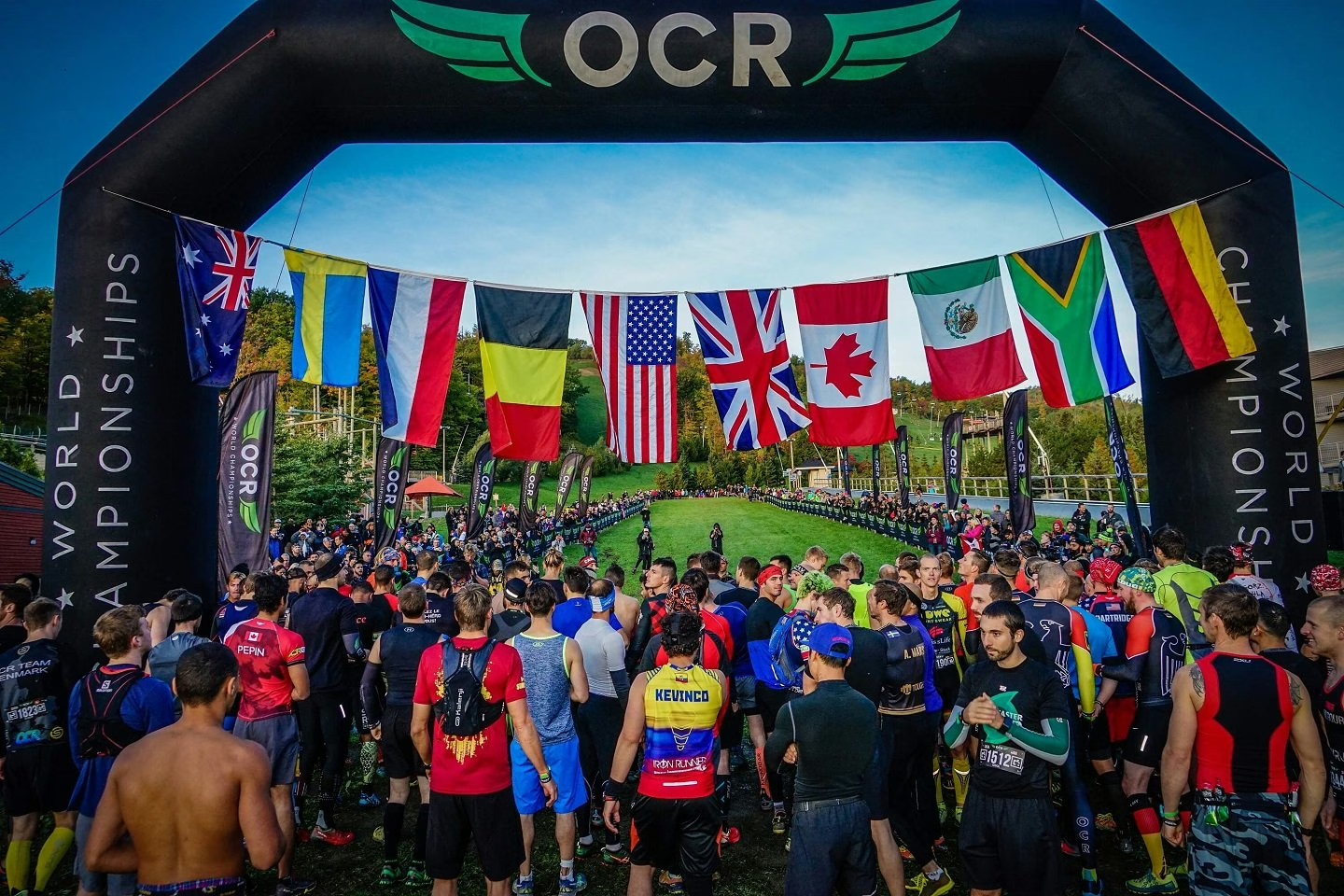
Obstacle course racing (OCR) is about to have a huge moment in Australia. The OCR Community World Championships will land at Ivory Rock in Queensland on May 21 and 22, 2026, bringing elite racers, weekend warriors and teams from around the globe to one of the toughest natural venues in the country.
For the Australian OCR scene, it’s a milestone. This is the first time the global championships have been staged Down Under, putting local athletes shoulder to shoulder with some of the sport’s best. And they’ll be racing on a course built to punish.
OCR Worldwide
Obstacle course racing might still feel niche in Australia, but globally the sport is fiercely competitive and growing fast. Recent world rankings feature European and North American stars like Stijn Lagrand, Gustav Cordua and Jesse De Heer battling for the top spots, while past champions such as Britain’s Jon Albon and Canada’s Ryan Atkins have set the standard for what elite OCR performance looks like.
With thousands of athletes from more than 70 nations typically competing across elite and age-group divisions, the World Championships are going to be interesting, especially given the terrain.
Ivory Rock sits beneath a towering volcanic plug and spreads across rugged bushland and steep rolling hills. The course will feature a mix of classic OCR challenges and marquee obstacles from race organisers around the world.
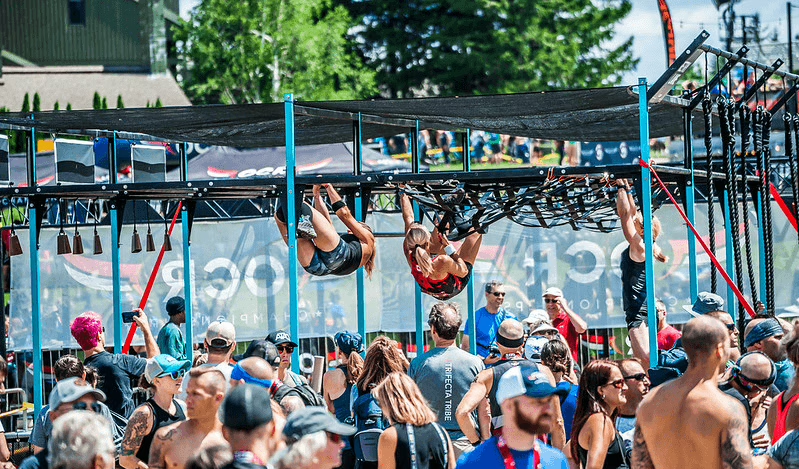
As of obstacles, expect heavy carries, technical rigs that shred your grip strength, wall climbs, and balance tests. Check out some here.
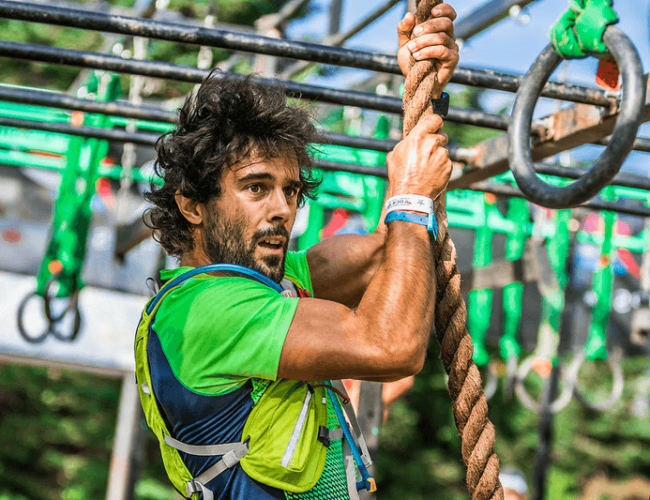
And then there’s the Australian bush factor, something the international entries won’t be expecting. The course cuts through raw hard volcanic Australian bush where dust, heat and volcanic rock add another layer of difficulty. Visiting athletes used to tidy race venues are about to discover what Australian obstacle racing feels like when the terrain itself is against you. Undoubtedly, foreign competitors will be incessantly warned bout drop bears by locals.
The championships feature four race formats, meaning there’s something for everyone from elite racers to first-timers who simply want to see how tough they really are.
The OCR races
The 80 metre obstacle race is the crowd-pleaser. It’s short, explosive and brutally technical. Athletes sprint through a rapid-fire sequence of obstacles where speed and precision matter just as much as strength. The format is getting global attention after the 80m obstacle event was confirmed for the 2028 Olympic Games as part of the Modern Pentathlon.
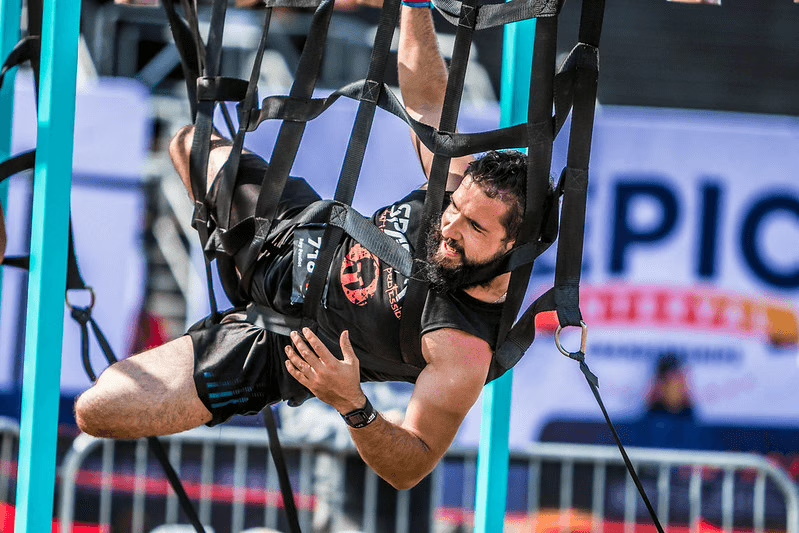
Then there’s the 3K Championship, a sharp, high-intensity course featuring more than 15 obstacles. It’s the kind of race that feels manageable on paper and absolutely savage once you’re halfway through.
Teams get their turn in the 6K Relay Championships, where three athletes split the early legs before joining forces to tackle the final stretch together. Each leg emphasises a different OCR skill, from raw speed to grip strength to technical obstacle work. And finally there’s the race that started it all.
The 15K Championship sends competitors over mountainous terrain packed with more than 40 obstacles. It’s widely considered the ultimate test in obstacle racing. No shortcuts, no substitutes, and nowhere to hide once the course bites back.
The event is also designed to bring the broader obstacle racing community together. Course designers and race organisers from across the sport will showcase their signature obstacles, creating a world-class obstacle lineup that reflects the best ideas in modern OCR.
Queensland: Australia’s OCR Home
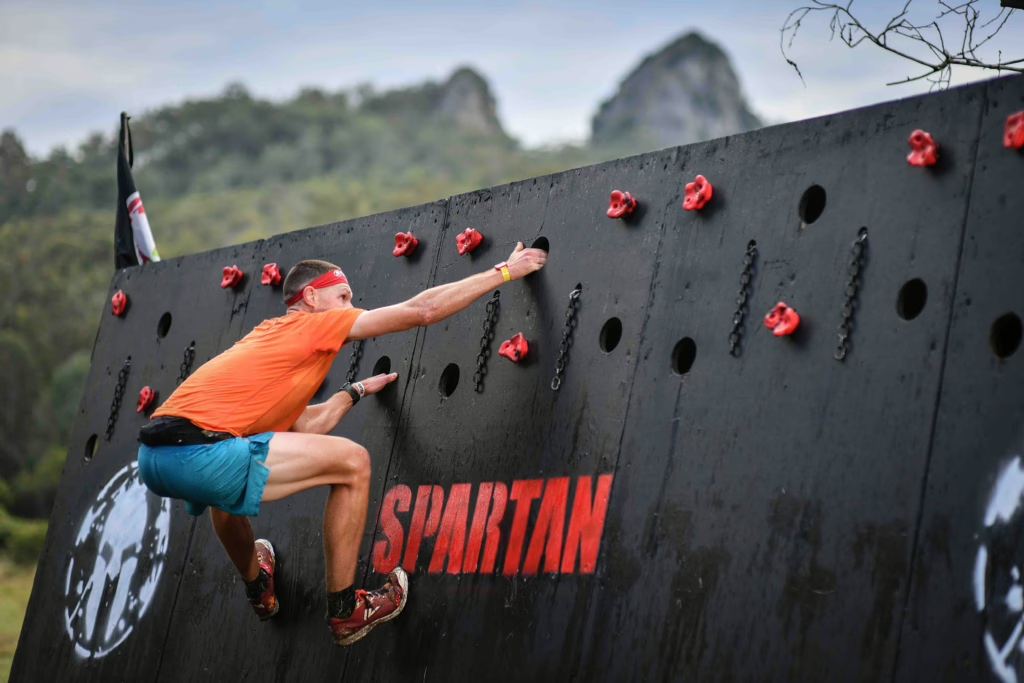
Just days after the championships wrap up, the Spartan Ivory Rock Trifecta weekend kicks off on the same terrain. Racers can line up for the 5K Sprint, the 10K Super or the brutal 21K Beast, turning one trip into a full weekend of mud, climbs and compromised life choices.
- 5K Sprint – 20 obstacles
- 10K Super – 20 obstacles (National Series event)
- 21K Beast – 30 obstacles
- 1–3K Kids Race – APAC Kids Qualifier for the World Championships
And the OCR tour of Queensland keeps rolling. In June, Tough Mudder Brisbane arrives at Sirromet Winery with its signature blend of ice baths, electric shocks, mud pits and team-based obstacles. For many racers it’s less about winning and more about surviving alongside your mates.
- 15K Course with 20 obstacles
- 5K Course with 12+ obstacles
- Infinity Category, giving participants the chance to rack up as many laps as possible in 8 hours.
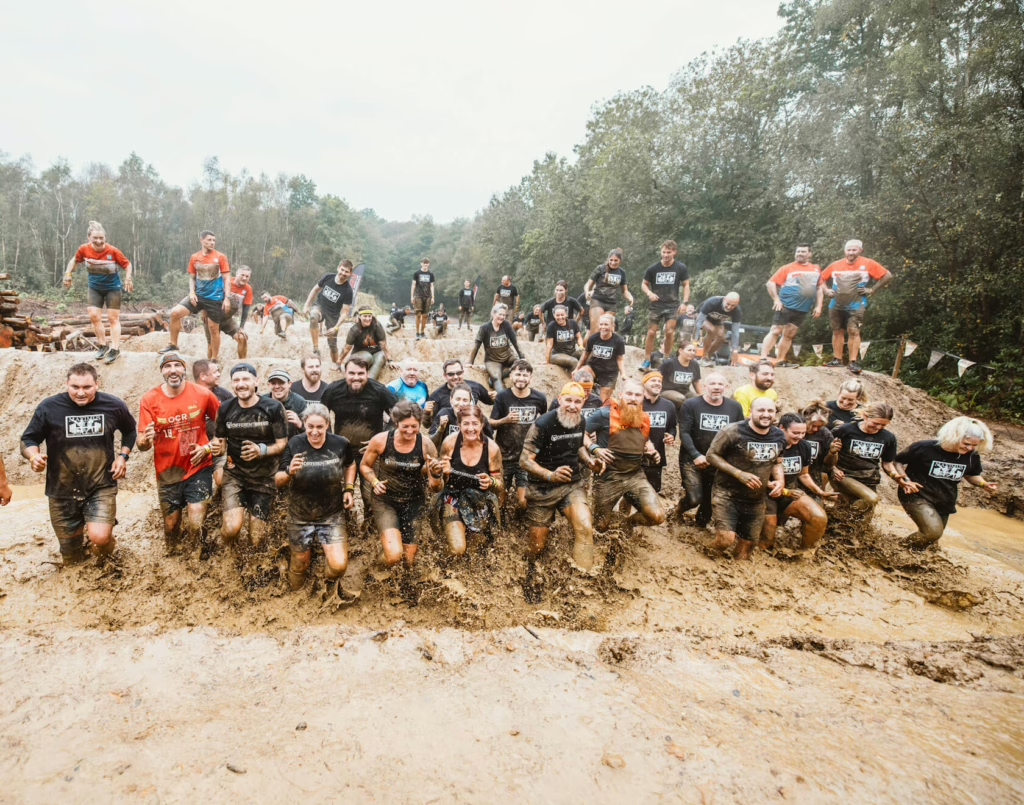
Taken together, the events highlight something that’s becoming obvious in the endurance world. Obstacle racing is booming, and Queensland is quickly becoming one of the sport’s favourite playgrounds.
FAQs
Obstacle course racing (OCR) is a competitive endurance sport that combines trail running with functional strength challenges such as rope climbs, heavy carries, wall climbs, rig obstacles and technical grip tests. Unlike casual mud runs designed mainly for fun, OCR events are timed competitions where failing an obstacle can result in penalties such as additional running or burpees. Elite races often involve technical obstacle rigs, steep terrain and distances ranging from short sprint courses to 15 km or longer.
Grip endurance is one of the defining physical traits of successful OCR athletes. Many obstacles involve hanging, traversing or pulling movements that fatigue the forearms quickly, especially when combined with mud, water and fatigue from running. Athletes who can maintain grip strength after several kilometres of running often gain a significant advantage on rig-heavy courses.
Most OCR athletes combine endurance training with functional strength work. Running remains the backbone of the sport, but successful competitors also train movements such as carries, rope climbs, pull-ups, dead hangs and balance drills. Many athletes borrow methods from CrossFit, calisthenics and trail running to prepare for the varied demands of a race.
OCR sits somewhere between trail running and functional fitness. Strong athletes may dominate individual obstacles, but endurance often decides the race because athletes must perform technical movements while fatigued. The best OCR competitors are usually well-rounded endurance athletes with strong relative strength, good grip endurance and efficient obstacle technique.