
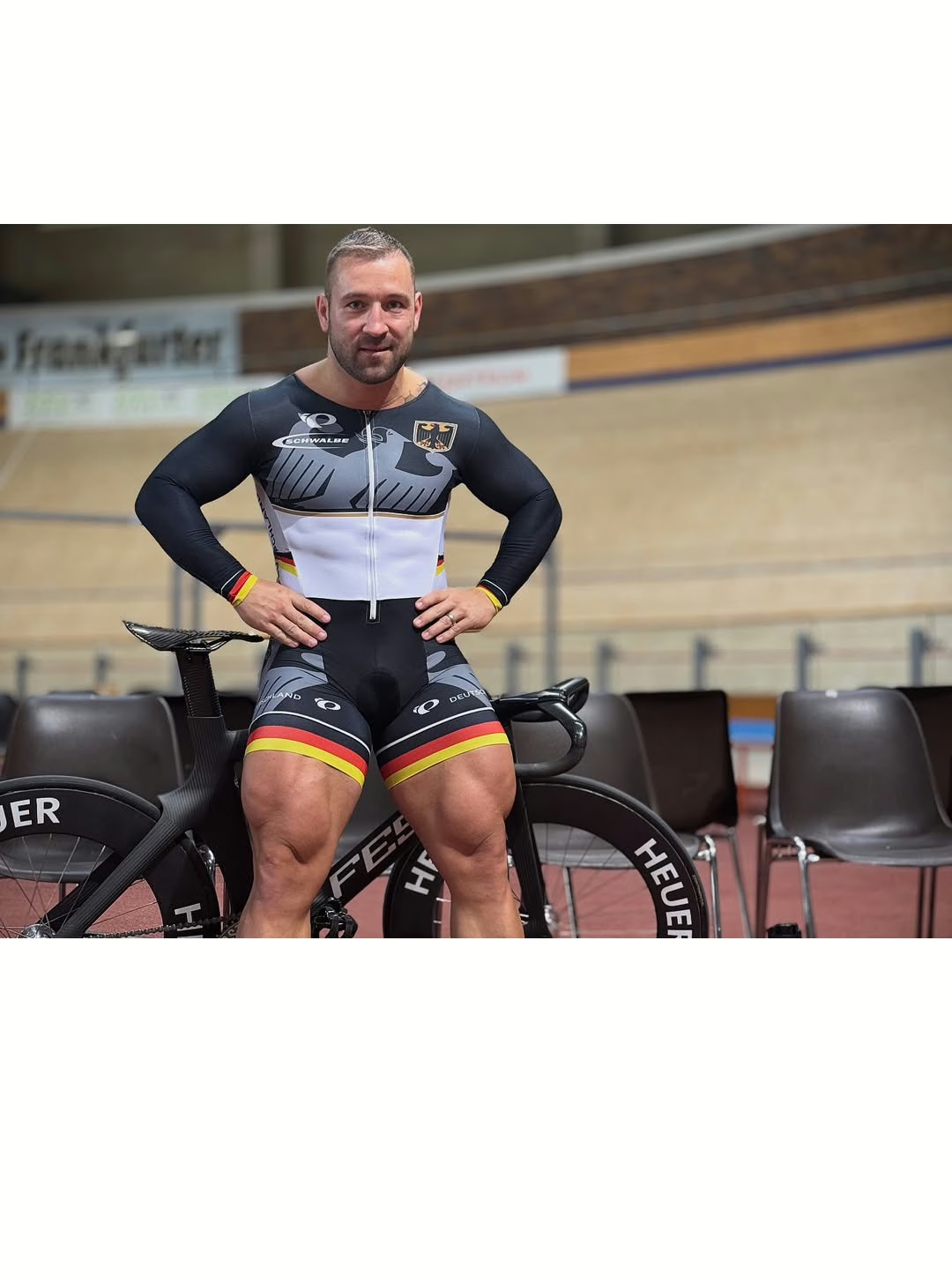
They call him “Quadzilla”, for good reason. German track cyclist Robert Förstemann has the largest legs in sport, which is odd, because when people talk about powerful legs in sport, the examples are usually Rugby Props or NFL running backs. Cyclists aren’t typically known for muscle mass.
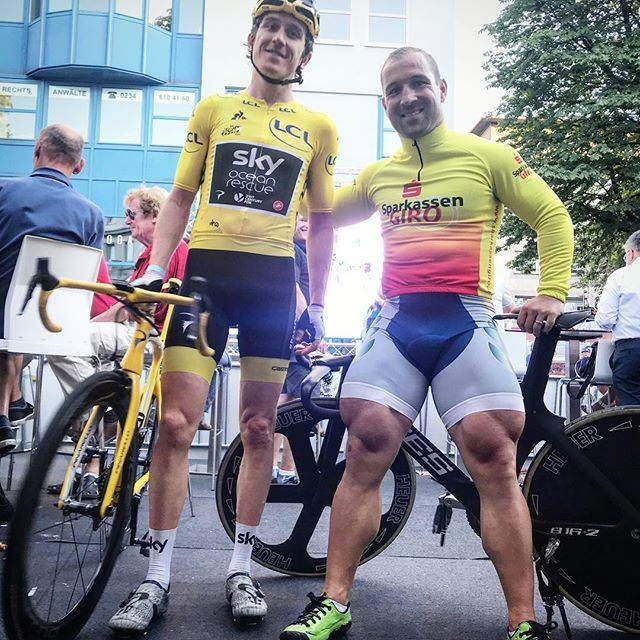
But Förstemann isn’t a typical cyclist. He became internet famous when the BBC filmed him standing next to a normal club cyclist. The contrast was absurd. His thighs measured roughly 74 cm in circumference, close to the size of many people’s waists. Next to him, the amateur rider looked like he’d skipped leg day for a decade.
But those massive quads are not just for show. They are built for one job: producing staggering amounts of power in very short bursts.
At his peak, Förstemann could generate around 2,500 watts during a sprint. For context, a recreational cyclist might briefly produce 600 watts. Even elite endurance riders rarely exceed 1,500 watts.
In track sprint cycling, races are often decided in seconds. Athletes accelerate from a near standstill and hit maximum speed in a matter of pedal strokes. The ability to explode off the line is everything.
“It’s about maximum power,” Förstemann explained in interviews about sprint cycling training. “You need to produce as much force as possible in a very short time.”
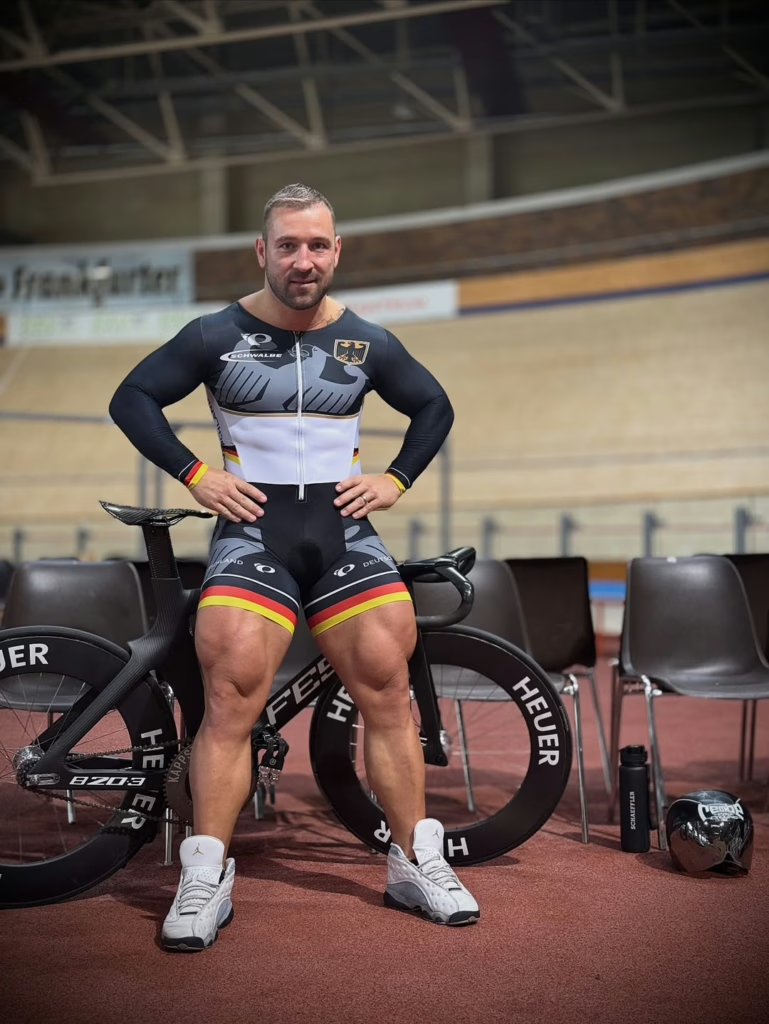
That requirement shapes the body of a track sprinter. Their training looks less like a traditional cyclist and more like a strength athlete who happens to ride a bike.
Like track sprinters, sprint cyclists spend a surprising amount of time in the gym lifting heavy weights. Squats are the cornerstone exercise, often performed with loads well over 200 kg at elite levels. Olympic lifts such as cleans are also common because they train explosive force through the hips and legs.
On the track, the focus is equally brutal. Riders perform repeated maximal efforts lasting around 10 to 20 seconds, often starting from a dead stop with massive gears. These efforts simulate the acceleration phase of sprint racing.
Unlike road cyclists who ride for hours, sprinters train for short, violent bursts followed by full recovery. The result is a body built for raw power rather than endurance.
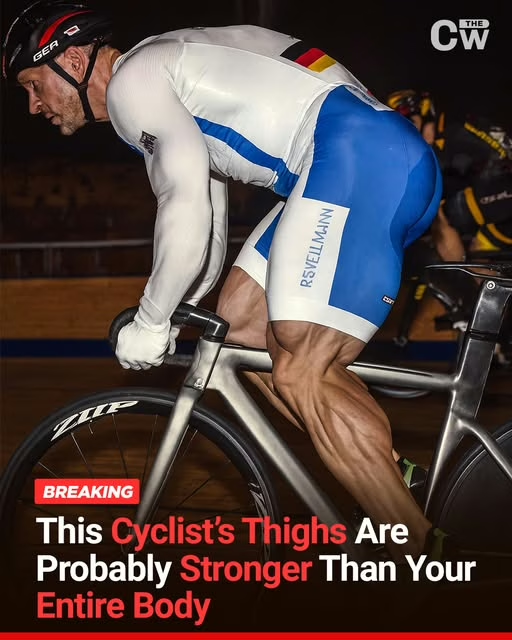
The difference was highlighted in the BBC experiment featuring Förstemann. Researchers compared his power output with that of a typical club rider. The amateur cyclist could pedal steadily for longer, but Förstemann produced dramatically higher peak wattage.
It was a perfect demonstration of how different types of training create completely different athletic bodies.
There is also a genetic element. Athletes like Förstemann likely have a higher proportion of fast-twitch muscle fibres, the type of muscle designed for explosive force. These fibres grow larger and produce more power but fatigue quickly.
That’s why sprint cyclists often have enormous legs but would struggle to match the endurance of a Tour de France rider. For regular gym-goers, the lesson is simple. If you want stronger, more powerful legs, you need to train for power, not just endurance.
That means heavy compound lifts, explosive movements, and short maximal efforts rather than endless steady cardio. You may never develop thighs like Robert Förstemann. Few humans will. But you can borrow some of the training principles that built them.
Practical takeaway: Track sprinter leg session
• Back squats: 5 sets of 3–5 reps heavy
• Power cleans: 4 sets of 3 reps
• Walking lunges: 3 sets of 10 per leg
• Bike sprints: 6 x 10-second all-out efforts with full recovery
Short, explosive work like this targets the same fast-twitch fibres that give track sprinters their explosive power.
Just don’t expect your jeans to fit the same afterwards.