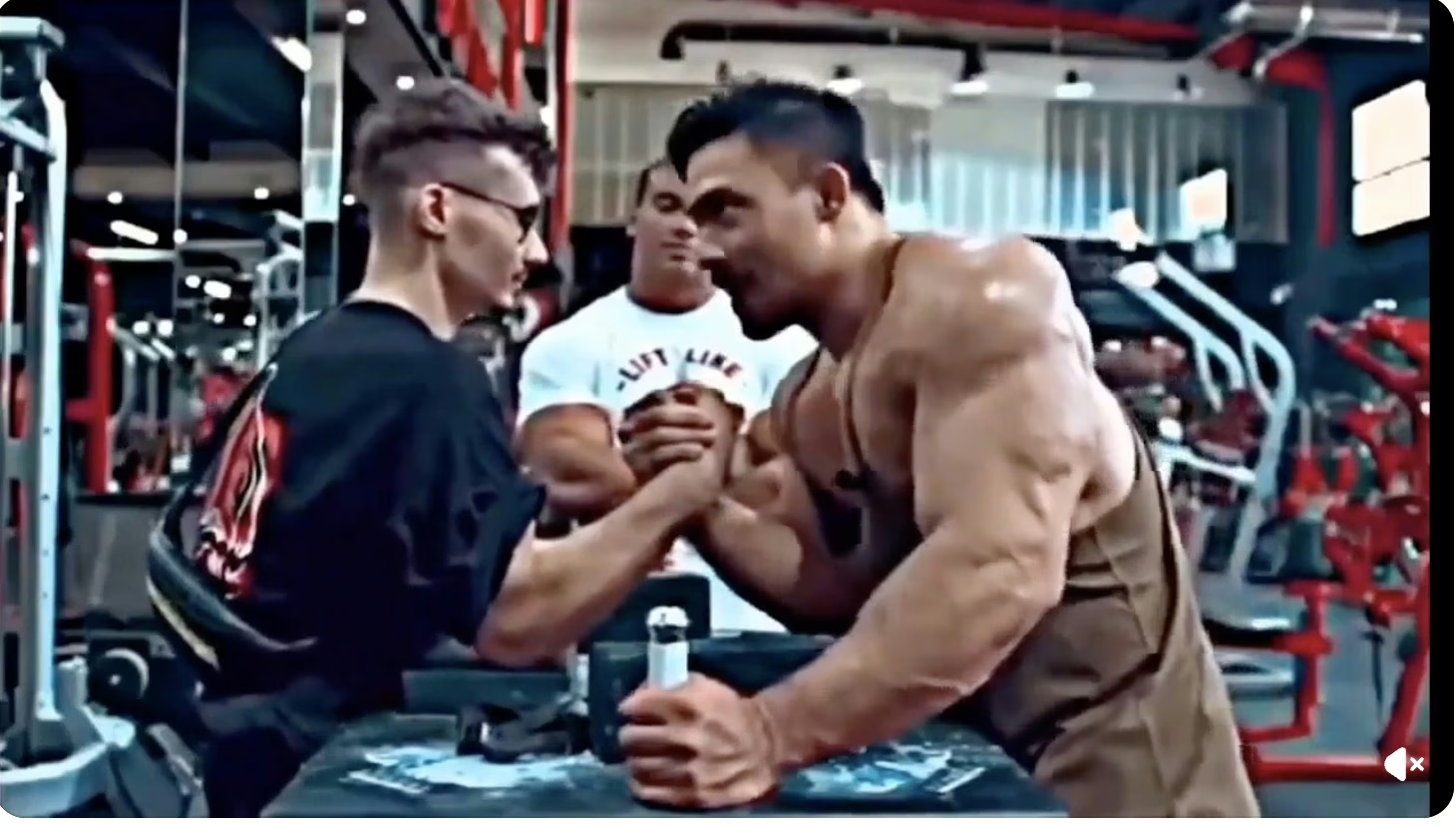
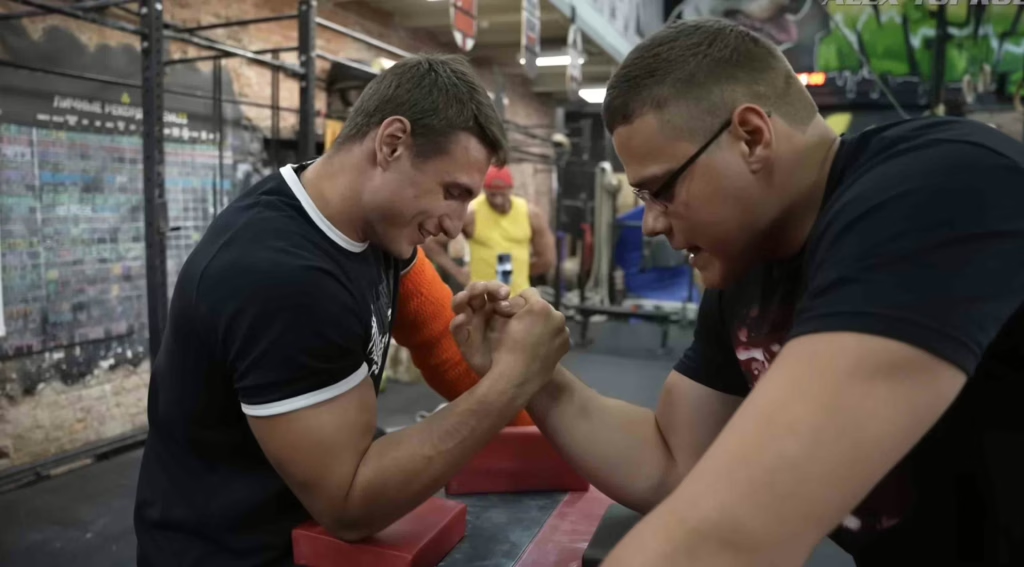
A 19-year-old walks up to a guy who looks like he could fold the kid in half. They settle in to arm wrestle. Then with no drama, no grunting and seemingly with little effort, the little guy powers the bigger guy’s arm down with a quiet sort of inevitability.
You’ve seen the clips. Like Anatoly in the gym pulling huge deads, it beggars belief.
What you’re actually watching is Aleksandr “Schoolboy” Beziazykov — a Russian arm wrestler who’s been doing this since he was a teenager — versus Akimbo. He didn’t just materialise on Reddit one afternoon. He started training young, competing early, and built a reputation the hard way: through real matches, real losses, and a methodical understanding of a sport most people think they already understand. That last part is what makes him interesting.
Because what Schoolboy does isn’t magic. It just looks like it — and that gap between appearance and reality is exactly the point.
Watch the Start
He doesn’t try to overpower the bigger guy. Doesn’t lunge, doesn’t brace, doesn’t do any of the things you’d expect from someone about to beat a man with forearms the size of rolled ham. He pulls the hand in. That’s it. And everything shifts.
The bigger guy thinks he’s in a test of arms. Biceps, forearms, something simple and brutal. A problem he can solve with the same tools that have always worked for him. He’s not.
He’s suddenly trying to fight someone’s back — and that’s a fight he’s already lost before the referee has said a word.
The sport most people get wrong
Arm wrestling looks like a strength sport. It isn’t, not really. It’s a positioning sport that punishes you for thinking it’s about strength.
The two main techniques — the top roll and the hook — aren’t just moves. They’re entire philosophies about how force travels through the body. The top roll works by extending the opponent’s fingers and wrist, gradually stripping their leverage until their arm is doing work it wasn’t built to do. The hook does the opposite — it pulls the hand inward and transfers load to the shoulder and lats, turning a forearm contest into something much harder to fight.
Schoolboy’s version of the hook is almost cruel in its efficiency. He shortens the distance early, locks himself into position, and forces the other guy to extend. The moment that happens — the moment the bigger man’s elbow drifts even slightly outward — it’s over. The arm opens up. The forearm starts compensating. And a muscle that was built for curling and carrying is suddenly being asked to stop a train.
You can almost see the moment it registers. There’s a stall. A pause where the bigger guy still thinks he can recover. Then the slow, quiet collapse.
The size thing
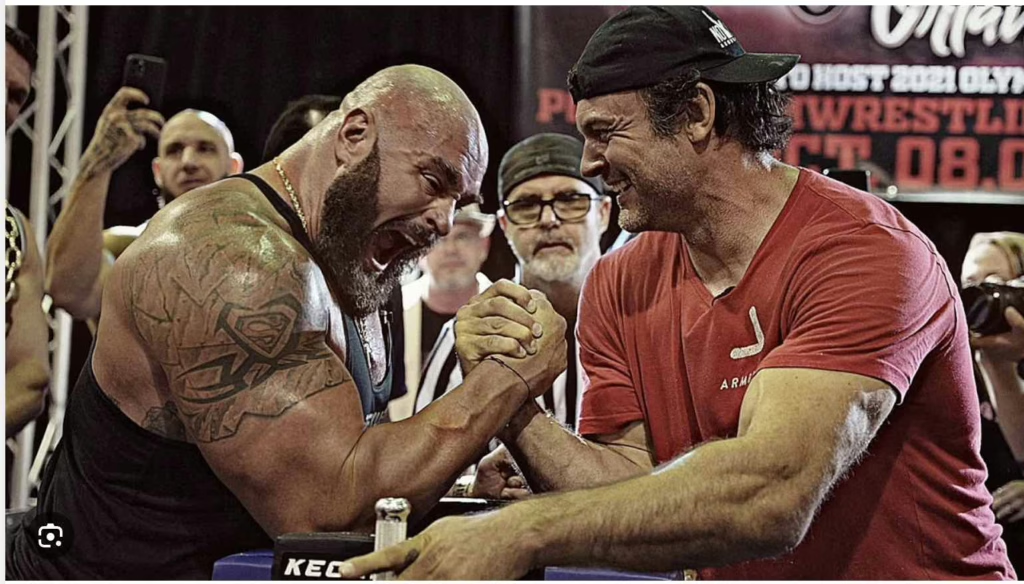
People keep coming back to it like it matters more than it does, becasue it begs the question: why do smaller arm wrestlers win.
The bigger guy looks stronger. Wider shoulders, thicker arms, the whole visual grammar of someone who lifts seriously and often. And he probably is stronger — in the gym sense. Pull him into a deadlift contest or a loaded carry and it might be a different story.
But here, in this match, he’s playing the wrong game.
Schoolboy’s not stronger in the conventional sense. He’s stronger in the only sense that counts: he knows exactly where to put the force. And that’s not a physical attribute. It’s a trained skill — one that takes years to build and looks effortless once it’s there.
This is why arm wrestling keeps producing these strange mismatches. Smaller guys beating bigger ones. Quiet guys beating aggressive ones. People who don’t look like much until you grab their hand and realise you’ve made an expensive mistake. The sport has a long history of this — Devon Larratt, John Brzenk, even the old footage of Cleve Dean — men who didn’t match the aesthetic of a champion but were nearly unbeatable at their peak.
Strength in arm wrestling is real, but it’s specific. You’re not training your arms the way a powerlifter does. You’re training your wrist flexors, your pronators, the deep stabilisers in your shoulder — muscles most gym-goers never isolate, on movements that don’t exist in any standard program.
MEET AKIMBO The 80kg Russian who makes big men look silly
He’s 190cm, weighs 80kg, and looks like he’d struggle to get served at a bar. Akimbo69 — the Russian arm wrestler and YouTuber with a face people keep comparing to Harry Potter — has built his entire brand on walking up to bodybuilders twice his size and quietly embarrassing them.
His hands tell a different story: around 22cm across, with a grip that can generate roughly 85kg of force and wrists strong enough to handle a 140kg barbell curl. The arms attached to those hands look completely ordinary. That’s part of the joke.
He’s a hooker — a competitor who pulls the match inward and wins with back and shoulder rather than raw forearm strength. It’s a technical style that rewards patience over aggression, which suits him fine.
He’s faced Schoolboy and lost. More than once. But that’s not really the point. After two years of dedicated training, he eventually came back and turned the tables TikTok — which is the kind of arc that gets a man 2.4 million YouTube subscribers.
He’s not the best arm wrestler alive. He’d tell you that himself. But he’s one of the most watchable — because every time he sits down across from someone who thinks they’ve already won, the result is the same.
They haven’t.
What these Types of Clips Are actually about
Schoolboy goes viral not because he’s unbeatable — he’s not, and he’d be the first to tell you — but because he makes you question something you thought you understood.
We’re wired to read size as strength. It works as a shortcut most of the time. But arm wrestling is one of those rare contexts where the shortcut fails completely, and what’s left is something more interesting: a sport where knowing where the force goes matters more than how much force you have. The bigger guy lost because he walked in thinking this was a simple matter to strength and size. So did you. Me too. It never was. It was all about technique.
FAQs
Arm wrestling is a positioning sport, not a pure strength sport. Smaller competitors who master techniques like the hook can redirect force through their back and shoulders, neutralising a bigger opponent’s size advantage entirely.
The hook pulls the match inward, transferring load to the lat and shoulder rather than the forearm. It effectively turns an arm contest into a back contest — one most gym-built opponents aren’t trained to fight.
Aleksandr “Schoolboy” Beziazykov is a Russian arm wrestler who gained viral fame for repeatedly beating much larger opponents using elite hooking technique. He began competing as a teenager and is a legitimate ranked competitor.
Sasha Akimbo is a Russian arm wrestler and YouTuber known for challenging bodybuilders and larger opponents despite weighing around 80kg. He has faced top-ranked competitors including Schoolboy and Devon Larratt.
Both — but technique dominates at higher levels. Specific strength (wrist flexors, pronators, shoulder stabilisers) matters far more than general muscle size. A technically superior lighter athlete will beat a stronger but untrained one almost every time.