
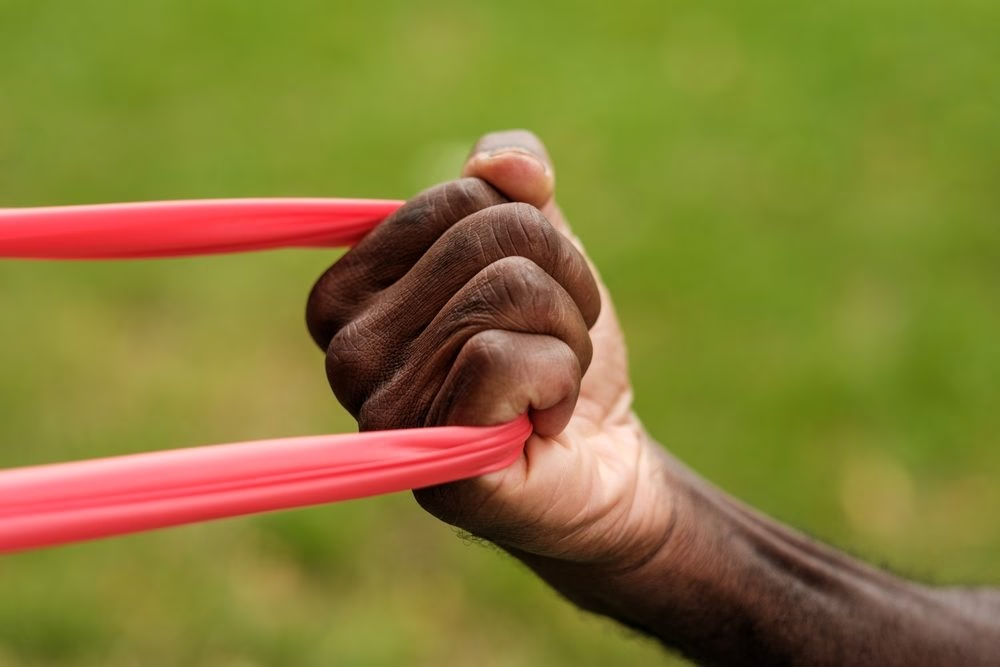
Grip strength has a habit of quietly turning up as a stand-in for how well the rest of your body is ageing. It has already been linked to lower all-cause mortality and better cardiovascular outcomes. Now it looks like it’s tracking your brain, too.
A new systematic review and meta-analysis — 60 studies, 380,960 people, 37 separate cohorts — found that older adults who maintained or increased their handgrip strength over time had about a 19% lower risk of cognitive decline than those whose grip weakened. People who simply started with stronger grip strength at baseline had a similarly lower risk. This isn’t a single study with a hundred participants and a press release doing the heavy lifting; it’s one of the largest bodies of evidence assembled on the topic.

What it doesn’t prove
Before you order a dynamometer and call it dementia prevention, the honest caveats: this is observational data, not a trial where researchers made people stronger and watched what happened to their brains. It cannot rule out reverse causality — early, subtle cognitive decline can itself reduce how active and strong someone stays, rather than the other way around. And while baseline grip strength tracked with overall cognitive performance, its link to the rate of decline over time was weaker and not statistically significant in the same way. Grip strength isn’t a diagnostic test. It’s a signal.
This fits a broader pattern in ageing research: deliberate exercise is one of the more consistently protective factors against dementia risk, though the picture isn’t as simple as staying physically busy in general — a physically demanding job doesn’t appear to offer the same protection as targeted exercise.
Why your hands, of all things
The likely explanation isn’t that squeezing harder protects neurons directly. Grip strength is a rough proxy for the condition of your whole neuromuscular system — nerve conduction, motor unit health, muscle quality — and those systems share biology with the brain: chronic inflammation, insulin resistance and vascular health all affect muscle and cognition together. A person who has kept their grip strong has, in most cases, also kept moving, kept lifting and kept the rest of their body’s systems in better shape. Grip strength is easy to measure precisely, which is probably why it keeps showing up in this kind of research more than, say, “overall vitality” — but what it’s likely capturing is broader than the muscles in your forearm. It’s the same broad picture behind what researchers call becoming a super-ager — sharp, strong and socially engaged into old age, rather than any single biomarker working alone.
How to actually test yours
A hand dynamometer is the real tool researchers use — cheap ones exist for home use, and most gyms or physios have one. Standing, elbow at roughly 90 degrees, squeeze as hard as you can for a few seconds, rest, repeat three times per hand, and take your best score.
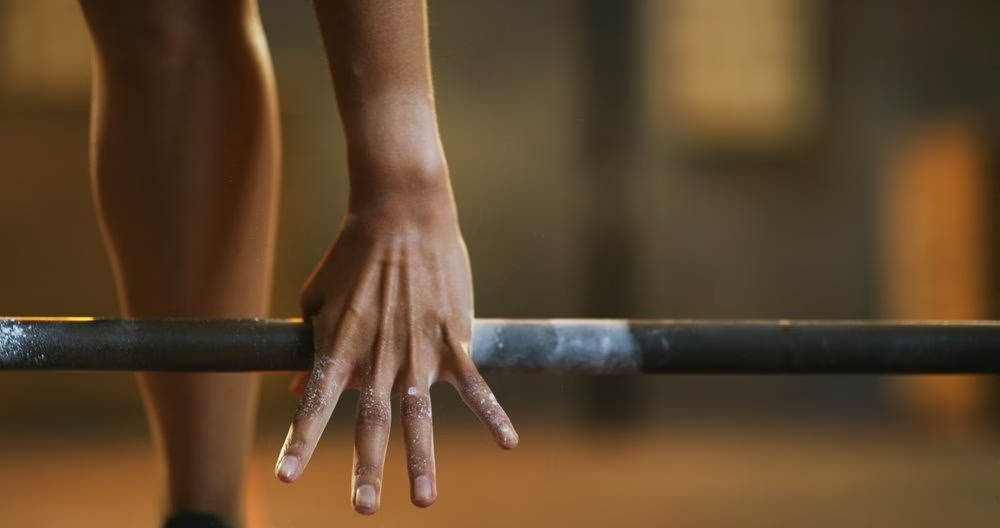
No dynamometer handy? A dead hang from a pull-up bar is a rough real-world proxy — how long you can hang, controlled, before your grip gives out, tells you something similar about grip endurance rather than peak strength.
Where you should land, by age (men)
Rough population norms for combined grip strength (kg), where “normal” is the broad healthy middle band:
| Age | Below average | Normal range | Strong |
|---|---|---|---|
| 25–29 | under 38 kg | 38–58 kg | over 58 kg |
| 40–44 | under 36 kg | 36–55 kg | over 55 kg |
| 50–54 | under 33 kg | 33–51 kg | over 51 kg |
| 60–64 | under 30 kg | 30–48 kg | over 48 kg |
| 70+ | under 21 kg | 21–35 kg | over 35 kg |
These are population averages, not a target to obsess over — the trend across the years matters more than any single number.
How to build it
Grip strength responds to direct, unglamorous work faster than almost anything else in the gym:
- Dead hangs. Build toward 30–60 seconds per set, a few sets, a few times a week.
- Farmer’s carries. Heavy dumbbells or a trap bar, walk for distance or time. Trains grip under load the way daily life actually demands it.
- Plate pinches. Pinch two weight plates smooth-side-out and hold. Brutal, effective, needs no equipment beyond what’s already at the gym.
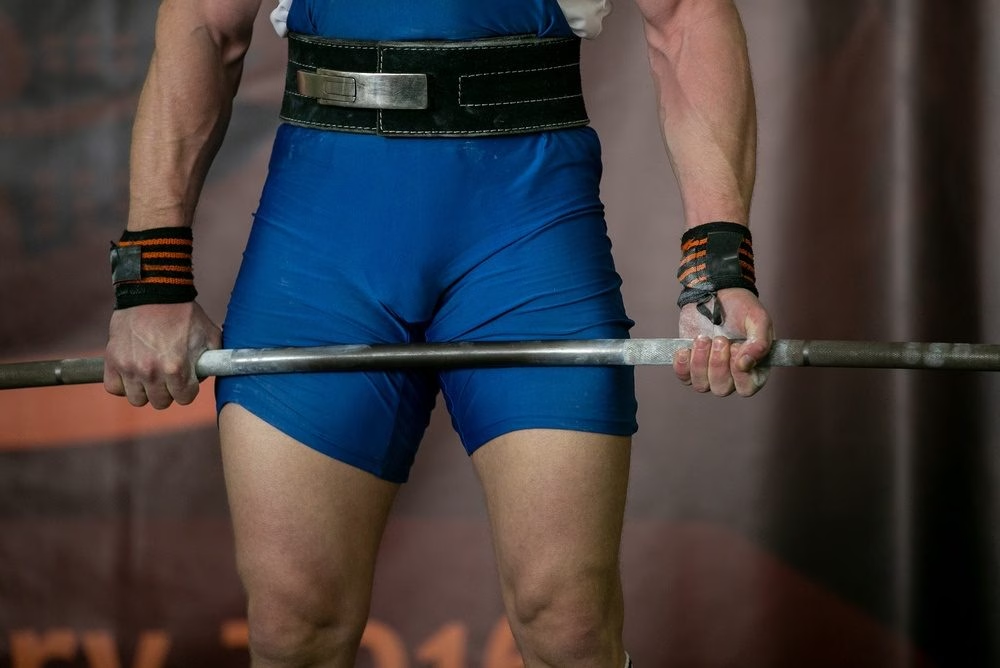
- Stop using straps on every pulling set. If you deadlift or row with wrist straps every session, your grip never gets the stimulus to adapt.
- Compound lifts you’re already doing. Deadlifts, rows and pull-ups all train grip as a side effect — the mistake is letting a weak grip become the bottleneck on lifts that should be building bigger muscles.
None of this requires abandoning your existing program. It requires not routinely offloading the one muscle group this research keeps flagging.
Source: Younis, Vints & Bautmans, “Handgrip performance as a predictor of incident cognitive decline in older adults: A systematic review and meta-analysis,” Neuroscience & Biobehavioral Reviews, 2026.