
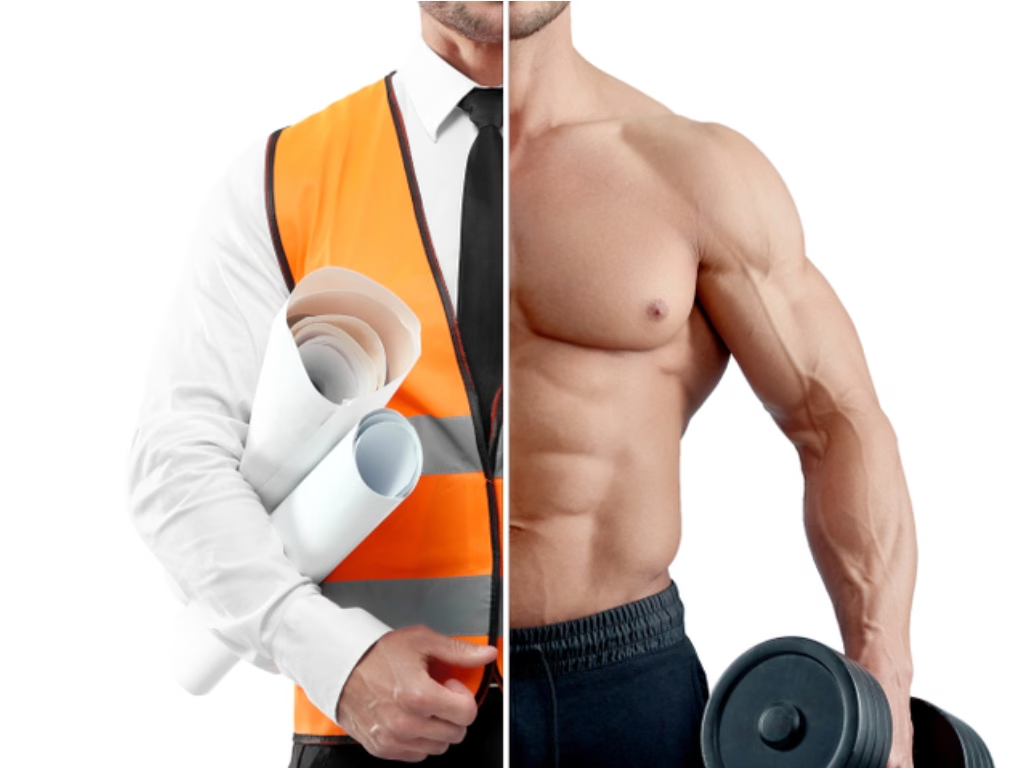
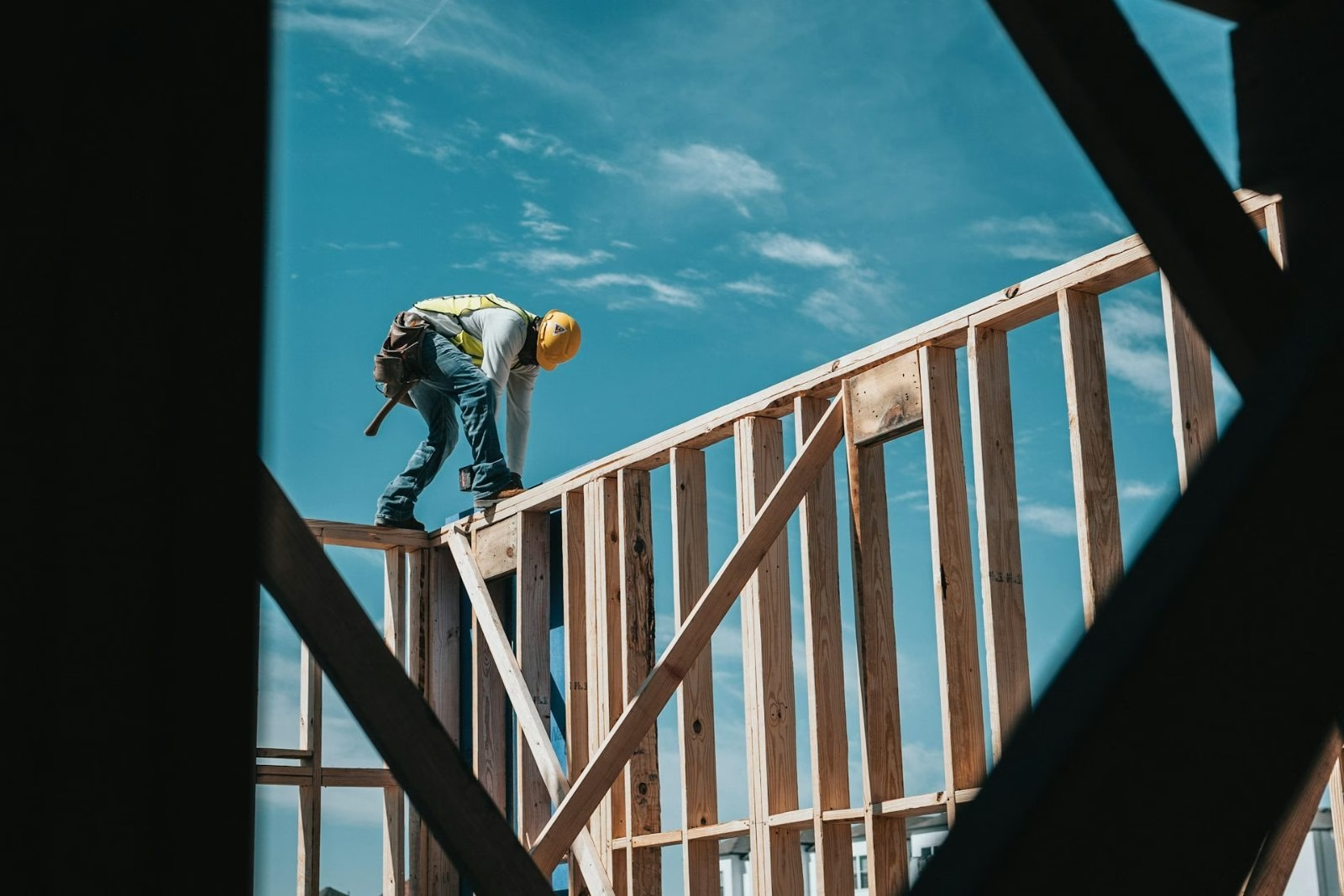
If you wear Day-Glo and spend eight hours climbing ladders, carrying materials and sweating through your shirt, you may think you’re sweet for exercise. Not so fast, says new research. The recent study suggests it may still matter, particularly for your brain.
A large international analysis found recreational exercise was associated with a 24 per cent lower risk of dementia. Physical activity at work was associated with a 20 per cent higher risk. Same sweat, opposite association, and it’s worth understanding properly: it’s neither an excuse to skip exercise nor a reason to think your trade is quietly damaging your brain.
The timing matters too. Dementia Action Week runs from 21 to 27 September 2026, and Dementia Australia estimates around 446,500 Australians are currently living with dementia, with 1.7 million people involved in their care. For a workforce that skews heavily toward tradies, labourers, warehouse staff and farmers, this isn’t an abstract research finding.
What four million people revealed
The analysis, published in The Lancet Public Health, pooled 74 cohort and case-control studies covering 4,227,297 participants, 47.2 per cent of them men, with a median age of 67.3 and ten years of follow-up on average. Researchers looked at activity across leisure time, work, commuting and household tasks, and tracked all-cause dementia, Alzheimer’s disease and vascular dementia.
High overall physical activity was linked to a 20 per cent lower risk of all-cause dementia, a 21 per cent lower risk of Alzheimer’s, and a 29 per cent lower risk of vascular dementia. Break it down by where the activity happened, though, and the picture splits: high leisure-time activity, 24 per cent lower risk. High occupational activity, 20 per cent higher risk. Active commuting, 10 per cent higher risk. Household activity, 15 per cent lower risk.
This is what researchers call the physical activity paradox: movement that looks identical on a fitness tracker can carry opposite associations with health depending on where and how it happens.
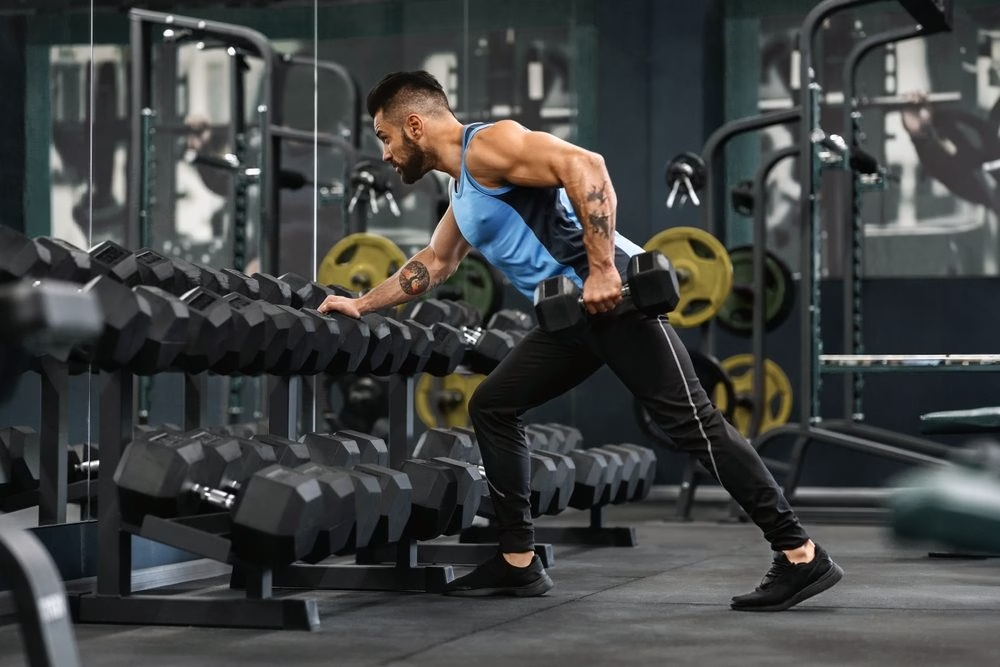
Work and exercise load the body differently
The likely explanation isn’t that lifting a load at a job site is somehow worse for your brain than lifting a dumbbell at a gym. It’s everything around the movement. Recreational exercise is usually voluntary. You choose the intensity, you stop when you’ve had enough, you reschedule around a bad night’s sleep. A physical job rarely offers that choice: repetitive lifting, prolonged standing or sustained low-level exertion, on someone else’s timeline, with little say over pace or rest breaks. (Being strong from decades of manual work is real — see is old-man strength real? — but strong and protective aren’t automatically the same thing, per this analysis.)
Manual jobs also come with exposures a gym session doesn’t: noise, air pollution, injury risk, and the psychosocial stress of a demanding workplace. There’s a simpler factor too: a body genuinely fatigued from an eight-hour shift has less left over for the recreational activity, and the social contact and stress relief that comes with it, that showed the strongest protective association here. None of this is settled mechanism, just the researchers’ best explanation for a pattern they didn’t expect to see split this cleanly.

What the study cannot tell us
Here’s the part that matters most before anyone changes anything based on this. The occupational-activity finding rests on just five studies. Active commuting, two studies. Household activity, one. All of it was observational, and physical activity was generally self-reported rather than measured. The variation between studies was substantial, with heterogeneity scores (I²) of 85.6 per cent for occupational activity and 96.6 per cent for leisure-time activity. Only 54 per cent of the included studies were rated moderate or high quality, and 93 per cent were conducted in high-income countries.
None of that means the finding is meaningless, but it does mean this analysis cannot establish that manual work causes dementia. It shows an association, not a mechanism, and evidence certainty across these categories is rated low to very low. Socioeconomic factors, income, education, healthcare access, may also explain part of the gap.
So…
A physical job is still physical activity, but it may not deliver the same benefits as exercise you choose, control and recover from. Being tired from work and being trained are not necessarily the same thing, and this analysis is a reason to add the second, not proof that the first is quietly working against you. If you’re starting from zero, our beginner calisthenics plan needs no gym and no equipment beyond floor space.