
Calisthenics is impressive, but it is simply strength training in which your own body supplies most of the resistance.
That is the dry, sports science definition. The more real version is that calisthenics takes exercises you already know and turns them into increasingly impressive demonstrations of strength.
At one end is a push-up on the lounge-room floor. At the other is a human flag, with your entire body held horizontally from a pole, or an iron cross, suspended between gymnastics rings with your arms held straight out to the sides.
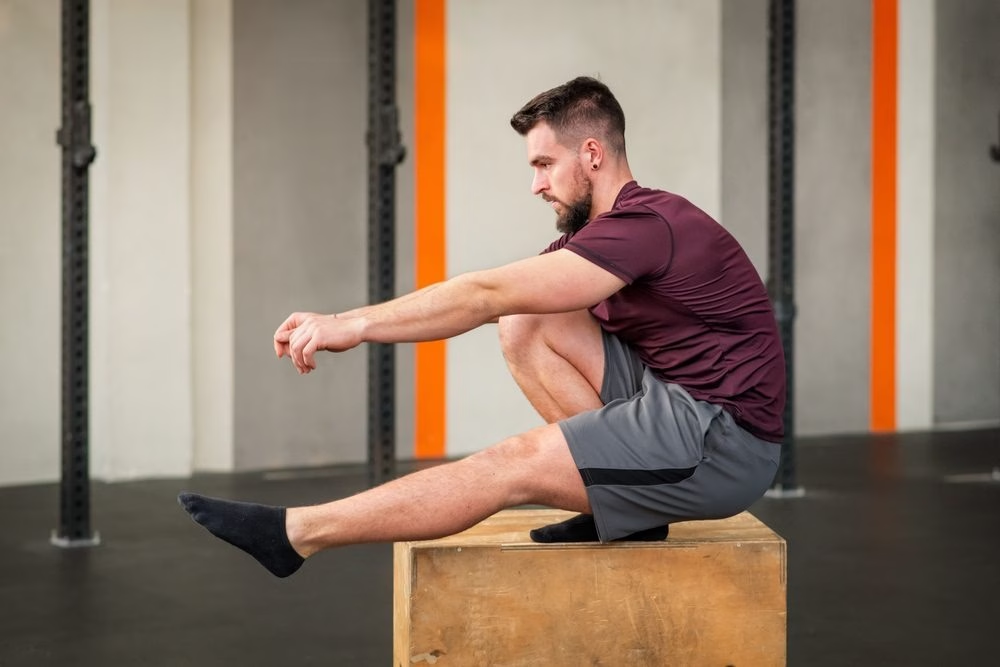
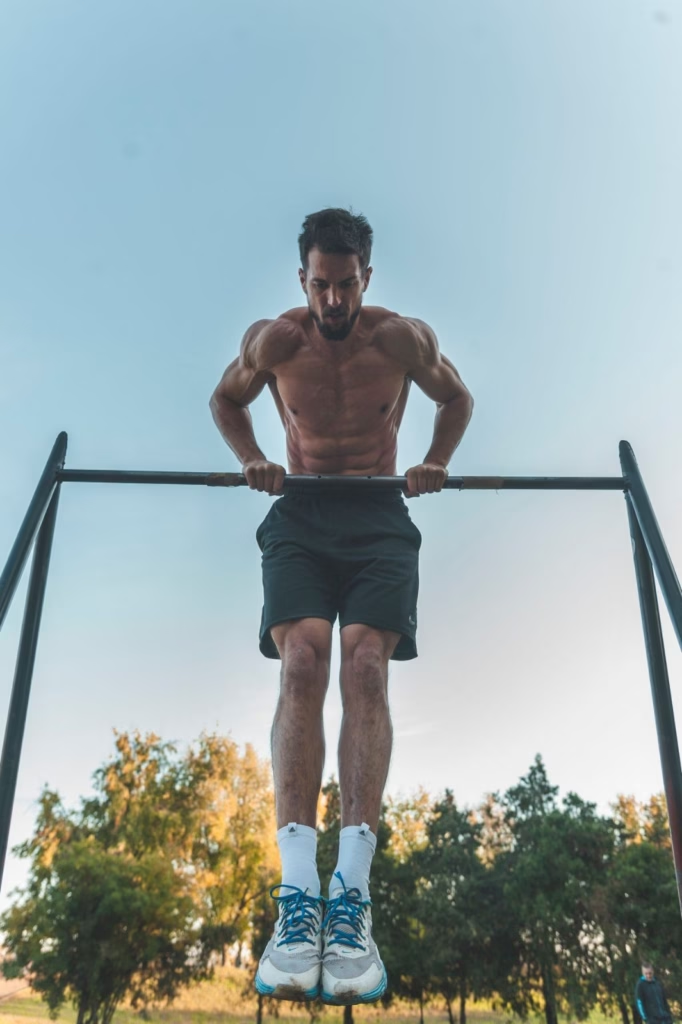
There are muscle-ups, handstand push-ups, front levers, pistol squats and planches in between. They look like circus tricks because, frankly, some of them nearly are. But each one is built from ordinary strength developed through patient, measurable progressions. If lifting weights tests how much resistance you can move, calisthenics tests how well you can move yourself.
Why start calisthenics?
Calisthenics is one of the cheapest, most portable and satisfying ways to build relative strength, which is your ability to produce force in relation to your bodyweight.
It can improve:
- Upper-body and core strength
- Muscular endurance
- Balance and coordination
- Grip and shoulder control
- Body awareness
- Mobility through controlled ranges
- Your ability to climb, hang, push and move your own weight
It can build muscle, too. In one small eight-week study, appropriately scaled push-ups produced similar improvements in chest and triceps thickness to a low-load bench press program.
That does not make calisthenics magically superior to weights. Barbells remain easier to load precisely, particularly for the legs. If maximum muscle or a huge squat is your goal, weights are useful. There is no need to join a religious war about it. Calisthenics simply gives you another kind of strength, one that is difficult to fake and impressive to watch.
THE CALISTHENICS DIFFERENCE
In a conventional gym program, progression normally means adding weight.
In calisthenics, you can increase difficulty by changing your leverage, range of movement, stability, tempo or number of limbs doing the work.
A wall push-up becomes an incline push-up. The incline becomes lower. Then comes the floor push-up, feet-elevated push-up, archer push-up and, eventually, the one-arm push-up.
The exercise changes. The principle does not: make the body solve a slightly harder problem.
What equipment do you need?
You can begin training your legs, pushing muscles and core with nothing but floor space. However, the claim that calisthenics requires absolutely no equipment is only half true.
You need something secure to pull against if you want to build a balanced body.
The most useful starter kit is:
- A properly installed pull-up bar
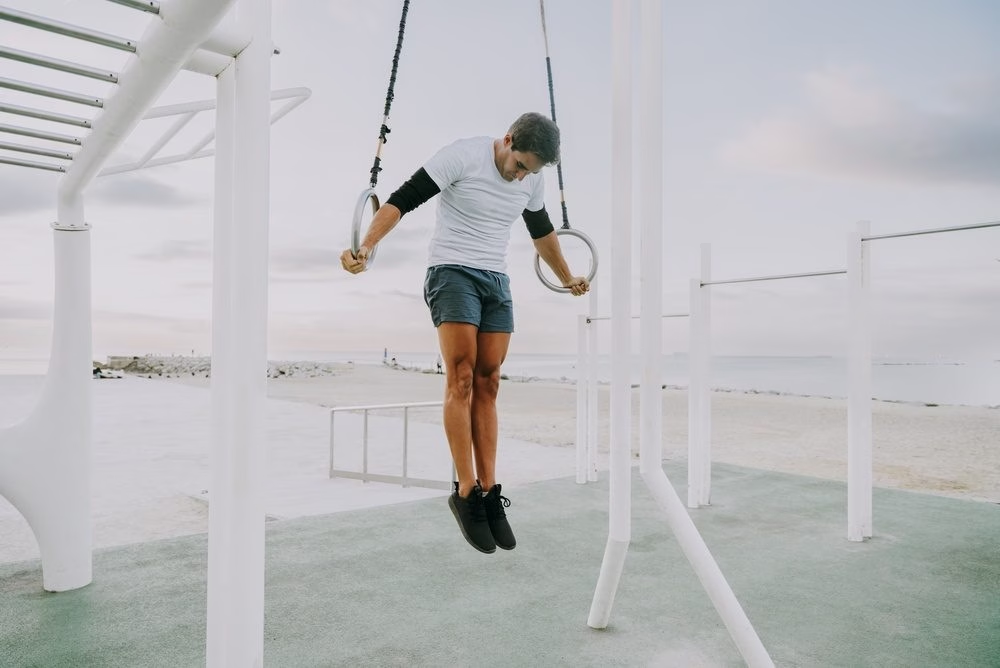
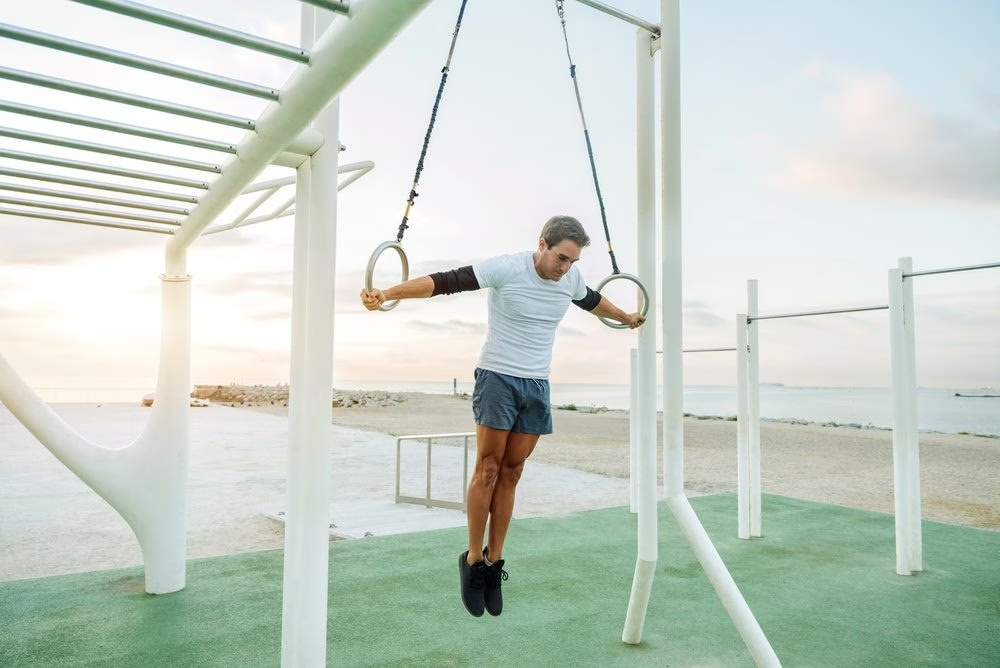
- Gymnastics rings or suspension straps
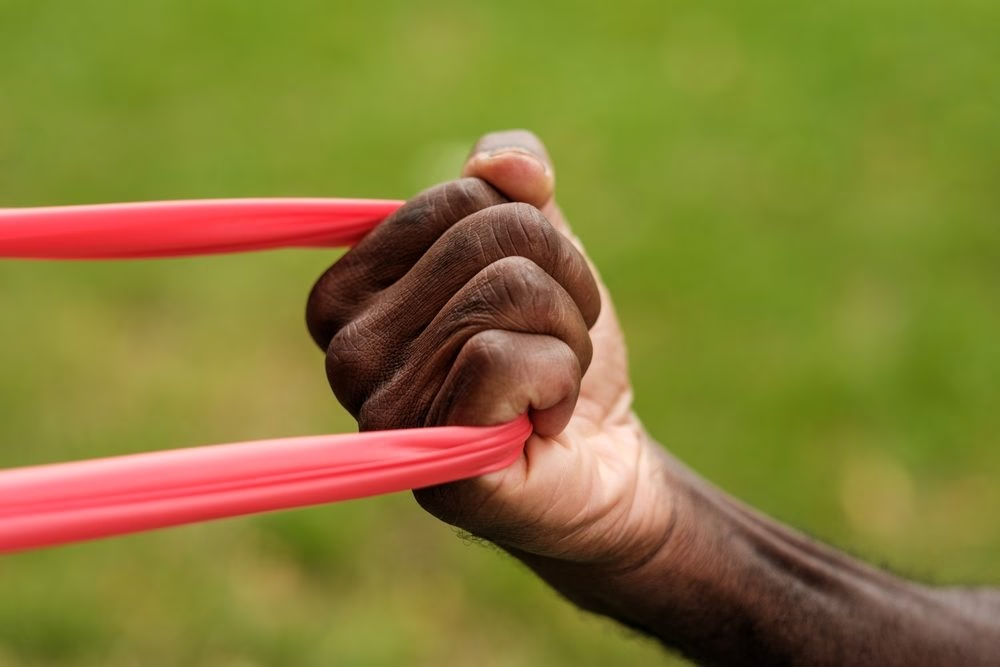
- One or two resistance bands
- Parallel bars or stable dip bars, later
Rings are particularly useful because their height and angle can be adjusted. A row can start almost upright and become harder as you lower your body towards horizontal.
A random dining table is not training equipment merely because someone on YouTube crawled underneath one. Use a fixed bar, rings or suspension trainer that can safely support your weight.
Start by finding your level
Do not begin by testing how badly you can fail at the hardest version. Choose a variation that allows you to perform clean repetitions while keeping one or two good reps in reserve.
Your first exercise level should look roughly like this:
| Movement | Starting target |
|---|---|
| Push-up variation | 6–12 controlled reps |
| Row variation | 6–12 controlled reps |
| Squat variation | 10–15 controlled reps |
| Split squat or reverse lunge | 6–10 reps each leg |
| Hollow hold or plank | 15–30 seconds |
| Dead hang | 15–30 seconds without shoulder pain |
If you cannot reach the bottom of the range, use an easier variation. If you can sail beyond the top without losing form, move to a harder one.
That is your starting point. Not good, not bad. Just useful information.
CHOOSE THE RIGHT RUNG
Push: wall push-up → high incline → low incline → floor push-up → feet elevated → archer → one arm
Pull: upright ring row → lower ring row → feet-elevated row → assisted pull-up → negative pull-up → strict pull-up
Legs: box squat → bodyweight squat → split squat → Bulgarian split squat → assisted pistol squat → pistol squat
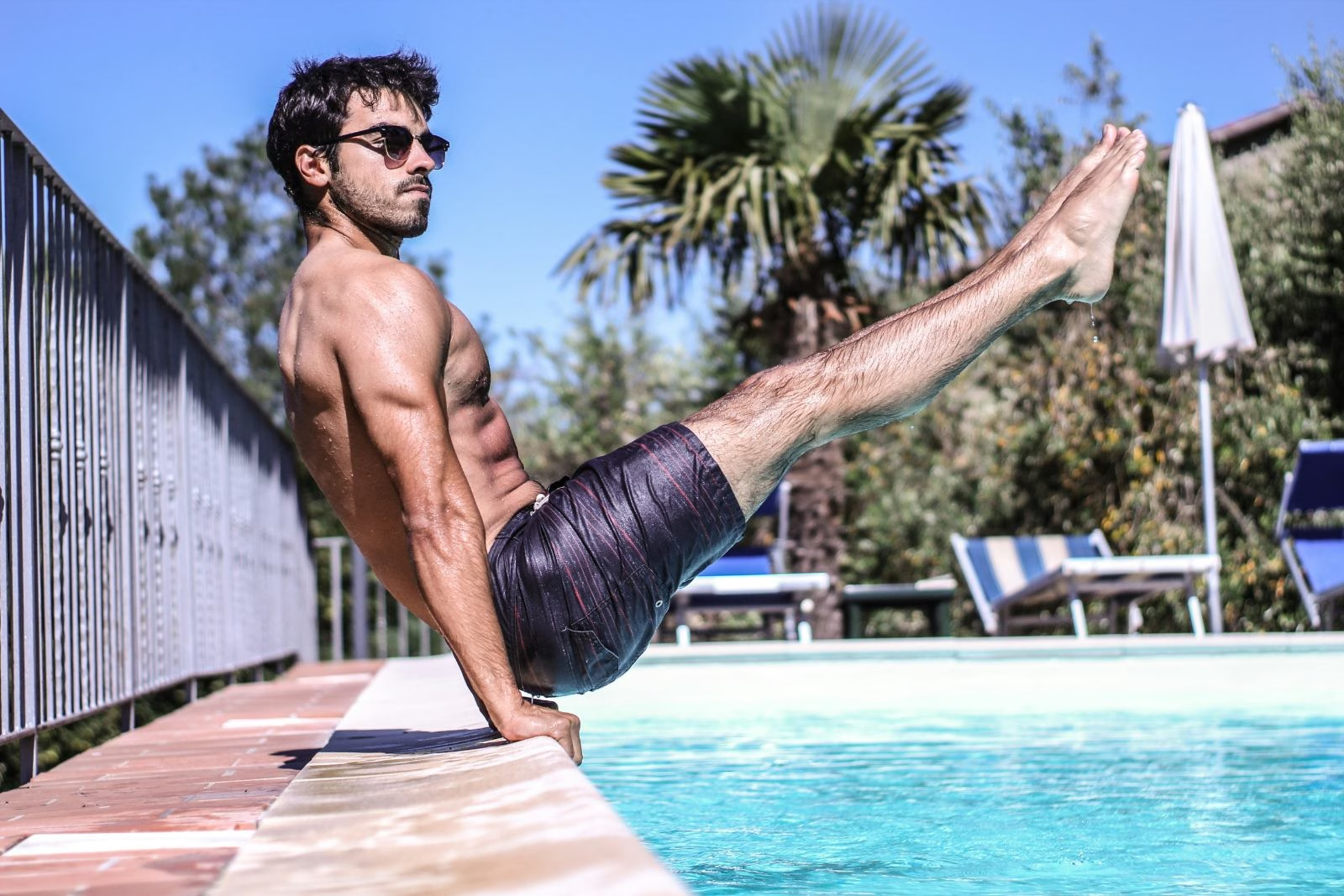
Core: dead bug → plank → hollow hold → hanging knee raise → L-sit
Overhead strength: incline pike push-up → pike push-up → feet-elevated pike push-up → wall handstand push-up
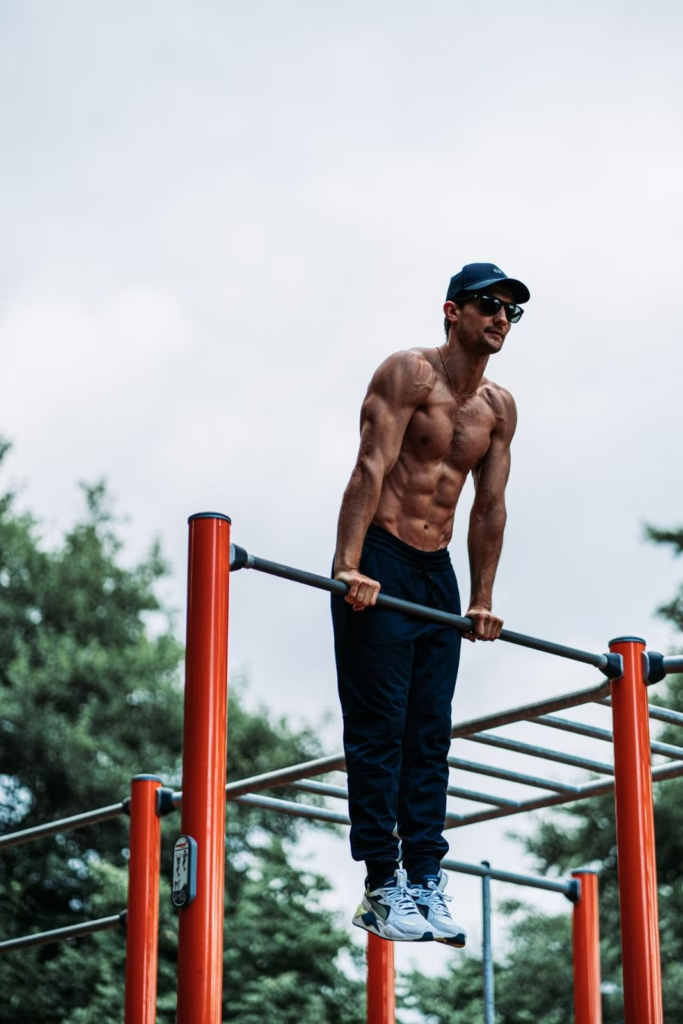
Your eight-week beginner calisthenics plan
Train three times each week on non-consecutive days.
Alternate Workout A and Workout B:
- Week one: A, B, A
- Week two: B, A, B
- Continue alternating for eight weeks
Spend five minutes warming up your wrists and shoulders, then perform arm circles, scapular push-ups, controlled squats and a short dead hang.
Use two sets per exercise during the first two weeks. Increase to three sets from week three if you are recovering well.
Rest for 90 seconds between ordinary sets and up to two minutes after demanding pulling or pressing exercises.
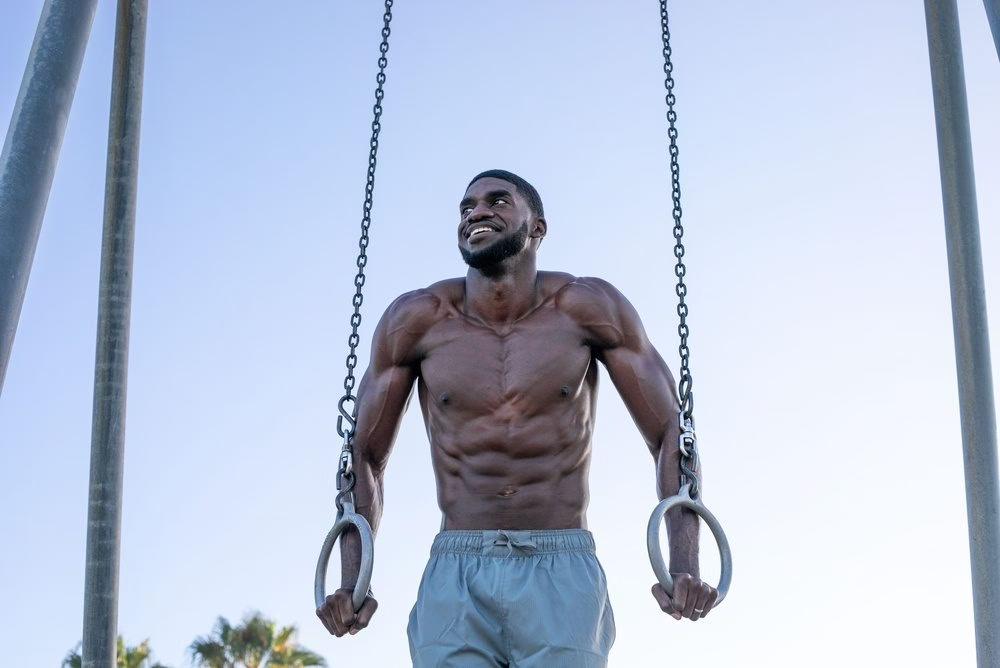
Workout A: Build the base
| Exercise | Sets and reps |
|---|---|
| Incline or floor push-up | 2–3 × 6–12 |
| Ring or fixed-bar row | 2–3 × 6–12 |
| Bodyweight squat | 2–3 × 10–15 |
| Glute bridge | 2–3 × 10–15 |
| Hollow hold or dead bug | 2–3 × 15–30 seconds |
| Dead hang | 2 × 15–30 seconds |
Choose an incline that allows a straight line from your head to your heels. Do not default to knee push-ups if you can use an incline instead. Incline push-ups preserve the same whole-body position you will eventually use on the floor.
On the rows, keep your ribs down and pull your chest towards the bar or rings. The more horizontal your body becomes, the harder the exercise gets.
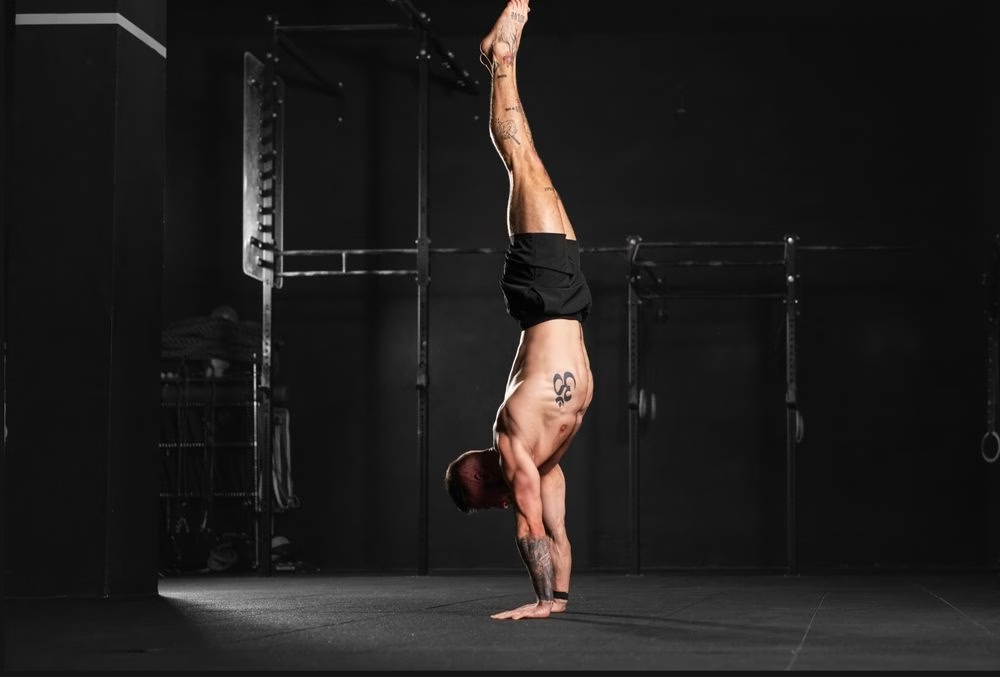
Workout B: Build towards your first skills
| Exercise | Sets and reps |
|---|---|
| Incline pike or pike push-up | 2–3 × 6–10 |
| Assisted pull-up or controlled negative | 2–3 × 3–6 |
| Reverse lunge | 2–3 × 6–10 each leg |
| Scapular pull-up | 2–3 × 5–8 |
| Side plank | 2–3 × 20–40 seconds each side |
| Parallel-bar support hold | 2–3 × 10–30 seconds |
For a negative pull-up, use a box to begin with your chin above the bar and lower yourself under control. Do not jump wildly at a bar and hope gravity develops a conscience.
The support hold is your introduction to dips and ring work. Keep your shoulders pressed down and your elbows straight. If the position causes shoulder pain, leave it out and have the joint assessed before forcing it.
How to progress
Do not add random repetitions forever. Calisthenics works when the movement becomes harder as you become stronger.
Use this rule:
- Reach the top of the repetition range on every set.
- Keep your technique clean and finish with one or two repetitions available.
- Repeat that performance in your next workout.
- Move to the next progression or make the current variation slightly harder.
That might mean lowering the push-up incline, placing your feet farther forward during rows, using a lighter assistance band or adding a few seconds to a hold.
Change one thing at a time. Do not add another set, reduce your rest and choose a harder variation in the same session. That is not progression. It is impatience wearing activewear.
YOUR FIRST FOUR MILESTONES
Ten strict push-ups: Your basic horizontal pressing strength is taking shape.
One strict pull-up: A significant relative-strength milestone. Check how your number compares with our pull-up standards for men by age.
A 30-second parallel-bar support: You are establishing the shoulder stability required for dips and ring work.
A controlled split squat: Your legs and hips are ready for harder single-leg progressions.
When do you begin training the impressive stuff?
The spectacular skills provide direction, but they should not replace the foundations.
After eight weeks, choose one skill to pursue while continuing your basic strength work.
The muscle-up
First build strict pull-ups and dips. Then develop high chest-to-bar pulls, explosive pulling power and the transition over the bar. Trying to learn the transition before you can pull high enough usually produces an ugly combination of kicking, swinging and disappointment.
The handstand
Begin with pike holds, wall walks and wall-supported handstands. The goal is initially to become comfortable upside down while maintaining straight arms and an active shoulder position.
The human flag
The flag combines a powerful pull through the upper arm, a strong push through the lower arm, grip strength and enormous lateral core tension.
Build side planks, pull-ups, pike pressing and active hangs before progressing through supported flags, tuck flags and straddle flags. It is advanced, but it follows a visible path.
The iron cross
The iron cross is not your next step after learning dips. It belongs to another postcode.
Melbourne bodyweight gym Beyond Movement estimates that most people require several years of consistent ring training. Your muscles may become strong before your elbows and biceps tendons are ready for the load, which is precisely why rushing the cross can end badly.
Treat it as a long-term destination requiring coached ring work, assisted holds and considerable straight-arm conditioning.
Can you start calisthenics after 50?
Yes. Age changes your starting rung and recovery needs, not the fundamental method.
The current Australian movement guidelines recommend muscle-strengthening exercise at least twice a week for adults, including those over 65.
Older beginners should be particularly patient with the wrists, elbows and shoulders. Use controlled repetitions, neutral grips where available and conservative progressions. Give tendons time to catch up with enthusiasm.
If you have persistent joint pain, a previous shoulder or elbow injury, heart disease or another condition affecting exercise, obtain individual advice before attacking bars and rings.
There is no prize for discovering that your 22-year-old brain still lives inside a 52-year-old elbow.
Common calisthenics mistakes
Turning every session into a circuit
Moving quickly creates fatigue, but fatigue is not the same as strength. Rest long enough to perform quality repetitions.
Training only push-ups
Push-ups are excellent, but a program without rows, hangs or pull-ups neglects the back, biceps, grip and much of the shoulder complex.
Attempting skills before building the positions
A muscle-up is not a pull-up with more optimism. A human flag is not a side plank performed near a pole. Develop the strength and joint positions first.
Chasing numbers with shortened repetitions
Partial-range training can have legitimate uses, but accidentally shortening every rep so you can claim a larger number is not one of them.
Changing the program every week
Calisthenics is endlessly variable, which makes it easy to become a collector of exercises rather than someone who improves at them. Keep the main movements long enough to measure progress.
The real beginning
Your first month of calisthenics is not supposed to look spectacular. It is supposed to build the pushing, pulling, leg, grip and trunk strength from which spectacular things become possible.
Today it might be an incline push-up and a ring row. Later it could be a muscle-up, handstand or flag that makes everyone else in the park stop what they are doing.
The gap between them is not talent. It is a ladder.
Start climbing.
For the fuller picture of what calisthenics actually is, where it came from and where it tops out, see our guide: What is Calisthenics?
Once you have completed this eight-week foundation, move to our complete calisthenics workout and begin specialising in the movements you actually want to master.