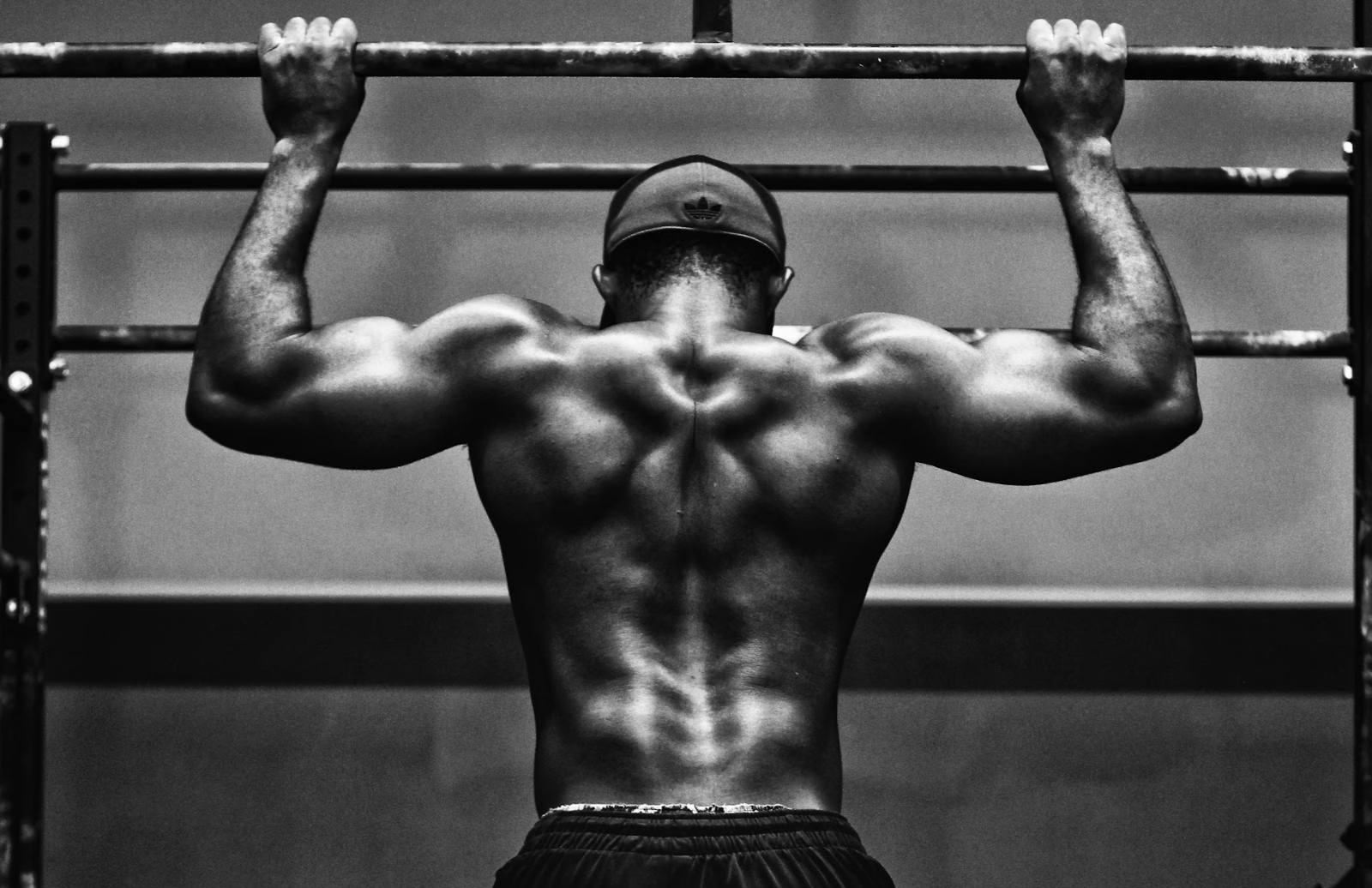


Most blokes think they are training back when they are really training grip, ego and biceps with a bit of lat thrown in if they are lucky.
A good pull workout should feel different. You should come away with your lats, mid-back, rear delts and biceps all knowing they have done a shift. Not smashed randomly. Trained properly. This is the workout that will you get better at pullups.
This session is built around six movements: a vertical pull, a horizontal row, a lat stretch movement, rear-delt work and two biceps exercises. It is more bodybuilding than powerlifting, so the goal is not simply to move the biggest possible weight. The goal is controlled tension, smart angles and enough progressive overload to make your back grow.
Start with a short warm-up: five minutes on the treadmill, bike or StairMaster, then 10 arm circles each way and 10 light cable external rotations per side. You are not trying to win the warm-up. You are just getting the shoulders, elbows and upper back ready for work.
| Exercise | Sets | Reps | Main Target |
|---|---|---|---|
| Lat pulldown | 4 feeder sets, then 2 hard sets | 10 per feeder set, then failure | Lats |
| Chest-supported row | 3 | 10–12 | Mid-back |
| Dumbbell lat pullover + lat stretch | 2 | 10–12 + 30 sec each side | Lengthened lats |
| Face pull from three angles | 3 | 12–15 | Rear delts, upper back |
| EZ-bar curl | 3 | 6–8 | Biceps strength |
| Bottom-half preacher curl | 2 | 10–12 | Stretched biceps |
The first proper move is the lat pulldown. This is your main vertical pull and the exercise where a lot of people get lost. They pull the bar down, but they never really feel their back do the work.
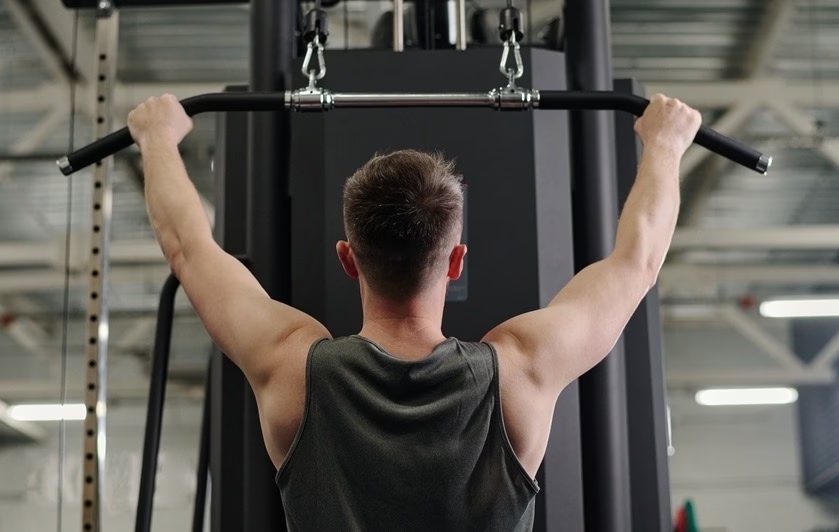
Use four feeder sets to fix that. Start light for 10 reps. Rest, add weight, and repeat. Each set should feel a little harder until the fourth set is genuinely tough. The point is not just to warm up. It is to find your working weight for the day and to get your lats firing before the hard work starts.
After your first all-out set, rest two to three minutes and go again. You probably will not match your first set exactly, and that is fine. If you hit 10 on the first hard set and only seven or eight on the second, fatigue is doing its job. To finish, strip the weight back by about 30 per cent and squeeze out another four or five reps. That mini drop set helps make sure the back, not just your arms, has been taken close to its limit.
Use a medium overhand grip, around one to one-and-a-half times shoulder width. Too wide and you shorten the range of motion. Too close and the biceps tend to take over. Straps can help if your grip gives out before your back does. If you do not use straps, try a thumbless grip. For some lifters, it makes it easier to think about pulling with the elbows rather than yanking with the hands.

Next is the chest-supported row. A complete pull day needs both a vertical pull and a horizontal pull. Pulldowns bias the lats. Rows bring more of the mid-back into play, especially the traps and rhomboids. The chest support also stops the movement turning into a lower-back exercise.

Use three grips across three sets: wide, closer, then neutral or underhand. This is not magic, but it is useful. The back is a messy piece of engineering, with muscles running in different directions. Slightly changing the grip changes the line of pull and gives the whole area a more complete hit.
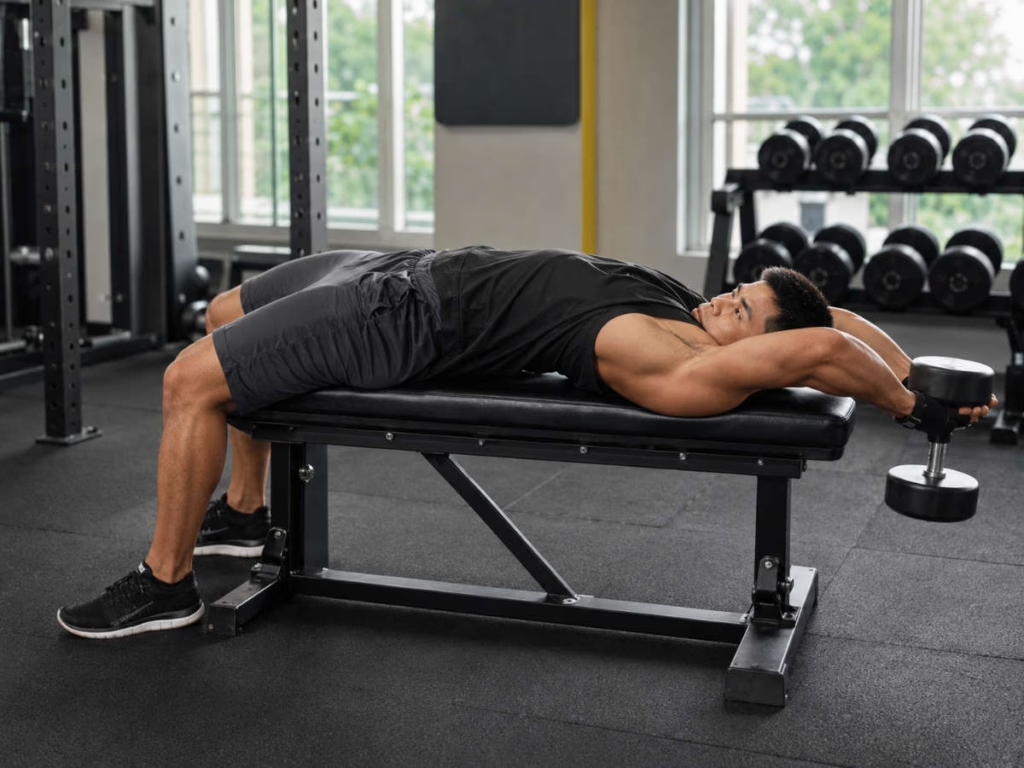
Then move to bottom-half dumbbell pullovers paired with a lat stretch. With the pullover, stay in the stretched lower half of the movement. The top half is where tension tends to fall away, so do not waste half the set waving the dumbbell through space. Keep the ribs down, control the lowering phase and feel the stretch through the lats.
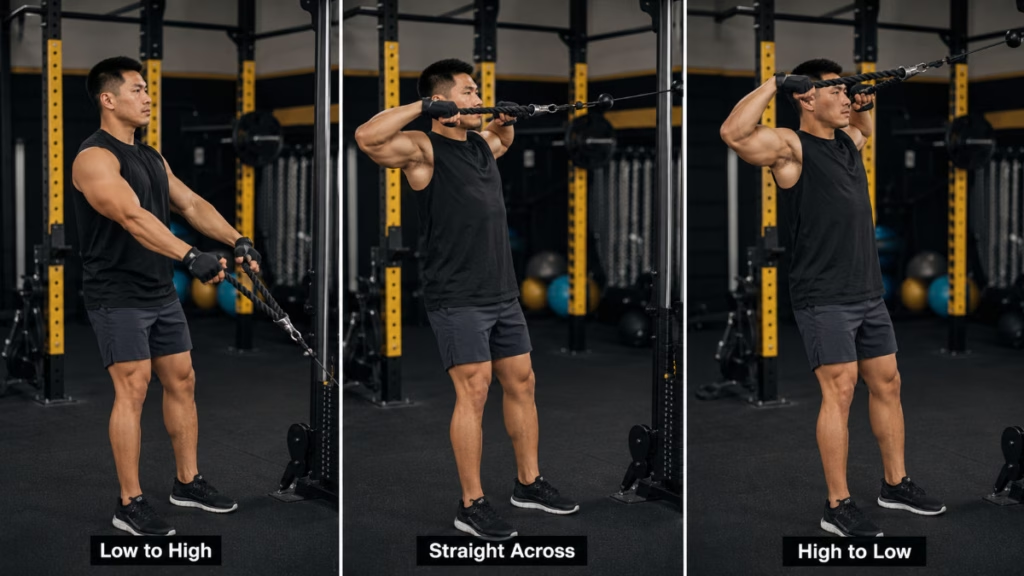
For rear delts and upper back, use face pulls from three directions. First, pull from low to high. Then pull straight across from shoulder height. Finally, pull from high to low, toward the eyes. This gives the rear delts, traps and upper back slightly different lines of tension.
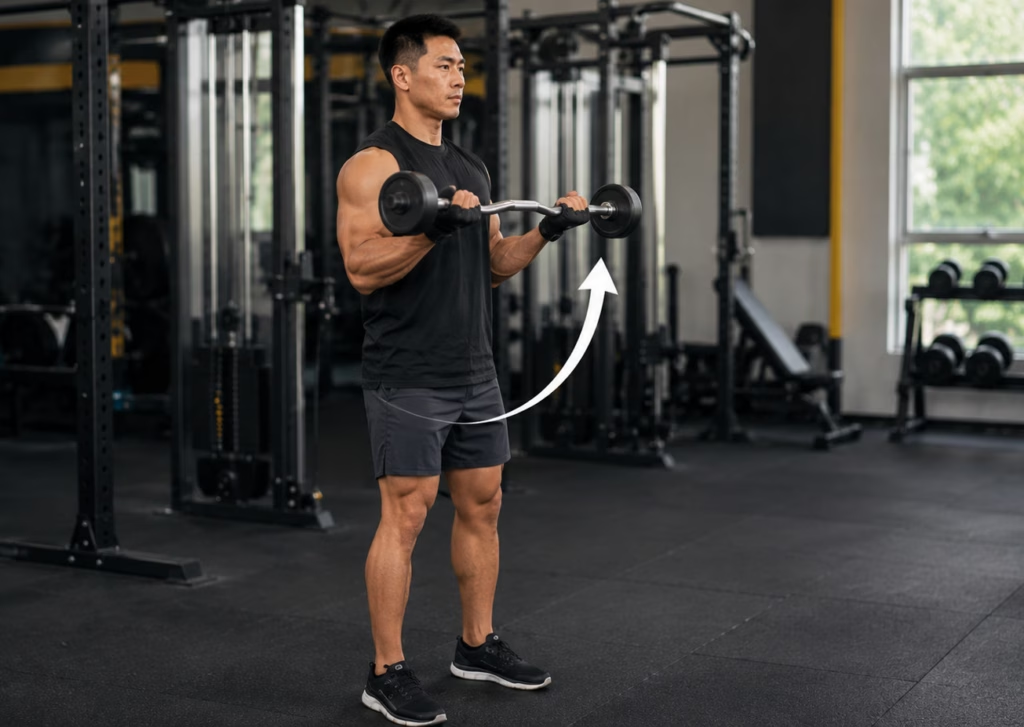
Now the biceps get their turn. Start with the EZ-bar curl for three sets of six to eight. Too many people only train biceps with light, pumpy sets. That has its place, but heavier curling matters too. Track your reps and load over time. A little body movement to get the weight started is not the end of the world, but the lowering phase has to be controlled. If the negative looks like gravity has taken over, the weight is too heavy.
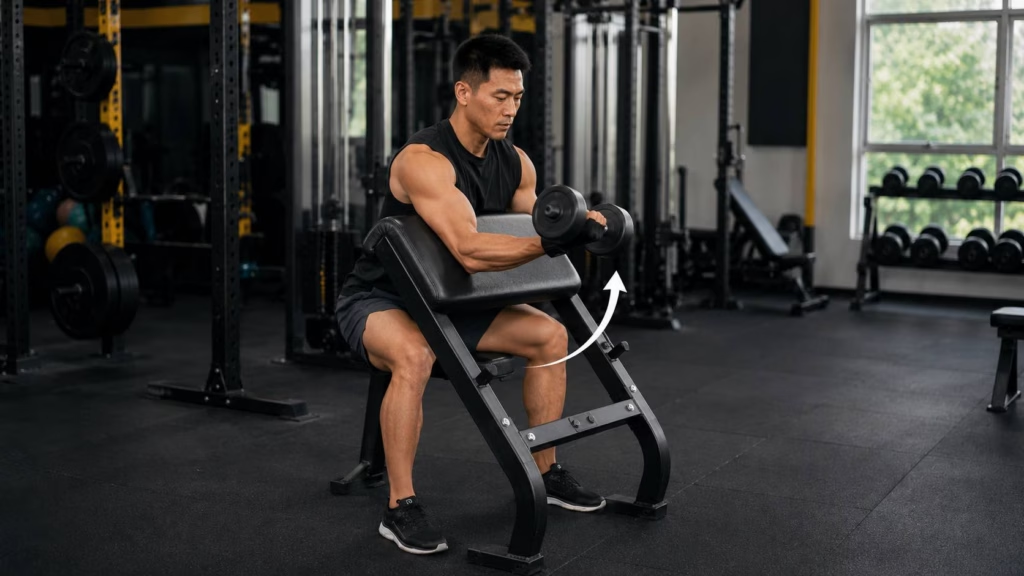
Finish with bottom-half preacher curls. These keep the biceps working in the stretched part of the movement, which is likely one of the most productive parts of the lift for growth. Do them one arm at a time. Start with your weaker arm, then match the reps on your stronger arm.
That is the session: pull down, row, stretch the lats, hit the rear delts, then train the biceps heavy and long. The rule is simple. Move naturally, but do not cheat yourself. If the target muscle is not doing the work, the rep does not count for much.