


With Whoop, Apple and others clambering to measure, monetise and optimise your sleep, a good night’s kip has become an expensive business. But a new analysis suggests one of the more useful options for older adults may be the one that costs nothing.
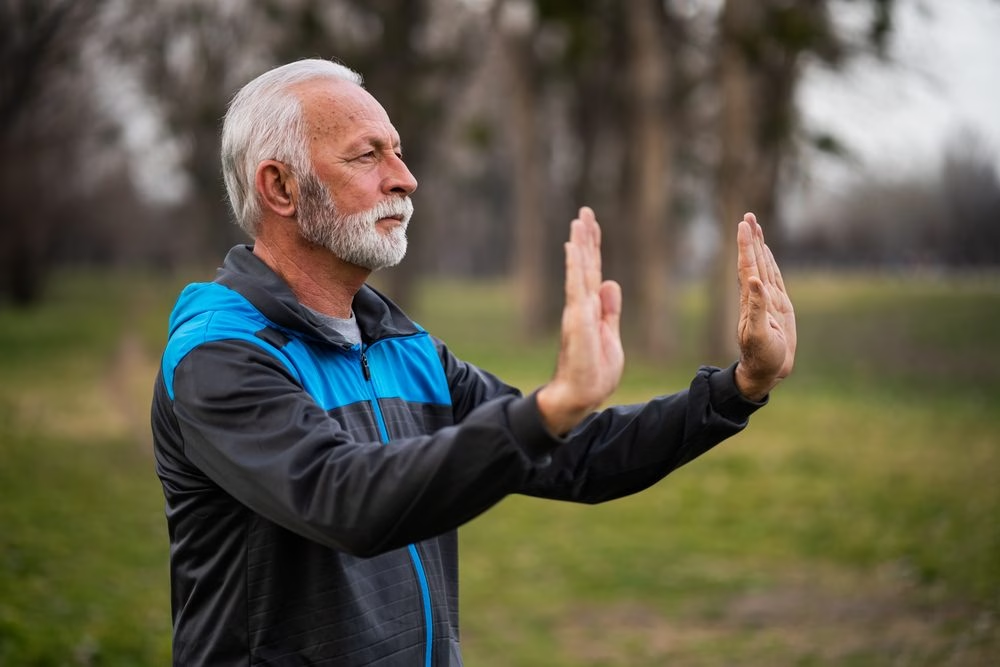
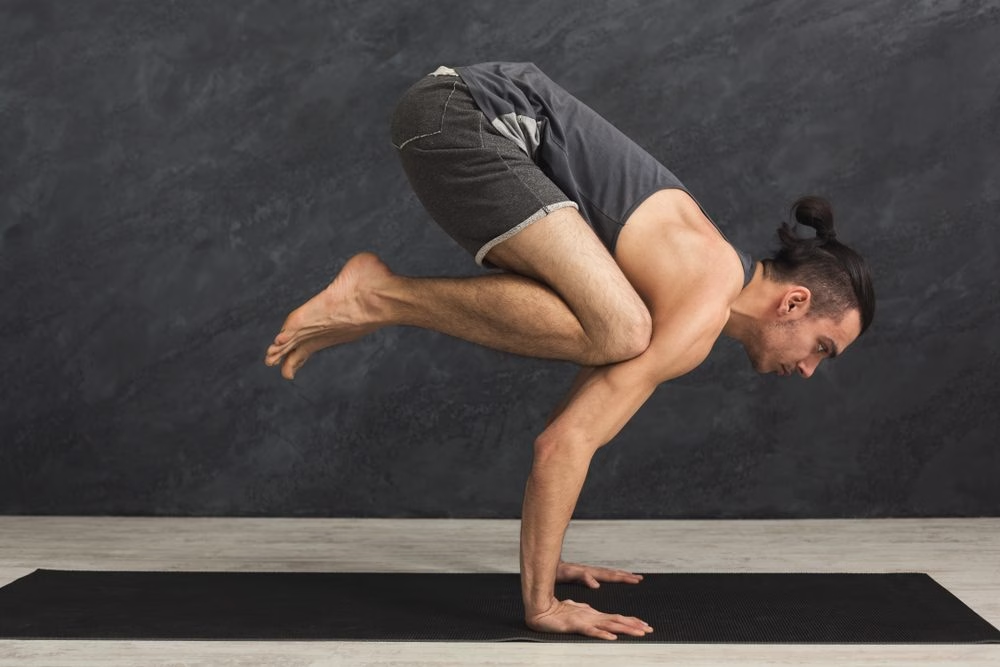
Researchers reviewed 45 studies involving 3,568 older adults with sleep problems and compared four popular mind-body practices: meditation, yoga, qigong and tai chi.
All four were associated with better self-reported sleep quality. Meditation produced the largest estimated improvement and had the highest probability of ranking first.
That does not mean meditation has been crowned the undisputed cure for insomnia. It does suggest that a simple, low-cost practice is worth considering, particularly if an overactive mind is keeping you awake.

What the study found
The network meta-analysis was published online in The Gerontologist. Researchers searched four major databases for relevant trials published up to 20 December 2025.
Compared with control groups, the estimated improvements in subjective sleep-quality scores were:
- Meditation: 3.49-point improvement
- Yoga: 2.40-point improvement
- Qigong: 2.21-point improvement
- Tai chi: 1.87-point improvement
Lower scores represented better reported sleep quality.
Meditation also performed better than sleep-hygiene education alone, producing an estimated additional 2.87-point improvement. The researchers concluded that all four practices could help, with meditation having the highest probability of ranking best in the primary analysis. (The Gerontologist study, PubMed record)

Did meditation really beat yoga and tai chi?
Not quite as decisively as that wording suggests.
This was a network meta-analysis. That method combines direct comparisons from trials with indirect comparisons across a connected body of research.
For example, if separate studies compared meditation with a control and yoga with a control, the analysis can estimate how meditation and yoga might compare with each other. That is useful, but it is not as conclusive as a large trial randomly assigning similar people directly to meditation, yoga, qigong or tai chi.
A ranking also does not mean the differences between every practice were statistically or clinically decisive.
An earlier review of 27 studies found that mind-body exercise reduced sleep disturbance in older adults but detected no significant differences between pilates, yoga, qigong and tai chi. (PubMed)
The sensible conclusion is therefore:
Meditation ranked highest in the new analysis, but the broader evidence supports several mind-body practices rather than identifying one guaranteed winner.
The study measured how people thought they slept
Another important qualification is hiding in the phrase “subjective sleep quality”.
The results describe how participants rated their own sleep. That matters. If you feel that you are sleeping better and functioning better the following day, the improvement is meaningful.
However, the study does not establish that meditation produced more deep sleep, increased total sleep by a particular number of minutes or changed every objective measure recorded by a sleep tracker.
It also cannot tell us whether meditation works equally well for someone whose sleep is being disrupted by stress, sleep apnoea, pain, medication, alcohol, restless legs or an inconsistent schedule.
Why meditation may still be useful
Trying harder to sleep is one of sleep’s more annoying contradictions. The more you monitor the time and demand that your brain switch off, the more alert you can become.
Meditation gives the mind a neutral task. You notice your breathing, recognise when your attention has wandered and return to the breath without starting an argument with yourself.
The aim is not to empty your mind. It is to stop following every thought that arrives.
That can make meditation particularly relevant for men who are physically tired but mentally replaying work problems, financial decisions, family concerns or tomorrow’s training.
It also has practical advantages over many sleep interventions:
- It costs nothing.
- It requires no equipment.
- It does not affect balance or reaction time the following morning.
- It can be practised without adding another supplement or device to the bedside table.
A sensible 14-night meditation experiment
The review did not establish a single ideal meditation dose. This is a straightforward way to test whether the practice is useful for you.
- Sit somewhere quiet approximately 30 minutes before bed.
- Set a timer for 10 minutes and put your phone out of reach.
- Breathe normally and place your attention on the sensation of breathing.
- When your mind wanders, notice it and return to the breath. Wandering is not failure; returning is the practice.
- Each morning, record how long you think it took to fall asleep, how often you woke, how rested you feel and your daytime energy.
Repeat the routine for 14 nights before deciding whether it helps. One heroic meditation session is unlikely to undo several months of disrupted sleep.
No Use with Insomnia
Meditation can be useful, but it should not be presented as a substitute for proper assessment or treatment.
Cognitive behavioural therapy for insomnia, known as CBT-I, remains a recommended first treatment for persistent insomnia. It addresses the habits, thoughts and behavioural patterns that keep sleep problems going.
The Sleep Health Foundation says CBT-I commonly includes sleep education, stimulus control, bedtime restriction, cognitive strategies and relaxation training. Its benefits can continue after treatment finishes. (Sleep Health Foundation)
Australians can also access a free, self-paced online Sleep Course through MindSpot, with optional therapist support. (Healthdirect)
Speak to your GP if poor sleep has persisted for months, affects daytime function or is accompanied by loud snoring, gasping, morning headaches, unusual leg sensations, significant anxiety or depression.
The Take Home Message
The new review does not prove that meditation is the best sleep treatment for every older adult. It does provide a reasonable basis for trying it.
Meditation, yoga, qigong and tai chi were all associated with improvements in how older adults rated their sleep. Meditation produced the strongest estimate and ranked highest, although the result came from a mixture of direct and indirect comparisons.
For men over 50, the useful takeaway is refreshingly uncomplicated: ten quiet minutes each evening is a low-risk experiment.
If it helps, keep doing it. If persistent insomnia continues, move beyond sleep hacks and look at CBT-I or a proper medical assessment.