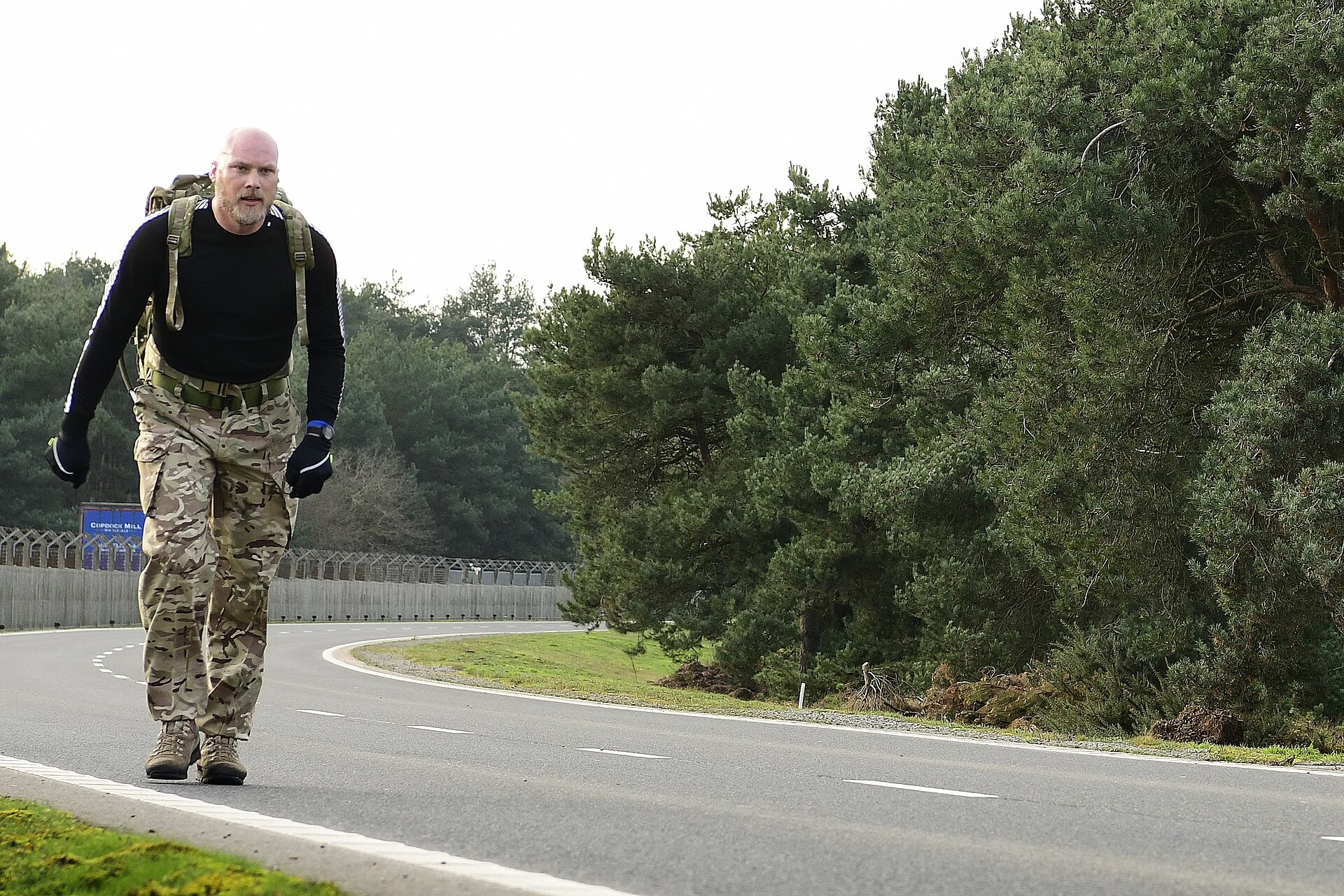

Rucking is walking with weight on your back. It’s that simple. It started as a military skill, the ruck march, and it’s become one of the simplest ways to get fitter without running: no gym, no impact, just a backpack, some weight and a footpath, and maybe a hill or two. It works your legs, back and core, gets your heart rate up, and it’s easy to scale for anyone from a beginner to someone training for SASR selection.
- What it is: brisk walking with a weighted backpack
- Starting weight: about 10% of your body weight (8 kg if you weigh 80 kg); guides range from 5% to 15%
- How often: two or three 30-minute rucks a week to start
- How to progress: change one thing at a time: time, then hills, then weight
- Pack it: weight high and tight against your back
- Biggest risks: blisters, sore feet and knees, and doing too much too soon
What is rucking?
A ruck is a rucksack, and rucking is walking with a loaded one. Armies have always tested it, because soldiers have always had to carry their kit, and the loads have climbed steadily since the 18th century (Knapik and colleagues (2004)). That’s why ruck marches turn up in selection courses and on TV shows like Special Forces: World’s Toughest Test.
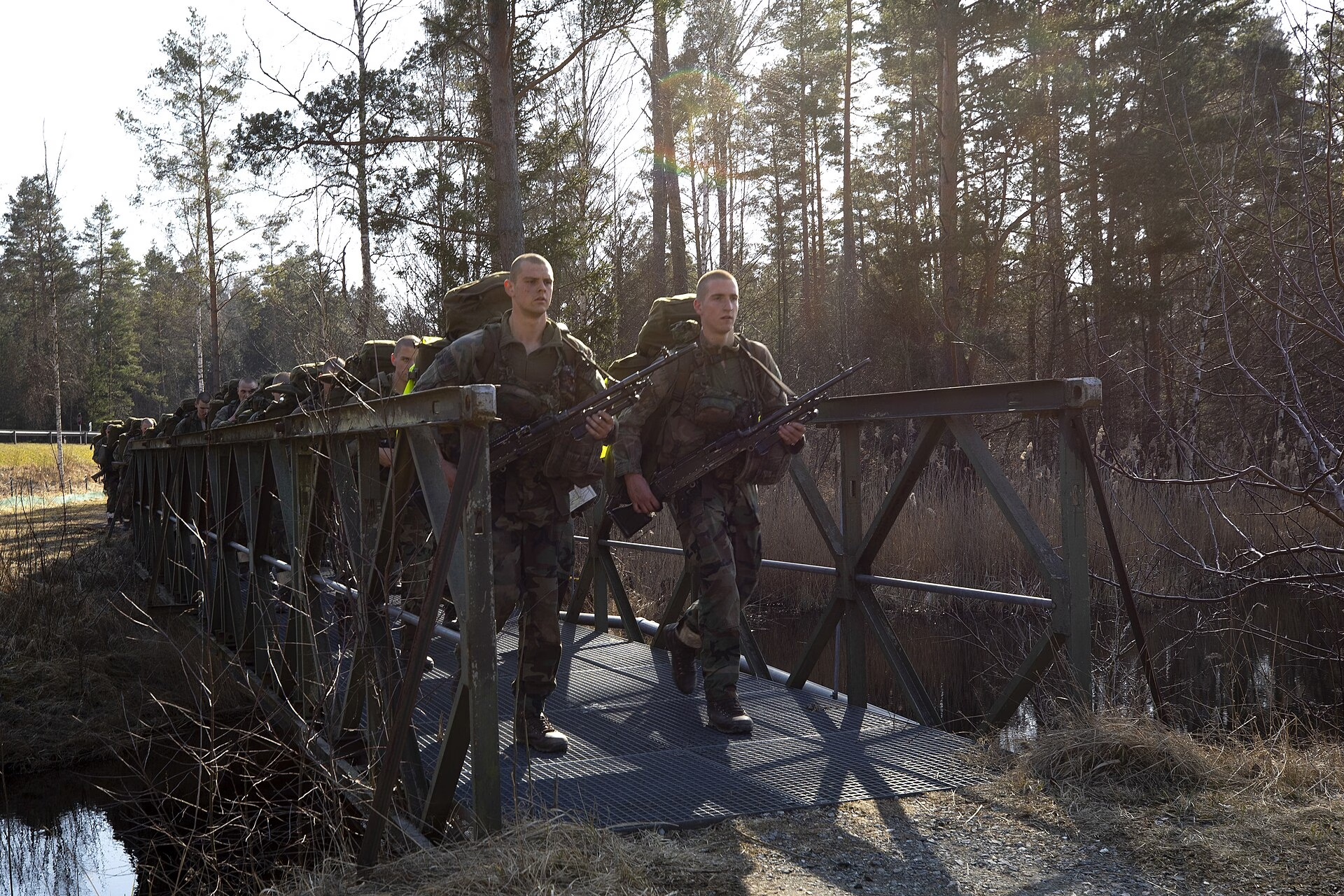
For everyone else, it’s walking made harder. You walk at a normal, brisk pace, but the pack makes every step cost more, and it lets you get a hard session without the pounding of running.
How many calories does rucking burn?
The standard way to estimate it is the Pandolf equation, published by US Army researchers in 1977. It predicts energy cost from your body weight, the load, your speed, the slope and the ground. Here’s what it gives for an 80 kg man walking at 5 km/h on a hard surface:
| Walk (80 kg, 5 km/h) | Calories per hour |
|---|---|
| Walking, no pack, flat | about 305 |
| 12 kg pack, flat | about 340 |
| 12 kg pack, 5% incline | about 535 |
The surprise is how little a light pack adds on the flat: about 10%. The hill does far more. A 5% incline with the same pack adds around 60%. So if you want more out of a ruck, pick a hillier route before you pick a heavier pack. The weight’s main job is to make walking strength work, not to burn calories on its own.

How much weight should you start with?
Most guides land on about 10% of your body weight. Team Red, White & Blue, a US veterans’ fitness group, suggests 10–15% for beginners. Hyperwear suggests 5–10% for many beginners, and warns that 30 lb (about 14 kg) is usually too much for a first ruck. If you’re new to exercise, older, or have sore knees or a sore back, start at the low end.
| Your weight | Range (5–15%) | Good first load (10%) |
|---|---|---|
| 60 kg | 3 to 9 kg | 6 kg |
| 70 kg | 3.5 to 10.5 kg | 7 kg |
| 80 kg | 4 to 12 kg | 8 kg |
| 90 kg | 4.5 to 13.5 kg | 9 kg |
| 100 kg | 5 to 15 kg | 10 kg |
Use something dense that won’t move around: a weight plate, a sandbag or a few wrapped bricks. Water and milk weigh about 1 kg a litre, so two 3-litre milk bottles make 6 kg.
How heavy is too heavy? The usual ceiling comes from the army. In The Soldier’s Load and the Mobility of a Nation (1950), US Army historian S.L.A. Marshall looked back at what armies had carried and concluded a soldier’s load should stay at or below about a third of his body weight (US Naval Institute, 1990). Rucking brand GORUCK uses the same rule: a third of your body weight is something to build towards over months and not go past. For an 80 kg man that’s about 27 kg, more than twice what most people need. If you want a harder session, go faster or further rather than heavier. Only go above a third if a goal demands it, such as military training or a hunting trip, and build up to it slowly.
A six-week beginner rucking plan
This is a simple build for a first-timer who already walks regularly. The rule both guides above agree on: change one thing at a time.
| Weeks | Sessions | Load | Focus |
|---|---|---|---|
| 1–2 | 2 rucks of 30 min, flat | 10% | Learn the pack fit; finish feeling you could go further |
| 3–4 | 3 rucks of 30–40 min, one with hills | 10% | Add the hills before any extra weight |
| 5–6 | 2 rucks of 30–40 min plus one of 60 min | 10–12% | Add 1–2 kg only if weeks 3–4 felt easy |
After six weeks, keep adding one thing at a time: a longer ruck, more hills, or another 1–2 kg. Ten to 12 kg is plenty for general fitness. If you’re training for something specific, such as an Army test or a selection course, build towards that event’s load and distance.

How to pack and wear a ruck
- Weight high and close. A load close to your body’s centre of mass costs the least energy and keeps you more upright (Knapik and colleagues (2004)).
- Tighten everything. Shoulder straps snug, and a hip or chest strap if the pack has one. Nothing should bounce.
- Shoes and socks first. Wear shoes you already walk in and socks that don’t bunch. Blisters are the most common rucking injury.
- Stand tall. Lean slightly forward from the ankles, not the waist, and keep your normal stride.
Rucking injuries and how to avoid them
Most of what’s known about load carriage injuries comes from soldiers carrying far heavier loads than you will. Two reviews, by Orr and colleagues at Bond University (2014) and Knapik and colleagues (2004), list the same problems: foot blisters, sore feet and knees, stress fractures and lower back strain. Most injuries are in the lower limbs. Both also describe a nerve injury from heavy shoulder straps, sometimes called rucksack palsy.
- Build up slowly, as the plan above does.
- Stop and loosen the straps if your arms or hands go numb or tingle.
- Treat hot spots on your feet straight away, before they become blisters.
- Have rest days between rucks while you’re starting out.
Rucking for military fitness
If you’re training for an Army entry test or a selection course, rucking is the specific skill, but it’s not the only one. Pair it with bodyweight strength and running fitness:
- Military calisthenics workout: our bodyweight plan, with a free PDF.
- Beep test: how the shuttle run works and how to lift your score.
- Fit to fight.
- Weighted vests: the other way to walk with load, and what it may do for your bones.
Train to the official standard for the role you’re applying for. The Australian Defence Force publishes its fitness requirements on Defence Jobs.
Rucking FAQ
How heavy should a ruck be for a beginner?
About 10% of your body weight: 8 kg if you weigh 80 kg. Guides range from 5% to 15%; start lower if you’re new to exercise or carrying an injury.
Is rucking good for weight loss?
It burns more than walking, especially on hills: an estimated 535 calories an hour for an 80 kg man with 12 kg on a 5% incline at 5 km/h, against about 305 for a flat walk with no pack. Like any exercise, it works best alongside your diet.
Does rucking build muscle?
A little, mainly in your legs and mainly if you’re new to training. A pack makes your legs work harder, and the thigh muscles most of all as the load gets heavier (Liu and colleagues, 2020), and ten weeks of loaded walking plus strength training made men measurably better at carrying a load (Wills and colleagues, 2019). But no study has shown rucking adds muscle the way lifting does. For size and strength, pair it with a strength session, such as our military calisthenics workout.
Is rucking better than running?
It’s different. Rucking is lower impact than running and puts load through your legs, back and core; running builds speed. Many people do both.
How often should you ruck?
Two or three times a week to start, with rest days in between. Add sessions or time before you add weight.
What do you need to start rucking?
A sturdy backpack, something heavy and compact to put in it, and shoes you already walk in. Dedicated rucking packs and plates make it more comfortable, but they aren’t essential.
Sources: the Pandolf equation (Pandolf, Givoni and Goldman, 1977); Team Red, White & Blue; Hyperwear; Orr and colleagues at Bond University (2014), International Journal of Injury Control and Safety Promotion; Knapik and colleagues (2004), Military Medicine; Liu and colleagues (2020), Applied Sciences; Wills and colleagues (2019), Journal of Strength and Conditioning Research. Checked 25 October 2026.