
At 51, Almir Rogério da Silva was a big lad. He weighed 160kg. He was strong, had worked physically demanding jobs since childhood and already trained with weights. He was also in serious health trouble.
Working as a night security guard in 2022, the Brazilian became ill and was taken to hospital. His blood pressure, he later told Brazil’s Gshow, had reached 260/160 mmHg. His blood glucose and cholesterol were also high.
For context, the American Heart Association classifies anything above 180/120 as severe hypertension. Add symptoms such as chest pain, weakness or difficulty speaking and it becomes a medical emergency. At 260/160, the warning light was not blinking. The dashboard was lit up like a freaking Christmas tree.
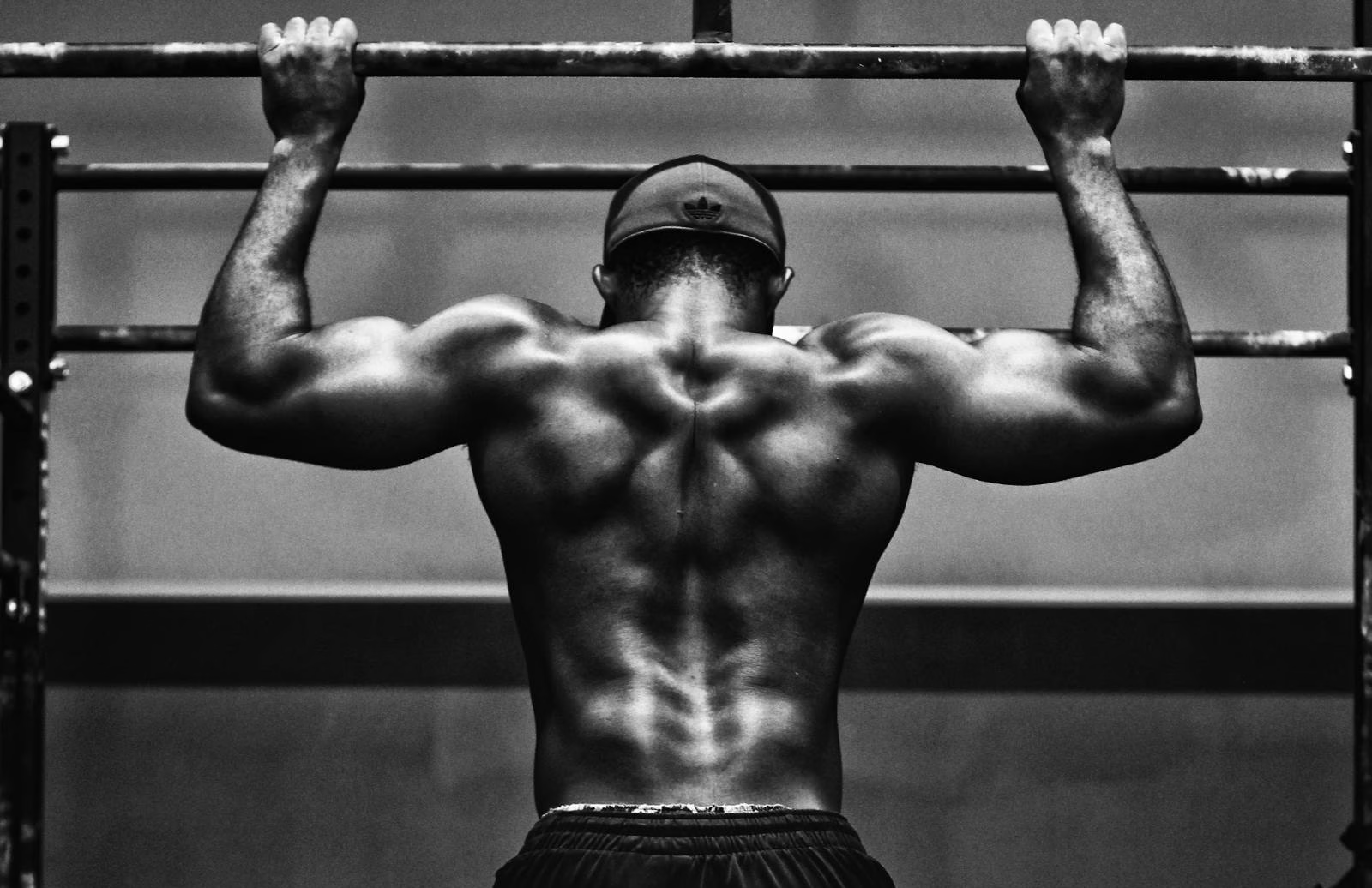
Three years later, Silva was roughly 80kg lighter, extraordinarily lean and competing in bodybuilding. Online, more than a million followers knew him as Vovô Bodybuilder, or Grandpa Bodybuilder.
This is how he did it, what he actually eats and the important part usually buried beneath the transformation photographs.
The man behind Vovô Bodybuilder
Silva comes from Bambuí in the Brazilian state of Minas Gerais. He began farm work at 11 and later worked in charcoal production, potato fields, milk transport and security.
In other words, he did not arrive at 160kg because he had never lifted anything heavier than a television remote. He had a large frame, years of hard physical work behind him and some gym experience. But strength does not cancel hypertension, high blood glucose or high cholesterol. The hospital visit forced him to stop confusing being powerful with being healthy.
He sought help from a nutritionist and began treating fat loss as a controlled project rather than another test of toughness. By his account, he lost about 80kg in less than two years. By 2025, he was maintaining a bodyweight around 80–85kg.
The photographs are startling. The method is considerably less mysterious.
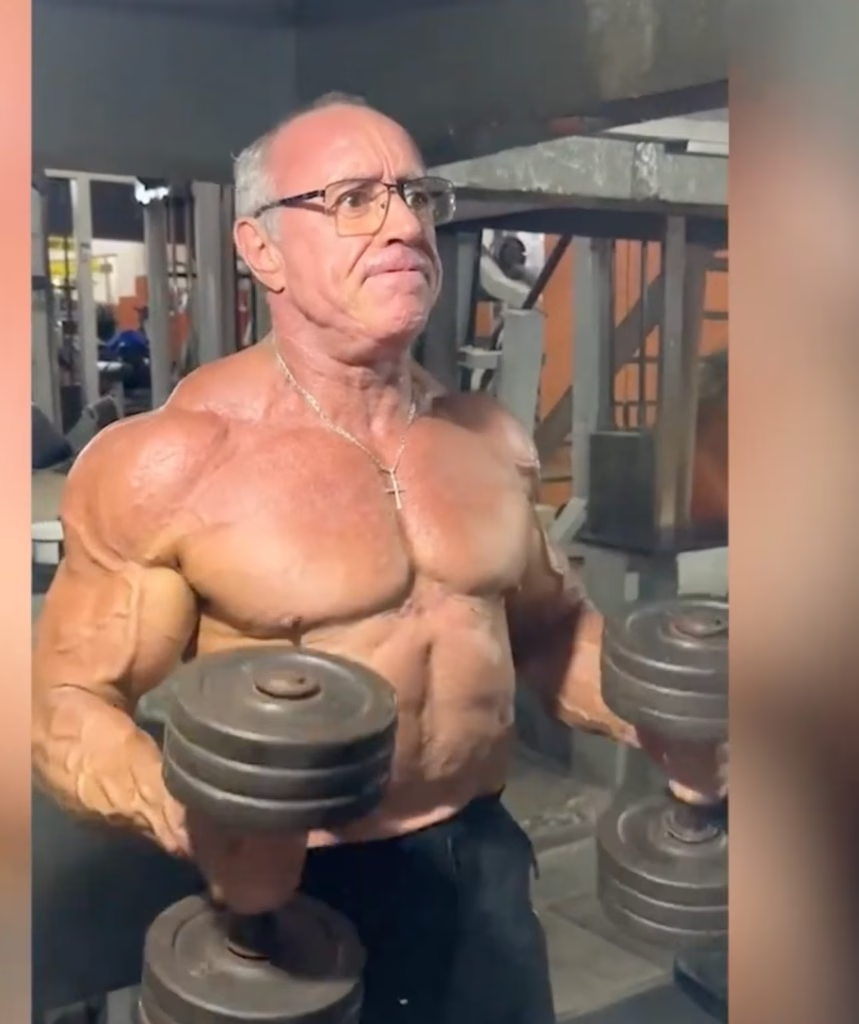
How Vovô Bodybuilder Lost 80kg
Before changing his diet, Silva says a typical breakfast could include eight eggs with bacon and chocolate milk. Fatty food and sugar were regular features, and portion control was largely absent.
His replacement diet was not built from obscure supplements, imported berries or anything requiring its own podcast. It was mostly ordinary food eaten in controlled quantities:
- Wholegrain bread, eggs and papaya for breakfast
- Rice and chicken across his main meals
- Vegetables, lean meat, fruit and other basic whole foods
- Homemade yoghurt, whey protein, oats and banana before bed
The reported sample menu is repetitive enough to make a chicken nervous, but that is partly the point. Silva found food he could afford, measured it and kept eating it.
His training became equally structured. He told Gshow he lifted weights for about an hour five times a week and performed approximately 45 minutes of aerobic exercise daily.
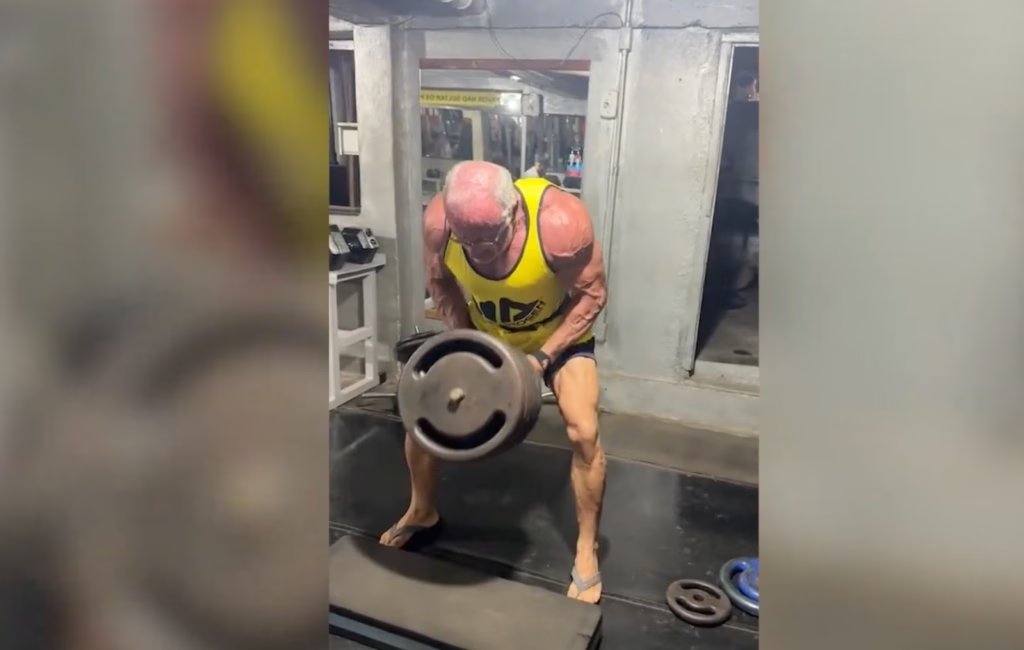
That is a substantial workload, particularly for a man starting at 160kg. It is not a prescription for every older beginner. Anyone with blood pressure approaching Silva’s reported level needs medical treatment and professional clearance, not a motivational reel and a set of burpees.
For most men over 50, the useful principle is simpler: combine progressive resistance training with regular cardiovascular work and an eating plan that produces a sustainable energy deficit. Our strength-training guide for men over 50 shows where to begin without training like a competitive bodybuilder.
Then came the bodybuilding stage
As Silva became lighter, the muscular base underneath began to show. His nutritionist suggested bodybuilding, and Silva took the idea considerably further than most men would.
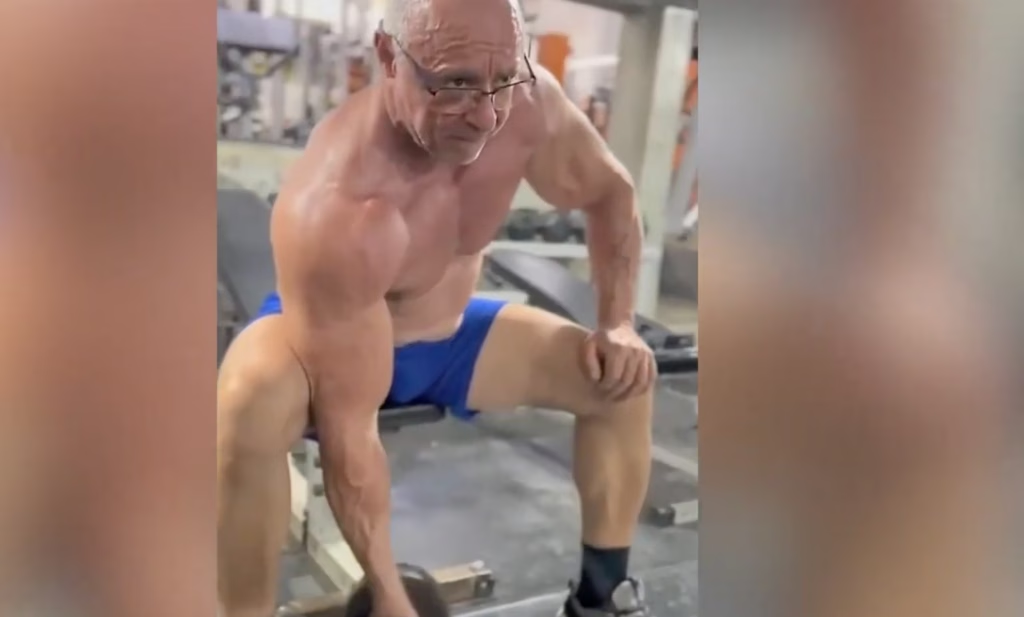
In 2024, he placed third in his category at an Arnold Classic event in Brazil. He later pursued further Masters-level competition and turned the transformation into a large social following.
Reports have placed his body fat between 4 and 9 per cent during his leanest periods. Treat those numbers cautiously because the measurement method has not been reported. More importantly, competition-level leanness is not required for good health and is not a sensible permanent target for most men.
Losing enough abdominal fat to improve blood pressure, glucose control and movement is one objective. Preparing a dehydrated, deeply defined physique for a bodybuilding stage is another.
Silva did both. You probably only need the first one.
Is Vovô Bodybuilder natural?
Not currently, according to Silva himself. He says he did not use hormones during the 80kg weight-loss phase. After losing the weight, however, tests reportedly showed testosterone below the recommended level and his doctor prescribed testosterone replacement, particularly as he moved into bodybuilding.
That is an important distinction. TRT does not explain away the discipline required to lose 80kg, but it changes how his later muscularity, recovery and strength should be interpreted. His current physique should not be presented as a completely drug-free result available to any 55-year-old who eats enough chicken.
It also does not mean other men should copy him. The Endocrine Society recommends diagnosing testosterone deficiency only when a man has relevant symptoms and consistently low results from properly conducted blood tests. TRT is medical treatment requiring monitoring, not an anti-ageing supplement.
Silva’s openness is useful. Plenty of extraordinary transformations leave that part conveniently outside the camera frame.
How strong is Vovô Bodybuilder?
In April 2026, Silva posted footage of a 220kg deadlift. The lift is impressive at any age and especially striking from a man who had halved his bodyweight after 50.
Vovô represents the spectacular end of strength after 50. At the other end of the same Still Strong idea, a 92-year-old man in Florida has completed 500 group fitness classes. One story is about extraordinary load; the other is about extraordinary adherence.
However, it appears to be a reported gym lift captured for social media, not a deadlift performed in a sanctioned powerlifting competition. That means it should not be described as a verified competition record.
The larger point is not whether every plate survived an inspection. Silva retained and built substantial strength while losing an enormous amount of bodyweight, something crash diets often fail to achieve.
Research increasingly connects muscular strength in later life with resilience, independence and lower health risk. That does not mean everyone needs a 220kg deadlift. It means remaining strong as you age is worth treating as part of your health plan rather than a hobby reserved for younger men.
What men over 50 should copy
Silva’s finished physique is exceptional. The useful habits behind it are not:
- Take the health numbers seriously. Bodyweight, blood pressure, blood glucose and cholesterol matter even when you feel strong.
- Get professional help early. Silva began with a nutritionist after a hospital visit, not an improvised starvation diet.
- Make food simple enough to repeat. His meals were affordable, measurable and almost aggressively ordinary.
- Lift while losing weight. Resistance training helps preserve strength and muscle during a long fat-loss phase.
- Keep cardiovascular work in the plan. Looking muscular does not exempt your heart from training.
- Separate health from competition. You do not need stage-level body fat, bodybuilding volume or TRT to transform your health after 50.
Silva has said he wants sedentary men his age to understand that it is not too late to begin. On that point, the evidence is standing in posing trunks.
He still has two personal ambitions: to see the ocean and travel on a plane.
After losing 80kg, stepping onto a bodybuilding stage and pulling a reported 220kg from the floor, those may be the easiest items left on his list.
The Essentials Facts About Vovô Bodybuilder
| Real name | Almir Rogério da Silva |
| Known as | Rogerão and Vovô Bodybuilder |
| Age | Reported as 55 in October 2025; approximately 55–56 in 2026 |
| Nationality | Brazilian |
| Home town | Bambuí, Minas Gerais |
| Starting weight | Approximately 160kg |
| Later weight | Approximately 80–85kg |
| Reported weight loss | About 80kg |
| Reported starting blood pressure | 260/160 mmHg |
| Training | Weights five times weekly plus daily cardio |
| Bodybuilding result | Third in his category at a 2024 Arnold Classic event in Brazil |
| Reported gym deadlift | 220kg |
| Verified competition deadlift | None located |
| Hormone status | Says he began medically supervised testosterone replacement after the weight-loss phase |
| Height | No reliable public measurement located |