Robert F. Kennedy Jr. is backing a move that could help legitimise BPC-157 in the United States, Reuters reports, while a new analysis suggests documented use of the experimental peptide has risen 33-fold in six years.
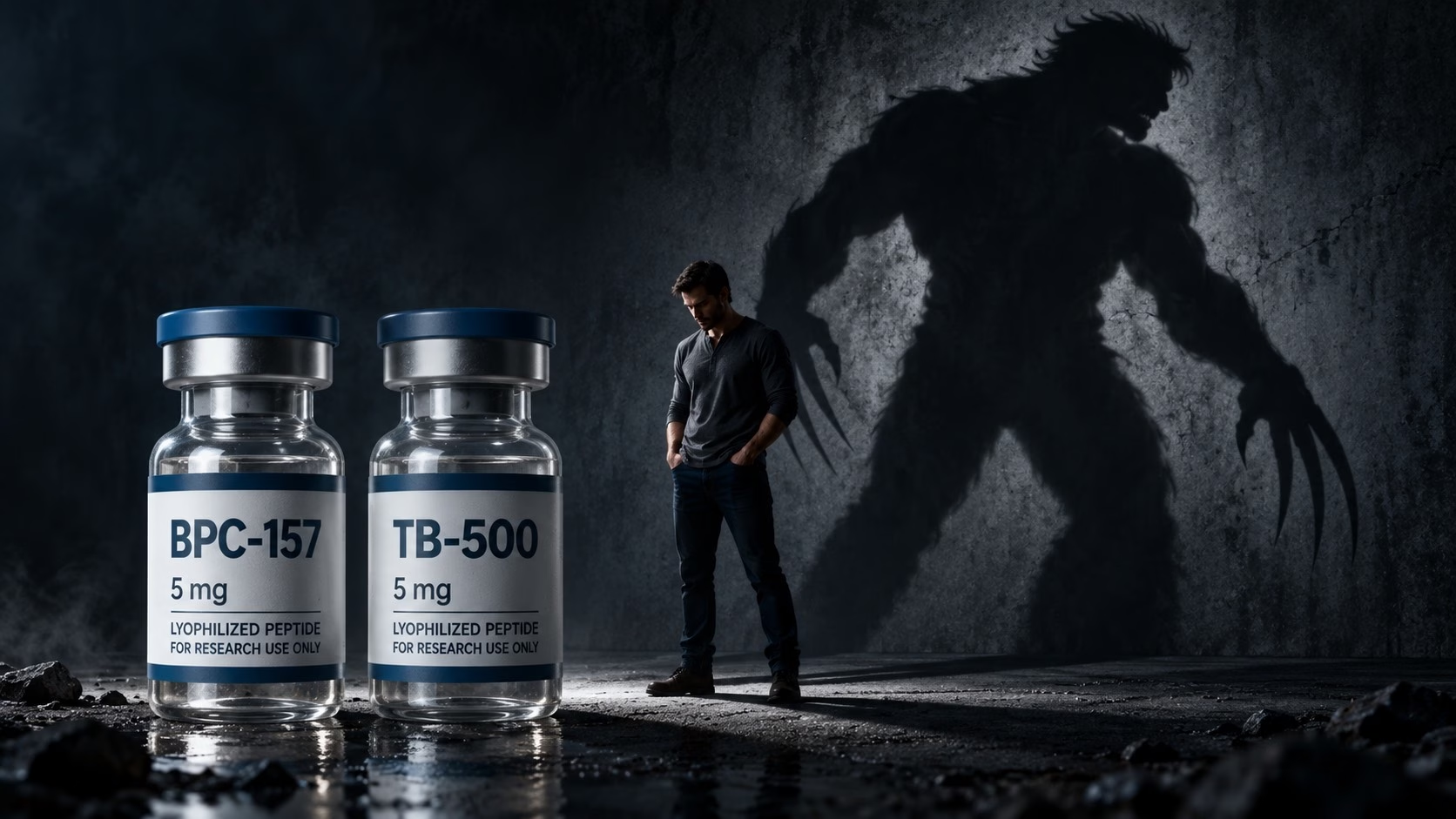
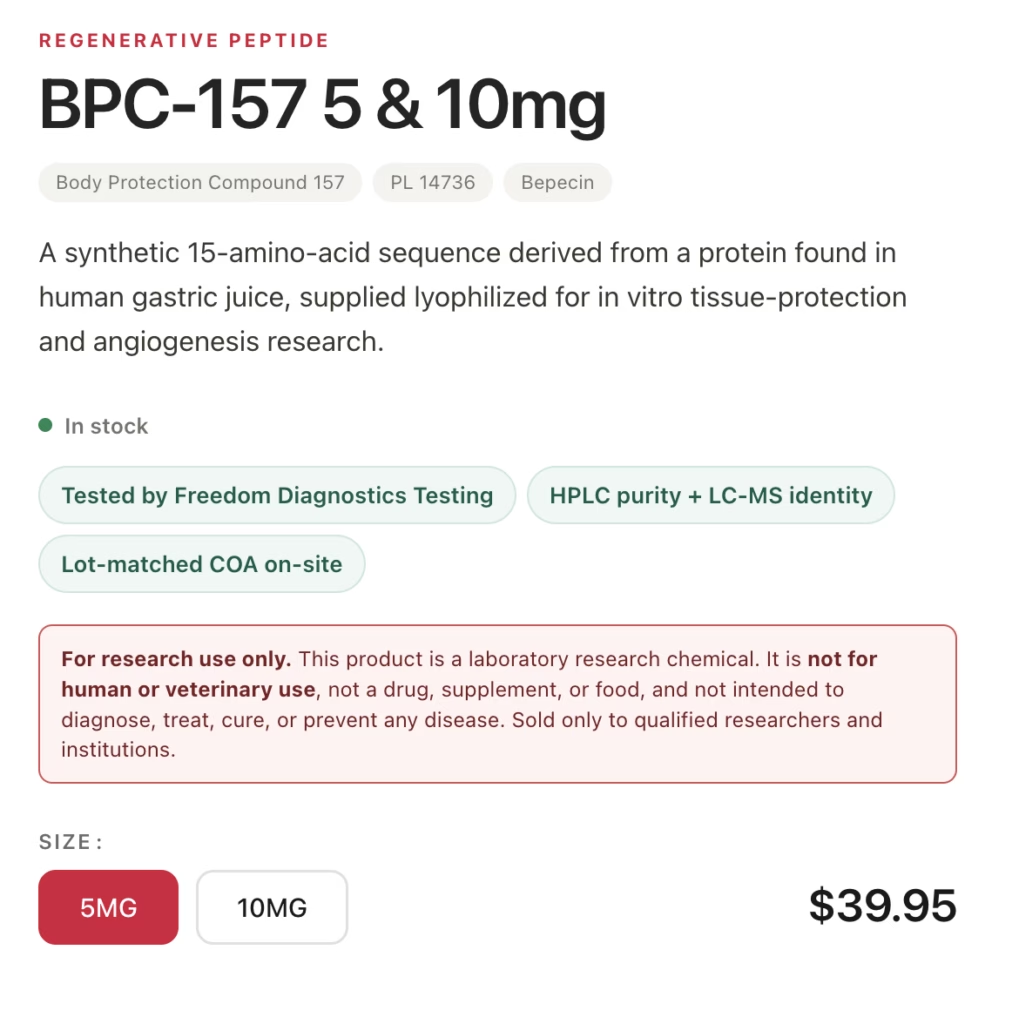
BPC-157 is half the so-called Wolverine Stack, a combination of BPC-157 and TB-500. Online sellers and fitness communities call the combo the Wolverine Stack because it promotes super speedy recovery, like the Marvel hero.
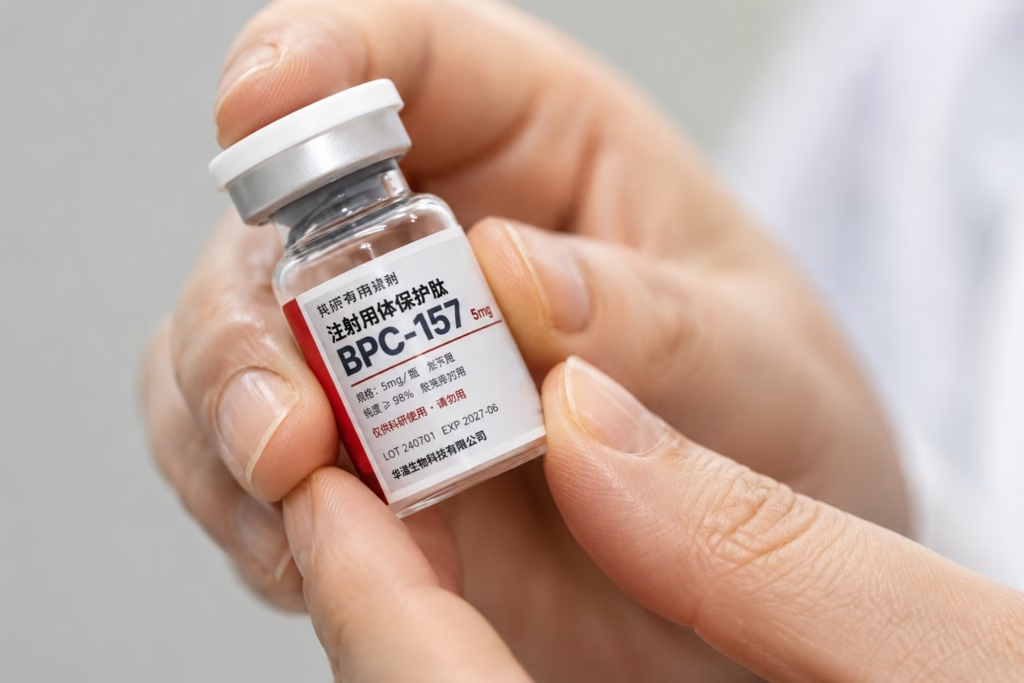
In July, an FDA advisory panel voted to allow pharmacy compounding of BPC-157 after encouragement from Kennedy, the US Health and Human Services Secretary. The FDA has not yet made its final decision, and BPC-157 remains unapproved.
Meanwhile, a commercial analysis published by Licensed Peptides used Glimpse, a Google Trends search intelligence platform, to claim searches for “Wolverine Stack” rose 948 per cent over the past year, reaching approximately 21,000 searches in the latest month.
Men increasingly dominate the group. The proportion of newly documented users who were male rose from 57 per cent in 2020 to 70 per cent in 2026, while the average age fell from 55 to 49.
What is the Wolverine Stack?
The name usually refers to two unapproved peptides: BPC-157 and TB-500. They are marketed for faster recovery from tendon, ligament and muscle injuries, reduced inflammation and improved performance.
It is a catchy name, clever marketing, not a recognised treatment or proof that the compounds work better together.

BPC-157 has produced interesting results in laboratory and animal studies. The human evidence is tiny. A 2025 review found limited clinical data and no meaningful human safety record. Sport Integrity Australia describes BPC-157 as experimental, not approved for human use and prohibited in sport at all times.
TB-500 is often discussed as another name for thymosin beta-4. It is not that straightforward. Thymosin beta-4 is the full-length peptide, while TB-500 is generally sold as a fragment or analogue. Early human studies do not prove that an online TB-500 product is the same molecule, made to the same standard or useful for a damaged tendon.
That is how peptide marketing works: a promising mechanism becomes a guaranteed result, and an animal study becomes “clinically proven”.
Wolverine Stack dosage: why there is no safe chart
Searches for “Wolverine Stack dosage” and “dosage chart” suggest that many people have moved past the basic question. They want to know how much to inject and how often.
There is no medically established dosage. The combination has not been validated in a properly controlled human trial, and online products may vary in concentration, purity and even identity.
That is why MFO is not going to reproduce an online protocol. A neat chart would create false precision around an unapproved product with no dependable supply chain. The important questions are whether the vial contains what the label says, whether it is sterile and whether the claimed benefit has been demonstrated in humans. At present, they remain unanswered.
Does the Wolverine Stack work?
There is no good human trial showing that the BPC-157 and TB-500 combination reliably repairs injuries or builds muscle. There is also no robust trial showing that stacking them produces a useful benefit either compound could not produce alone.
The biology may be interesting, but the claims have run well ahead of the evidence. A biological response is not necessarily useful, predictable or safe over time.
That is the same basic problem covered in MFO’s guide to whether peptides are safe. “Peptide” describes a type of molecule, not a safety rating. Insulin and semaglutide are peptides. So are several unapproved products sold in unmarked vials online.
Is the Wolverine Stack legal in Australia?
The TGA lists BPC-157 and TB-500 among unapproved peptide products that have not been assessed for safety, quality or effectiveness. In August, it said it had seized a product marketed as the Wolverine Stack from two New South Wales properties.
The words “research use only” do not turn a product intended for human injection into a legal supplement. The TGA says it is unlawful to import, advertise, manufacture and supply unapproved peptide products outside authorised pathways. BPC-157 is listed as a Schedule 4 substance, with possession without authority prohibited. See MFO’s guide to what’s legal in Australia.
Athletes face an additional problem. BPC-157 is prohibited under the World Anti-Doping Code, while thymosin beta-4, also listed as TB-500, is banned at all times. A product obtained through a doctor or compounding pharmacy is not automatically TGA-approved and may still create an anti-doping violation.
There is also the supply-chain risk. The TGA warns that unapproved injectable peptides may be incorrectly labelled, contaminated, non-sterile or dosed differently from the vial. Australia’s recent counterfeit retatrutide case made the point clearly: the label can say one thing while the vial contains something else.
In a nutshell..
The Wolverine Stack is popular because the pitch is simple: heal faster, train harder and avoid the stigma attached to steroids. The evidence does not support it.
If you have an injury, get it diagnosed rather than trying to mask it with an unapproved injection. Be patient for results and do not look for shortcuts.
The Wolverine Stack may sound like teenage comic-book medicine and that’s the close to the truth of the matter.