

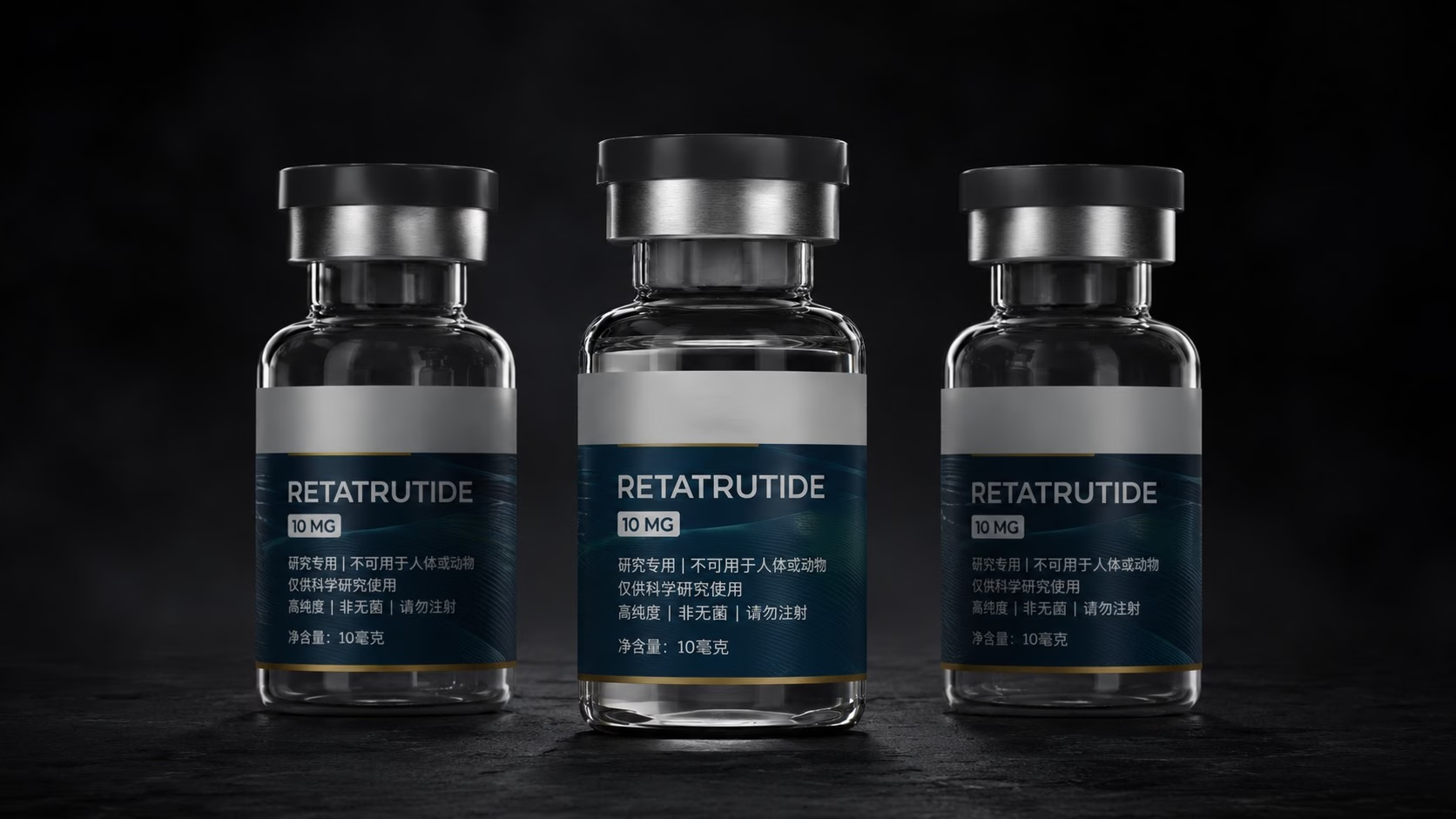
An Australian regulator tested a vial sold as the experimental weight-loss drug. Its contents did not match the label, and a user was hospitalised after severe vomiting.
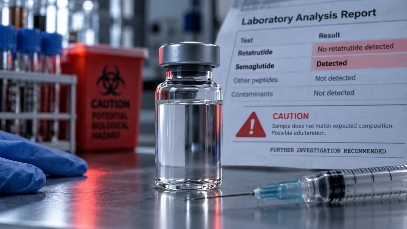
The vial was sold as retatrutide. When the Therapeutic Goods Administration tested it, the regulator found no retatrutide at all. It found undeclared semaglutide at approximately eight times the level in semaglutide products the TGA has assessed for Australian supply.
That is the new finding in a TGA safety alert published on 14 September. The test followed a report of a serious adverse event: a person experienced uncontrollable vomiting, suffered a torn oesophagus and needed hospital treatment.
The TGA describes the event as linked to a product sold as retatrutide. Its alert does not establish the exact clinical cause of the injury, identify the seller or give the date of the incident. The distinction matters. The lab result is firm; the wider story of how this person came to be harmed is still incomplete.
What the TGA test found
The sample came from an original, unmarked vial obtained during the investigation. According to the regulator, it contained semaglutide but no retatrutide, detected at about eight times the level found in semaglutide products the TGA has assessed for the Australian Register of Therapeutic Goods.
That comparison is the TGA’s own description of its laboratory finding, not a dosing guide or a basis for calculating what the patient injected — and it says nothing about batch size or whether other vials sold under the same label contained the same thing.
TGA Chief Medical Officer Professor Robyn Langham AM put the underlying risk plainly: “The biggest risks with unapproved peptide products are not knowing what is in the vial, how much of or even what substance it contains, whether it is sterile, or whether it contains other contaminants or toxins.”
Retatrutide itself is still in human clinical trials. The TGA says it has not been approved by it or a comparable overseas regulator. A vial offered outside a clinical trial therefore carries two separate problems: the medicine is unapproved, and the seller’s description may be wrong.
MFO has reported on earlier Australian cases involving fake retatrutide and liver injury. This is a separate TGA alert with a specific laboratory result. The regulator has not said this vial came from the same supplier or batch as those cases.
What to do if you have an unmarked vial
The TGA’s advice is direct: do not use unapproved peptide products, particularly unmarked vials bought online or obtained from overseas. Seek advice from a qualified health professional and use medicines supplied through Australian pharmacies. Its guide to weight-loss products explains how approved and listed products are identified in Australia.
If you have already used a product and become unwell, seek medical care and tell the clinician exactly what you were told it was, where you got it and what you used. The TGA also asks people to report adverse events so it can investigate emerging risks. Keep any packaging or vial details for that conversation if it is safe to do so. Do not assume a familiar drug name on the label makes a product equivalent to a pharmacy-supplied medicine. In this case, the regulator found a different substance at a markedly different level from its assessed products. That is a problem a buyer could not settle by reading the vial.
For readers weighing up the wider peptide market, MFO’s guide to what is legal in Australia provides the regulatory context. But the practical point here is simpler than a legal debate. In this tested vial, the label failed at the most basic job: telling the buyer what was inside.