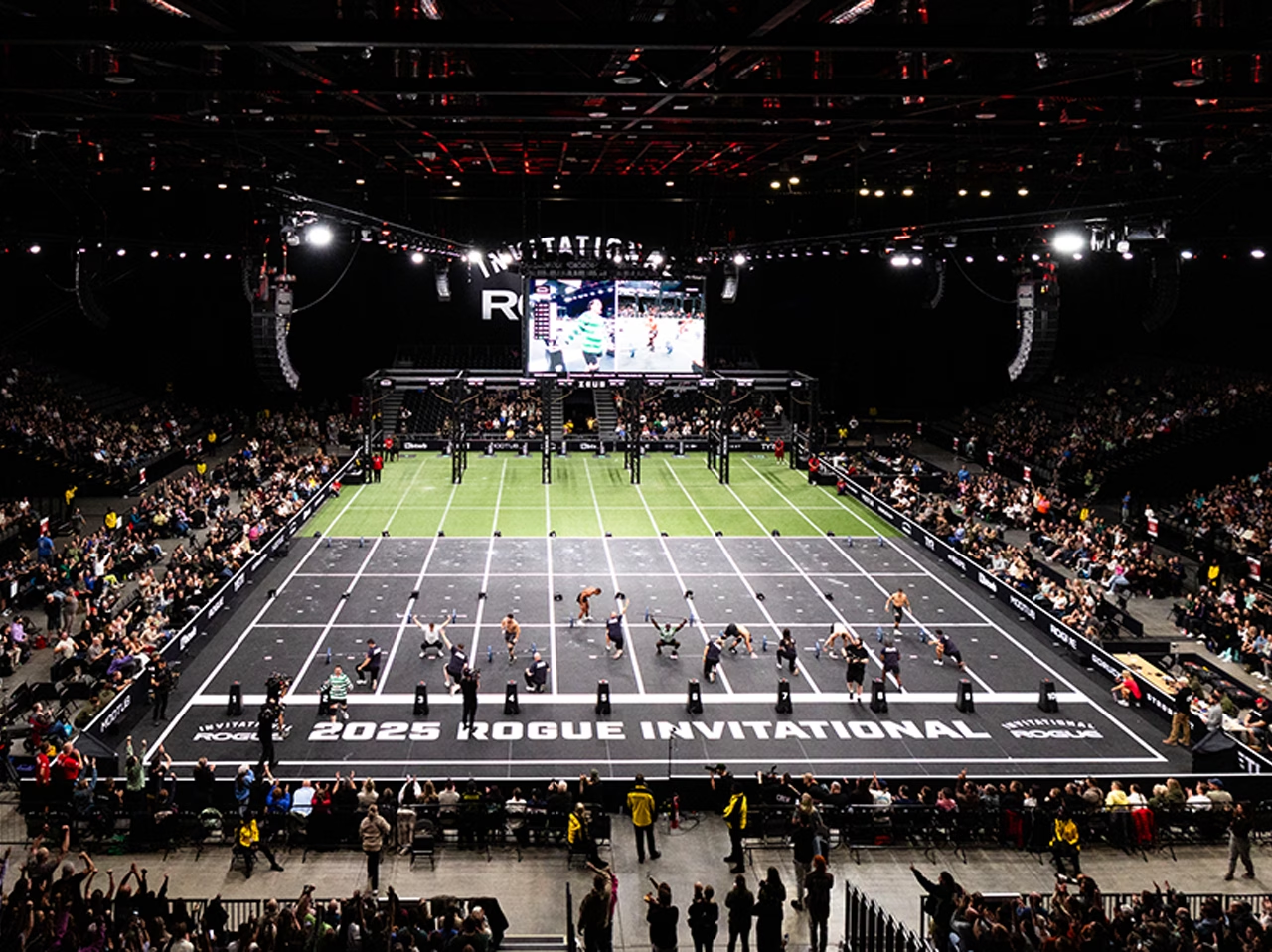


It’s a good question. Both involve an enormous effort and use equipment, both can leave you on the floor totally gassed, and both have built genuine competitive scenes out of what started as gym programming.
But HYROX and CrossFit are answering different questions, and picking between them comes down to which question you’d rather train for and how much control you like to have.

The format is the real difference
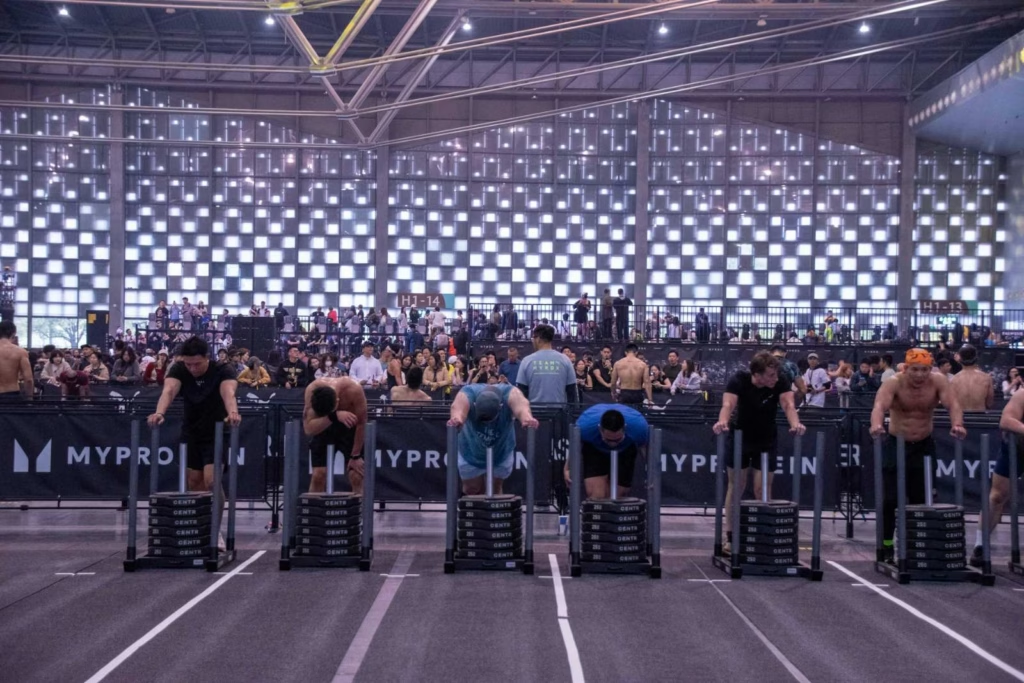
HYROX is fixed: 8km of running split into eight even efforts, each followed by one of eight specific stations, in the same order, at every event, worldwide. You know exactly what you’re training for a year out, and your result is directly comparable to anyone else who’s ever done it. It’s simple, fixed and repeatable.
CrossFit’s competitive format is the opposite on purpose. Workouts are announced shortly before they’re performed, drawn from an enormous pool of possible movements (Olympic lifts, gymnastics, monostructural conditioning) and constantly recombined. Unpredictability is the point: CrossFit is testing broad, general physical preparedness, not performance on a known task.

What the training actually looks like
HYROX training narrows toward one specific demand: running economy under load, and strength endurance in eight specific movement patterns. A real program is built around compromised running, doing stations and running back to back, because that’s precisely what race day asks of you.
CrossFit training stays broad by design. A given week might include heavy barbell cycling, gymnastics skill work, short sprints and long conditioning pieces, because the next competition workout could test any combination of them. You’re training capacity across a wide range, not economy in one fixed 90-minute effort.

Who each one actually suits
HYROX rewards people who like a known target: runners who want a strength component, or lifters who want a reason to actually train their engine. The fixed format means you can genuinely track improvement year over year against the same benchmark.
CrossFit rewards people who like variety and don’t want to know what’s coming. If doing the same eight stations in the same order sounds tedious rather than satisfying, CrossFit’s constantly-changing programming is the better fit. It also demands a broader technical skill set upfront, Olympic lifts and gymnastics movements have a real learning curve that HYROX’s stations don’t.


Injury profile and time commitment
HYROX’s demands are largely load-and-repetition based: sleds, carries, lunges, running. The injury risk is mostly overuse if you ramp volume too fast, not acute technical failure. CrossFit’s inclusion of Olympic lifts and gymnastics under fatigue carries a different risk profile, technical breakdown under load is a real factor, which is why reputable programming emphasises coaching and scaling.
Neither is a quick session. A serious HYROX block asks for genuine running volume on top of gym work; serious CrossFit asks for near-daily training to maintain the skill work. Neither is a fit for someone who only wants to train twice a week.

The honest answer
If you already run and want a competitive reason to add strength work, HYROX is the more direct path. If you already lift and want a competitive reason to build an engine and learn new skills, CrossFit is the broader (and steeper) one. Plenty of people end up doing both: CrossFit-style strength and skill work in the off-season, narrowing toward HYROX-specific training in the months before a race.
Resources:
If HYROX is the one that appeals, see what the actual workout looks like, how to actually build a training program around it, or read the full format and rules before you commit. And if you want both worlds combined into a single scored event, a new competition called XENOM is trying to do exactly that.