

A HYROX workout is 8km of running broken into eight even 1km efforts, each one followed immediately by a functional station: no rest, no pause to recover, just straight into the next thing while your legs are already cooked from the last. That combination, endurance racing stacked directly on top of strength work, is what makes it feel so different from a normal gym session or a normal run.

The actual race workout
In the Open men’s division, the official loads are fixed:
- Run 1km, then SkiErg 1000m
- Run 1km, then sled push – 152kg including the sled, 50m
- Run 1km, then sled pull – 103kg including the sled, 50m
- Run 1km, then burpee broad jumps – 80m
- Run 1km, then rowing 1000m
- Run 1km, then farmers carry – 2x24kg kettlebells, 200m
- Run 1km, then sandbag lunges – 20kg sandbag, 100m
- Run 1km, then wall balls – 6kg ball, 100 reps to finish
Top competitors finish this in under an hour. Most first-timers are looking at 75 to 100 minutes, and the honest answer to “which part hurts most” is usually the run straight after the sled work, not the sled work itself.

A HYROX-style workout for a normal gym
Most commercial gyms don’t have a sled track or an official HYROX setup, which is most of why “hyrox workout” gets searched so much: people want to know what to actually do without the specialist gear. This version keeps the structure, running plus a station, eight times through, and swaps in equipment most gyms already have:
- Run 1km, then rowing machine 1000m (stand-in for the SkiErg)
- Run 1km, then loaded treadmill push or heavy prowler push, 50m
- Run 1km, then sled pull with a resistance band or rope, or a heavy backward-walking sled drag, 50m
- Run 1km, then burpee broad jumps, 80m (needs no substitute, it’s bodyweight)
- Run 1km, then rowing machine 1000m again, or a ski erg if your gym has one
- Run 1km, then farmers carry with dumbbells or kettlebells, 200m
- Run 1km, then walking lunges holding a sandbag, plate or dumbbell, 100m
- Run 1km, then wall balls or thrusters, 100 reps
Scale the loads down if this is your first time through the whole thing. The point of a first attempt is finishing the format intact, not matching Open-division numbers you haven’t trained for.
How to pace it without blowing up
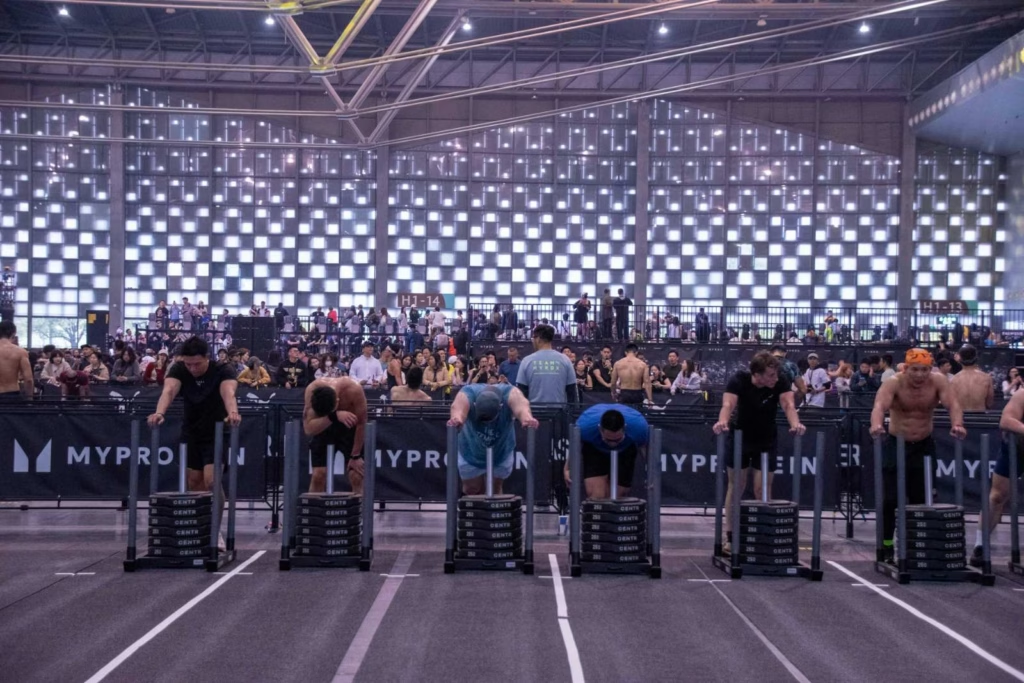
The single most common mistake is treating the first two or three rounds like a normal training session, because they still feel easy. They won’t feel easy by round six. Run the first kilometre at a pace you could hold for the whole session, not a pace that feels good because you’re fresh. The sled stations are where most people lose the most time relative to their fitness level, since sled work rewards technique as much as raw strength, so it’s worth practising the push and pull specifically rather than assuming general leg strength will carry you through.
Where to go next
For a deeper look at any single station, see all 8 explained individually. This is one workout, not a training program: see how to actually build one if you’re preparing to race, not just trying it once. If you’re actually preparing to race, our free eight-week HYROX training plan for beginners builds toward this exact format properly, and our HYROX explainer covers the full official rules, divisions and where events are actually held in Australia.