

Eight stations, eight 1km runs between them, same order every time you race, anywhere in the world. That fixed order is what makes HYROX comparable across venues and years, and it’s also what makes the pacing so unforgiving: you know exactly what’s coming, and there’s nowhere to hide from a weak station.
1. SkiErg – 1000m
The first SkiErg was prototyped in 1982 in a barn in Vermont. By the mid 2000’s ski clubs and even Concept2 employees had the Model D RowErg attached to walls, and began fussing with attachments to mimic cross country skiing. It’s your first station, while you’re still fresh. If you’ve ever used poles on ski’s to get up a hill you’ll know the full-body pulling movement. It’s arms and lats that do most of the work, and it’s more technique-dependent than it looks. Pace yourself and search for a nice rhythm with your breath. A poor rhythm here burns arms you’ll need soon enough. Finished? Run 1000 metres.

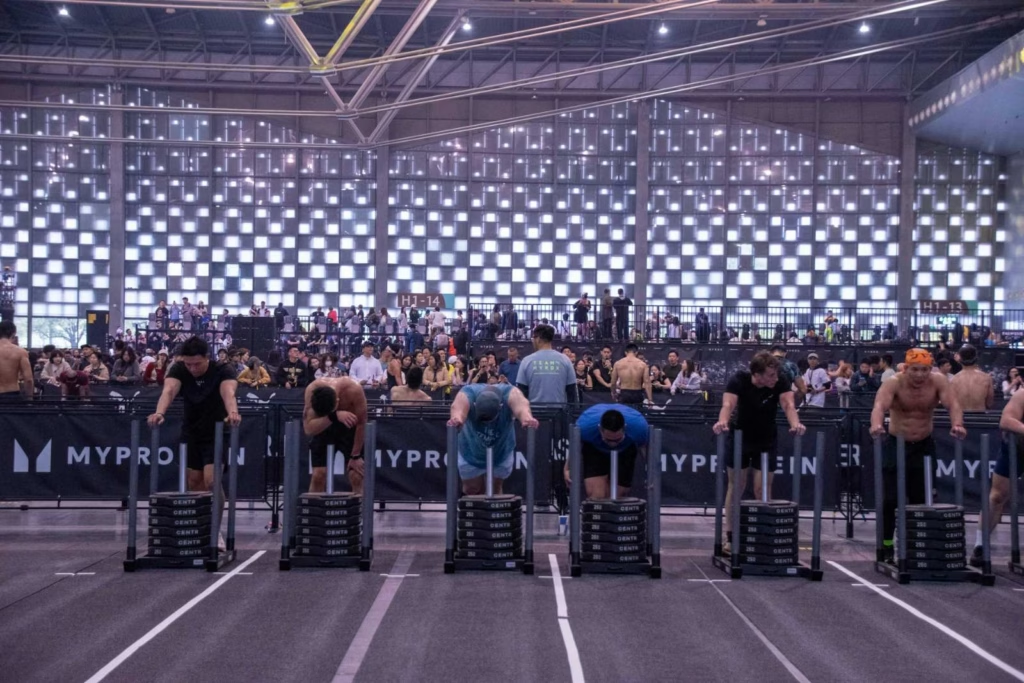
2. Sled push – 50m, 152kg including the sled
The first real gut-check. This is real power. You need a low body position, short powerful steps, and keep momentum up. The weight simply won’t move if you stand up straight and push with your arms instead of your legs. This can really suck gas. Finished? Run 1000 metres.
3. Sled pull – 50m, 103kg including the sled
A rope-and-harness pull, working backward. Different muscles to the push, mostly glutes, hamstrings and back, but it punishes the same lower-back fatigue the push already started. Get low, use your legs and keep a good hand position. A low body angle matters more than brute strength.

4. Burpee broad jumps – 80m
Bodyweight, no equipment, and one of the most exhausting stations purely because it’s unavoidable. A burpee, then a broad jump, repeated for 80m. Pace this one deliberately: the temptation is to jump as far as possible each time, which is slower overall than a shorter, more repeatable jump distance. Steady easy pace. Finished? Run 1000 metres.

5. Rowing – 1000m
The second cardio-machine station, and by this point you’re roughly halfway through and you know it. Rowing technique (legs, then back, then arms, in that order, reversed on the way back) matters more here than at the start of a session, because fatigued form breaks down fast. Good form, steady pace. Finished? Run 1000 metres.

6. Farmers carry – 200m, 2x24kg kettlebells
Grip is usually the limiter, not legs or lungs. If your grip gives out, the kettlebells go down, and picking them back up costs more time than walking slightly slower would have. Bring the weights in close to your body rather than letting them swing. Finished? Run 1000 metres.
7. Sandbag lunges – 100m, 20kg sandbag
Held across the shoulders, walking lunges for 100m. Late in the race, this is where hip and quad fatigue from all the running finally catches up with people. Shorter, controlled steps beat long lunges that wobble. Finished? Run 1000 metres.


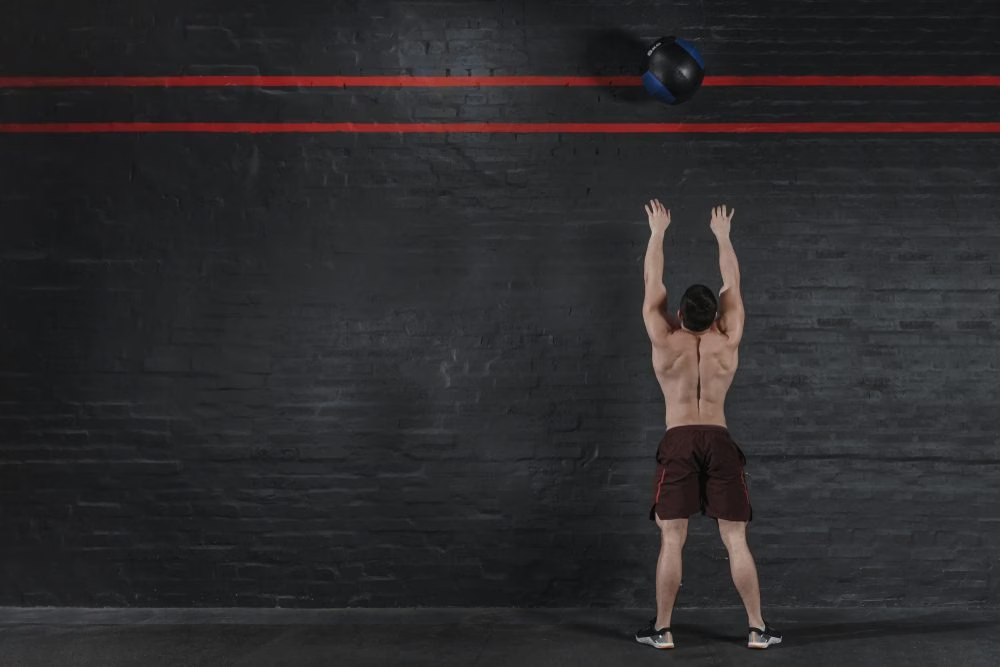
8. Wall balls – 100 reps, 6kg ball
The finish. A squat and a throw, 100 times, with legs that have already run 8km and pushed and pulled a sled. Most competitors’ slowest reps-per-minute of the entire race happen here, which is exactly why it’s placed last.
Where to go next
For the full official rules, divisions and where HYROX is actually held in Australia, see our HYROX explainer. To see all eight stations put together into one session, including a version for a gym without a sled or ski erg, see the actual HYROX workout. For the full training principles behind all of it, see how to actually build a HYROX training program.