
There are certain pieces of information a man approaches with understandable caution. A letter from the ATO; his banking app after a huge night out; his first 5 km time after six months off.
Apple would now like to add another. How old does your body actually look, underneath the calendar?
Apple Watch Series 12 and Ultra 4 land in Australian stores from 18 September, starting at A$649. Buried in the announcement is a new Health app section called Longevity, and inside it, Apple Watch Health Age: a score built from your VO2 max, heart rate variability and sleep quality, designed to show — in Apple’s own words — “which factors are adding years and which ones are taking them off.”
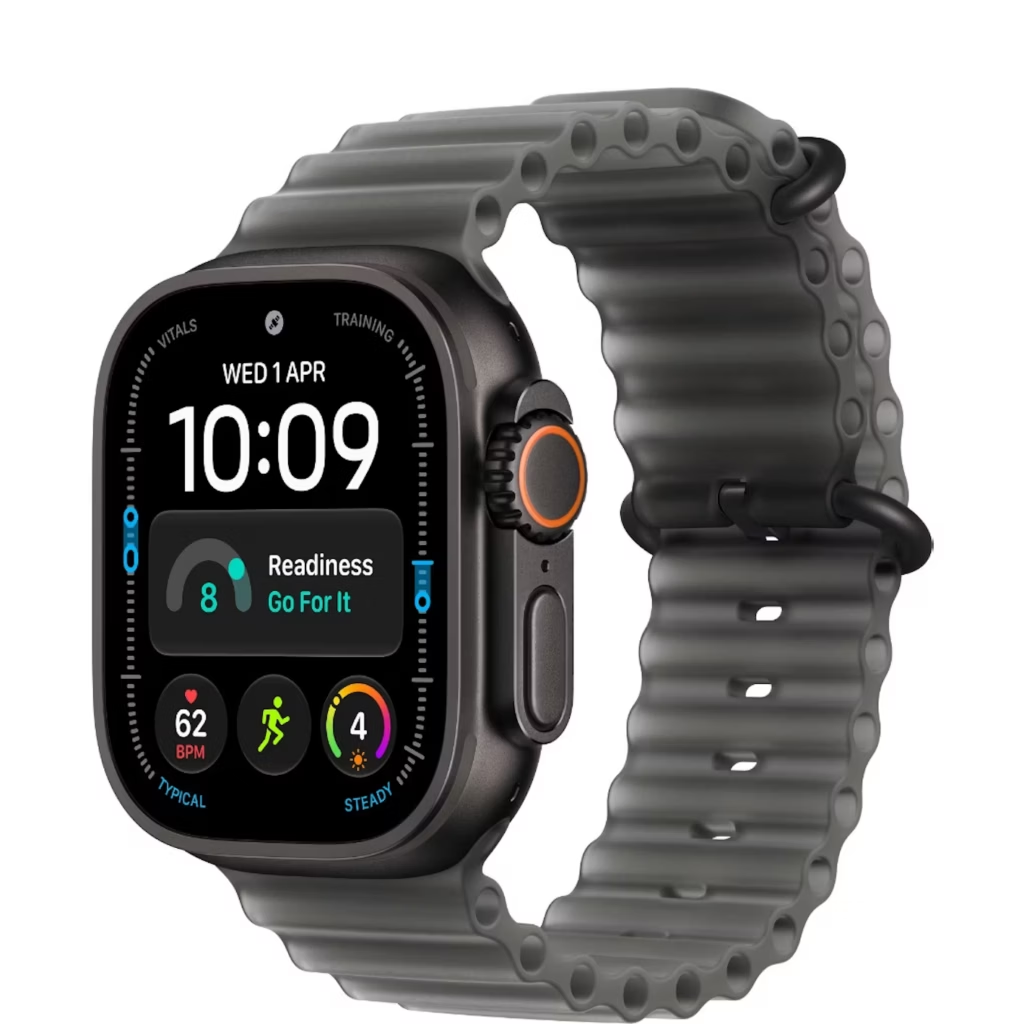
Worth being upfront about one thing immediately: Health Age isn’t actually available yet. Apple’s own materials list it as “coming late 2026,” and it requires an Apple Intelligence–enabled iPhone to work — meaning older handsets miss out entirely. It doesn’t even appear on Apple’s Australian product page yet, only the US one. What does ship with the watch from day one is something different, and arguably more useful day to day: a Readiness score.
What is Apple Watch Health Age, and how is Readiness different?
Yes, and the difference matters. Health Age is a long-run trend — an attempt to answer “how is my body ageing, broadly.” Readiness is a daily number, recalculated each morning from your recent activity, vitals and sleep, meant to answer a much narrower question: should you go hard today, or not.
Apple’s pitch is blunt: “Should you rest or put yourself to the test?” It’s the same basic idea that Whoop and Garmin have been selling for years under names like Recovery and Body Battery — MFO reviewed the Whoop 5.0 version of this idea back when it launched — Apple is simply the biggest player yet to build it directly into a mainstream watch.

What’s actually new in the hardware
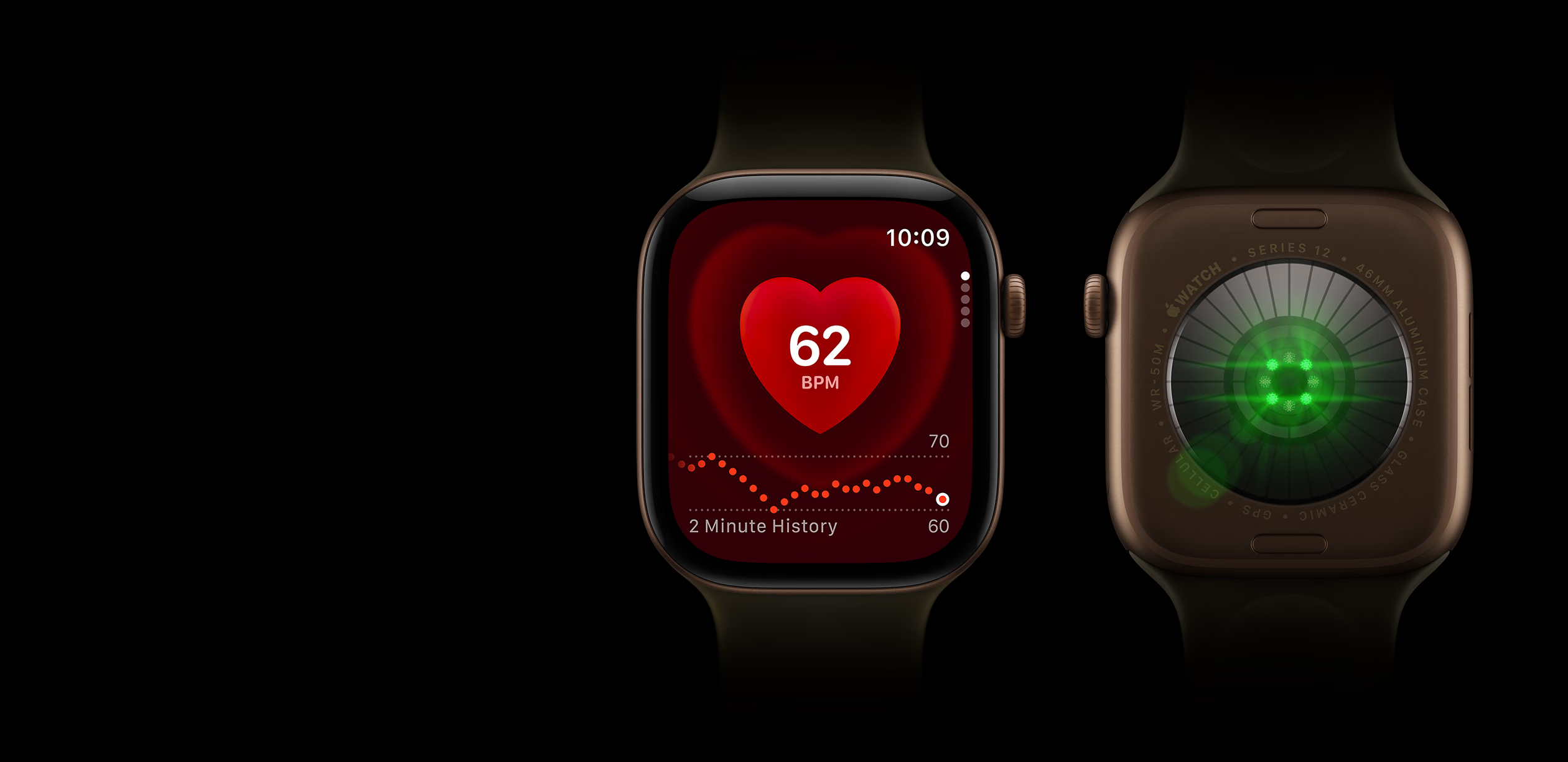
The reason Apple can make either claim with a straight face is a genuinely upgraded sensor. Series 12 measures background heart rate every five seconds — Apple says that’s 60 times more frequent than Series 11 — and takes an HRV reading as often as every five minutes, 24 times more frequent than before. More frequent sampling means fewer gaps for the algorithm to guess across, which is the actual, unglamorous reason these scores can claim to be more accurate than earlier attempts.
Should you actually trust a number like this?
Wearables are extremely good at looking precise and only moderately good at being accurate. A heart-rate sensor on your wrist is inferring, not measuring directly, and small things — a loose band, cold hands, a bad night’s sleep unrelated to fitness — can move the number around more than your actual physiology has changed. MFO has made this exact point before: a single day’s reading is closer to noise than signal. The trend over weeks is where these tools earn their keep, not the number you see on any given Tuesday.

Health Age specifically leans on VO2 max, and VO2 max itself is a genuinely useful longevity marker — but not the whole story: a wrist-estimated VO2 max is a rough approximation of a lab-measured one, not a replacement for it. Treat Health Age, when it does arrive, as a motivational nudge rather than a medical verdict — useful for noticing a downward trend worth acting on, not for diagnosing anything.
Do You Need It?
The hardware upgrade is real and the Readiness score is a genuinely useful, well-established idea finally built into the watch most people already own. Health Age is the more interesting promise — but it’s a promise for later this year, gated behind a newer iPhone, and not yet even offered to Australian buyers. Worth buying Series 12 for what it does today. Worth being a little sceptical of what it’s promising for December.