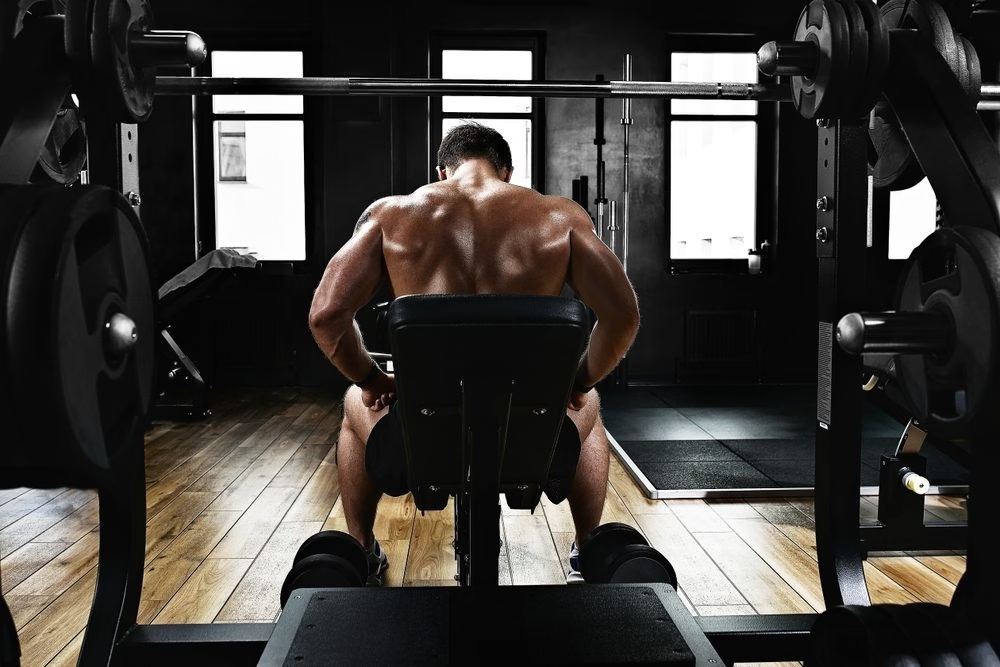

Forge Fitness, in Eagle, Idaho, looks like an ordinary strength gym from the car park. Barbells, plates, the usual iron-scented humidity. Walk inside and the mission statement is a little different: the gym exists to train men not just for muscle, but for ministry. Membership is strictly men only, on purpose, and the pitch is as much about brotherhood and accountability to a higher power as it is about a bigger squat.
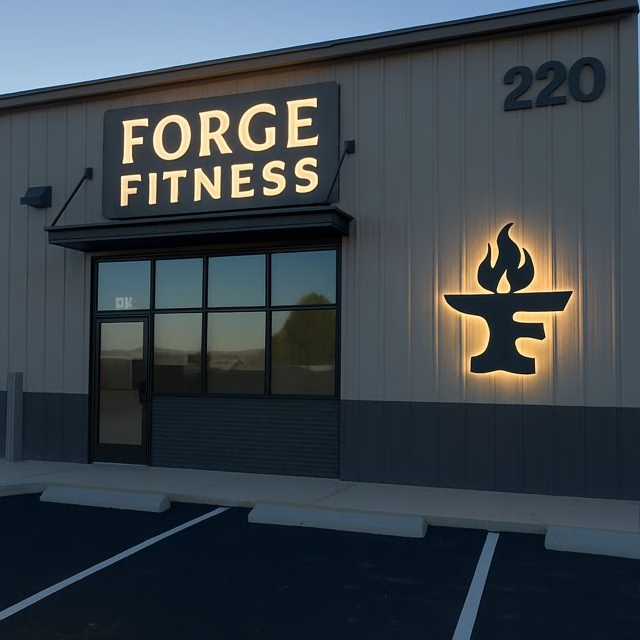
It’s a small trend, not something we’ve seen here in Australia yet as a movement. But it points to something worth taking seriously: men are increasingly creating male-only spaces.
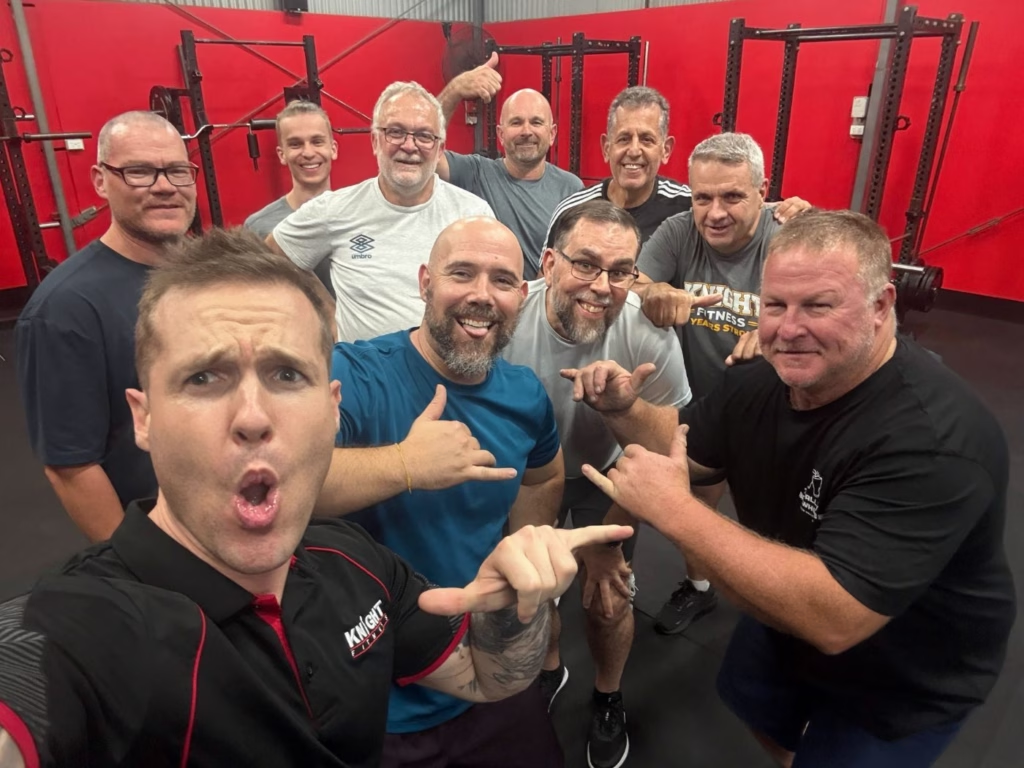
Australia doesn’t have a Forge Fitness yet. It does however, have Hardcore Gym, a male-only “strength, conditioning and self-defence” facility that’s been operating in Sydney since 2015, plus a small cluster of newer entrants — Brotherhood Gym on the Gold Coast, Knight Fitness’s Mens Club in Brisbane, The Strength Base in Melbourne. None of them mention God. All of them run on the same basic premise Forge does: some men train better, and open up more, and feel more comfortable without women in the room.

Why remove women in the first place?
Supporters argue men behave differently — more honestly, less performatively — around other men. That’s largely true in my experience from the military to sport to the corporate to gyms all over the world. Men in a room behave considerably different.
Critics see something less charitable: a retreat into a narrower, more traditional idea of masculinity, dressed up as fitness. The exclusion of women, it appears, is taken as some sort of removal of fundamental rights.
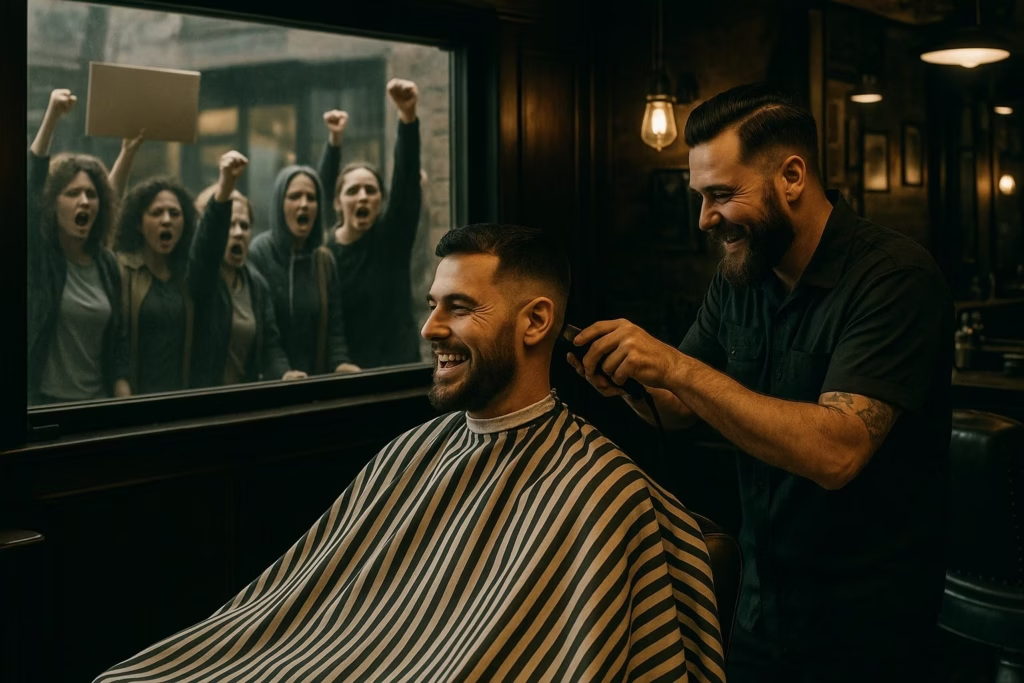
Australia has already had a version of this exact fight — over a barbershop, not a gym. Robbie’s Chop Shop, a men-only barber in Adelaide, made headlines after a woman was turned away and directed to the salon next door under the same ownership. The argument for it was the same one Forge’s members would recognise: women have had Fernwood for decades: over 70 locations, no controversy. Why is a men’s equivalent treated as suspect?
The thing is both things can be true at once. A men-only space can be genuinely useful to lonely, disconnected men — Men’s Shed pops to mind — and still carry some uncomfortable truths about what women’s presence changes, particularly in a gym environment.
The actual problem men-only spaces are answering
The demand side of this is well-documented and doesn’t need speculation. A 2024 Healthy Male (Andrology Australia) survey found 43% of Australian men had experienced loneliness, with 16% reporting high levels of it — a figure serious enough that the ABC reported on it as a public health concern, not a niche complaint. Internationally, Gallup has found men aged 15–34 report loneliness at meaningfully higher rates than women in the same age bracket.


None of that requires a gym to fix it. But a gym is a genuinely good delivery mechanism for male friendship specifically, for a boring, practical reason: men tend to bond more easily side by side, doing something, than face to face, talking about something. A shared 5am session, the same three blokes on the same three mornings, produces the kind of low-pressure familiarity a scheduled “catch-up” rarely does. MFO has covered the same mechanism in a running-club context — lonely, over-40 dads finding community through a shared activity rather than a support group. A weights room can do the identical job.
Maybe the barbells were never really the point
Strip away the theology and the trend looks a lot less novel: men doing something physical, on a schedule, next to the same other blokes, in a culture that’s increasingly rethinking what a gym is even for — from mirrors and machines toward something closer to a third place.
Forge just adds a chaplain to the formula. Hardcore and Brotherhood leave God out and keep the rest. Either way, the actual product being sold isn’t really the workout. It’s somewhere to be a bloke around other blokes, which — loneliness statistics being what they are — turns out to be worth quite a lot right now.
FAQ
Is it legal to run a men-only gym in Australia? There’s a genuine exemption in the Sex Discrimination Act 1984 for single-sex services, and it applies on paper to either sex — but women-only fitness spaces have decades more tested precedent behind the same argument than men-only ones do.